
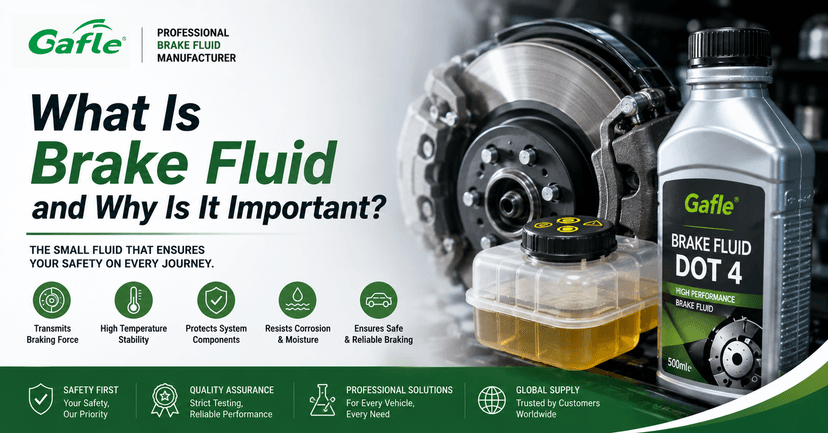
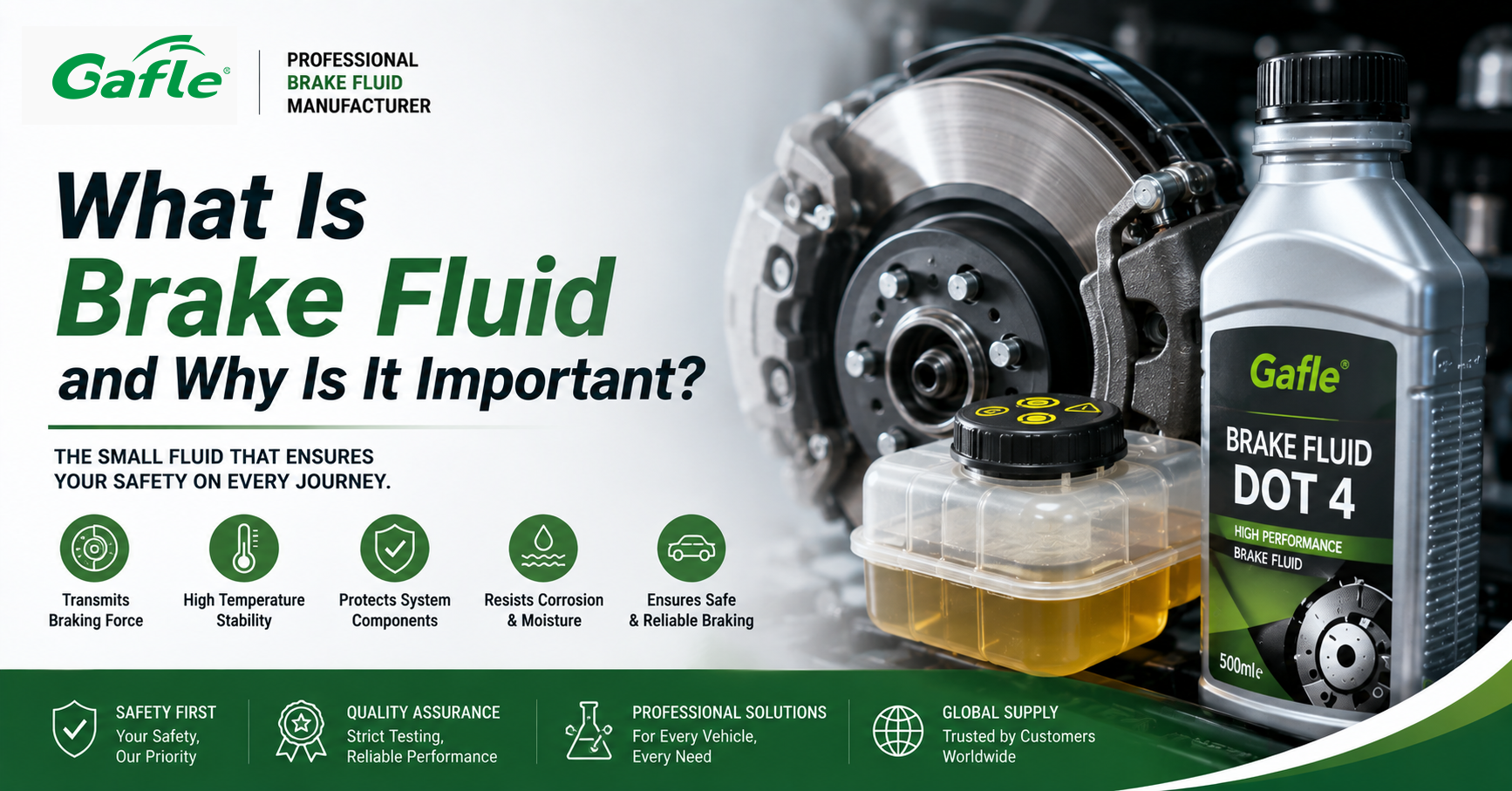
 What Is Brake Fluid and Why Is It Important?
Brake fluid is one of the most important yet often overlooked fluids in a vehicle. While drivers regularly pay attention to engine oil or coolant, many don't realize that brake fluid plays a direct role in vehicle safety.
Without brake fluid, the braking system cannot transfer the force from the brake pedal to the wheels, making it impossible for a vehicle to slow down or stop effectively.
Whether you're a vehicle owner, distributor, importer, or automotive brand, understanding what brake fluid is and why it is important can help you make better maintenance and purchasing decisions.
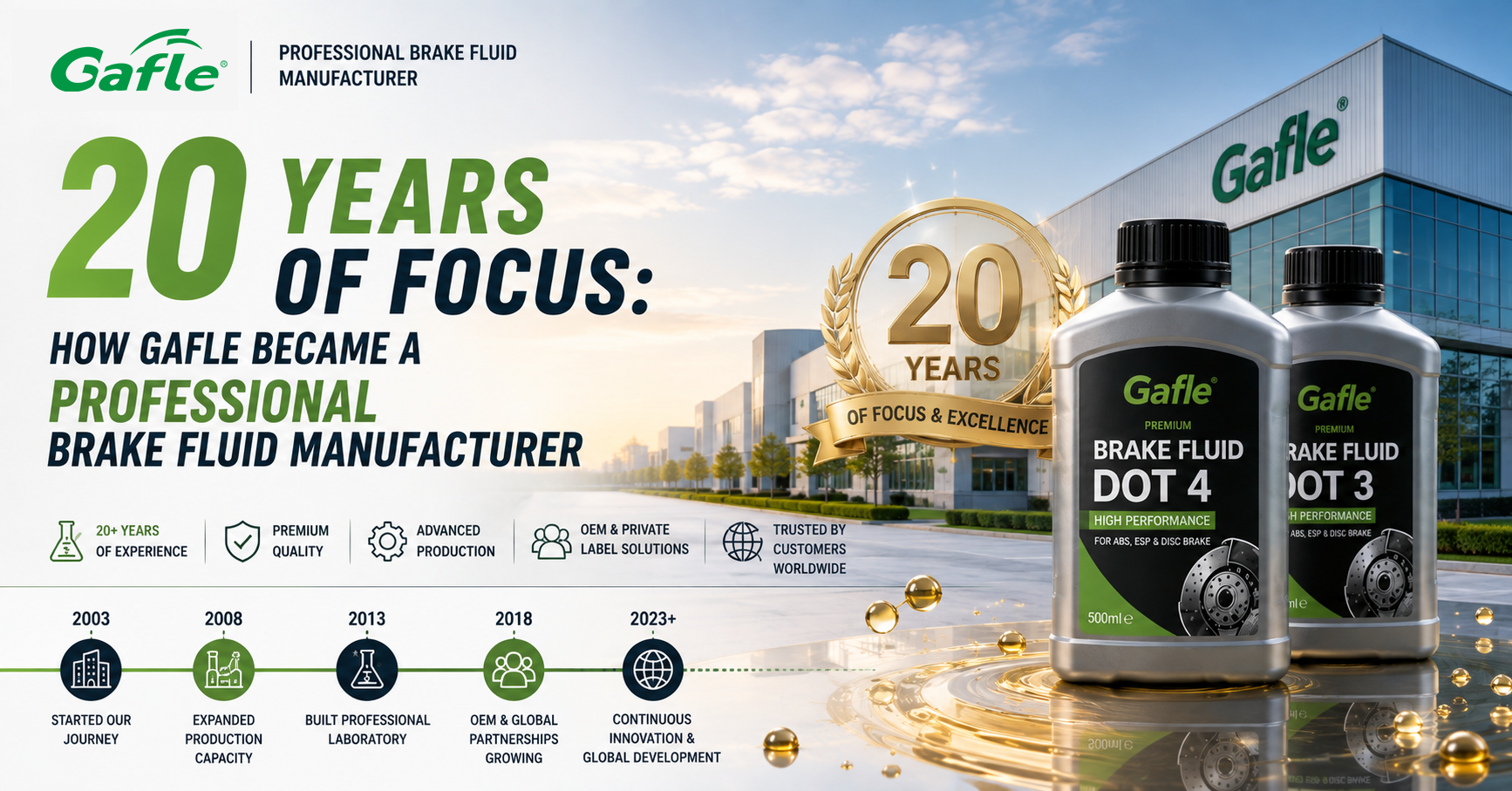
As a professional Brake Fluid Manufacturer, Gafle has specialized in brake fluid manufacturing for more than 20 years, supplying reliable DOT 3 and DOT 4 brake fluid solutions to customers around the world.
In this article, we'll explain what brake fluid is, how it works, why it's essential, and how to choose a reliable brake fluid supplier.
What Is Brake Fluid?
Brake fluid is a hydraulic fluid used in a vehicle's braking system.
Its primary function is to transfer the force generated when the driver presses the brake pedal into hydraulic pressure, allowing the braking system to slow down or stop the vehicle safely.
Unlike lubricants, brake fluid is specifically designed to:
- Transmit hydraulic pressure
- Maintain stable performance under high temperatures
- Protect brake system components
- Resist corrosion
- Support reliable braking performance
Because braking systems operate under demanding conditions, brake fluid must perform consistently even during repeated or emergency braking.
How Does Brake Fluid Work?
Understanding how brake fluid works helps explain why it is so important.
The braking process follows these basic steps:
Step 1: The Driver Presses the Brake Pedal
The driver's foot applies force to the brake pedal.
Step 2: Hydraulic Pressure Is Generated
The master cylinder converts pedal force into hydraulic pressure.
Step 3: Brake Fluid Transfers the Pressure
Brake fluid carries this hydraulic pressure through the brake lines.
Step 4: Brake Calipers or Wheel Cylinders Respond
The hydraulic pressure moves the braking components.
Step 5: The Vehicle Slows Down
Brake pads press against the brake discs (or brake shoes against brake drums), reducing vehicle speed.
Because brake fluid is responsible for transferring hydraulic force, its performance directly affects braking efficiency and safety.
Why Is Brake Fluid Important?
Many drivers underestimate the importance of brake fluid.
In reality, Why Is Brake Fluid Important is one of the most frequently asked questions in automotive maintenance.
Brake fluid performs several essential functions.
1. Transfers Braking Force
Brake fluid enables the braking system to convert pedal force into stopping power.
Without brake fluid, the braking system cannot function properly.
2. Maintains Reliable Performance Under High Temperatures
Braking generates significant heat.
Quality brake fluid is designed to maintain stable performance under high operating temperatures.
3. Protects Brake System Components
Brake fluid helps protect internal components from corrosion and wear, contributing to the long-term reliability of the braking system.
4. Supports Consistent Braking
Stable hydraulic performance helps provide predictable braking response in different driving conditions.
Because brake fluid is directly related to braking performance, regular maintenance is essential for vehicle safety.
Types of Brake Fluid
Different vehicles require different types of brake fluid.
The most common categories include:
DOT 3 Brake Fluid
Suitable for many passenger vehicles used under normal driving conditions.
DOT 4 Brake Fluid
Offers higher boiling points than DOT 3 and is commonly used in modern passenger vehicles, SUVs, and light commercial vehicles.
DOT 5 Brake Fluid
Silicone-based brake fluid used in certain specialized applications. It is generally not interchangeable with glycol-based DOT 3 or DOT 4 fluids.
DOT 5.1 Brake Fluid
A glycol-based fluid with higher performance characteristics than DOT 4 for applications requiring enhanced braking performance.
Always follow the vehicle manufacturer's recommendations when selecting brake fluid.
What Happens If Brake Fluid Is Not Replaced?
Brake fluid naturally absorbs moisture over time.
As moisture content increases, brake fluid performance can gradually decline.
Old brake fluid may contribute to:
- Reduced boiling point
- Less consistent braking performance
- Increased risk of vapor lock under severe conditions
- Internal corrosion within brake system components
Regular brake fluid replacement helps maintain reliable braking performance and supports the long-term condition of the braking system.
When Should Brake Fluid Be Replaced?
Replacement intervals may vary depending on the vehicle manufacturer and operating conditions.
However, many manufacturers recommend replacing brake fluid approximately:
- Every 2 years, or
- Every 40,000 kilometers (25,000 miles)
Vehicles operating in demanding conditions may require more frequent inspections or replacement.
Always refer to the vehicle owner's manual for the recommended maintenance schedule.
How to Choose High-Quality Brake Fluid
Not all brake fluids are manufactured to the same standards.
When selecting brake fluid, buyers should consider:
Product Quality
Choose products manufactured according to recognized quality management systems.
Manufacturing Experience
Experienced manufacturers often provide more consistent product quality.
Laboratory Testing
Professional testing helps verify product performance before shipment.
OEM Capability
Manufacturers offering OEM services typically have strong production and quality management capabilities.
Choosing products from an experienced Brake Fluid Manufacturer helps support product reliability and long-term customer confidence.
How to Choose the Best Brake Fluid Manufacturer in China
Many global buyers search online for the Best Brake Fluid Manufacturer in China when looking for reliable suppliers.
Rather than focusing only on price, buyers should evaluate manufacturers based on:
- Years of manufacturing experience
- Brake fluid research and development
- Laboratory testing capability
- Quality management systems
- OEM manufacturing experience
- Production consistency
- Export capability
- Technical support
- Long-term partnership potential
Manufacturers with strong technical expertise and standardized production systems are generally better equipped to deliver reliable products over the long term.
Why Choose Gafle?
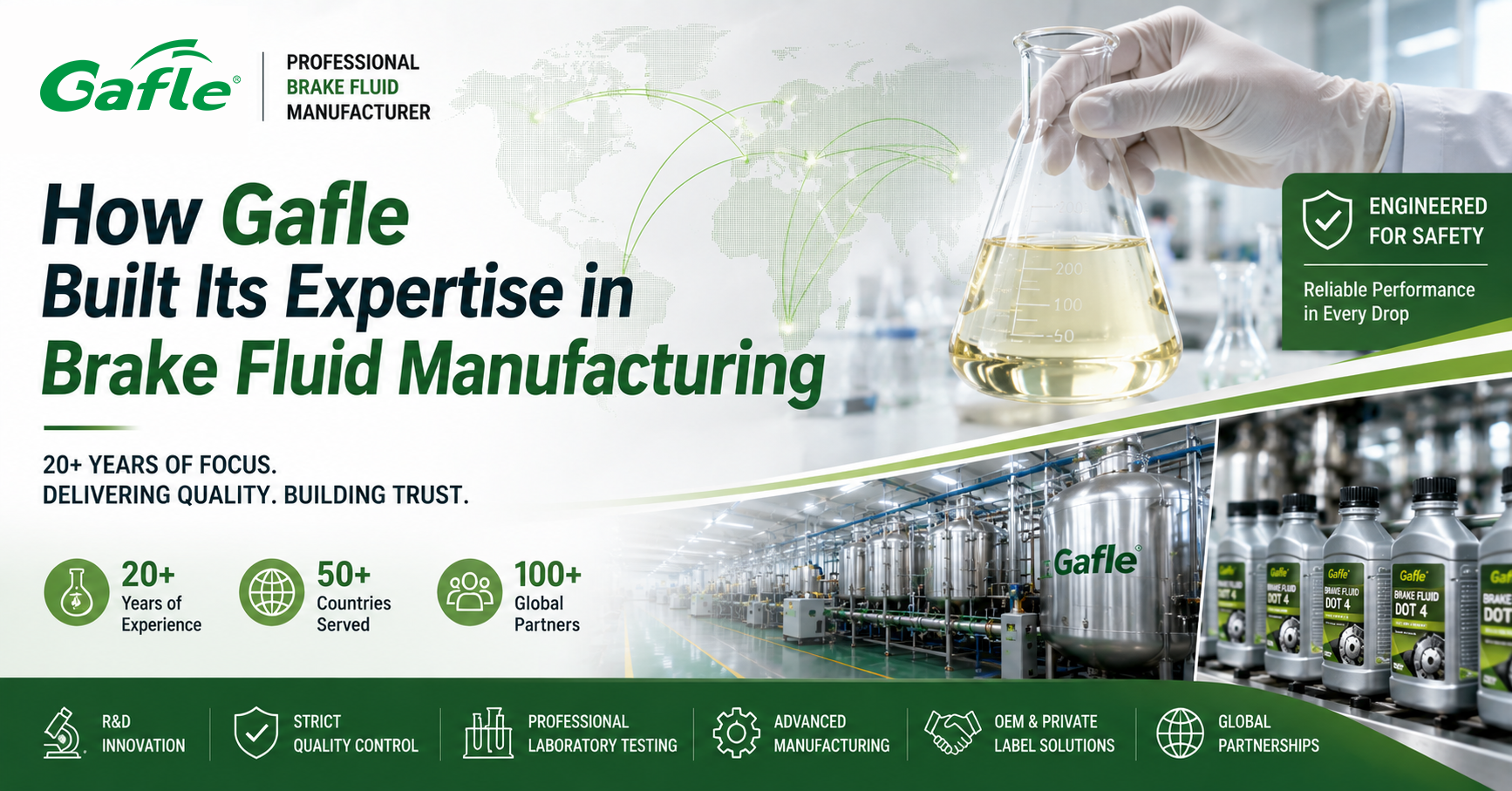
As a professional Brake Fluid Manufacturer, Gafle has focused exclusively on brake fluid manufacturing for more than 20 years.
Our strengths include:
- 20+ Years of Brake Fluid Manufacturing Experience
- Professional DOT 3 and DOT 4 Brake Fluid Production
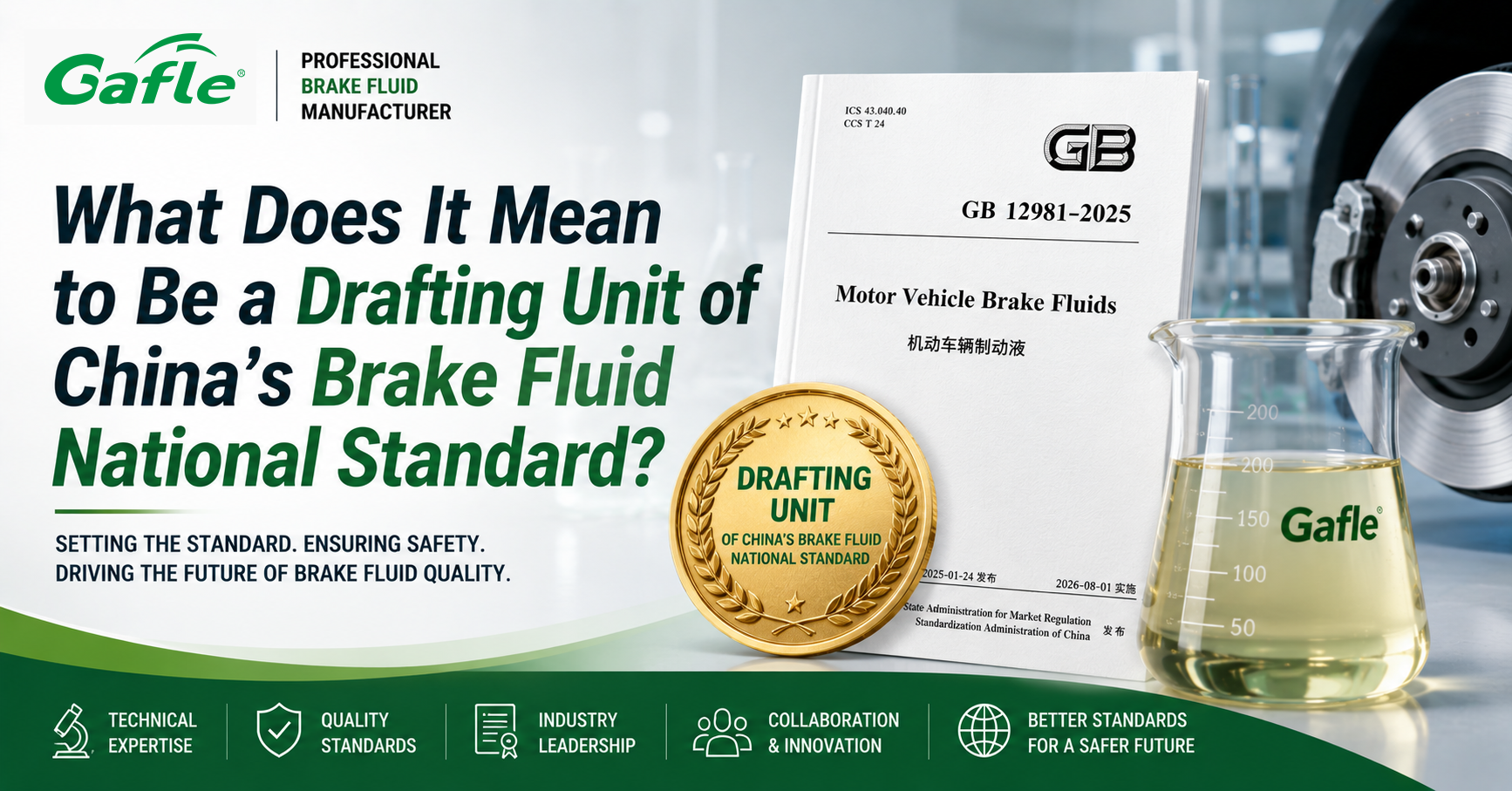
- Participation in Drafting China's National Brake Fluid Standard
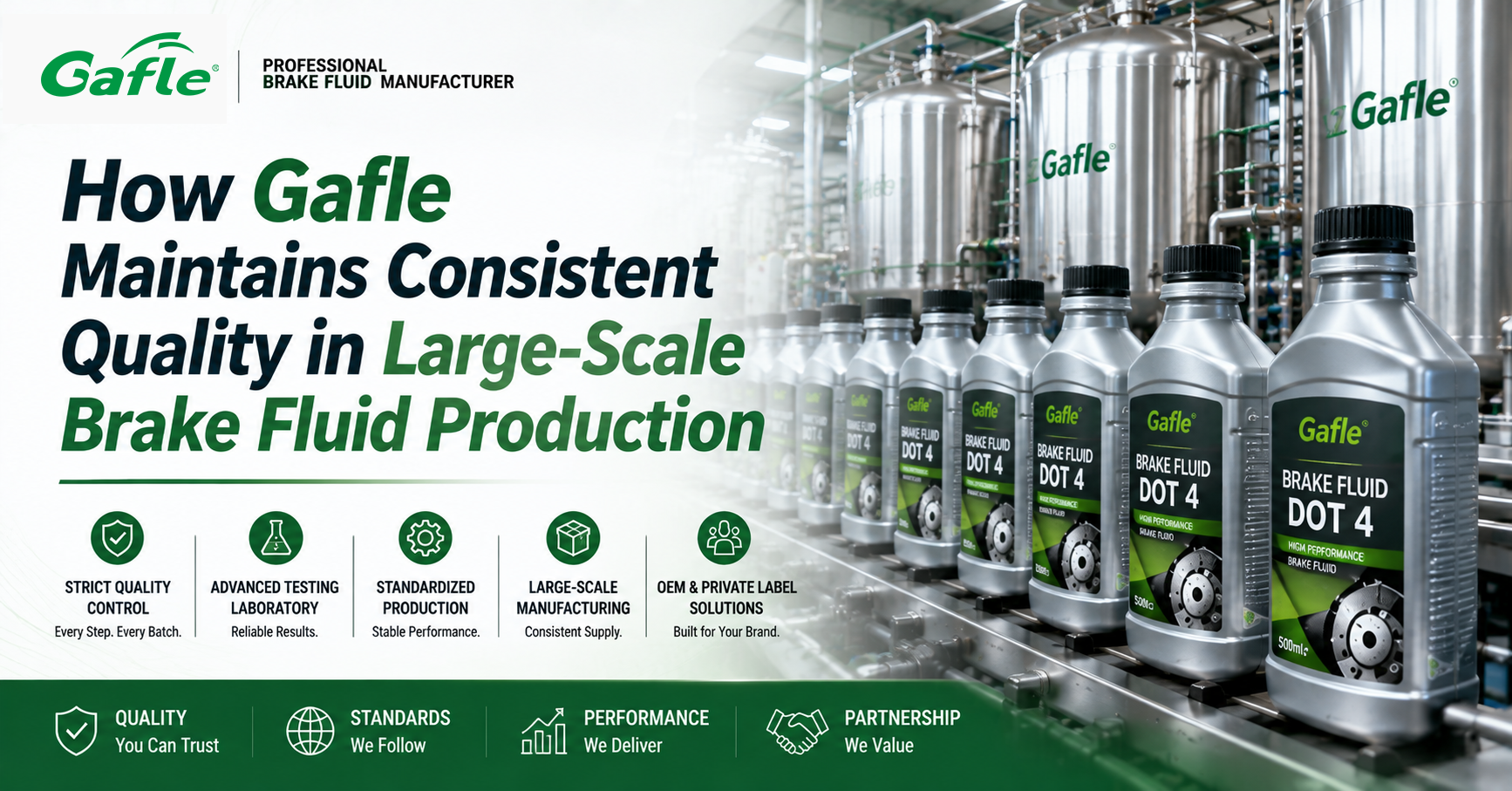
- Modern Manufacturing Facilities
- Professional Laboratory Testing
- Strict Quality Management
- IATF 16949 Quality Management System
- OEM Brake Fluid Manufacturing
- Private Label Solutions
- Customized Bottles, Labels, and Cartons
- Stable Production Capacity
- Global Export Experience
These strengths allow Gafle to provide dependable products and professional manufacturing services to customers worldwide.
Frequently Asked Questions
What is brake fluid?
Brake fluid is a hydraulic fluid that transfers force from the brake pedal to the braking system, allowing a vehicle to slow down or stop safely.
Why is brake fluid important?
Brake fluid transfers braking force, withstands high temperatures, protects brake system components, and helps maintain consistent braking performance.
How often should brake fluid be replaced?
Many vehicle manufacturers recommend replacing brake fluid every 2 years or 40,000 kilometers, although maintenance intervals may vary depending on the vehicle and operating conditions.
Can I mix different types of brake fluid?
Only mix brake fluids if the vehicle manufacturer specifically approves it. Different brake fluid types may have different chemical properties and performance characteristics.
How should buyers choose the Best Brake Fluid Manufacturer in China?
Instead of relying only on marketing claims, buyers should evaluate manufacturers based on manufacturing experience, laboratory capability, quality management, OEM expertise, export support, and long-term production reliability.
Conclusion
Although brake fluid is often overlooked during routine vehicle maintenance, it is one of the most important fluids in any braking system.
Understanding what brake fluid is, how it works, and why it is important helps vehicle owners maintain safer braking performance while helping distributors and importers choose reliable products for their markets.
For companies searching for the Best Brake Fluid Manufacturer in China, selecting a manufacturer with proven experience, professional laboratory testing, standardized quality management, and strong OEM capabilities can provide long-term confidence in product quality and supply stability.
With more than 20 years of dedicated brake fluid manufacturing experience, Gafle combines advanced production technology, professional research and development, strict quality management, OEM expertise, and global export capabilities to deliver reliable brake fluid solutions for customers around the world.
At Gafle, we believe that high-quality brake fluid is not just a product—it is an essential part of every safe journey.