logo

What Is Glycol-Based Brake Fluid, And Its Core Benefits

logo

Published

Oct 10 2026

  • Buying Guide

Follow us

what-is-glycol-based-brake-fluid-and-its-core-benefits
benefits of glycol brake fluid
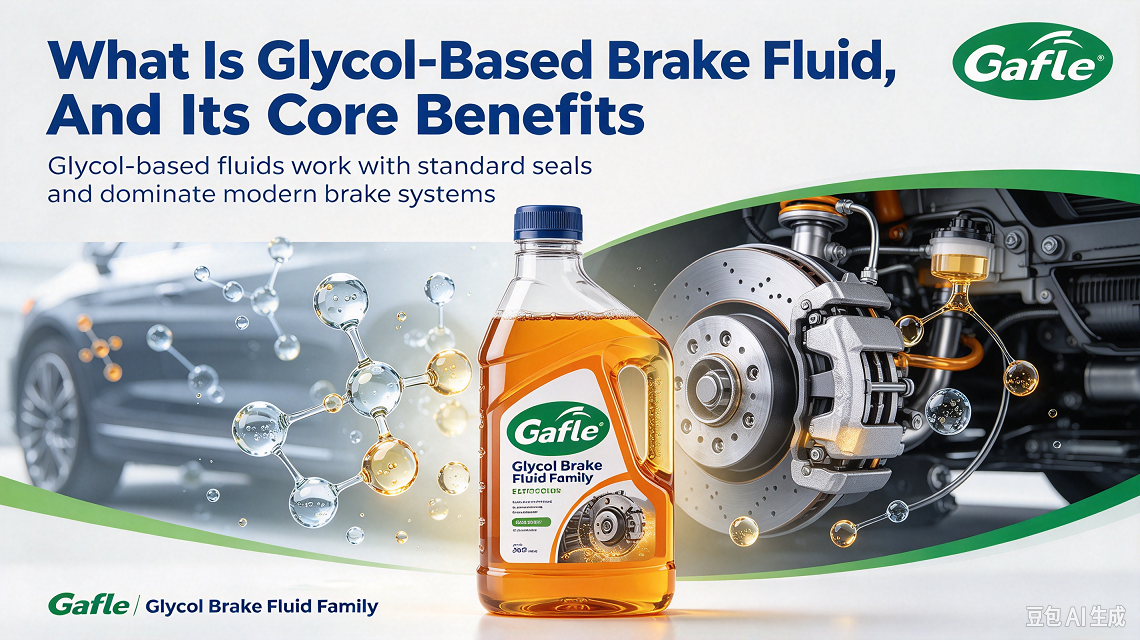
Glycol-based brake fluid accounts for more than 90% of the brake fluid used in passenger cars, light trucks and racing vehicles worldwide.
When customers ask about brake fluid classification, the first and most important category you need to introduce is glycol-based brake fluid. DOT3, DOT4, DOT5.1 and Gafle Racing325 all belong to the glycol family. Understanding its chemical characteristics helps you distinguish it from silicone DOT5 brake fluid and avoid costly cross-contamination mistakes.
The core chemical feature of glycol brake fluid is hygroscopy.
Glycol ether compounds naturally absorb water vapor from the air. This is both a designed feature and its main limitation. When tiny amounts of moisture enter the brake system through rubber hoses and seals, glycol blends evenly with water. Instead of forming separate water droplets that cause localized corrosion, the water spreads uniformly throughout the fluid. However, continuous moisture absorption will reduce boiling point gradually, which is the reason regular brake fluid replacement is required.
Glycol brake fluid has excellent compatibility with standard brake system rubber parts.
Most factory brake systems are fitted with EPDM rubber seals, hoses and cups. Glycol-based brake fluid is formulated to work with these rubber materials, without causing excessive swelling, hardening or cracking. This is the primary reason OEM manufacturers choose glycol brake fluid for mass production vehicles. In contrast, silicone DOT5 brake fluid is not compatible with many older rubber components and cannot be mixed with glycol products.
Wide application range covers daily cars, commercial fleets and motorsport.
Standard DOT3 glycol brake fluid fits older passenger vehicles with low braking load. DOT4 glycol brake fluid is the mainstream choice for modern sedans and SUVs. High-performance glycol products such as Gafle Racing325 are engineered for track racing, delivering outstanding thermal stability under extreme braking heat. All glycol brake fluid from Gafle complies with FMVSS 116 standards and passes strict compatibility and corrosion testing.
Key reminders when handling glycol brake fluid.
Glycol brake fluid can damage painted vehicle surfaces. Any spillage on car paint must be washed away immediately with clean water. For distributors, remind your retail clients of this important safety tip. Gafle supplies glycol brake fluid in multiple package sizes for retail and bulk wholesale. We can provide MSDS, TDS and certification documents for your import and sales.
Welcome to contact GAFLE for more information & cooperation!
peter
ZHEJIANG GAFLE AUTO CHEMICL CO.,LTD
Tel:86-579-8222 1665
Fax:86-579-8246 4690
Cel/Wechart:86-13335993986
E-mail:peter@gafle.net
Web:www.gafle.net
Featured Blogs
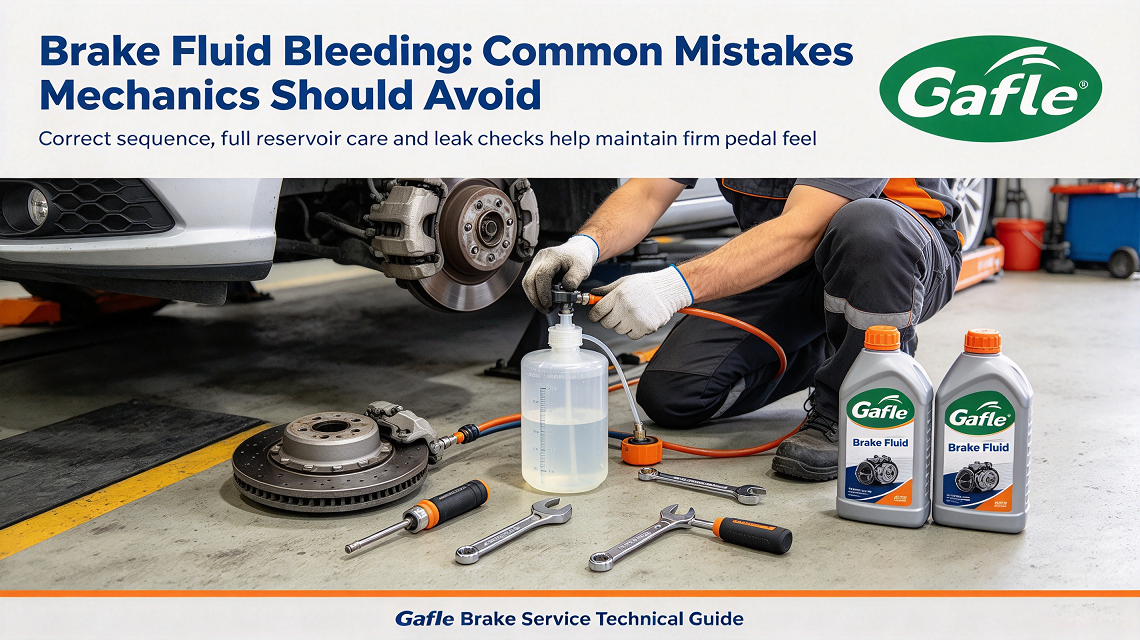
Brake Fluid Bleeding: Common Mistakes Mechanics Should Avoid

Brake Fluid Bleeding: Common Mistakes Mechanics Should Avoid

1. Brake fluid bleeding is the essential final step after brake fluid replacement, yet many technicians make small mistakes that compromise braking performance. 2. The most frequent mistake: incomplete bleeding sequence. 3. Another common error: letting the master cylinder reservoir run dry during bleeding. 4. Mixing different brake fluid brands or grades during bleeding. 5. Neglecting to inspect for leaks after bleeding. 6. For repair shop owners, standardizing bleeding procedures reduces comebacks.

Heavy-Duty Truck Brake Fluid: Special Requirements & Selection Rules

Heavy-Duty Truck Brake Fluid: Special Requirements & Selection Rules

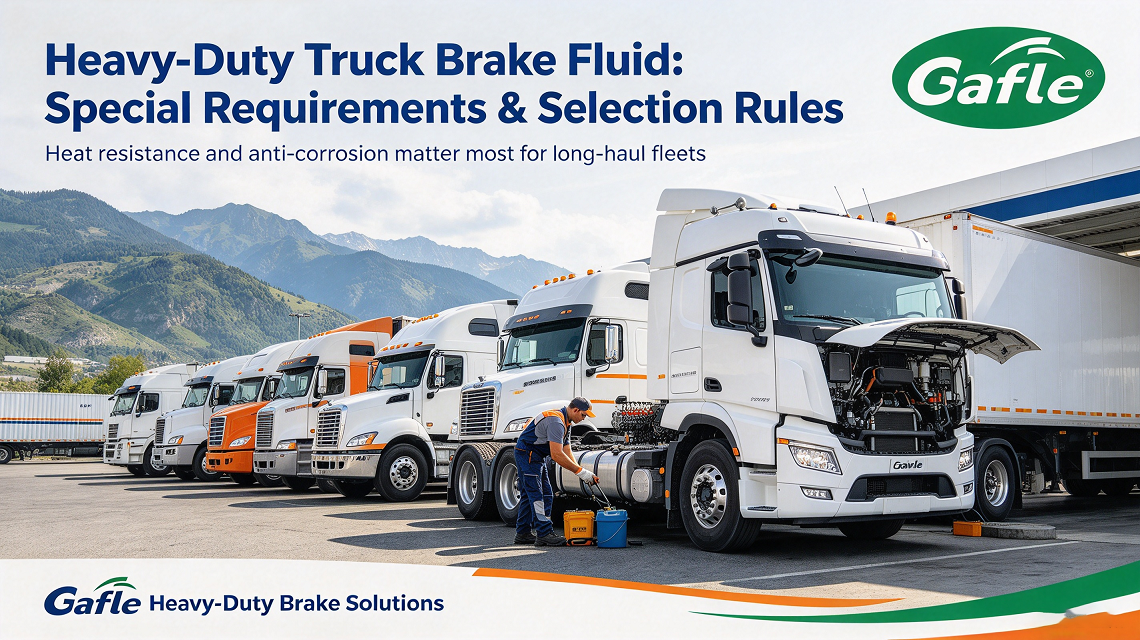
1. Heavy-duty commercial trucks place far higher stress on brake fluid compared with ordinary passenger cars. 2. Heat build-up is the biggest challenge for truck brake fluid. 3. Brake fluid grade recommendation for different heavy-duty use cases. 4. Brake system contamination risk in heavy-duty trucks. 5. Gafle supplies heavy-duty suitable brake fluid for global fleet partners.

Why Brake Fluid Colour Changes Over Service Life

Why Brake Fluid Colour Changes Over Service Life

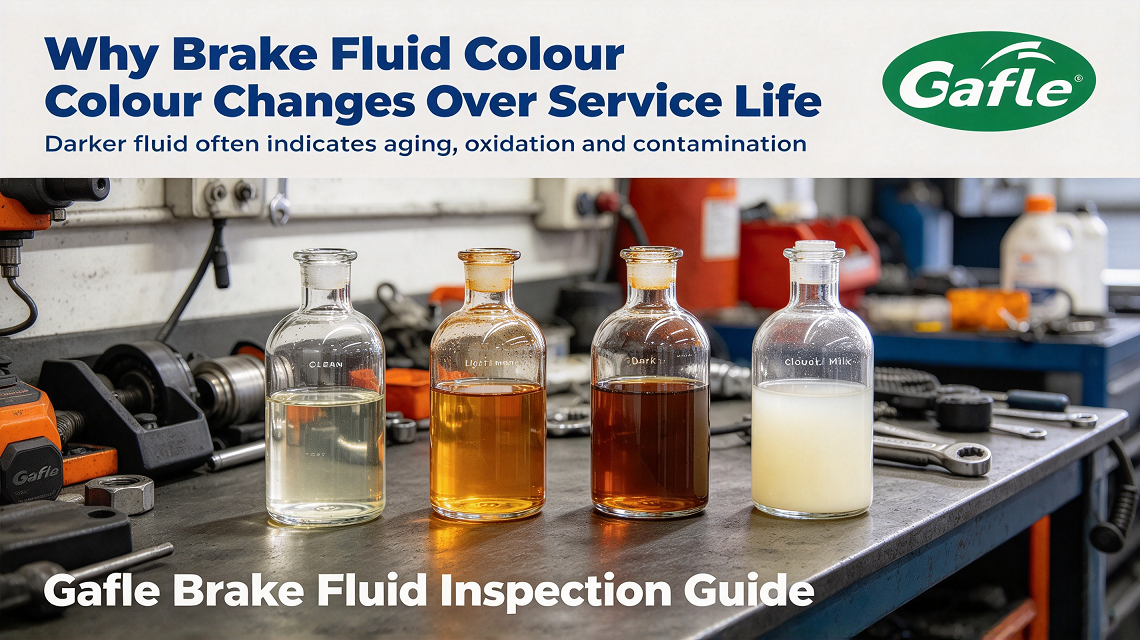
1. Fresh brake fluid is usually clear, pale yellow or light amber, and it gradually darkens as it ages inside the brake system. 2. New, unused Gafle brake fluid is translucent pale amber. 3. Dark brown or nearly black brake fluid signals severe aging and heavy contamination. 4. Cloudy or milky brake fluid is a clear sign of water contamination. 5. Important note for technicians:

How Brake Fluid Affects ABS and ESP System Performance

How Brake Fluid Affects ABS and ESP System Performance

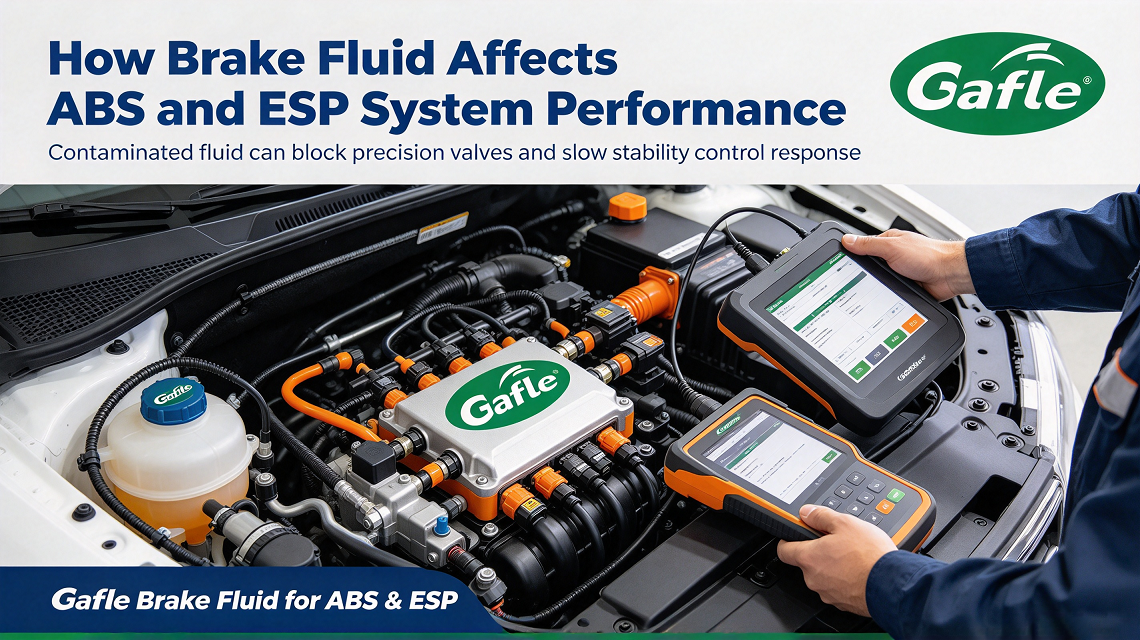
1. Modern vehicles equipped with ABS and ESP rely heavily on qualified brake fluid for normal operation. 2. ABS and ESP systems work by rapidly adjusting hydraulic pressure during wheel slip. 3. Moisture in brake fluid accelerates wear of ABS hydraulic components. 4. Brake fluid selection rules for ABS and ESP vehicles. 5. Business tips for auto aftermarket distributors.

What Is Glycol-Based Brake Fluid, And Its Core Benefits

What Is Glycol-Based Brake Fluid, And Its Core Benefits

1. Glycol-based brake fluid accounts for more than 90% of the brake fluid used in passenger cars, light trucks and racing vehicles worldwide. 2. The core chemical feature of glycol brake fluid is hygroscopy. 3. Glycol brake fluid has excellent compatibility with standard brake system rubber parts. 4. Wide application range covers daily cars, commercial fleets and motorsport. 5. Key reminders when handling glycol brake fluid.

The Impact of Altitude on Brake Fluid Performance

The Impact of Altitude on Brake Fluid Performance

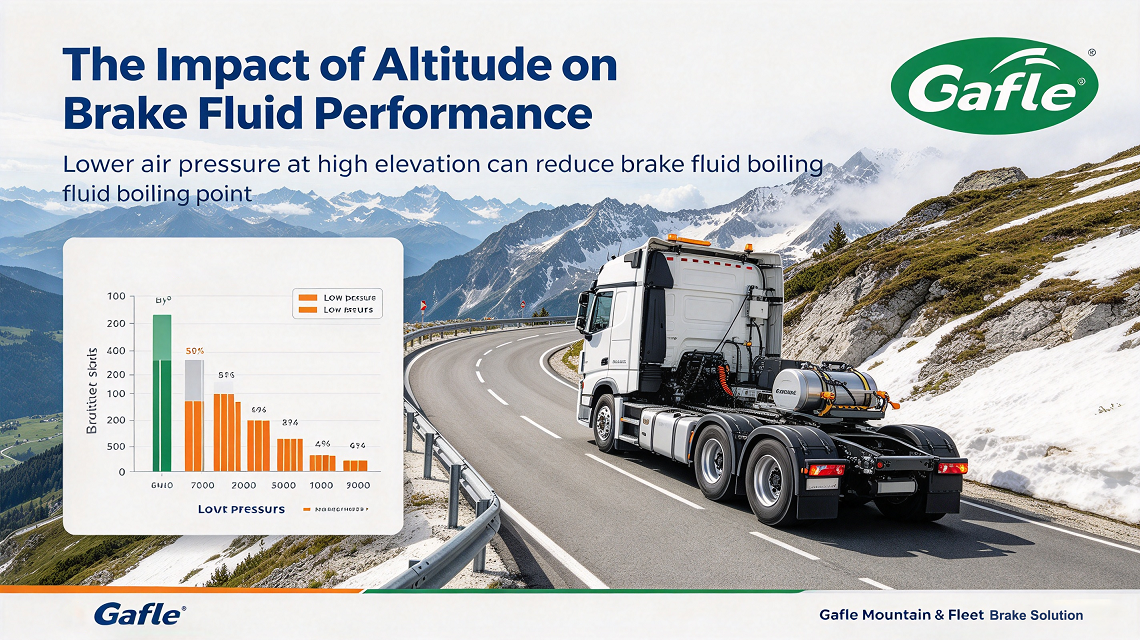
1. Many fleet owners and repair shops overlook the fact that altitude changes can alter the working performance of brake fluid. 2. Atmospheric pressure drops as elevation increases, lowering the boiling point of liquids including brake fluid. 3. Different brake fluid grades show different tolerance to high-altitude working conditions. 4. Maintenance adjustments for vehicles operating at high altitude. 5. Practical advice for auto aftermarket distributors.