logo

Why Brake Fluid Colour Changes Over Service Life

logo

Published

Oct 10 2026

  • Buying Guide

Follow us

why-brake-fluid-colour-changes-over-service-life
what does dark brown brake fluid mean
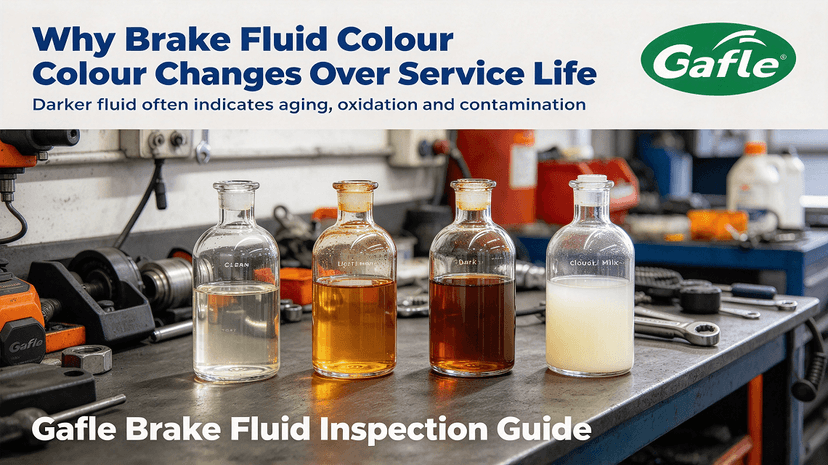
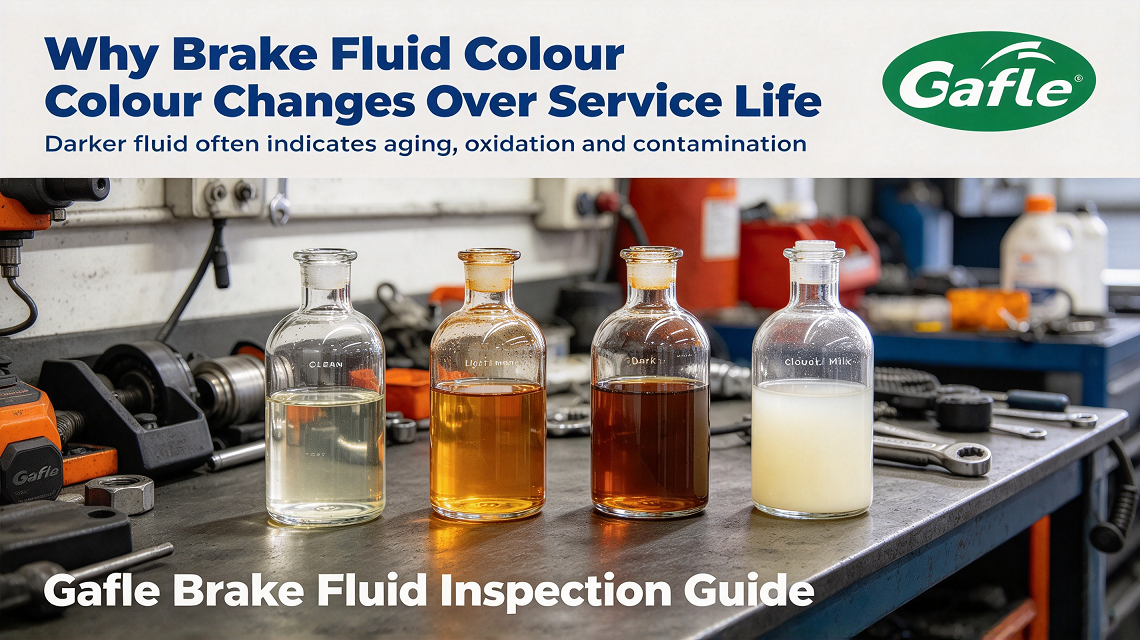
Fresh brake fluid is usually clear, pale yellow or light amber, and it gradually darkens as it ages inside the brake system.
Visual inspection of brake fluid color is a quick, simple method for mechanics to assess fluid condition. While color alone cannot replace professional water content testing, it serves as an important preliminary warning sign. Learning to read brake fluid color changes helps repair shops identify brake system issues at an early stage.
New, unused Gafle brake fluid is translucent pale amber.
It looks clean, without suspended particles or cloudiness. Once installed in the brake system, the fluid slowly picks up fine wear debris from metal brake components, rubber seal particles and oxidation products. These tiny contaminants tint the fluid, turning it from light amber to golden yellow after one year of use. At this stage, moisture content is still relatively low, and brake performance remains acceptable, but it is approaching the service window.
Dark brown or nearly black brake fluid signals severe aging and heavy contamination.
When brake fluid turns dark brown, it has absorbed large amounts of water, mixed with plenty of metal dust and rubber residue. The additives inside the fluid have already depleted. Corrosion begins to attack brake lines, calipers and the master cylinder. In this condition, the wet boiling point drops sharply, and the vehicle faces high risk of brake fade during hard braking. A full brake fluid flush is mandatory immediately.
Cloudy or milky brake fluid is a clear sign of water contamination.
If brake fluid appears milky, it means a large volume of water has entered the hydraulic circuit. Water can enter through damaged seals, loose pipe joints or worn rubber hoses. Milky brake fluid causes rapid corrosion and greatly reduces boiling point. This is a dangerous condition, and the system must be fully flushed and inspected for leaks without delay.
Important note for technicians:
Do not judge brake fluid condition by color only. Some high-performance brake fluids contain special additives that naturally have a deeper color when new. Always combine visual inspection with a brake fluid moisture tester. Distributors can stock brake fluid test tools together with Gafle brake fluid, offering a complete maintenance package to your workshop buyers.
Welcome to contact GAFLE for more information & cooperation!
peter
ZHEJIANG GAFLE AUTO CHEMICL CO.,LTD
Tel:86-579-8222 1665
Fax:86-579-8246 4690
Cel/Wechart:86-13335993986
E-mail:peter@gafle.net
Web:www.gafle.net
Featured Blogs
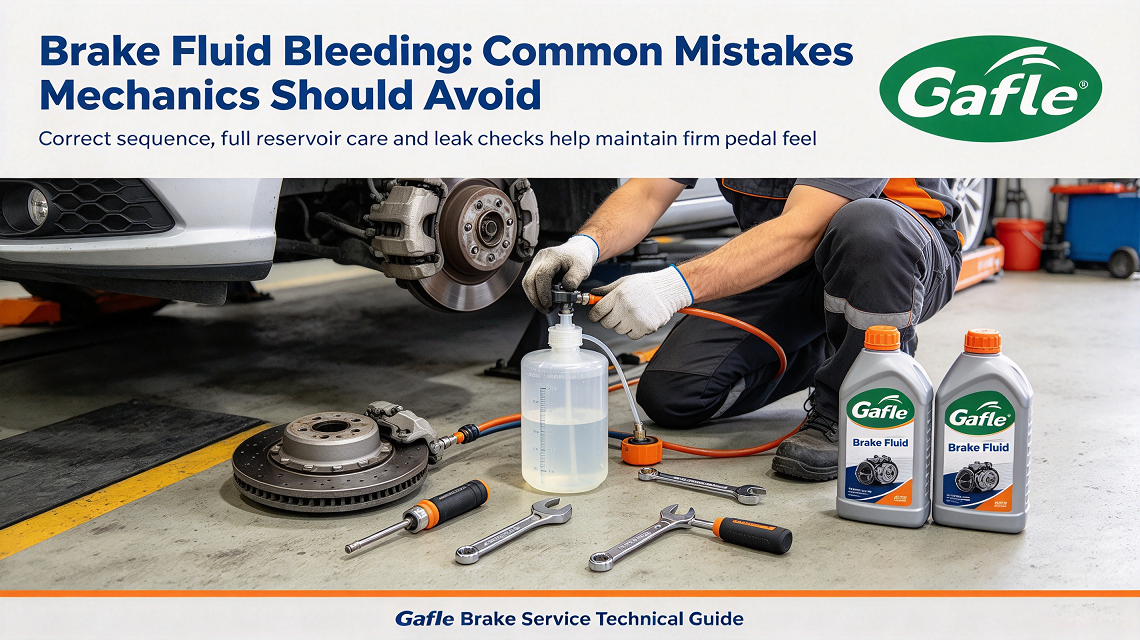
Brake Fluid Bleeding: Common Mistakes Mechanics Should Avoid

Brake Fluid Bleeding: Common Mistakes Mechanics Should Avoid

1. Brake fluid bleeding is the essential final step after brake fluid replacement, yet many technicians make small mistakes that compromise braking performance. 2. The most frequent mistake: incomplete bleeding sequence. 3. Another common error: letting the master cylinder reservoir run dry during bleeding. 4. Mixing different brake fluid brands or grades during bleeding. 5. Neglecting to inspect for leaks after bleeding. 6. For repair shop owners, standardizing bleeding procedures reduces comebacks.

Heavy-Duty Truck Brake Fluid: Special Requirements & Selection Rules

Heavy-Duty Truck Brake Fluid: Special Requirements & Selection Rules

1. Heavy-duty commercial trucks place far higher stress on brake fluid compared with ordinary passenger cars. 2. Heat build-up is the biggest challenge for truck brake fluid. 3. Brake fluid grade recommendation for different heavy-duty use cases. 4. Brake system contamination risk in heavy-duty trucks. 5. Gafle supplies heavy-duty suitable brake fluid for global fleet partners.

Why Brake Fluid Colour Changes Over Service Life

Why Brake Fluid Colour Changes Over Service Life

1. Fresh brake fluid is usually clear, pale yellow or light amber, and it gradually darkens as it ages inside the brake system. 2. New, unused Gafle brake fluid is translucent pale amber. 3. Dark brown or nearly black brake fluid signals severe aging and heavy contamination. 4. Cloudy or milky brake fluid is a clear sign of water contamination. 5. Important note for technicians:

How Brake Fluid Affects ABS and ESP System Performance

How Brake Fluid Affects ABS and ESP System Performance

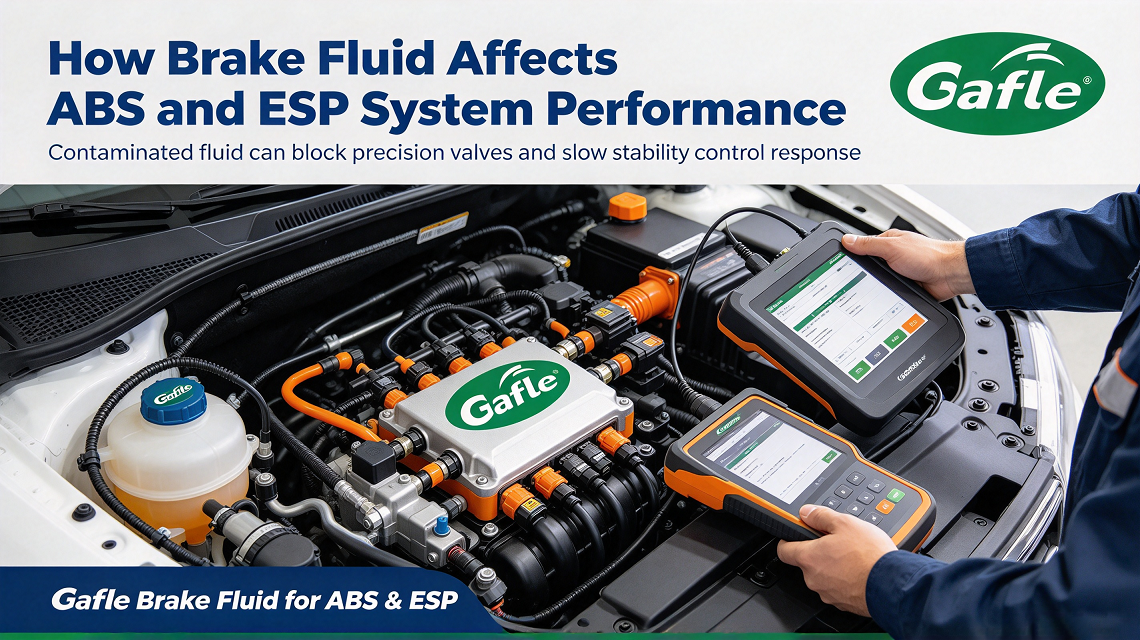
1. Modern vehicles equipped with ABS and ESP rely heavily on qualified brake fluid for normal operation. 2. ABS and ESP systems work by rapidly adjusting hydraulic pressure during wheel slip. 3. Moisture in brake fluid accelerates wear of ABS hydraulic components. 4. Brake fluid selection rules for ABS and ESP vehicles. 5. Business tips for auto aftermarket distributors.

What Is Glycol-Based Brake Fluid, And Its Core Benefits

What Is Glycol-Based Brake Fluid, And Its Core Benefits

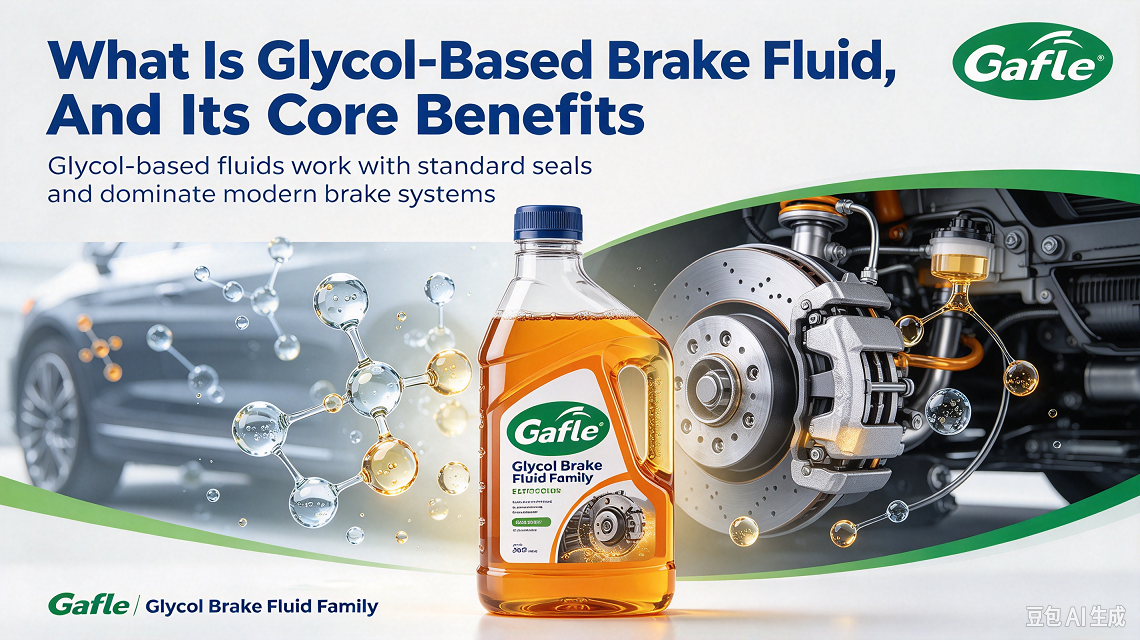
1. Glycol-based brake fluid accounts for more than 90% of the brake fluid used in passenger cars, light trucks and racing vehicles worldwide. 2. The core chemical feature of glycol brake fluid is hygroscopy. 3. Glycol brake fluid has excellent compatibility with standard brake system rubber parts. 4. Wide application range covers daily cars, commercial fleets and motorsport. 5. Key reminders when handling glycol brake fluid.

The Impact of Altitude on Brake Fluid Performance

The Impact of Altitude on Brake Fluid Performance

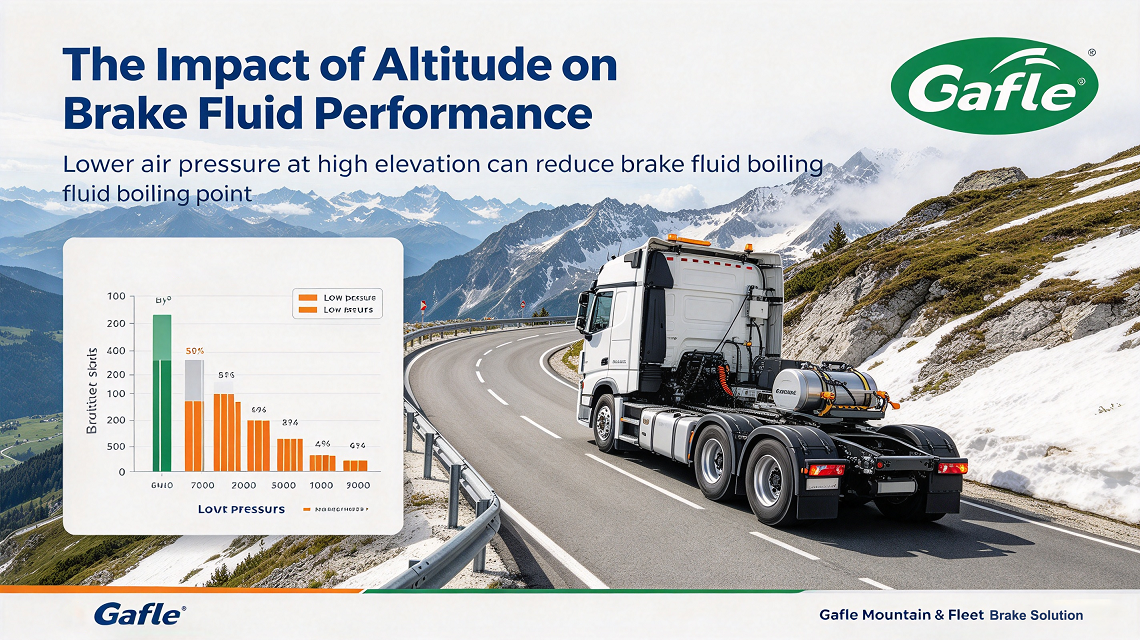
1. Many fleet owners and repair shops overlook the fact that altitude changes can alter the working performance of brake fluid. 2. Atmospheric pressure drops as elevation increases, lowering the boiling point of liquids including brake fluid. 3. Different brake fluid grades show different tolerance to high-altitude working conditions. 4. Maintenance adjustments for vehicles operating at high altitude. 5. Practical advice for auto aftermarket distributors.