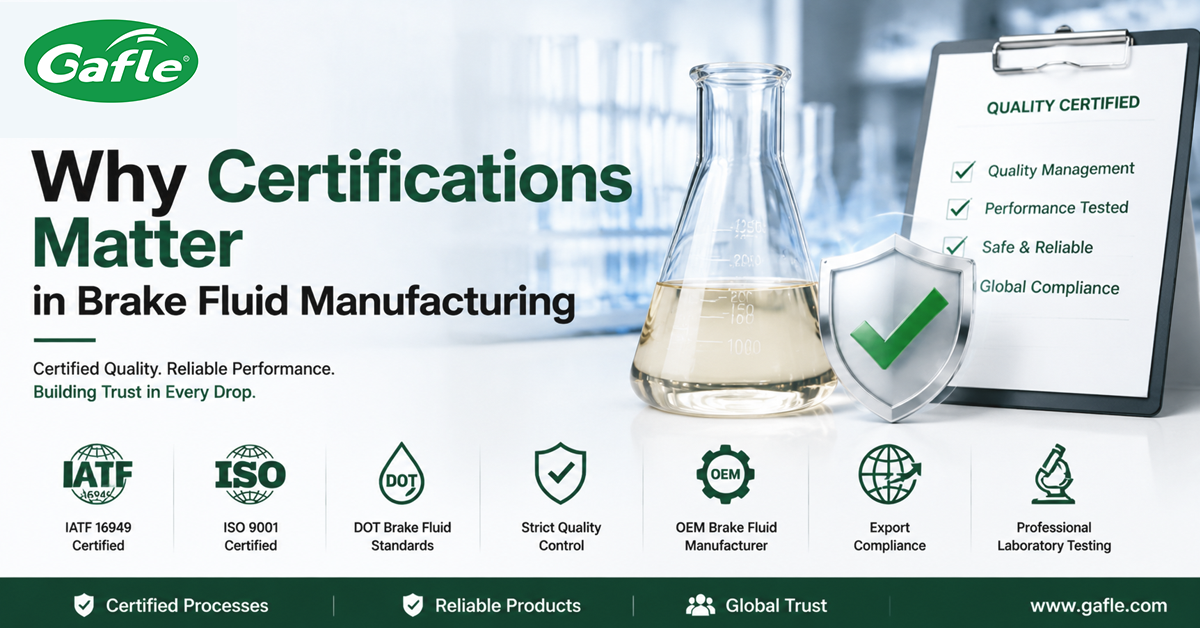
Why IATF 16949 Brake Fluid Certification Matters to Buyers
IATF 16949 Brake Fluid Certification is not just a line on a supplier brochure. For sourcing teams, it is usually the first signal that a brake fluid supplier understands automotive process discipline, traceability, and repeatable quality under pressure. That matters because brake fluid is not a commodity you can easily rework after a problem shows up in the field. If the fluid is inconsistent, the consequences can move fast: customer complaints, warranty exposure, and a lot of uncomfortable questions from OEM procurement or aftermarket distributors.
For engineers and product teams, the real issue is simpler. Can this supplier make the same brake fluid, to the same standard, run after run? Can they document it? Can they support export requirements without improvising? That is where certification and factory systems start to matter more than marketing claims.
What Buyers Usually Want to Know First
If you are comparing suppliers, the decision usually comes down to a few practical points:
- Does the factory run with automotive-grade quality management?
- Can the supplier support brake fluid quality control with meaningful records?
- Are DOT brake fluid standards being treated as a real production target, not a label slapped on later?
- Is the supplier set up for brake fluid export compliance and international shipments?
- Can they provide professional brake fluid laboratory testing when needed?
Those questions sound basic, but in practice they separate a serious OEM brake fluid manufacturer from a trading company or a small-blend operation that may not have the process depth a vehicle program needs.
What IATF 16949 Signals in a Brake Fluid Supply Chain
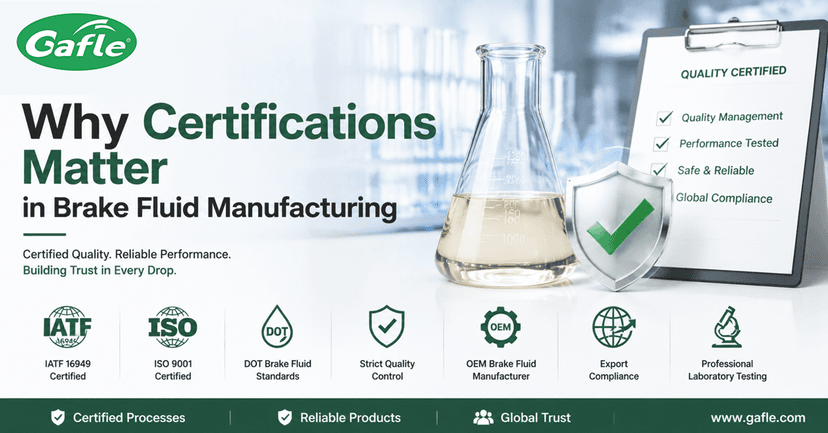
IATF 16949 is an automotive quality management framework. In brake fluid sourcing, it tells you the supplier is expected to manage process control, corrective actions, document control, traceability, and continuous improvement in a way that fits automotive expectations. That does not automatically guarantee perfect product performance, of course. No certification does. But it does reduce the odds of loose process discipline, which is where a lot of supply problems begin.
For buyers, the practical value is in the habits behind the certificate. A factory that operates to IATF-style discipline is more likely to treat raw material control, batch records, packaging checks, and change management as non-negotiable. That is especially important if the brake fluid is being supplied to multiple markets or private-label programs.
ISO Certified Brake Fluid Factory Versus Automotive-Focused Supplier
An ISO Certified Brake Fluid Factory may have a decent baseline quality system, but ISO certification alone does not always mean the supplier is prepared for automotive expectations. The difference is in the detail. Automotive buyers usually want tighter process control, more structured corrective action, and better alignment with OEM expectations.
That is one reason IATF 16949 Brake Fluid Certification carries more weight in this category. It helps buyers distinguish between general manufacturing capability and the specific discipline needed for brake fluid used in vehicle systems.
Brake Fluid Standards, Testing, and the Reality Behind the Label
DOT Brake Fluid Standards are still one of the most common reference points in sourcing discussions, especially for products aimed at North American and export markets. But a standards label is only as useful as the testing behind it.
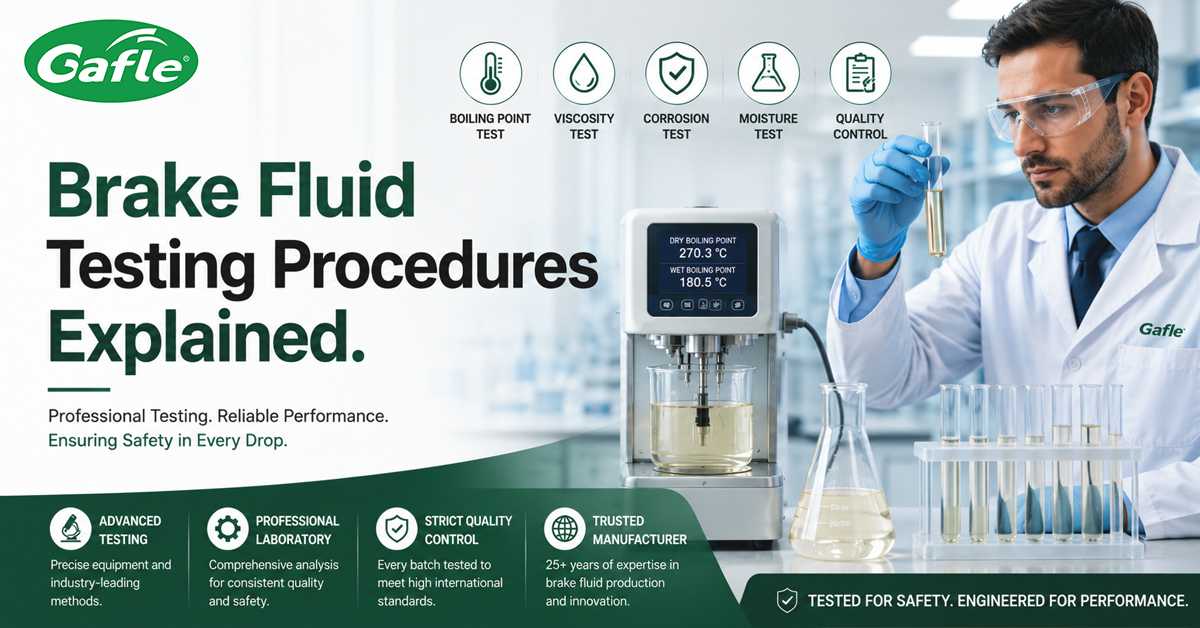
A supplier worth considering should be able to show how product batches are verified, whether through viscosity checks, moisture control, boiling point evaluation, or other relevant lab methods. Professional Brake Fluid Laboratory Testing is not just about passing a spec sheet; it is about proving the factory can hold that spec consistently.
This is where many buyer mistakes happen. They ask for a standard, receive a sample that looks fine, and assume the production lot will behave the same way. It often does not, unless the supplier has a disciplined system behind it.
What to Ask Before You Approve a Supplier
Before choosing an OEM Brake Fluid Manufacturer, ask for the following in plain terms:
1. Batch traceability
Can the factory trace raw materials and finished goods by lot number?
2. Quality control records
What brake fluid quality control checks are performed during production and release?
3. Export readiness
Does the supplier understand brake fluid export compliance for your target market?
4. Laboratory capability
Is there in-house or partner lab support for meaningful verification, not just basic paperwork?
5. Change management
How are formulation or process changes approved and communicated?
A cautious buyer will also ask how the factory handles packaging integrity, since brake fluid can be sensitive to contamination and moisture pickup during storage and transport. That detail gets overlooked more often than it should.
Why Some Buyers Specifically Look for Gafle Brake Fluid Factory
When buyers search for a specific supplier name such as Gafle Brake Fluid Factory, they are often looking for a factory that combines automotive process discipline with export-oriented production support. The name itself is less important than the underlying capability. Still, for sourcing managers, a factory that is positioned around brake fluid manufacturing, lab testing, and compliance support can shorten the approval cycle and reduce back-and-forth.
The useful question is not whether the supplier sounds established. It is whether they can support a program with stable output, documented controls, and the responsiveness that OEM and aftermarket channels demand.
Buyer Takeaway
If you are selecting a brake fluid supplier, use IATF 16949 as a filter, not a slogan. It helps you narrow the field to suppliers that are more likely to control variation, document their work, and support export requirements. Then verify the real details: testing, traceability, release procedures, and how they handle change.
That extra scrutiny may feel slow at the front end. It usually saves time later, which is when brake fluid problems become expensive.
Next Step for Sourcing Teams
If your team is evaluating an OEM brake fluid source, start by requesting the factory’s quality documentation, laboratory capability overview, and export support details. Compare those against your target market requirements and your own approval checklist. A serious supplier should be able to answer clearly, without overpromising.
If they cannot, keep looking.