
Brake Fluid Testing Procedures Explained
Brake fluid is one of the most critical components of a vehicle's braking system. It transfers hydraulic pressure from the brake pedal to the brake calipers or wheel cylinders, allowing drivers to stop their vehicles safely and efficiently. Because brake fluid directly affects braking performance, every batch must undergo strict testing before reaching the market.
At Gafle Brake Fluid Factory, quality is built into every stage of production. Through advanced laboratory equipment and comprehensive testing procedures, we help ensure that our brake fluid products deliver reliable performance under a wide range of driving conditions.
In this article, we'll explain the key brake fluid testing procedures and why they are essential for product quality and driving safety.
Brake Fluid Testing Procedures: Why Are They Important?
Professional brake fluid testing procedures help verify that products meet performance requirements and maintain stable braking characteristics throughout their service life.
Testing helps evaluate:
- Product consistency
- High-temperature performance
- Low-temperature stability
- Moisture resistance
- Corrosion protection
- Material compatibility
Comprehensive testing provides confidence for manufacturers, distributors, workshops, and drivers alike.
Brake Fluid Boiling Point Test
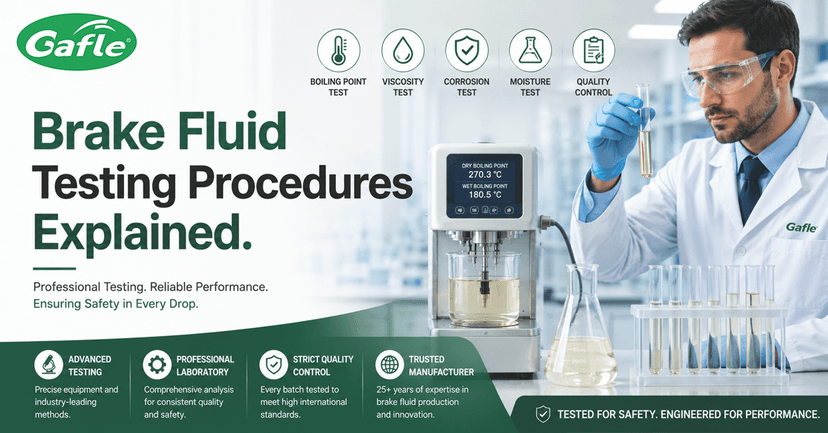
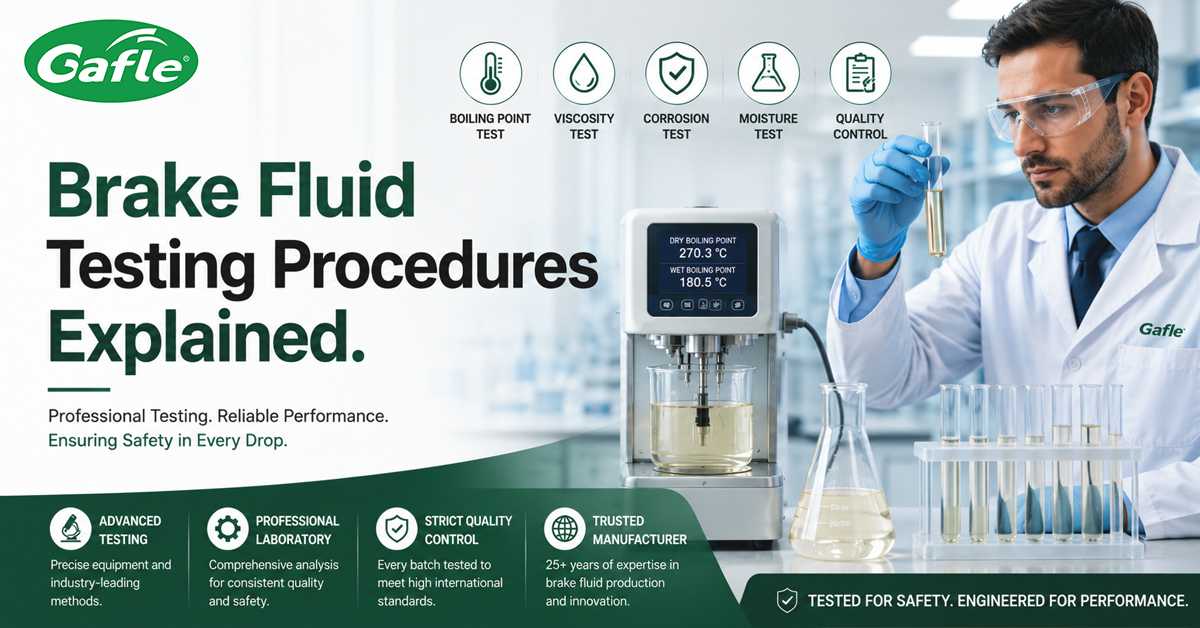
One of the most important evaluations is the brake fluid boiling point test.
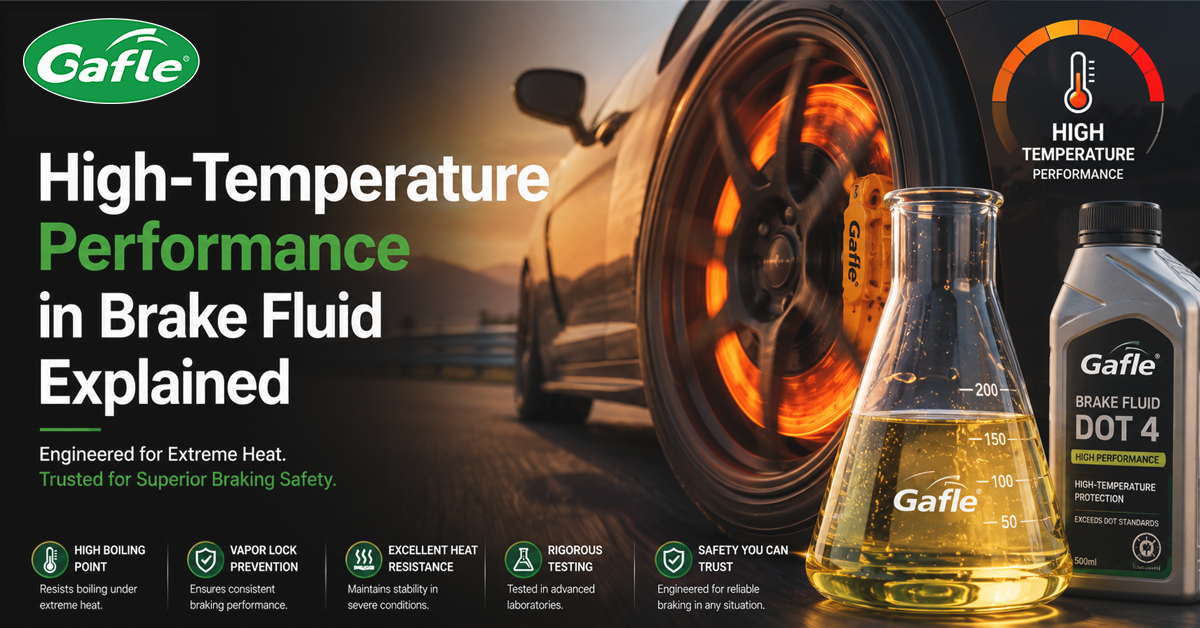
During braking, especially under demanding conditions, the braking system generates significant heat. Brake fluid must remain stable under these temperatures to maintain hydraulic pressure.
Dry Boiling Point
This test measures the boiling point of new brake fluid before moisture absorption.
A higher dry boiling point helps support:
- Heavy traffic driving
- Mountain roads
- High-speed braking
- Commercial vehicle operation
Wet Boiling Point
Brake fluid naturally absorbs moisture from the atmosphere over time.
Wet boiling point testing evaluates product performance after moisture exposure and helps determine long-term reliability.
At Gafle, boiling point testing is an essential part of our quality verification process.
Brake Fluid Quality Control Throughout Production
Reliable products depend on strict brake fluid quality control.
At Gafle Brake Fluid Factory, quality management covers every stage of manufacturing.
Raw Material Inspection
Incoming materials are carefully evaluated before production begins.
Formula Verification
Production formulas are monitored to maintain consistency.
Process Monitoring
Manufacturing conditions are continuously controlled during production.
Filling Inspection
Automatic filling systems help improve accuracy and reduce contamination risks.
Final Product Testing
Finished products undergo laboratory analysis before shipment.
This comprehensive quality control system helps ensure stable product performance from batch to batch.
Professional Brake Fluid Laboratory
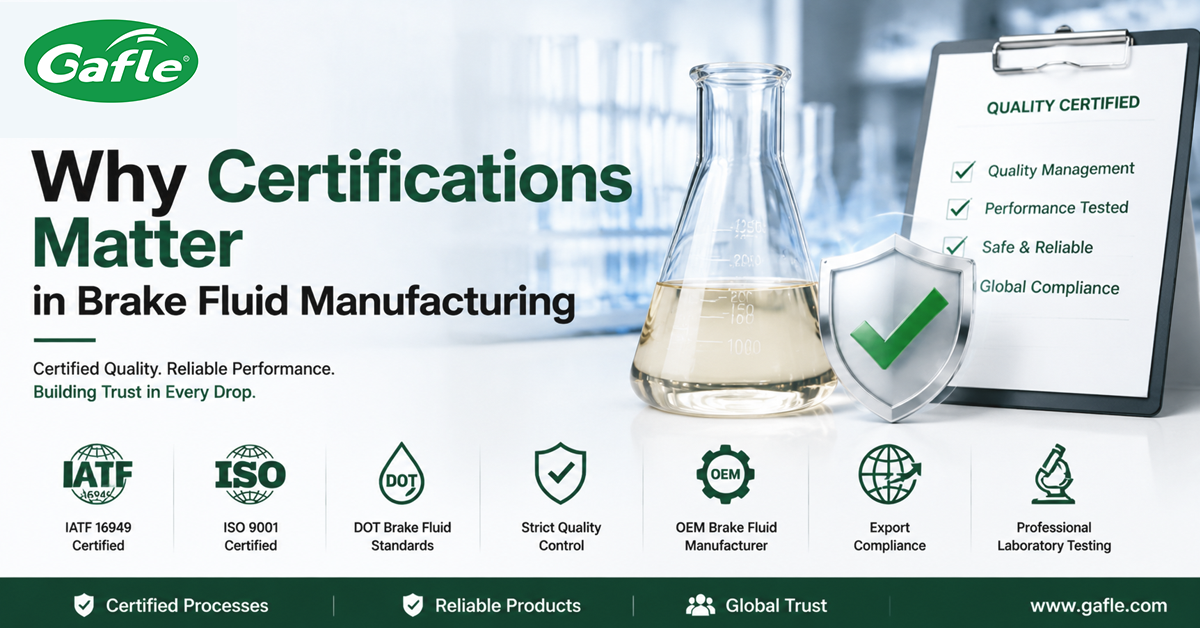
A modern professional brake fluid laboratory plays a key role in product development and quality assurance.
Our laboratory supports:
- Product research
- Formula improvement
- Raw material evaluation
- Quality verification
- Performance analysis
Laboratory testing helps identify opportunities for continuous improvement while maintaining product consistency and reliability.
Brake Fluid Viscosity Testing
Another important procedure is brake fluid viscosity testing.
Viscosity measures how easily brake fluid flows under different temperatures.
Low Temperature Testing
Brake fluid should remain fluid in cold environments to ensure quick hydraulic response.
High Temperature Stability
Brake fluid should maintain stable flow characteristics under high operating temperatures.
Proper viscosity helps support:
- Fast brake response
- Stable pedal feel
- Reliable hydraulic pressure
- Consistent braking performance
This is particularly important for vehicles operating in regions with extreme climate conditions.
Advanced Brake Fluid Performance Testing
Beyond basic laboratory evaluations, Gafle conducts advanced brake fluid performance testing to assess overall product reliability.
These tests may include:
Corrosion Resistance Testing
Evaluating the fluid's ability to protect brake system components.
Material Compatibility Testing
Checking compatibility with rubber seals and braking system materials.
Moisture Resistance Evaluation
Assessing long-term stability as moisture is absorbed.
Product Stability Testing
Verifying formula consistency and long-term storage performance.
Comprehensive testing helps ensure dependable braking performance across various driving environments.
How Testing Supports Vehicle Safety
Brake fluid quality directly affects braking system performance.
Reliable testing helps support:
- Stable braking response
- Consistent hydraulic pressure
- Better high-temperature performance
- Improved moisture resistance
- Long-term brake system protection
For automotive distributors and workshops, choosing professionally tested brake fluid helps improve customer confidence and product reliability.
Gafle Brake Fluid Factory: Committed to Quality
For over 25 years, Gafle Brake Fluid Factory has focused on producing high-quality brake fluid products for global markets.
Our manufacturing philosophy combines:
Advanced Laboratory Testing
Continuous product verification and quality improvement.
Strict Manufacturing Control
Stable production systems designed for product consistency.
Professional Quality Management
Careful monitoring throughout every production stage.
Continuous Innovation
Investing in technology and research to improve brake fluid performance.
These efforts help us provide reliable brake fluid solutions for customers worldwide.
Why Professional Testing Matters for Global Customers
International customers increasingly expect manufacturers to demonstrate strong testing capabilities.
Professional testing provides benefits such as:
- Greater product consistency
- Improved customer confidence
- Better market competitiveness
- Enhanced product reliability
- Long-term business partnerships
At Gafle, we believe that thorough testing is one of the most effective ways to support product quality and customer satisfaction.
Looking Toward the Future
As vehicle technology continues to advance, brake fluid performance requirements will become even more demanding.
Gafle remains committed to:
- Expanding laboratory capabilities
- Enhancing testing technology
- Improving manufacturing processes
- Supporting higher industry standards
- Developing innovative brake fluid solutions
Our goal is to continue delivering products that meet the evolving needs of global automotive markets.
Conclusion
Brake fluid testing is essential for ensuring product quality, braking performance, and driving safety. Through boiling point testing, viscosity analysis, quality control procedures, laboratory research, and advanced performance evaluations, manufacturers can help provide reliable products that drivers can trust.
At Gafle Brake Fluid Factory, over 25 years of manufacturing experience, professional laboratory capabilities, and strict quality management systems allow us to deliver dependable brake fluid solutions to customers around the world.
Because at Gafle, we believe that better testing leads to better quality—and better quality helps make automotive life safer.