
High-Temperature Performance in Brake Fluid Explained
When drivers think about brake safety, they often focus on brake pads, rotors, or tires. However, one of the most critical factors affecting braking performance is brake fluid—especially its ability to withstand high temperatures.
During repeated braking, steep downhill driving, heavy traffic, or commercial transportation, brake systems generate significant heat. If brake fluid cannot maintain stable performance under these conditions, braking efficiency may decrease, affecting overall vehicle safety.
At Gafle Brake Fluid Factory, we have over 25 years of experience producing high-quality brake fluid solutions. Through advanced manufacturing technology and professional laboratory testing, we help ensure reliable braking performance even under demanding operating conditions.
Why High Temperature Brake Fluid Matters
A quality high temperature brake fluid is designed to maintain stable hydraulic performance when braking systems generate excessive heat.
High-temperature performance is particularly important for:
- Urban stop-and-go traffic
- Mountain driving
- Commercial vehicles
- High-speed highway driving
- Heavy-load transportation
- Performance vehicles
When brake fluid maintains its stability, drivers benefit from:
- Consistent brake response
- Reliable hydraulic pressure
- Improved braking confidence
- Enhanced vehicle safety
Understanding Brake Fluid Boiling Point
One of the most important characteristics of brake fluid is its brake fluid boiling point.
Brake fluid absorbs heat generated during braking. If the temperature becomes too high and exceeds the fluid's boiling point, vapor bubbles may form inside the braking system.
Two important measurements are commonly evaluated:
Dry Boiling Point
The boiling point of fresh brake fluid before significant moisture absorption.
A higher dry boiling point supports better performance during demanding braking conditions.
Wet Boiling Point
Brake fluid naturally absorbs moisture over time.
Wet boiling point testing evaluates long-term product performance after moisture exposure.
Both measurements are important indicators of brake fluid quality and durability.
Brake Fluid Vapor Lock Prevention
One of the main reasons high-temperature performance matters is brake fluid vapor lock prevention.
What Is Vapor Lock?
When brake fluid reaches excessive temperatures, portions of the liquid may turn into vapor.
Unlike liquid brake fluid, vapor can compress.
This may lead to:
- Soft brake pedal feel
- Reduced braking response
- Longer stopping distances
- Less stable braking performance
How High-Quality Brake Fluid Helps
Brake fluids with higher boiling points and stable formulations help reduce the likelihood of vapor formation during demanding driving conditions.
This contributes to safer and more reliable braking performance.
Benefits of High Performance Brake Fluid
Modern vehicles often place greater demands on braking systems, increasing the need for high performance brake fluid.
High-performance brake fluid typically offers:
Higher Thermal Stability
Maintains performance under elevated temperatures.
Better Moisture Resistance
Helps preserve braking performance over time.
Stable Hydraulic Pressure
Supports consistent brake response.
Long-Term Reliability
Maintains product quality throughout service life.
These characteristics are valuable for both passenger vehicles and commercial transportation.
Brake Fluid Heat Resistance
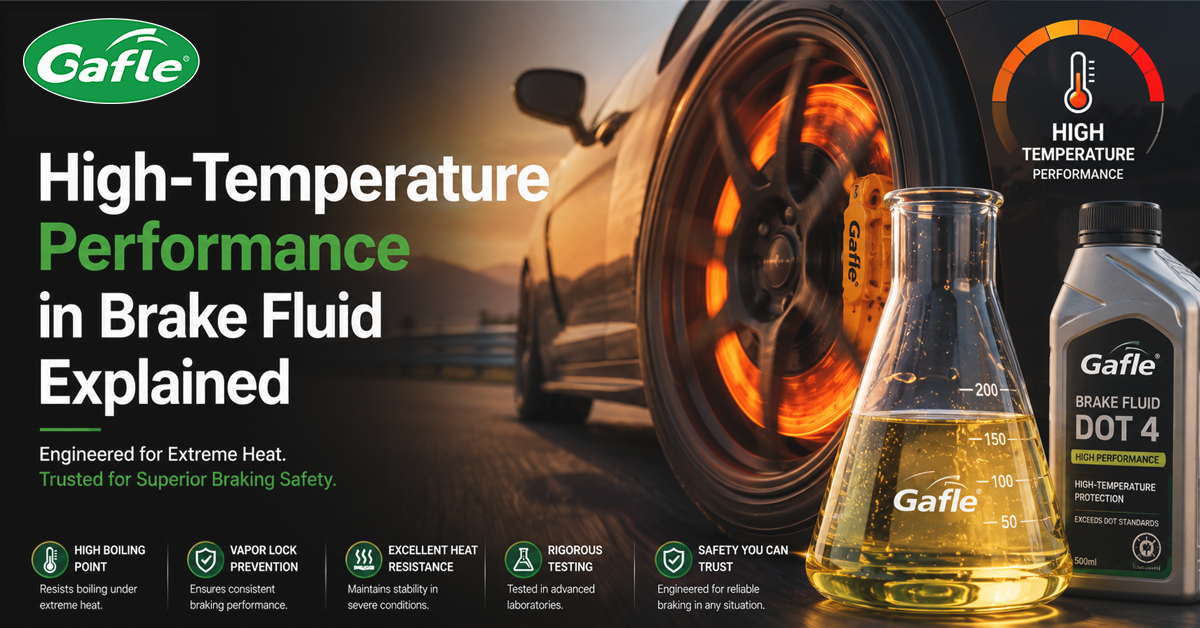
Strong brake fluid heat resistance is essential for maintaining braking safety.
Brake fluid may experience high temperatures during:
- Long downhill descents
- Heavy traffic congestion
- Continuous braking
- Hot climate operation
- Heavy-load vehicle use
Heat-resistant brake fluid helps:
- Maintain hydraulic efficiency
- Reduce braking instability
- Improve system reliability
- Support safer vehicle operation
This is especially important in regions with high ambient temperatures.
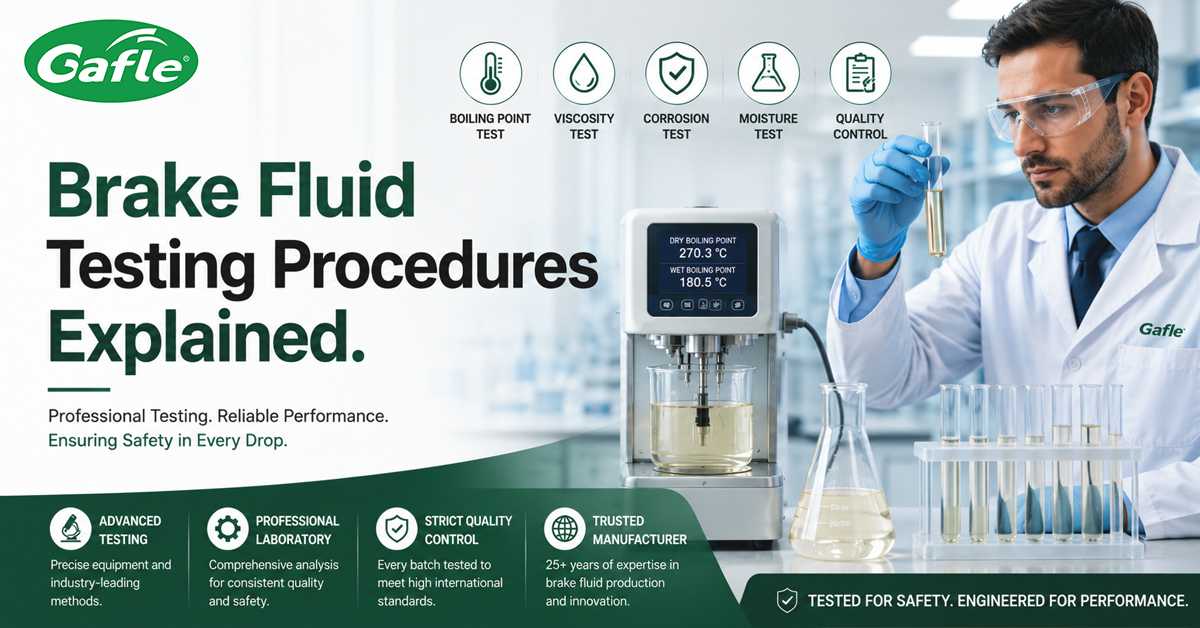
Brake Fluid Performance Testing
At Gafle, product reliability is supported by comprehensive brake fluid performance testing.
Our laboratory procedures help verify product quality and consistency.
Boiling Point Evaluation
Testing thermal stability under controlled conditions.
Viscosity Testing
Checking fluid performance across different temperature ranges.
Moisture Resistance Testing
Evaluating long-term product stability.
Corrosion Protection Testing
Assessing compatibility with brake system components.
Product Consistency Verification
Helping ensure stable quality from batch to batch.
Professional testing helps provide confidence for distributors, workshops, and end users.
Why High-Temperature Performance Matters for Global Markets
Different regions place different demands on brake fluid products.
Hot Climate Regions
High ambient temperatures increase thermal stress on braking systems.
Mountain Areas
Frequent braking generates additional heat.
Urban Traffic
Continuous stop-and-go driving increases brake temperatures.
Commercial Transportation
Heavy vehicles require stable braking performance during extended operation.
Choosing brake fluid with excellent high-temperature performance helps improve safety across these diverse environments.
Gafle Brake Fluid Factory: Built for Performance
For more than 25 years, Gafle Brake Fluid Factory has focused on developing reliable brake fluid solutions for global automotive markets.
Our manufacturing philosophy includes:
Advanced Laboratory Testing
Continuous product evaluation and improvement.
Strict Quality Control
Comprehensive quality management throughout production.
Modern Manufacturing Technology
Stable production systems designed for consistency.
OEM & ODM Services
Flexible solutions for automotive brands and distributors.
International Export Experience
Serving customers across global markets with dependable brake fluid products.
Supporting Safer Driving Through Innovation
At Gafle, we believe that brake fluid should perform reliably under real-world conditions.
Our continuous investment in:
- Product research
- Laboratory capabilities
- Manufacturing technology
- Quality management
helps us improve brake fluid performance and support safer braking systems.
Our mission remains simple:
Making Automotive Life Safer.
Conclusion
High-temperature performance is one of the most important characteristics of modern brake fluid. Stable boiling points, effective vapor lock prevention, excellent heat resistance, and comprehensive laboratory testing all contribute to reliable braking performance and improved vehicle safety.
At Gafle Brake Fluid Factory, over 25 years of manufacturing experience, advanced testing capabilities, and strict quality management systems allow us to provide high-performance brake fluid solutions for customers around the world.
Whether for passenger vehicles, commercial fleets, or demanding driving environments, Gafle remains committed to delivering reliable brake fluid products that help ensure safer journeys—because better performance under heat means greater confidence on the road.