
 Why Does Braking Performance Drop After Repeated Hard Braking?
Have you ever noticed that your brakes feel less responsive after repeated hard braking? Whether you're driving down a long mountain road, towing a heavy load, navigating stop-and-go traffic, or participating in high-performance driving, repeated heavy braking can generate significant heat that affects braking performance.
This phenomenon is commonly known as Brake Fade, and it is one of the most important topics in brake system safety. While brake pads, discs, and calipers all contribute to braking performance, the quality of the brake fluid also plays a critical role in maintaining consistent braking under high-temperature conditions.
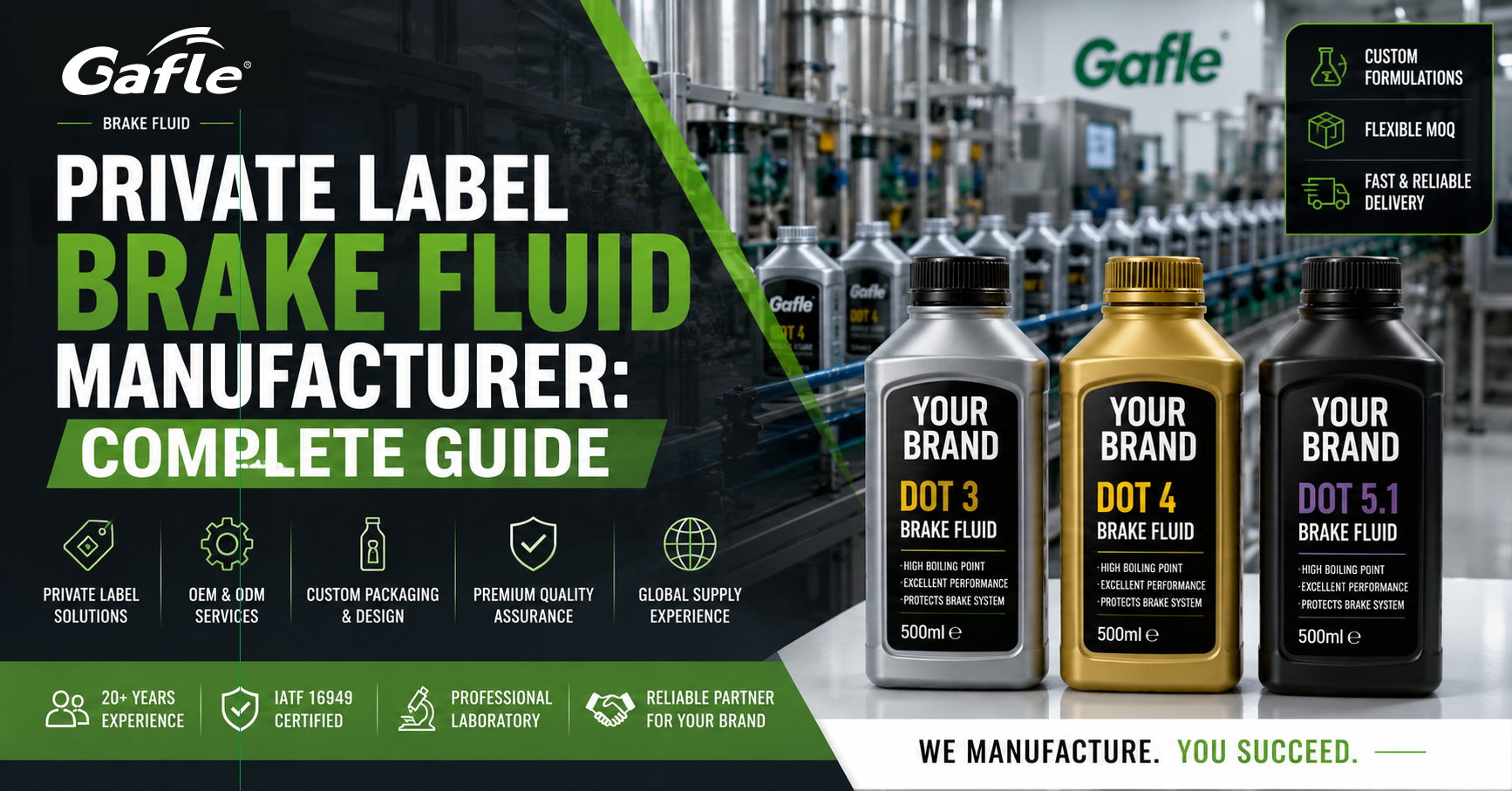
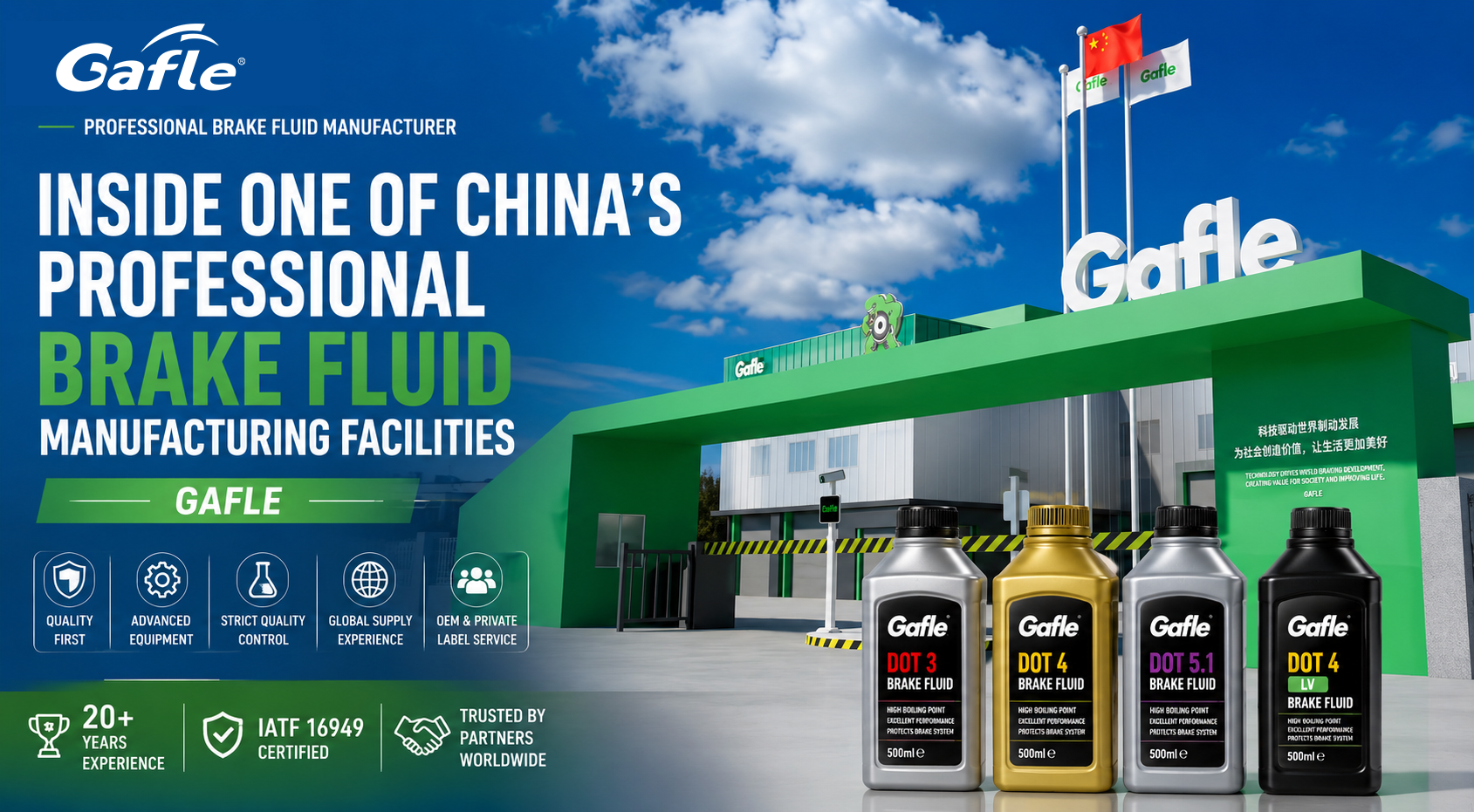
As a professional Brake Fluid Manufacturer, Gafle has more than 20 years of manufacturing experience developing high-performance brake fluids for distributors, OEM brands, and automotive professionals worldwide. In this article, we'll explain why braking performance drops after repeated hard braking, how brake fluid is involved, and how to reduce the risk of brake fade.
What Is Brake Fade?
Brake Fade refers to the temporary reduction in braking effectiveness caused by excessive heat within the braking system.
When braking components repeatedly absorb and dissipate large amounts of heat, their ability to provide consistent stopping power may decrease.
Brake fade can occur during situations such as:
- Driving on long downhill roads
- Repeated emergency braking
- Heavy commercial vehicle operation
- High-performance or track driving
- Towing heavy trailers
- Stop-and-go traffic in hot weather
Understanding brake fade is the first step toward improving braking safety.
Why Does Repeated Hard Braking Reduce Braking Performance?
Every time you press the brake pedal, kinetic energy is converted into heat through friction.
Under normal driving conditions, this heat is quickly dissipated.
However, repeated hard braking generates heat faster than the braking system can release it.
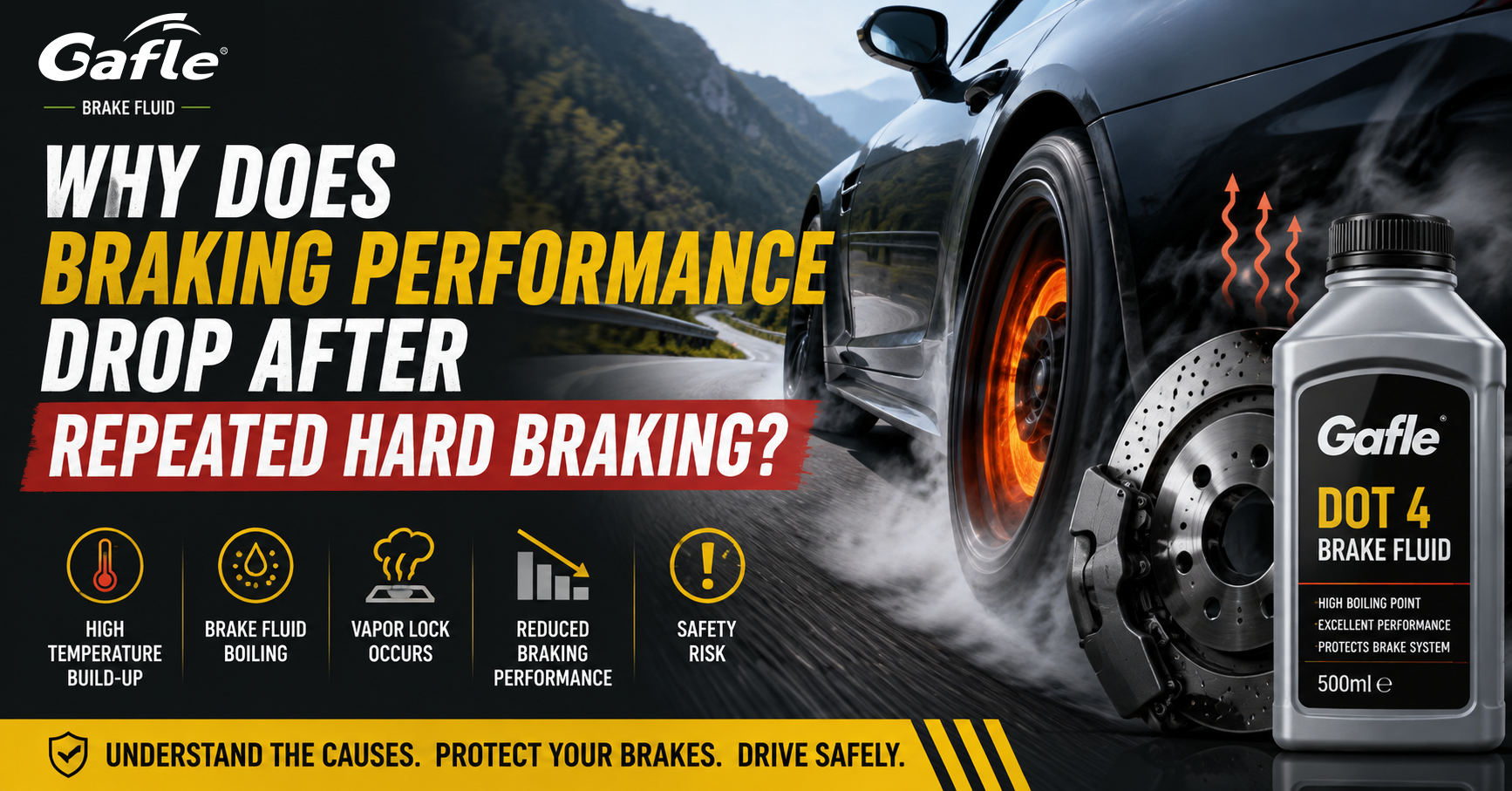
As temperatures continue to rise, several factors may contribute to reduced Braking Performance.
1. Excessive Heat Reduces Friction Efficiency
Brake pads and brake discs are designed to work within specific temperature ranges.
When temperatures become excessively high, the friction characteristics of these components may temporarily change, reducing braking effectiveness.
2. Brake Fluid Temperature Increases
Brake fluid is responsible for transmitting hydraulic pressure throughout the braking system.
During repeated hard braking, heat from the braking components can gradually transfer to the brake fluid.
If the fluid becomes excessively hot, its performance may be affected, especially if it has absorbed moisture over time.
3. Moisture Lowers the Boiling Point
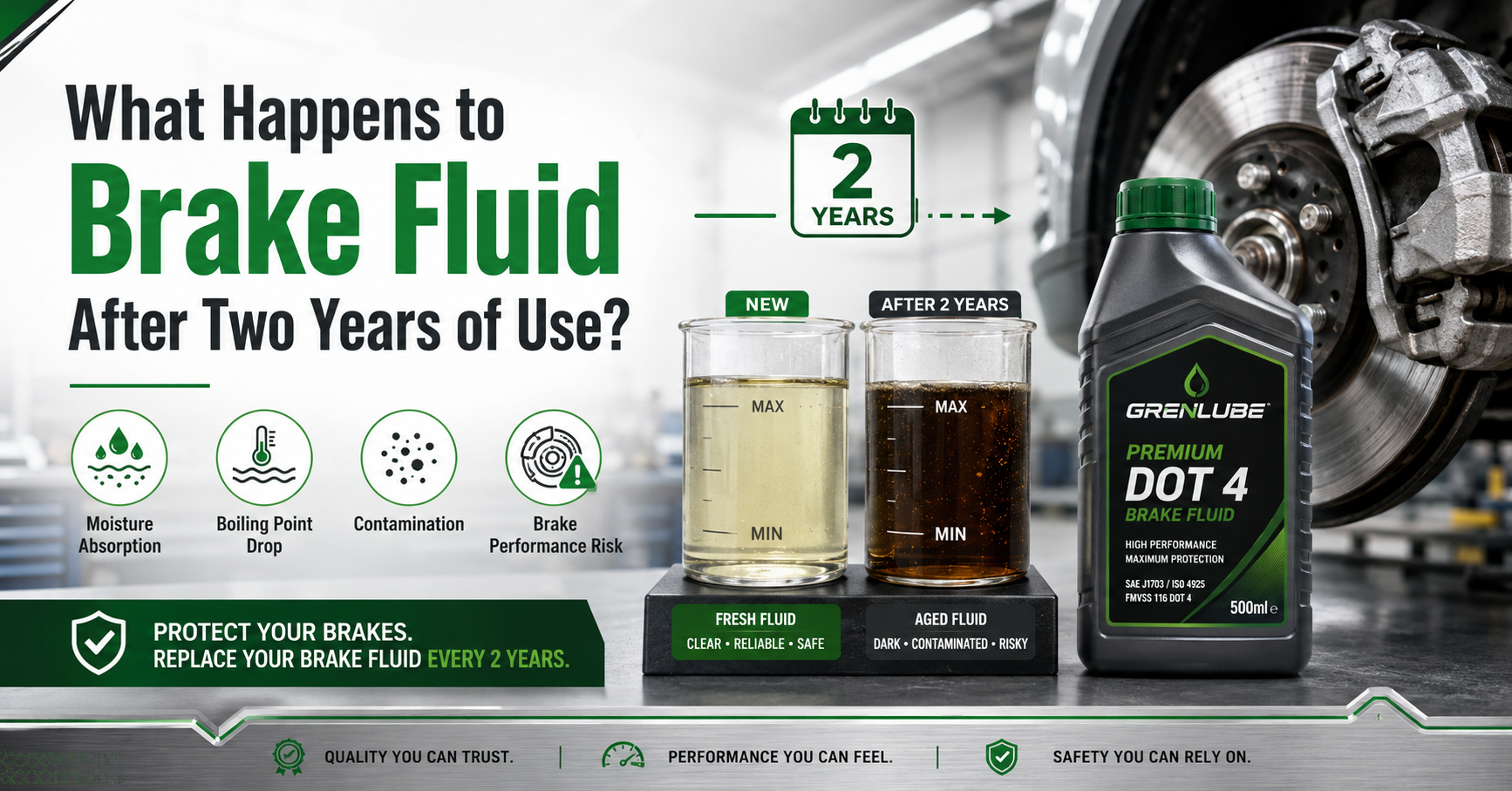
Brake fluid is hygroscopic, meaning it gradually absorbs moisture during normal service.
As moisture content increases, the fluid's boiling point decreases.
Under severe braking conditions, brake fluid with excessive moisture is more likely to experience vapor formation, reducing hydraulic efficiency.
Regular Brake Fluid Change helps minimize this risk.
4. Increased Driver Fatigue
Repeated heavy braking also places greater demands on the driver.
Reduced braking confidence combined with changing brake feel can increase driving stress, especially on long descents or in emergency situations.
The Role of High Temperature Brake Fluid
One of the most effective ways to maintain braking performance is by using a high-quality High Temperature Brake Fluid.
Premium brake fluid is designed to provide:
High Boiling Point
Helping maintain hydraulic performance under demanding braking conditions.
Stable Hydraulic Pressure
Ensuring consistent force transmission from the brake pedal to the braking components.
Reliable Thermal Performance
Supporting braking stability during repeated braking events.
Corrosion Protection
Helping protect internal brake system components throughout the service life.
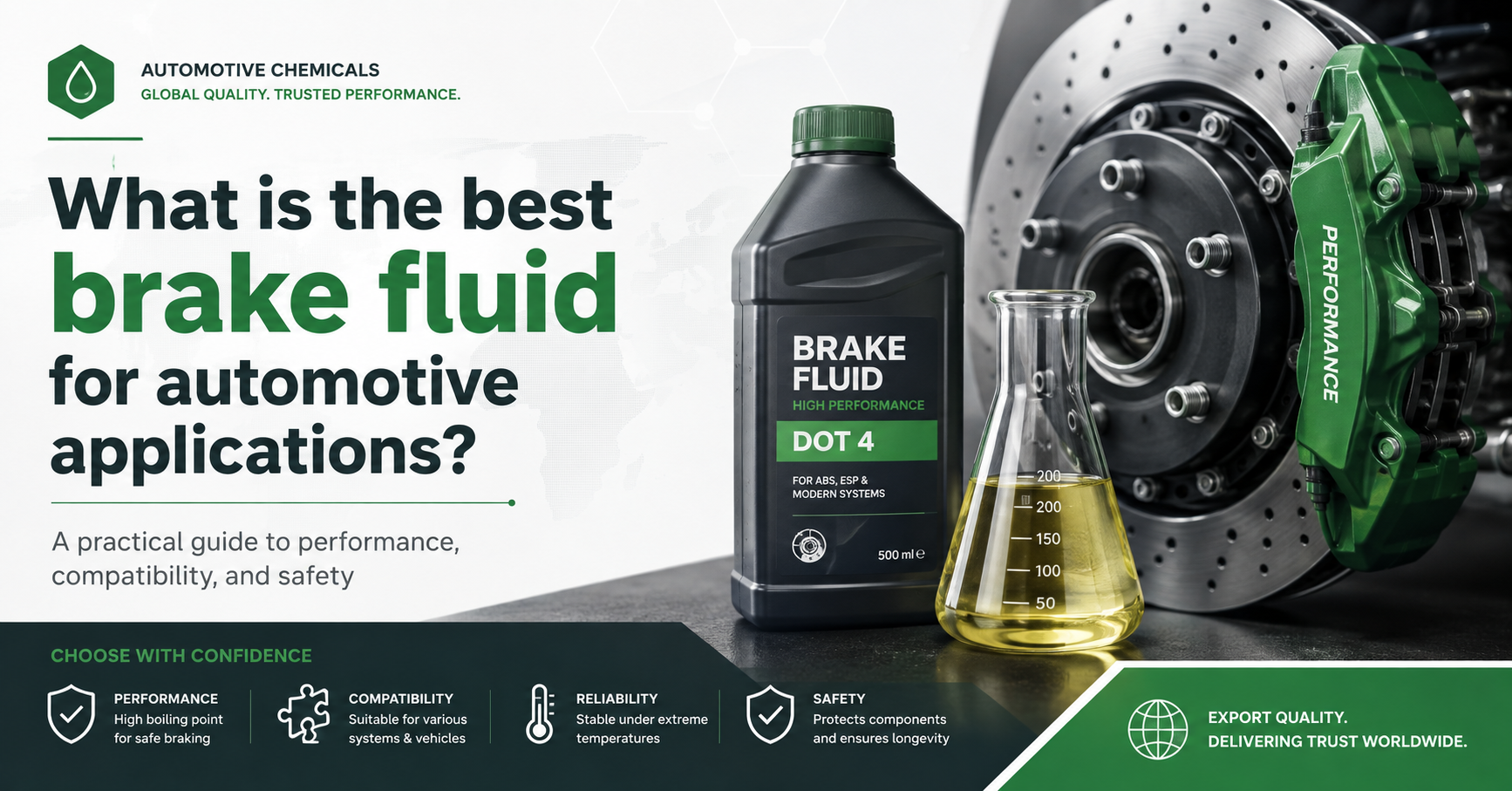
For many modern vehicles, DOT 4 Brake Fluid is commonly selected because it offers higher boiling point requirements than DOT 3.
How to Prevent Brake Fade
Although brake fade cannot always be completely eliminated under extreme conditions, proper maintenance and driving habits can significantly reduce its occurrence.
Replace Brake Fluid Regularly
Brake fluid should generally be replaced according to the vehicle manufacturer's maintenance schedule.
Regular replacement helps maintain optimal hydraulic performance.
Use the Correct Brake Fluid
Always select a brake fluid that meets the specifications recommended by the vehicle manufacturer.
Using the appropriate DOT grade is essential for reliable braking.
Inspect the Brake System
Routine inspections of:
- Brake pads
- Brake discs
- Brake lines
- Brake fluid condition
help identify potential issues before they affect braking performance.
Avoid Continuous Heavy Braking
On long downhill roads, using engine braking where appropriate can help reduce heat buildup in the braking system.
Why Brake Fluid Quality Matters
Not all brake fluids are manufactured to the same standards.
A high-quality brake fluid should provide:
- Stable high-temperature performance
- Consistent hydraulic pressure
- Excellent low-temperature flow
- Reliable corrosion protection
- Batch-to-batch consistency
Professional manufacturing and strict quality control are essential for delivering these characteristics.
Choosing a Reliable Brake Fluid Manufacturer
Selecting a dependable Brake Fluid Manufacturer is just as important as selecting the right brake fluid specification.
A professional manufacturer should provide:
- Modern production facilities
- Professional laboratory testing
- Stable product formulations
- Comprehensive quality management
- OEM manufacturing capability
- Private label services
- Consistent production quality
- Reliable global supply
These capabilities help ensure long-term product performance and customer satisfaction.
How to Choose the Best Brake Fluid Manufacturer in China
Many importers and distributors searching for the Best Brake Fluid Manufacturer in China understand that manufacturing capability is just as important as product performance.
When evaluating suppliers, buyers should consider:
- Manufacturing experience
- High-temperature product testing
- Brake Fluid research and development
- Professional laboratory facilities
- OEM manufacturing capability
- Private label support
- Quality management systems
- Production consistency
- Global export experience
- Long-term technical support
Choosing an experienced manufacturing partner helps reduce sourcing risks while strengthening brand competitiveness.
Why Global Customers Choose Gafle
As a trusted Brake Fluid Manufacturer, Gafle supplies premium brake fluid products to customers around the world.
Our strengths include:
- 20+ Years of Dedicated Brake Fluid Manufacturing Experience
- High-Performance DOT 3 and DOT 4 Brake Fluid
- Modern Manufacturing Facilities
- Professional Laboratory Testing
- Strict Quality Management
- IATF 16949 Quality Management System
- OEM Brake Fluid Manufacturing
- Private Label Solutions
- Customized Bottles, Labels, and Cartons
- Stable Production Capacity
- Global Export Experience
- Participation in Drafting China's National Brake Fluid Standards
Our mission is to provide reliable brake fluid solutions that help customers improve braking performance while building long-term business success.
Frequently Asked Questions
What is brake fade?
Brake fade is a temporary reduction in braking performance caused by excessive heat within the braking system after repeated or prolonged braking.
Can brake fluid affect braking performance?
Yes. Brake fluid transfers hydraulic pressure throughout the braking system. High-quality brake fluid with appropriate boiling point performance helps maintain consistent braking under demanding conditions.
Is DOT 4 brake fluid better for repeated hard braking?
DOT 4 brake fluid generally offers higher minimum boiling point requirements than DOT 3, making it suitable for many vehicles operating under higher thermal loads. Always follow the vehicle manufacturer's recommendations.
How can I reduce brake fade?
Regular brake fluid replacement, proper brake system maintenance, using the correct brake fluid specification, and avoiding unnecessary continuous heavy braking can all help reduce the likelihood of brake fade.
How should buyers choose the Best Brake Fluid Manufacturer in China?
Buyers should evaluate manufacturing experience, laboratory testing, OEM capability, production consistency, quality management systems, export experience, and long-term technical support rather than focusing only on price.
Conclusion
Repeated hard braking generates significant heat, and when that heat exceeds the braking system's ability to dissipate it, Brake Fade can occur. Heat buildup, moisture-contaminated brake fluid, and reduced hydraulic efficiency may all contribute to a temporary decline in Braking Performance.
Maintaining your braking system with regular Brake Fluid Change, using high-quality High Temperature Brake Fluid, and following the vehicle manufacturer's maintenance recommendations are key steps toward preserving safe and reliable braking.
For businesses searching for the Best Brake Fluid Manufacturer in China, selecting a manufacturer with advanced production facilities, professional laboratory testing, strict quality management, and dependable OEM capabilities is just as important as choosing the right brake fluid itself.
With more than 20 years of manufacturing expertise, Gafle continues to provide premium brake fluid products, customized OEM solutions, and reliable manufacturing support for distributors, importers, and automotive brands around the world.
At Gafle, we believe that outstanding braking performance starts with outstanding brake fluid—and every bottle we produce reflects our commitment to safety, consistency, and long-term partnership.