The latest news on Gafle.
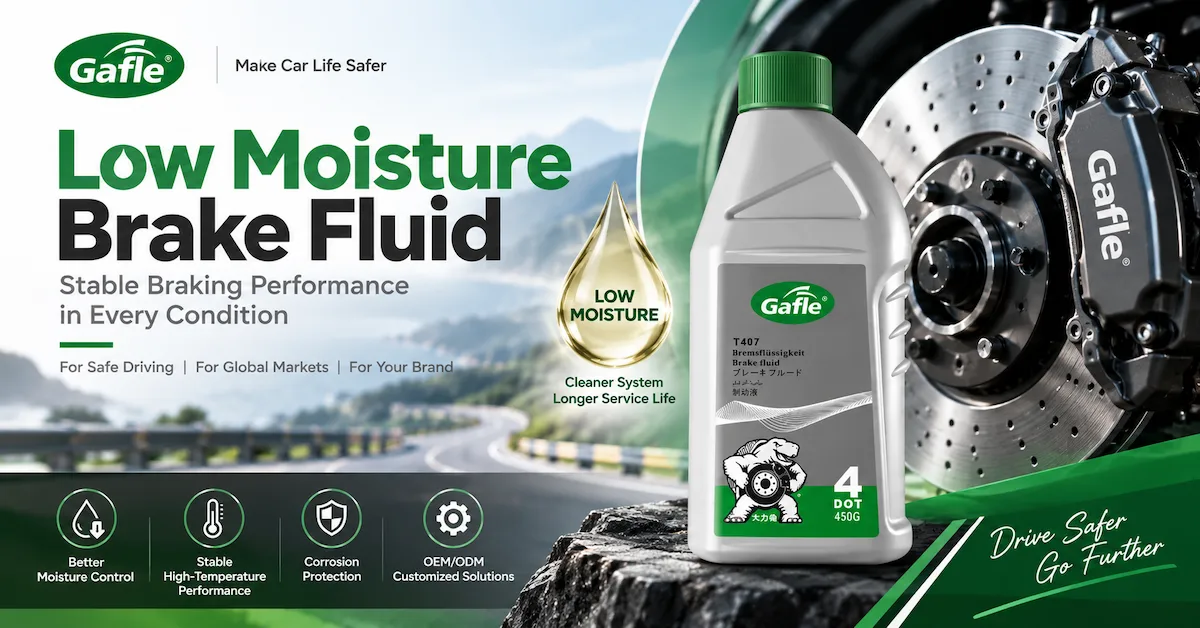
Low Moisture Brake Fluid requires more than a low water-content claim: buyers should verify wet boiling point, laboratory methods, moisture-controlled manufacturing, and protective packaging. This guide helps importers, distributors, and private-label brands assess technical risks, qualify OEM suppliers, and prepare more precise RFQs.
SAE J1703 Brake Fluid sourcing requires more than checking a grade name or one boiling-point figure. This guide explains what SAE J1703 covers, how it relates to DOT 3 and other brake-fluid standards, which laboratory and batch-control evidence B2B buyers should verify, and how importers, distributors, fleets, and private-label brands can reduce technical and commercial risk.
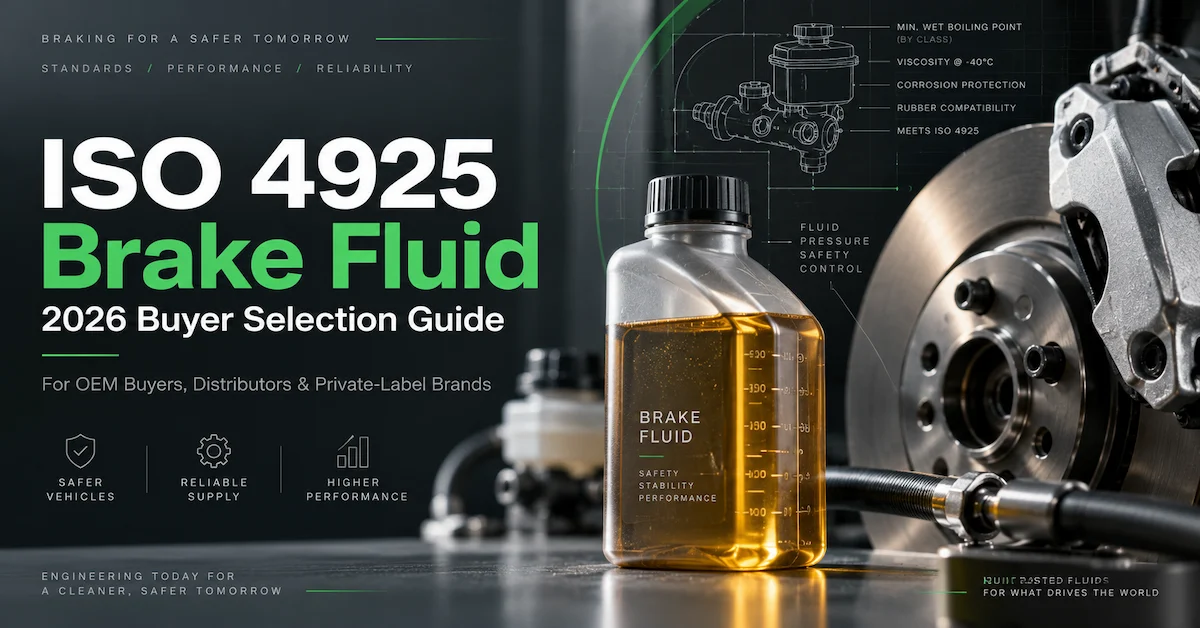
ISO 4925 Brake Fluid is more than a boiling-point specification: buyers need to identify the correct edition, class, low-temperature viscosity requirement, application, test evidence, and batch-control process before approving a supplier. This guide explains ISO 4925:2026 classes, their relationship with familiar DOT grades, the tests that matter in real procurement, and how importers, distributors, OEM programs, and private-label brands can reduce sourcing risk.
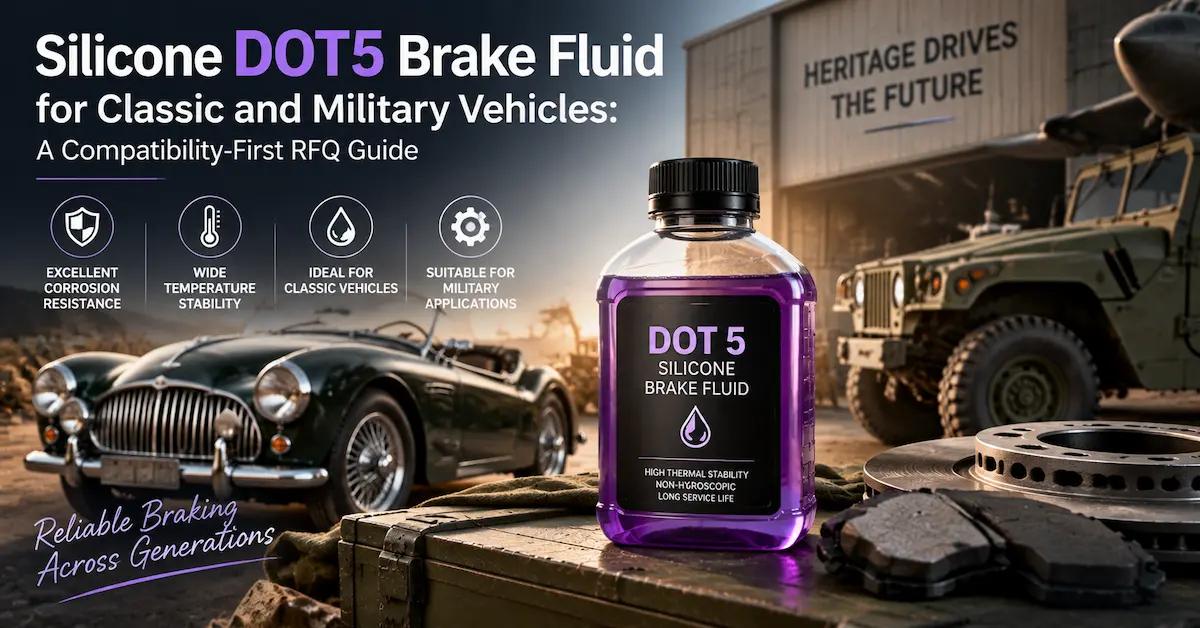
Silicone DOT5 Brake Fluid is a specialized silicone-base grade for systems that explicitly specify or formally approve it, not a universal replacement for DOT 3, DOT 4, or DOT 5.1. This compatibility-first guide helps OEM, distributor, restoration, military-vehicle, and bulk buyers verify applications, standards, test evidence, packaging, and supply controls before requesting a quotation.
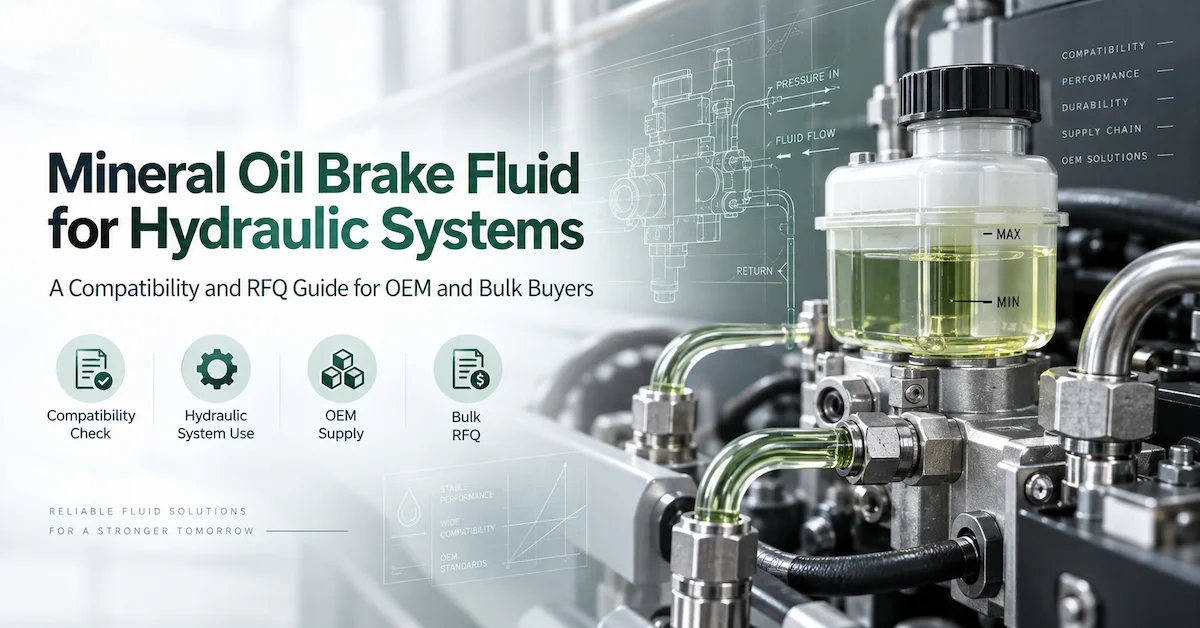
Mineral Oil Brake Fluid is a compatibility-controlled hydraulic medium, not a DOT 3, DOT 4, or DOT 5.1 substitute. This guide helps OEM, bulk, distributor, and service buyers identify the correct system specification, verify seal and material fit, compare controlled performance evidence, and prevent costly cross-contamination before approval.
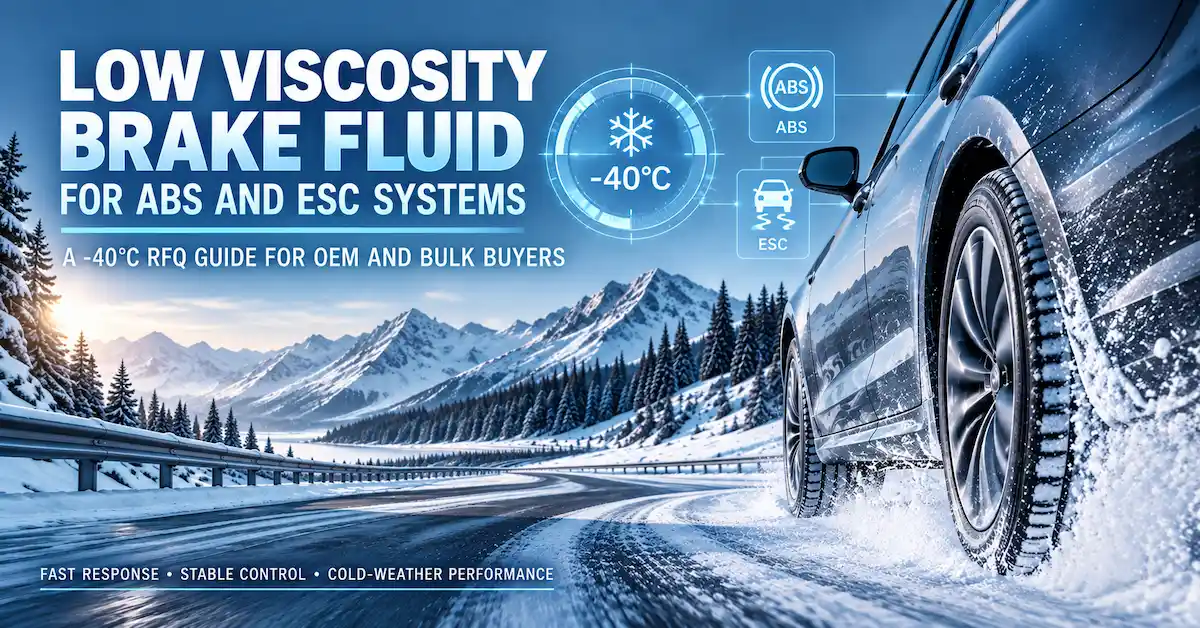
Low Viscosity Brake Fluid is not a separate DOT grade, and a low number is meaningful only beside its temperature, test method, and vehicle requirement. This guide shows OEM, bulk, fleet, and distributor buyers how to translate ABS/ESC cold-response needs into an RFQ, compare hot and cold performance, and verify batch evidence before approval.
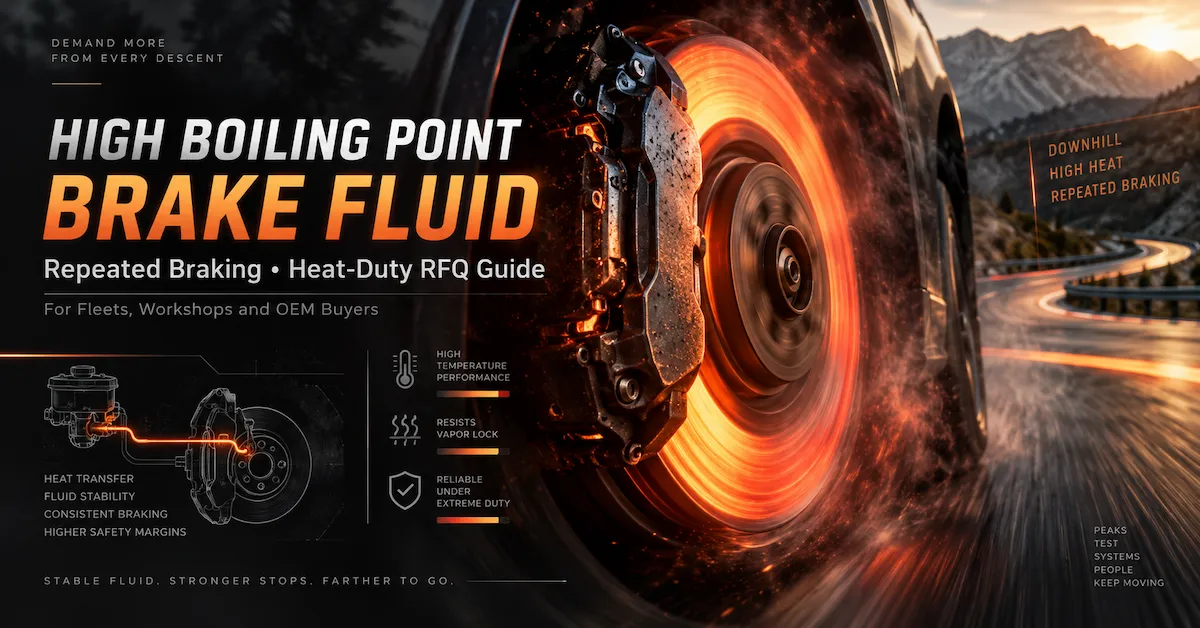
High Boiling Point Brake Fluid should be chosen by the vehicle specification, repeated-braking duty, wet boiling reserve, viscosity, and verifiable batch data, not by a single headline temperature. This guide gives fleet, distributor, and OEM buyers a practical method to translate heat exposure into an RFQ, compare candidate fluids, and verify production evidence before approval.
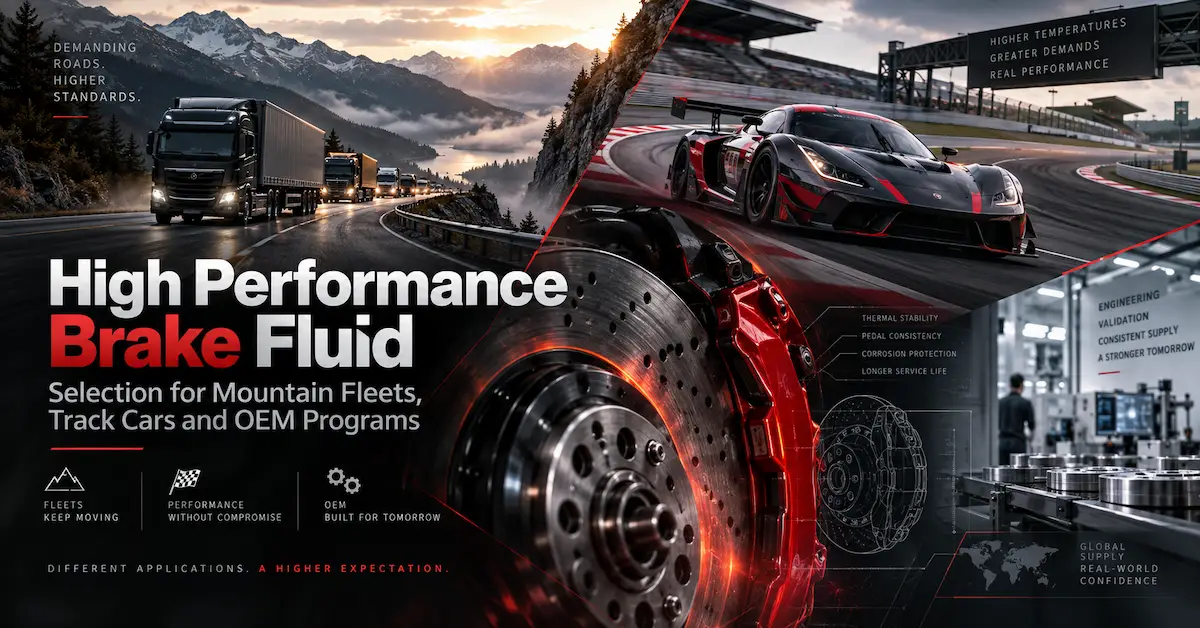
High Performance Brake Fluid should be qualified by duty cycle, vehicle requirements, wet boiling point, low-temperature viscosity and batch evidence rather than one headline number. This guide helps distributors, fleet buyers and private-label teams compare grades, audit supplier documents and build a precise RFQ for hot, cold and repeated-braking service.
Home
Product
Contact
Inquiry