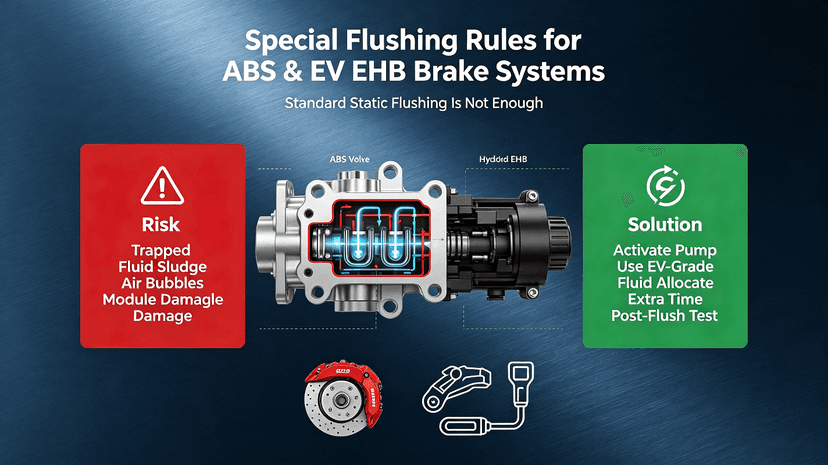
Standard static flushing cannot refresh fluid trapped inside ABS valve bodies
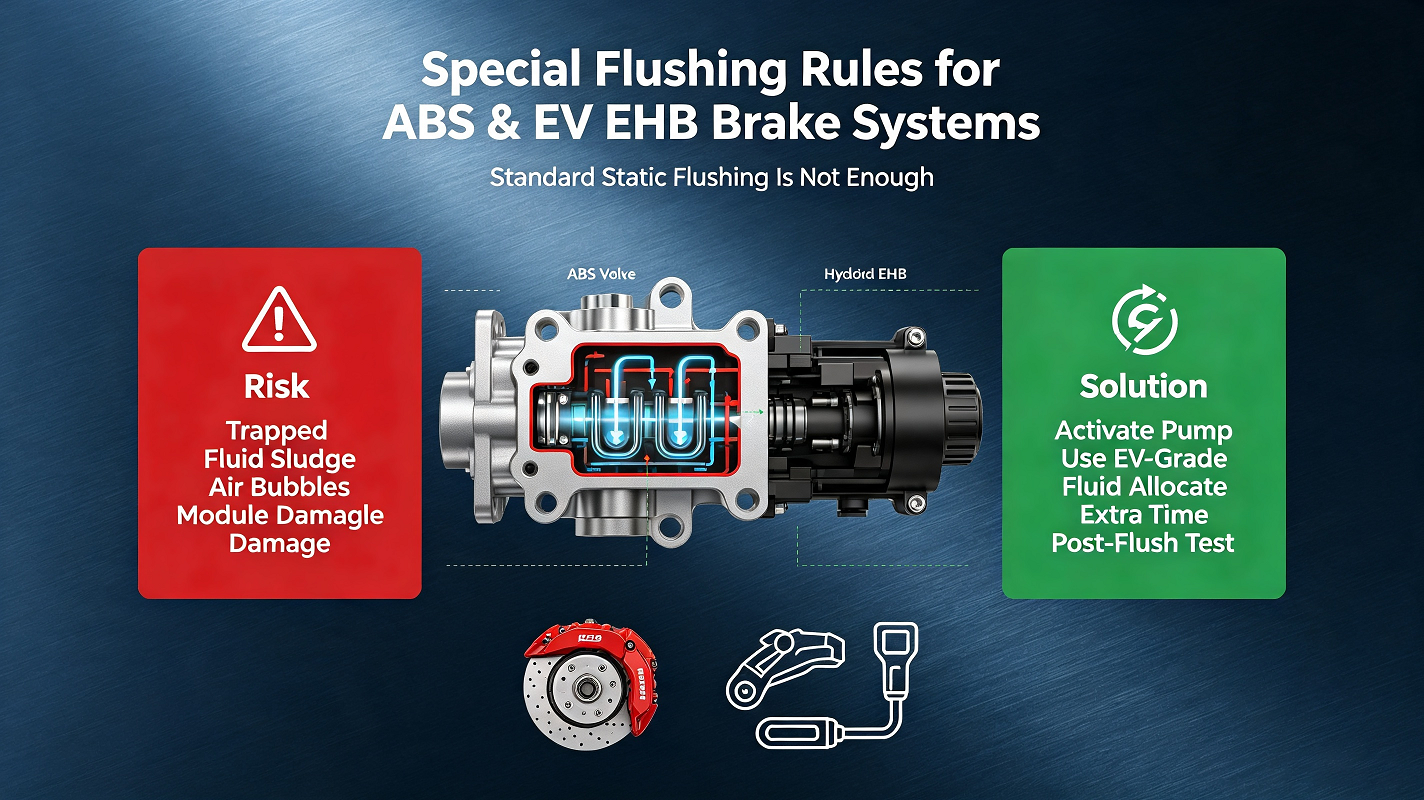
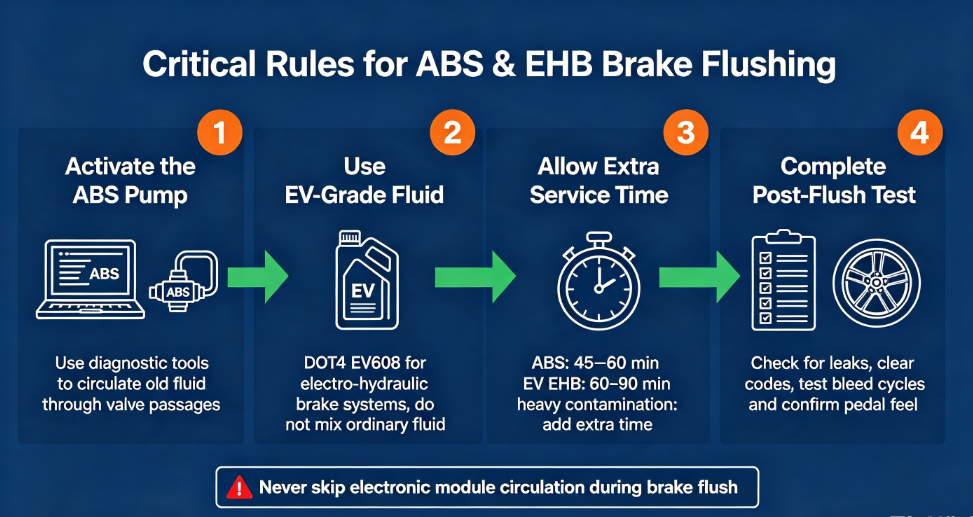
Traditional brake‑flushing procedures work well for old‑school non‑ABS hydraulic systems. For cars fitted with ABS / ESP modules, many old fluid residues stay locked inside tiny valve channels. Static bleeding only replaces fluid inside calipers and hoses, leaving contaminated liquid inside the ABS assembly. Sludge and moisture build‑up here will trigger fault codes, unstable brake force or ABS module failure. Technicians must activate the ABS pump via vehicle diagnostic tools during flushing work, to circulate old fluid fully out of internal valve passages. Skipping this diagnostic step creates incomplete service.
EV EHB electro‑hydraulic brake systems require OEM‑specified dedicated fluid
Electric‑vehicle EHB brake hardware uses unique material for internal seals and sensors. Regular DOT3 or ordinary DOT4 brake fluid is not designed for EHB components. Using non‑EV‑specified fluid will gradually swell or harden special rubber seals inside the electro‑hydraulic unit. Over time, you will face fluid leakage and costly EHB pump replacement. Always use EV‑formulated brake fluid such as DOT4 EV608. Never mix ordinary brake fluid with EV‑grade fluid inside EHB circuits. This is the most frequent service mistake seen in general repair garages.
Extra time must be budgeted for ABS and EV EHB flushing work
Flushing these electronic brake assemblies takes longer than conventional gasoline‑car brake jobs. For ABS‑equipped fuel cars, expect 45‑60 minutes total service time. For EV EHB brake systems, proper flushing and bleeding can take 60‑90 minutes. Many service advisors underestimate working hours, rushing technicians to finish jobs quickly. When you cut corners on circulation time, contaminated fluid remains inside micro‑channels. Shops should set separate service‑time quotes for ABS and EV vehicles, do not apply standard car pricing.
Watch out for air trapping inside high‑pressure EHB circuits
EHB systems work under higher working pressure than traditional brake set‑ups. Improper bleeding easily traps tiny air bubbles inside the hydraulic loop. Air inside EHB units leads to soft brake pedal feel, system warning lights and unstable brake assist output. After completing the full flush, follow OEM service manuals to run automated bleeding cycles. Perform road‑test validation to confirm firm pedal feel and no dashboard fault codes before handing back the vehicle to the owner.
Post‑flush inspection checklist for ABS & EV EHB brake systems
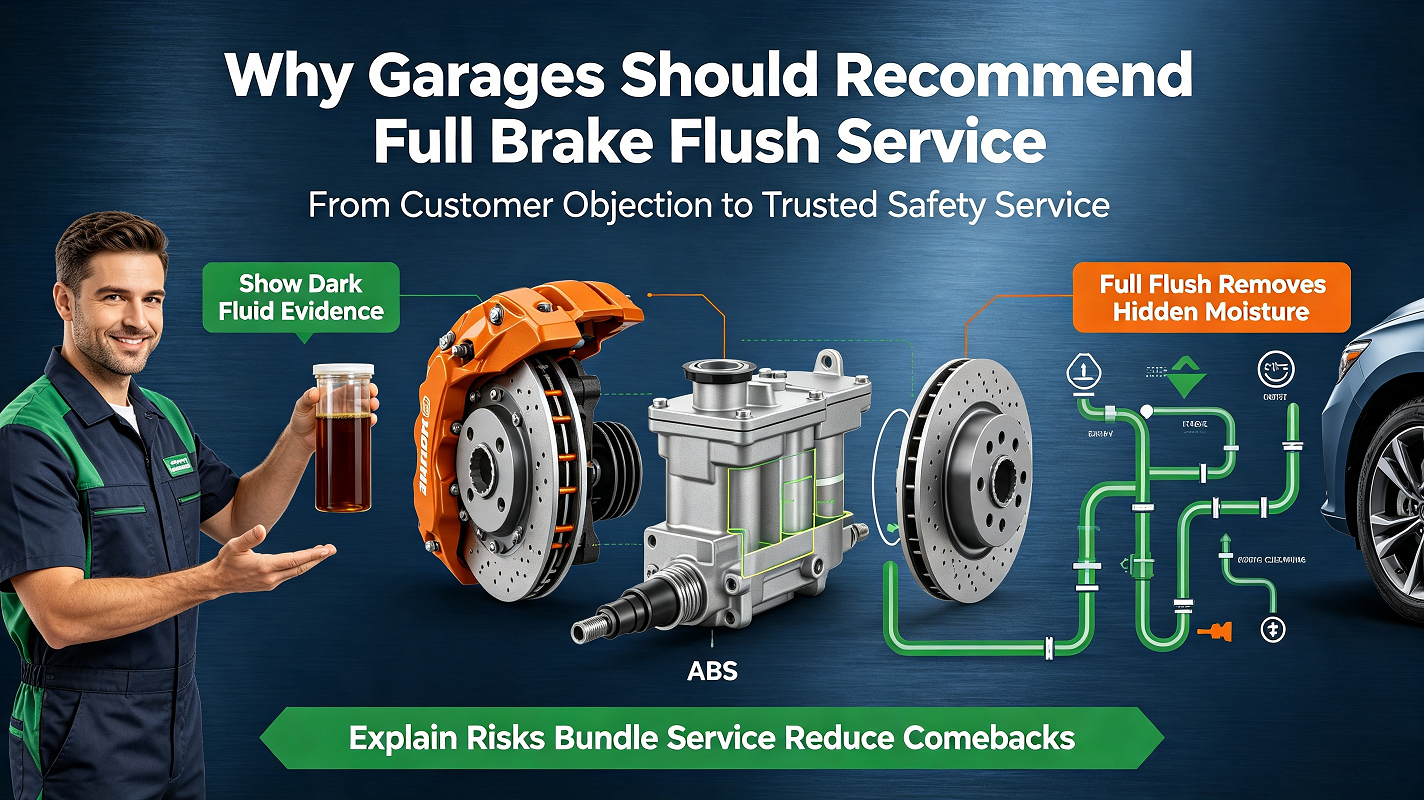
Finish your service with these key checks: confirm no brake‑fluid leakage around module connections; clear all historic diagnostic trouble codes; run system self‑test cycle; perform test drive covering hard‑braking scenarios. If warning lights stay active after flushing, do not return the car. Re‑run the full flushing‑and‑bleeding workflow. Quick visual checks reduce expensive comeback repairs and protect your garage’s reputation.
Conclusion
ABS and EV EHB brake systems cannot follow basic flushing workflows. Activate ABS pump with diagnostic tools, use EV‑special brake fluid for EHB hardware, allocate sufficient working hours, avoid air trapping and complete post‑service testing. Breaking these rules risks damaging expensive electronic brake parts.
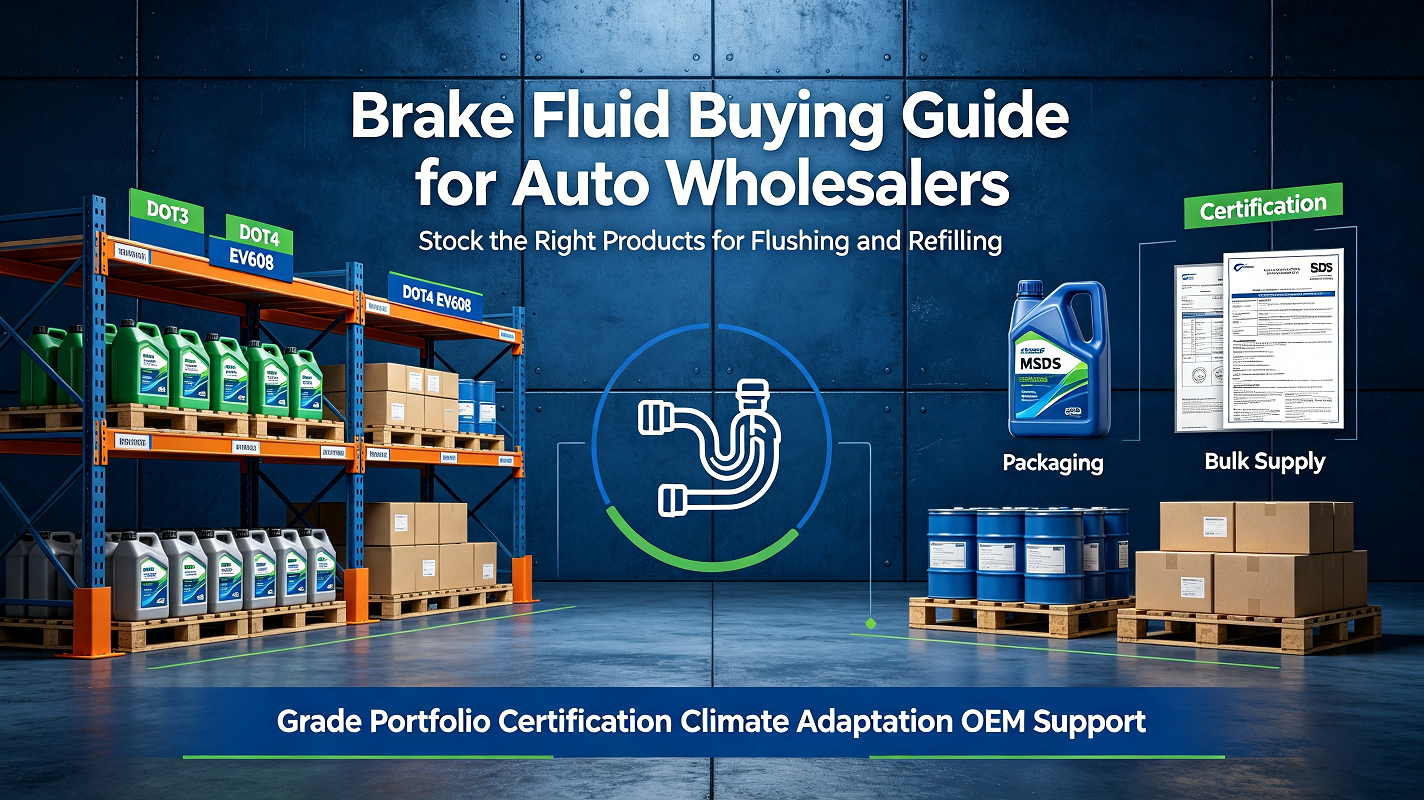
GAFLE DOT4 EV608 brake fluid is specially formulated for EV EHB brake‑system flushing and refilling. We support global repair‑shop suppliers and auto wholesalers via bulk and OEM private‑label orders. Get in touch with our sales team.
Welcome to contact GAFLE for more information & cooperation!
peter
ZHEJIANG GAFLE AUTO CHEMICL CO.,LTD
Tel:86-579-8222 1665
Fax:86-579-8246 4690
Cel/Wechart:86-13335993986
E-mail:peter@gafle.net
Web:www.gafle.net
peter
ZHEJIANG GAFLE AUTO CHEMICL CO.,LTD
Tel:86-579-8222 1665
Fax:86-579-8246 4690
Cel/Wechart:86-13335993986
E-mail:peter@gafle.net
Web:www.gafle.net