Why brake fluid quality control deserves more attention than it usually gets
Brake fluid quality control is one of those topics that only gets noticed when something goes wrong. For workshops, fleet maintenance teams, distributors, and parts buyers, that is exactly the problem. Brake fluid sits inside a safety-critical hydraulic system, so a small variation in formulation, contamination, packaging integrity, or labeling can create a much larger issue downstream than it would in an ordinary lubricant product.
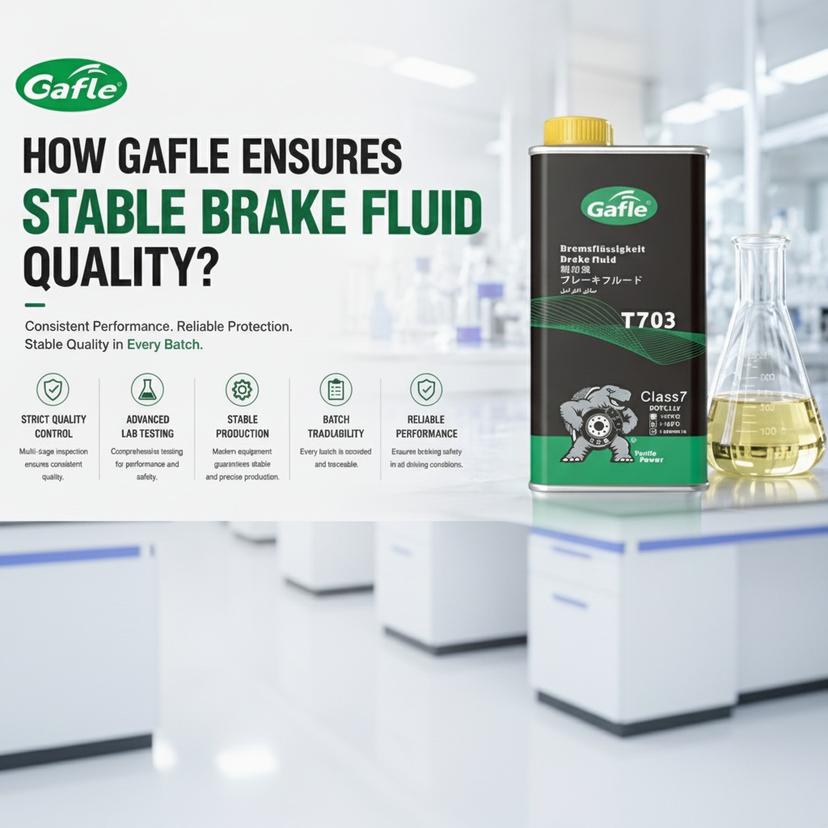
The product shown as Gafle T703 “Brake fluid” points to the kind of packaged automotive hydraulic fluid that depends on controlled blending, batch traceability, and careful inspection before it reaches the market. The visible “Class 7” and “DOT5.1 LV” markings suggest a performance-oriented brake fluid segment, though the full specification details are not clear from the image alone. That uncertainty is exactly why disciplined inspection matters. Buyers are rarely just purchasing a liquid; they are purchasing consistency.
What brake fluid quality control is really checking
In practical terms, brake fluid quality control is meant to protect three things: performance, compatibility, and shelf stability. If the fluid does not behave predictably under heat and pressure, the braking system loses margin. If the packaging or labeling is wrong, the wrong fluid may be used in the wrong application. If contamination enters during production or filling, even a visually clean product can fail to meet expectations.
For a buyer, that means quality control is not a single test at the end of the line. It is a chain of checks that starts with raw material inspection, continues through production, and ends with packed goods leaving the facility.
A simple buyer’s view of the control points
Not every supplier presents the process the same way, but a useful reference model looks like this:
Raw material inspection checks incoming ingredients before blending. This is where contamination risk is first reduced, and where supplier consistency matters most.
Quality assurance testing is the technical core. In a brake fluid context, this usually means verifying properties relevant to hydraulic performance and product stability. The exact test list depends on the formulation and the stated grade.
Packing material inspection matters more than many buyers expect. Metal cans, screw caps, seals, linings, and printed wraps all affect how the product survives storage and transport. A good fluid can still be compromised by poor packaging.
Label inspection is the final filter before shipment. For brake fluid, label accuracy is not cosmetic. It is how a distributor, workshop, or warehouse team identifies grade, batch, and intended use.
Why the packaging tells you something about the process
The visible rectangular metal canister with a yellow screw cap suggests a packaged chemical product designed for distribution and workshop handling. That matters because brake fluid is not usually judged by appearance alone. A clear to pale yellow liquid in a lab flask may look clean, but the real question is whether the product inside the canister stayed stable through blending, filling, sealing, and storage.
The graphic language on the product also mentions strict quality control, advanced lab testing, stable production, and batch traceability. Those phrases are common in the market, so buyers should treat them as a starting point rather than a conclusion. Useful claims are the ones that connect back to process discipline: inspected raw inputs, controlled filling, traceable lots, and consistent packaging.
What engineers and sourcing teams should ask before buying
If you are comparing brake fluid suppliers, the main decision is not simply price or brand presentation. It is whether the supplier can show a repeatable control system. Ask how raw material inspection is handled, how batches are identified, what quality assurance testing is performed, and how label inspection is documented before release.
A practical caution: some buyers focus heavily on the visible grade marking and overlook the paperwork around traceability. That is risky. In automotive fluids, the label may be right while the filling lot, storage conditions, or package integrity are not. The best suppliers make those links easy to verify.
Common mistakes in brake fluid sourcing
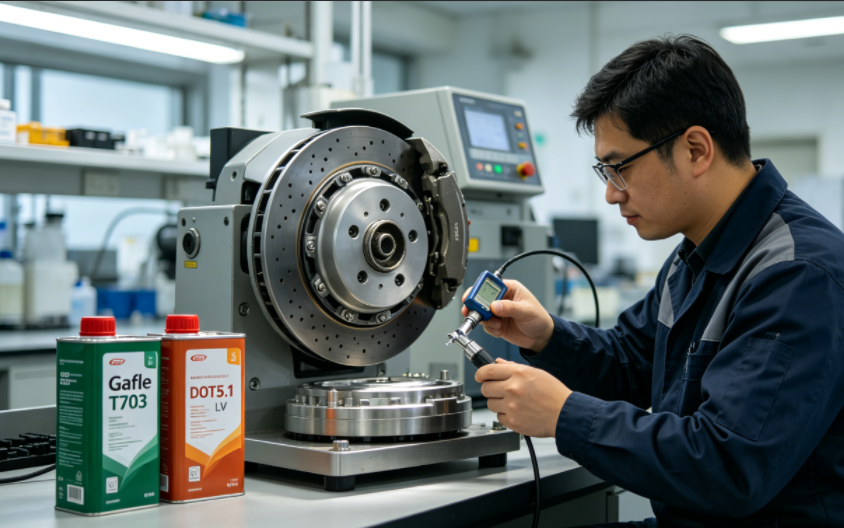
The first mistake is treating all brake fluids as interchangeable. They are not. The product image suggests a DOT 5.1 LV-type positioning, but compatibility still needs confirmation against the vehicle or service requirement.
The second mistake is assuming a clean-looking sample proves the whole lot is sound. A lab flask with clear fluid is useful for presentation, but it is not a substitute for lot-level quality assurance testing.
The third mistake is ignoring packing material inspection. A weak closure, poor seal, or damaged printed label can create avoidable problems in storage and workshop use.
How to make the buying decision
If you are sourcing brake fluid for resale or service use, prioritize suppliers that can explain their control points in plain language. You want evidence of raw material inspection, batch traceability, quality assurance testing, packing material inspection, and label inspection. You also want a product presentation that matches the intended channel, whether that is a workshop shelf, distributor warehouse, or fleet maintenance program.
For many buyers, the right decision is not the cheapest drum, can, or bottle. It is the one that reduces field complaints, simplifies receiving checks, and keeps product identity clear from warehouse to service bay.
Next step for buyers
When evaluating a brake fluid supplier, request the current product specification, packaging details, batch coding method, and a summary of the quality control process. If you are comparing multiple offers, use those documents to separate polished marketing from actual manufacturing discipline. In this category, that distinction is worth more than a glossy label.