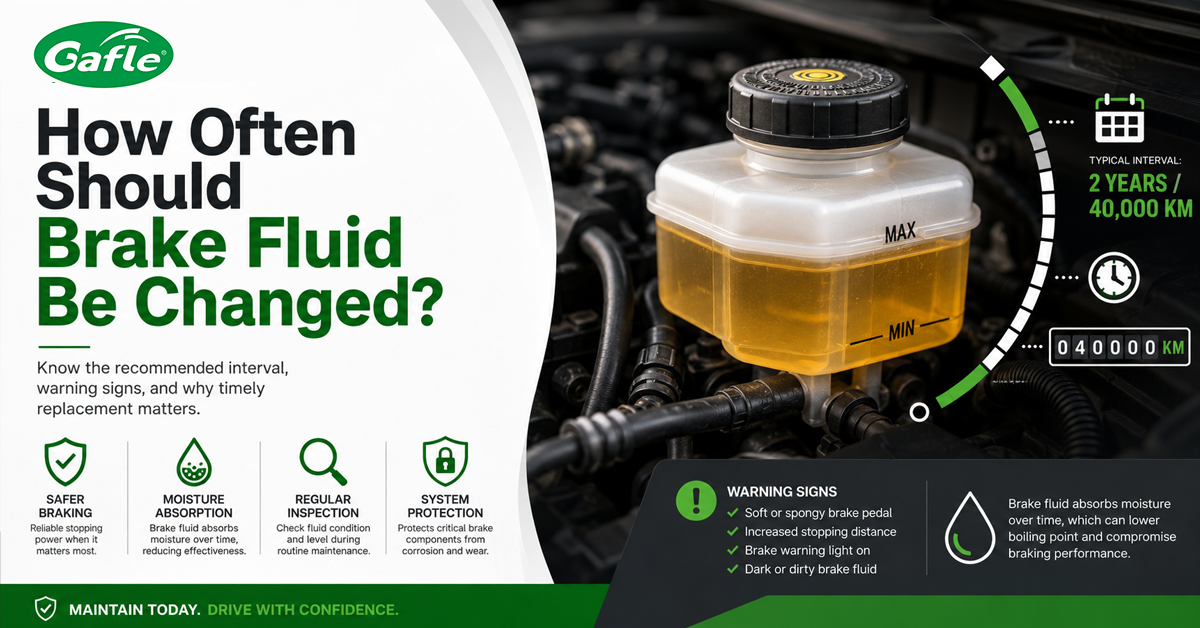
How Often Should Brake Fluid Be Changed? The Short Answer Depends on More Than Mileage
How often should brake fluid be changed is one of those maintenance questions that sounds simple until you look at how brakes actually work. The fluid does not just sit there as a passive filler. It transfers force, survives heat, and slowly absorbs moisture from the air over time. That last part is why a brake system can feel fine today and still be building problems for tomorrow.
For engineers, sourcing managers, and fleet operators, the real decision is not whether brake fluid ages. It does. The question is when that aging starts to matter enough to justify a brake fluid replacement, and whether a fixed service schedule or condition-based inspection makes better sense for the application.
Why Brake Fluid Replacement Matters
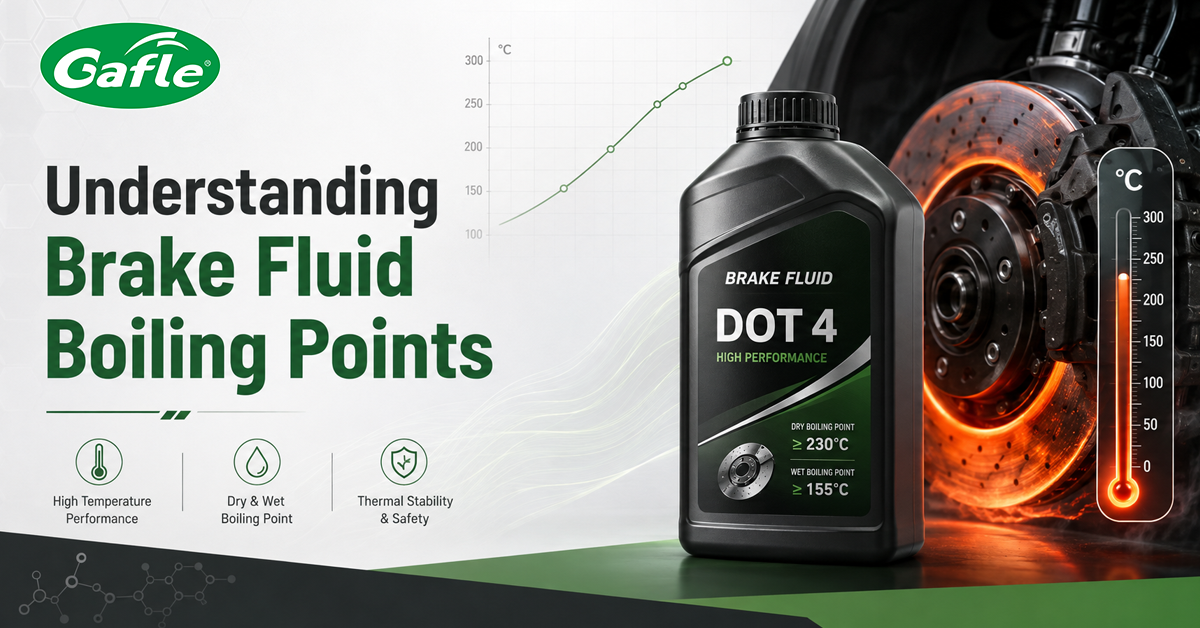
Brake fluid is hygroscopic in most common passenger-vehicle formulations, which means it naturally absorbs water. As moisture content rises, boiling point drops. That matters because brakes generate heat, sometimes far more than drivers realize, especially in stop-and-go traffic, mountain driving, towing, or repeated hard stops. If the fluid boils, pedal feel can go soft or inconsistent, and braking performance can degrade at exactly the wrong moment.
There is also a longer-term system issue. Moisture and contamination can contribute to internal corrosion in master cylinders, calipers, wheel cylinders, ABS components, and lines. So the service decision is not just about fresh feel at the pedal. It is about protecting hardware that is far more expensive than the fluid itself.
Brake Fluid Change Interval: What Most Buyers Should Use as a Starting Point
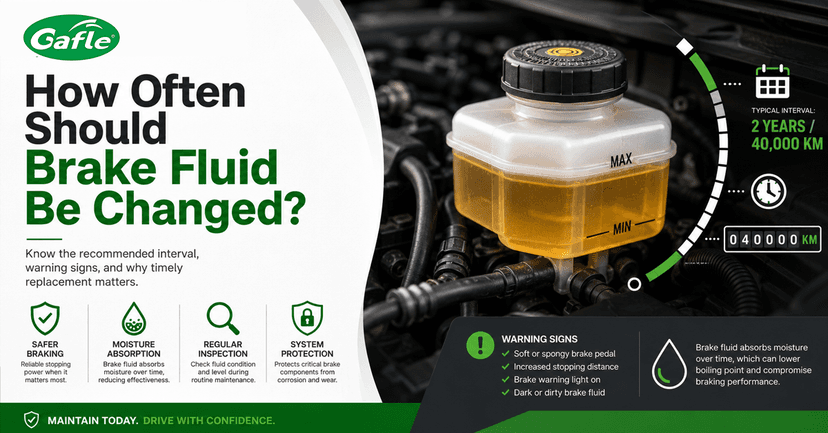
There is no universal mileage-only rule that fits every vehicle, but many maintenance programs treat brake fluid as a time-based service item rather than waiting for obvious symptoms. A common practical approach is to inspect fluid condition regularly and consider replacement every two to three years, or sooner in severe use. That is not a hard law. It is a sensible baseline when the vehicle sees normal road use and the manufacturer does not specify something different.
For high-load or heat-heavy applications, the interval may need to be shorter. Commercial fleets, performance cars, tow vehicles, and vehicles running in humid or corrosive environments often deserve more attention. If a maintenance plan still relies only on “looks okay,” that is usually a weak standard. Brake fluid can look amber and still be degraded enough to justify replacement.
How Long Does Brake Fluid Last in Real Use?
How long does brake fluid last depends on chemistry, storage, system sealing, climate, and duty cycle. Fresh fluid in a sealed container may remain usable for a long period if stored properly, but once it is in the vehicle, the clock changes. Heat cycles, venting through the reservoir, and general exposure all work against it.
That is why suppliers and maintenance teams should think in two layers: shelf life in storage and service life in the brake system. The second is usually much shorter. A drum of fluid and the fluid inside a working brake system are not the same conversation.
Signs You Need to Change Brake Fluid
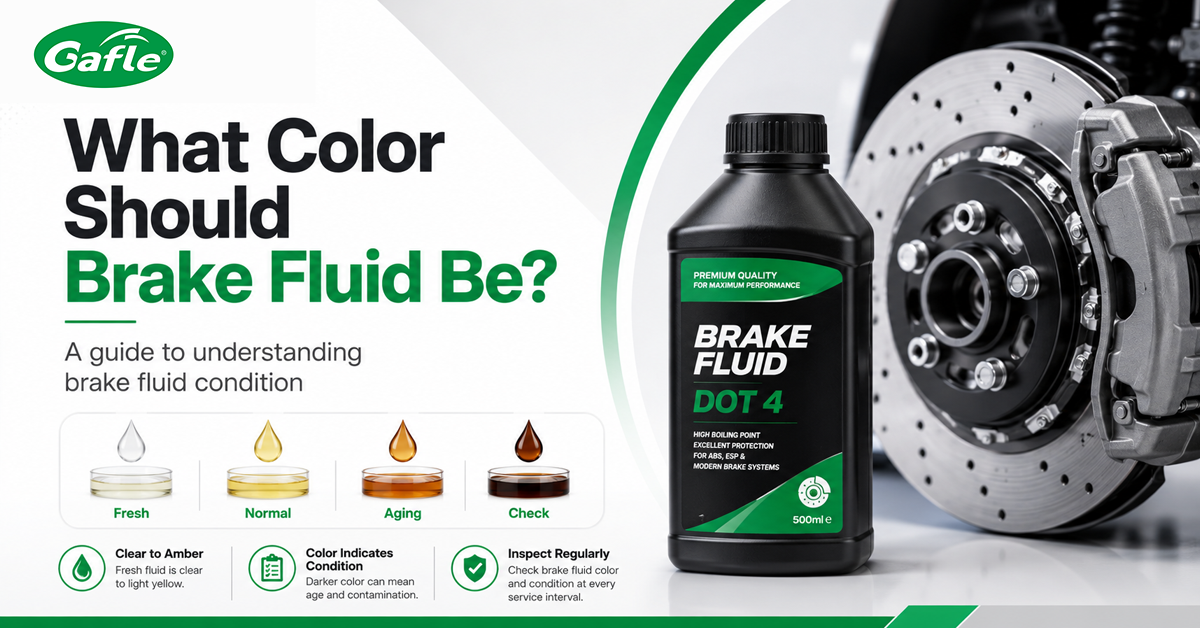
Signs you need to change brake fluid are not always dramatic. A soft or spongy pedal is the obvious warning, but by then the problem may already be advanced. Other clues include darkened fluid, inconsistent pedal feel, longer stopping distance under repeated braking, or a service history that shows the fluid has simply been ignored for years.
In a workshop or fleet setting, it is smart to pair visual checks with fluid condition testing where appropriate. A caution here: not every dipstick-style impression or quick glance tells the whole story. Contamination and moisture content are not reliably judged by color alone.
DOT 4 Brake Fluid Replacement and Other Formulations
DOT 4 brake fluid replacement is common in many vehicles because DOT 4 is designed for higher boiling performance than some older formulations. That does not make it maintenance-free. In fact, higher-performance fluid still needs periodic replacement because the moisture issue does not disappear.
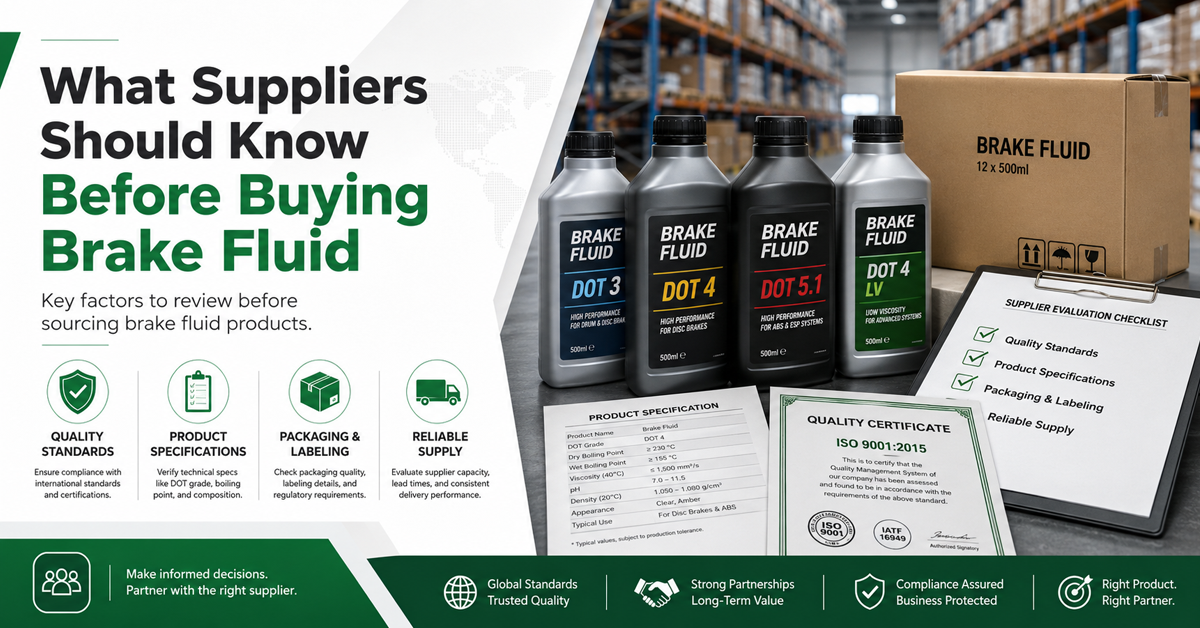
Different brake fluids are not meant to be mixed casually without checking compatibility. For sourcing teams or service managers, the safe move is simple: match the vehicle specification, verify the correct fluid type, and keep handling procedures clean. A contaminated brake-fluid bottle can create a problem that looks like a component failure later.
Brake Fluid Replacement Cost Versus the Cost of Waiting
Brake fluid replacement cost is usually modest compared with the price of calipers, ABS components, or downtime from a failed inspection. That cost comparison is why experienced buyers tend to treat fluid service as a preventive action, not an optional add-on. The labor may be the larger part of the bill, but even then it is generally easier to justify than replacing corroded hardware or chasing a brake complaint that started with neglected fluid.
For fleets, the hidden cost is vehicle availability. A simple service window is easier to schedule than an unscheduled brake repair that takes a truck or car out of rotation.
Practical Buyer Advice for Maintenance and Procurement
If you are setting policy, start with the vehicle manufacturer’s recommendation, then adjust for duty cycle and environment. If the fleet lives in heat, humidity, or severe stop-start service, shorten the review cycle. If the maintenance team has no habit of fluid testing, build one. A small process improvement here pays off quickly.
If you are buying fluid, work with a reputable brake fluid manufacturer and insist on clear labeling, sealed packaging, and the correct specification for the application. In brake service, the cheapest bottle can become the most expensive decision in the job.
FAQ
Can brake fluid be left alone if the brakes still feel normal?
Usually not for long-term maintenance planning. Normal pedal feel does not guarantee healthy fluid.
Should brake fluid be changed by time or mileage?
Time is often the better starting point because moisture absorption continues even if the vehicle is driven less than expected.
Is dark fluid always bad?
Not always, but it is enough of a warning sign to check the fluid more seriously.
Next Step
If your team is deciding how often should brake fluid be changed across a vehicle line or fleet, use the manufacturer schedule as the floor, not the ceiling. Review duty cycle, climate, and service history, then set a replacement policy that protects braking performance before the system starts showing obvious symptoms.