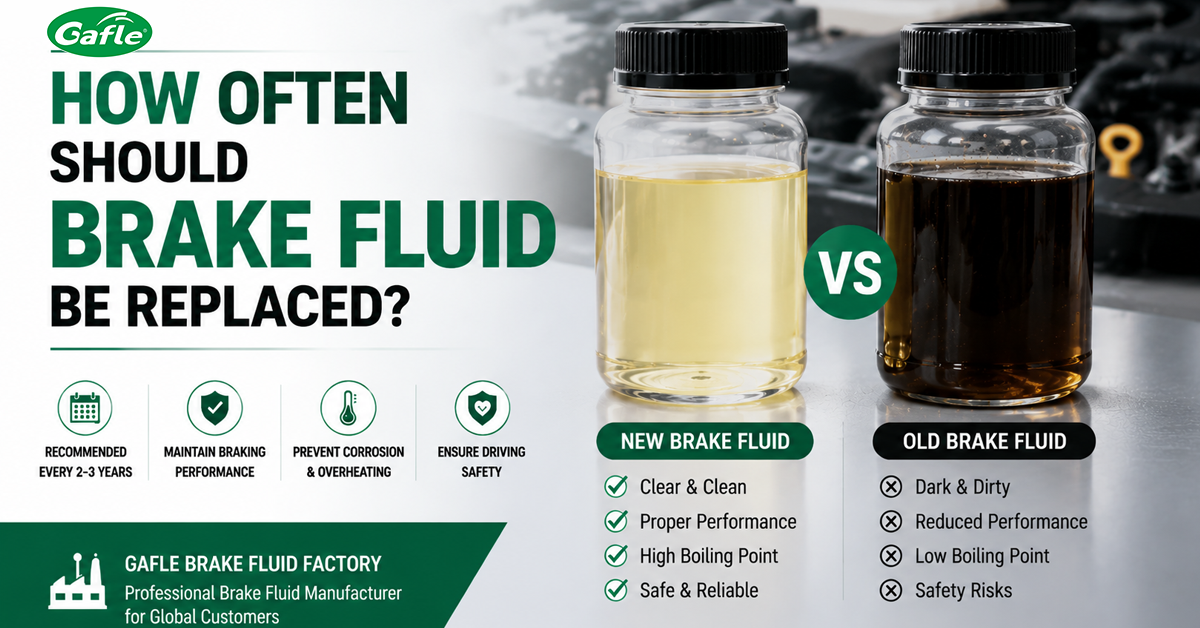
How Often Should Brake Fluid Be Replaced?
Brake fluid is one of the most important safety components in any vehicle braking system. It transfers the force from the brake pedal to the brake calipers, allowing the vehicle to stop efficiently and safely. However, many vehicle owners overlook its maintenance until problems appear.
So the key question is:
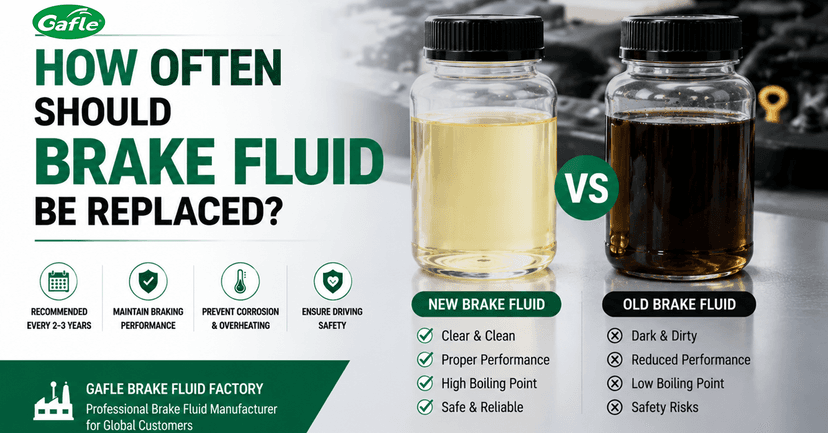
How Often Should Brake Fluid Be Replaced?
In this article, we will explain the ideal Brake Fluid Change Interval, common Signs of Bad Brake Fluid, and why regular Brake Fluid Maintenance is essential for vehicle safety. We will also share insights from Gafle Brake Fluid Factory, a professional global Brake Fluid Manufacturer serving OEM customers worldwide.
Why Brake Fluid Replacement Is Important
Brake fluid works under extreme conditions:
- High temperature
- High pressure
- Continuous heat cycles
- Exposure to moisture over time
Because of this, brake fluid naturally degrades. If not replaced on time, it can lead to:
- Reduced braking performance
- Longer stopping distance
- Brake system corrosion
- Safety risks while driving
This is why regular Brake Fluid Replacement is essential for every vehicle.
What Is the Recommended Brake Fluid Change Interval?
Most automotive experts and manufacturers recommend:
👉 Every 2 to 3 years
However, the exact Brake Fluid Change Interval depends on several factors:
1. Driving Conditions
- City driving with frequent braking → faster degradation
- Highway driving → slower degradation
- Mountain or heavy-load driving → higher heat stress
2. Climate Conditions
- Humid environments increase moisture absorption
- Extreme heat accelerates fluid breakdown
3. Vehicle Usage
- Commercial vehicles may require more frequent replacement
- High-performance vehicles experience higher thermal stress
Because brake fluid absorbs moisture over time, even if the car is not heavily used, replacement is still necessary.
How Often to Change Brake Fluid in Real Practice?
When customers ask:
“How Often to Change Brake Fluid?”
The practical answer is:
- Standard passenger cars: every 2–3 years
- Heavy-duty vehicles: every 1–2 years
- Performance vehicles: based on brake system condition and testing
Regular inspection is always recommended, especially if the fluid shows discoloration or contamination.
Signs of Bad Brake Fluid
Before failure occurs, brake fluid usually shows warning signs.
Common Signs of Bad Brake Fluid include:
1. Dark or Dirty Fluid Color
Fresh brake fluid is usually light yellow or clear. Dark brown or black fluid indicates aging or contamination.
2. Soft Brake Pedal
The brake pedal may feel spongy or less responsive.
3. Reduced Braking Performance
Longer stopping distance or weaker braking force.
4. Moisture Contamination
Water absorption reduces boiling point and increases risk of brake fade.
5. ABS Performance Issues
In some cases, degraded brake fluid affects ABS system efficiency.
When these signs appear, immediate Brake Fluid Replacement is recommended.
Why Brake Fluid Degrades Over Time
Brake fluid is hygroscopic, meaning it absorbs moisture from the air.
Over time, this leads to:
- Lower boiling point
- Internal corrosion
- Reduced hydraulic efficiency
- Increased braking instability
Even high-quality fluids eventually degrade, which is why maintenance is essential.
Brake Fluid Maintenance Best Practices
Proper Brake Fluid Maintenance helps extend braking system life and improve safety.
Recommended practices include:
- Regular inspection every service interval
- Checking brake fluid color and level
- Using manufacturer-recommended brake fluid type (DOT 3 / DOT 4 / DOT 5.1)
- Avoiding contamination during topping up
- Timely replacement every 2–3 years
OEM Quality Matters: Insights from Gafle Brake Fluid Factory
As a professional Brake Fluid Manufacturer, Gafle Brake Fluid Factory understands the importance of consistent quality and long-term performance.
Our OEM brake fluid solutions are designed to provide:
- Stable boiling point performance
- Strong anti-corrosion protection
- Excellent moisture resistance
- Reliable hydraulic performance
As a trusted global supplier, Gafle supports:
- OEM Brake Fluid Manufacturer services
- Private Label Brake Fluid solutions
- International Brake Fluid Supplier partnerships
This ensures that customers worldwide receive high-quality brake fluid suitable for long-term vehicle safety.
Why Regular Replacement Should Never Be Ignored
Many drivers delay brake fluid replacement because it is “invisible” compared to engine oil or filters.
However, ignoring brake fluid maintenance can lead to:
- Brake failure risks
- Reduced safety performance
- Expensive brake system repairs
That is why professional manufacturers and automotive experts always emphasize timely replacement.
Conclusion
So, How Often Should Brake Fluid Be Replaced?
The general recommendation is every 2–3 years, but actual timing depends on driving conditions, vehicle type, and fluid condition.
By following proper Brake Fluid Maintenance practices and watching for Signs of Bad Brake Fluid, drivers can ensure safe and stable braking performance.
At Gafle Brake Fluid Factory, we are committed to producing high-quality brake fluid as a trusted global Brake Fluid Manufacturer, supporting OEM customers and ensuring long-term vehicle safety worldwide.