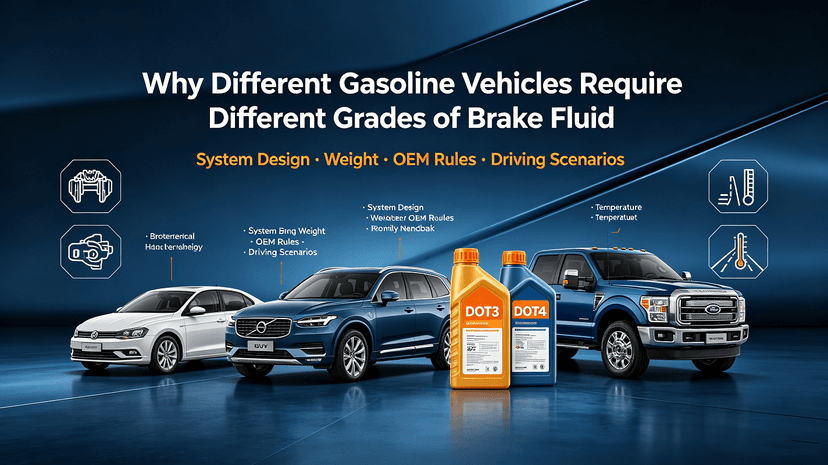
1. Distinct brake system structural designs from car manufacturers are the core factor
Every automaker independently designs braking systems for their gasoline vehicle models, which sets fixed minimum brake fluid standards.
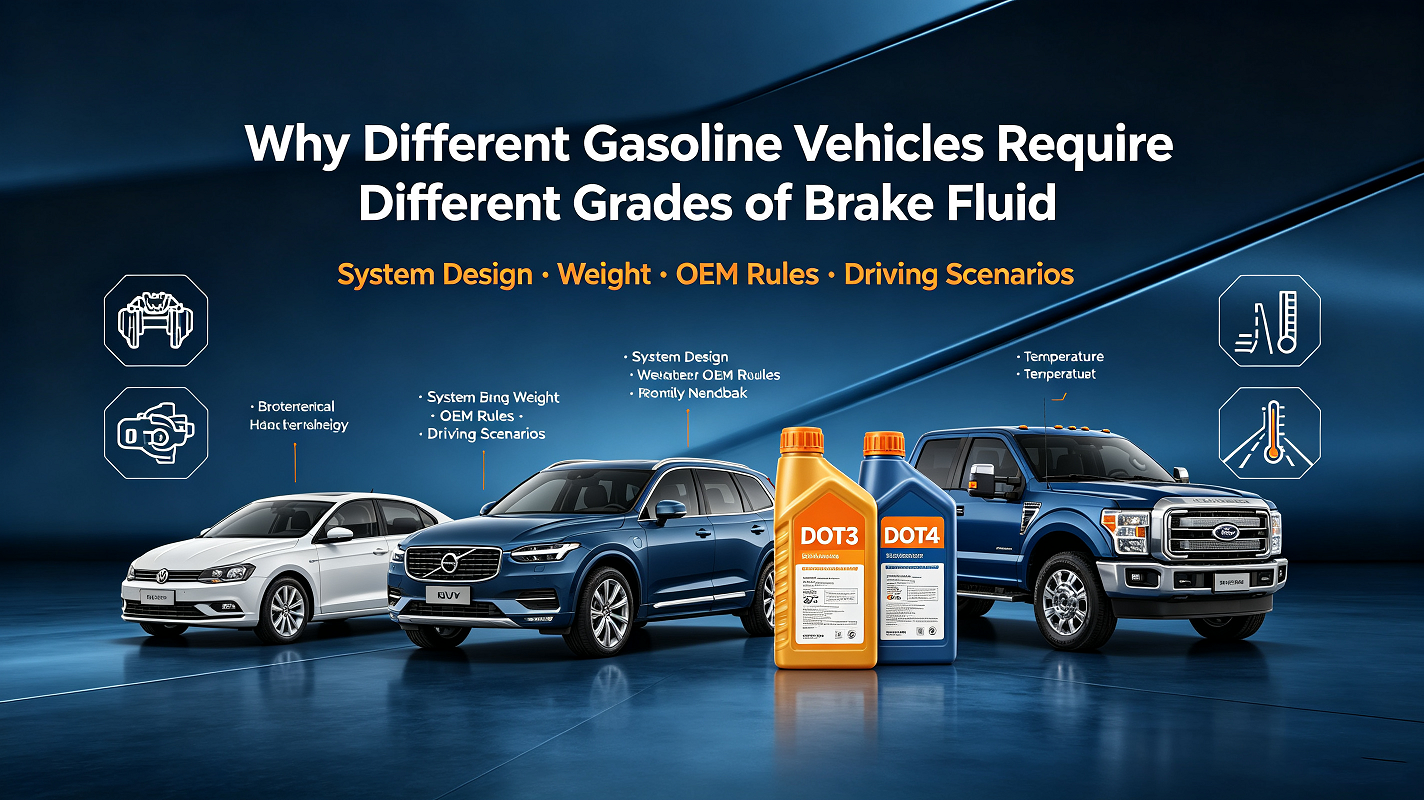
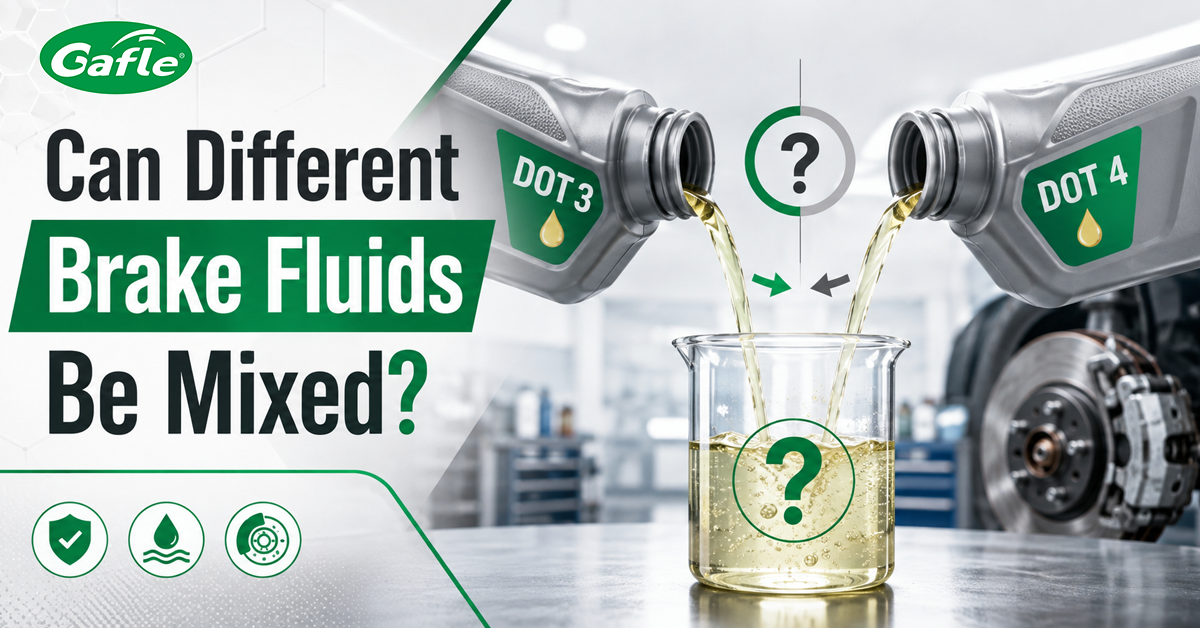
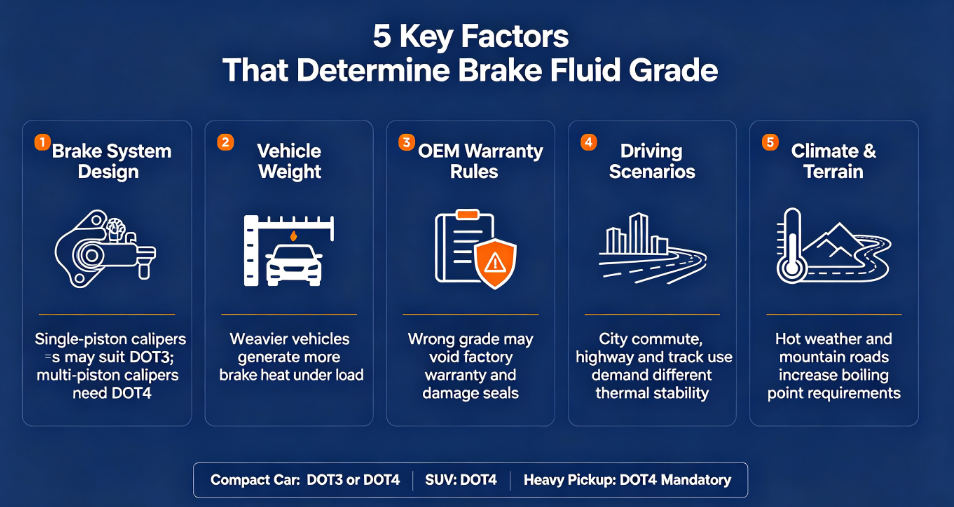
Entry-level compact city cars adopt simple single-piston brake calipers with thin brake lines. The whole braking system generates low heat during daily commutes, so OEMs mark DOT3 as the factory-recommended fluid.
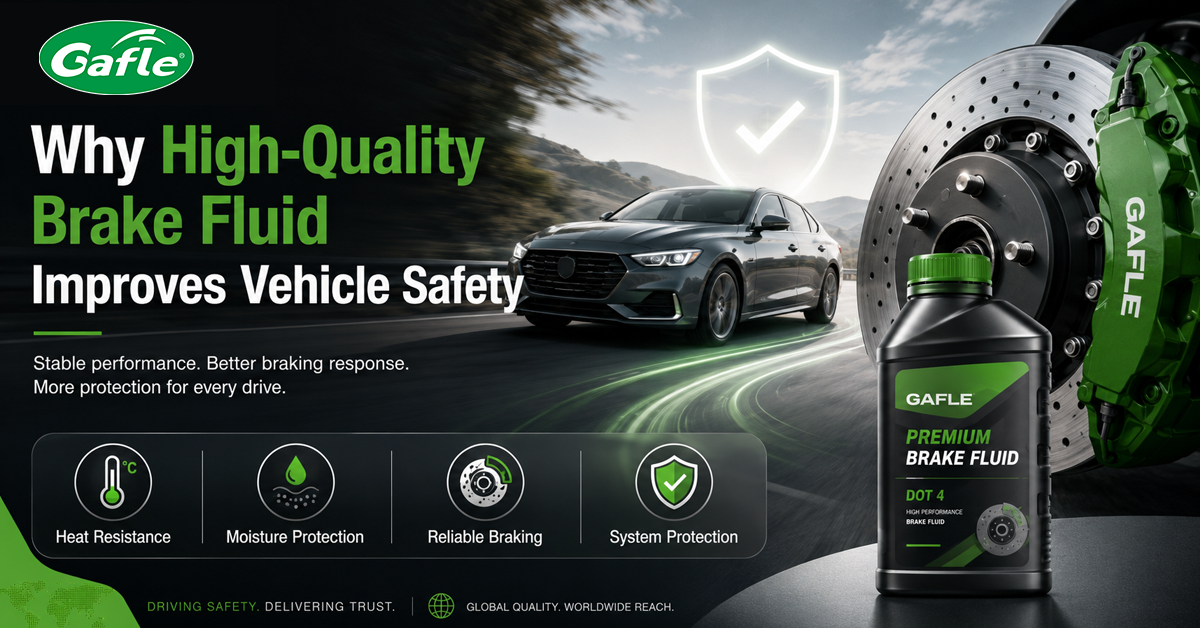
Mid-size sedans, SUVs and performance fuel cars equip multi-piston high-performance calipers, larger brake discs and complex ABS anti-lock modules. These components trap massive heat under frequent braking. Automakers mandate DOT4 fully synthetic brake fluid for these models, thanks to its far higher dry and wet boiling point that prevents vapor lock.
Heavy gasoline pickup trucks and large 7-seat SUVs add load-bearing pressure on brakes. Their official maintenance manuals strictly prohibit DOT3, as only high-spec DOT4 can avoid brake failure under heavy loads.
2. Vehicle curb weight directly determines heat generation of brake assemblies
The total weight of a gasoline car is a decisive index for matching brake fluid grades.
Light compact fuel cars (below 1200kg): Light body weight creates little friction heat during urban stop-and-go driving. DOT3 brake fluid meets all daily safety demands and keeps maintenance costs low for car owners.
Mid-weight family vehicles (1200kg–1800kg): Extra weight raises braking heat, especially during downhill sections or highway emergency braking. OEMs upgrade the standard to DOT4 to eliminate boiling risks.
Heavy gasoline trucks, full-size SUVs (over 1800kg): Full loads amplify brake temperature spikes. Low-spec DOT3 will produce air bubbles quickly, leading to spongy brake pedals. All heavy fuel vehicles require DOT4 fluid as standard.
3. Official OEM factory certification and warranty binding brake fluid standards
All gasoline vehicle brands tie brake fluid specifications to the official vehicle warranty policy.
If car owners refill DOT3 fluid into a vehicle factory-certified for DOT4, any subsequent brake system damage will void the manufacturer’s warranty. Automakers design brake pipelines, seals and ABS pumps to match specific fluid viscosity and chemical properties. Mismatched fluid triggers premature seal swelling, pipeline corrosion and ABS module malfunctions.
Each brand releases dedicated maintenance manuals listing exact brake fluid grades for every fuel car model. European gasoline vehicles almost universally require DOT4, while some low-cost Asian entry-level fuel cars retain DOT3 as the baseline spec.
4. Varied daily driving habits and usage scenarios change performance demands
How drivers operate their gasoline cars reshapes the practical requirement for brake fluid standards.
City-only commuter vehicles: Short-distance low-speed driving with infrequent heavy braking. DOT3 works perfectly without safety hazards and cuts maintenance spending for vehicle owners.
Highway frequent long-distance vehicles: Sustained high speeds lead to continuous brake usage during overtaking and downhill cruising. High boiling-point DOT4 is necessary to avoid brake fading.
Performance gasoline sports cars: Aggressive driving, hard braking and track use create extreme brake heat. Many performance fuel models even require upgraded high-temperature DOT4 plus formulations, far exceeding basic DOT3 limits.
5. Geographic climate and local road terrain influence OEM spec adjustments
Automakers tweak recommended brake fluid grades for gasoline cars sold in different regions based on local environment.
Vehicles exported to hot, mountainous markets: Long uphill and downhill journeys plus year-round high ambient temperatures force OEMs to label DOT4 as mandatory for all fuel car models sold locally.
Cars sold in flat, mild-temperature urban zones: Light braking loads allow manufacturers to approve DOT3 for entry-level gasoline vehicles to fit local low-cost maintenance demands.
Conclusion
There is no one-size-fits-all brake fluid for all gasoline vehicles. The grade difference originates from five core factors: factory brake system design, vehicle weight, OEM warranty regulations, daily driving scenarios and regional climate conditions.
For auto chemical wholesalers and repair garages, GAFLE supplies complete DOT3 and DOT4 brake fluid lines fully compliant with global gasoline vehicle OEM standards. Our products match all mainstream fuel car models, with customizable export packaging and full certification documents for every market.
Reach out to our sales team to get tailored brake fluid stock solutions for your local gasoline vehicle market.
Welcome to contact GAFLE for more information & cooperation!
peter
ZHEJIANG GAFLE AUTO CHEMICL CO.,LTD
Tel:86-579-8222 1665
Fax:86-579-8246 4690
Cel/Wechart:86-13335993986
E-mail:peter@gafle.net
Web:www.gafle.net
peter
ZHEJIANG GAFLE AUTO CHEMICL CO.,LTD
Tel:86-579-8222 1665
Fax:86-579-8246 4690
Cel/Wechart:86-13335993986
E-mail:peter@gafle.net
Web:www.gafle.net