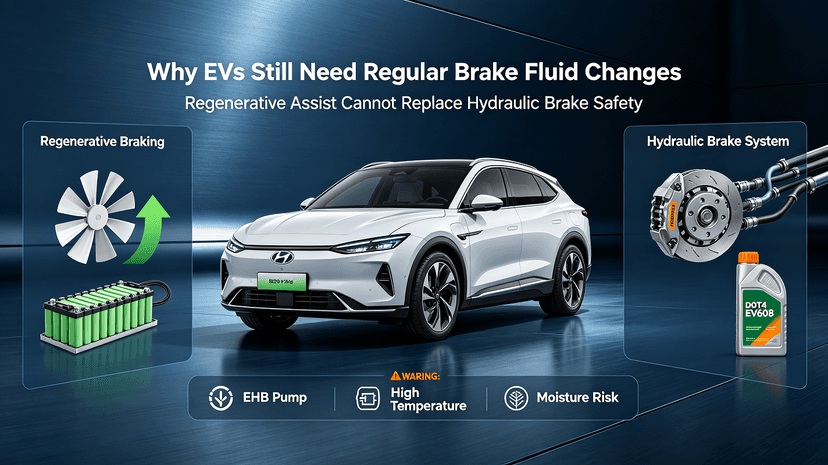
1. EVs use dual braking systems — hydraulic brake fluid remains a critical safety core
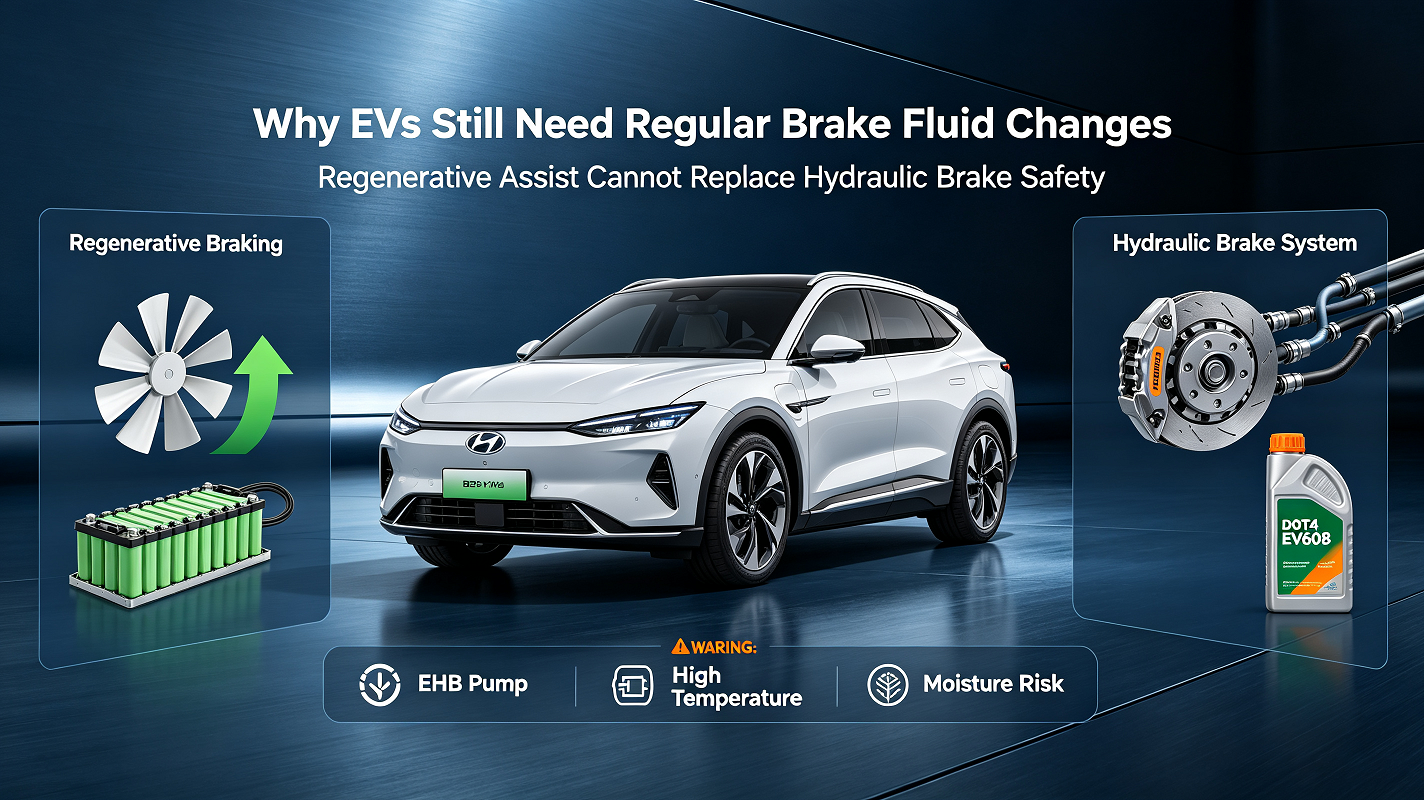
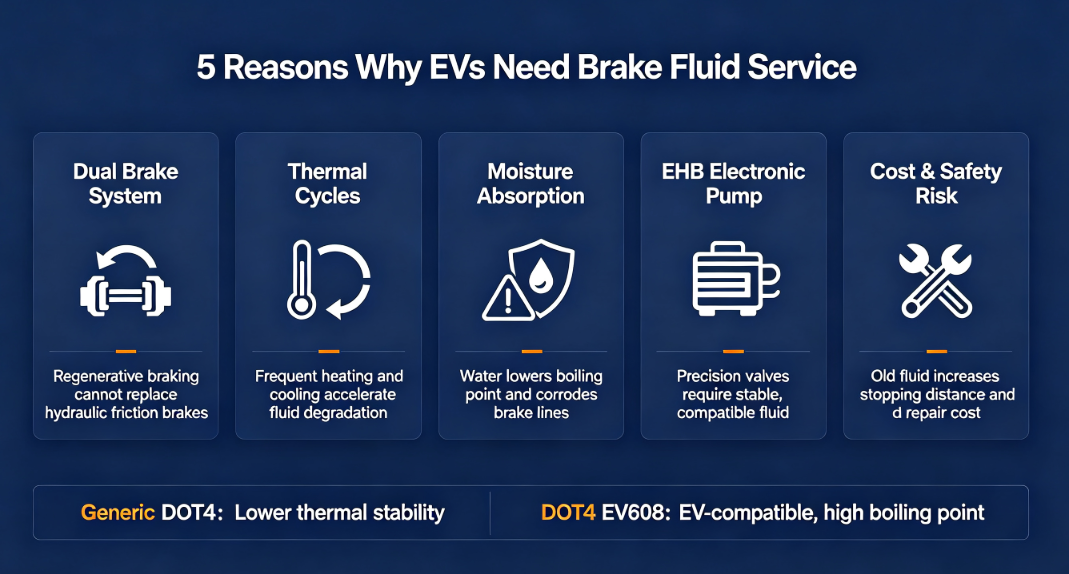
Most EV drivers mistakenly believe regenerative braking eliminates the need for brake fluid maintenance. Every electric sedan, SUV and light EV pickup is built with two braking systems working together. Regenerative braking slows the car and recycles battery power during gentle deceleration, yet it fails to function in key scenarios: emergency hard braking, full vehicle stops, low-speed parking, or when the battery is fully charged. In these dangerous moments, the hydraulic brake system takes over entirely. This system relies completely on brake fluid to transfer pressure to calipers. Without functional brake fluid, vehicles lose stopping power, creating severe crash risks. No mass-produced electric car removes hydraulic brake hardware, so brake fluid is non-negotiable safety fluid for all EV models.
2. Frequent switching between regenerative and hydraulic braking creates extreme temperature swings
EV brake systems endure harsher thermal cycles than traditional gasoline vehicles. Throughout every drive, the car continuously toggles between energy recovery and hydraulic friction brakes. Constant repeated heating and cooling inside brake lines accelerates fluid degradation fast. Standard DOT4 brake fluid struggles to withstand this repeated thermal shock. As fluid ages, its boiling point drops rapidly, forming vapor bubbles in pipelines. Spongy brake pedals and longer stopping distances follow, which are life-threatening for high-speed highway driving. Custom EV-grade DOT4 EV608 brake fluid features enhanced thermal stability built to handle the unique temperature fluctuations of electric vehicles.
3. All glycol-based brake fluid naturally absorbs moisture, which damages EV precision brake components
Brake fluid’s hygroscopic nature applies equally to electric and fuel-powered vehicles. Brake line seals are not fully airtight, allowing ambient water vapor to seep into the closed brake circuit over months and years. Excess water drastically lowers the wet boiling point of brake fluid and triggers internal corrosion. EV engine compartments are tightly packed with lithium battery packs, wiring harnesses and expensive electro-hydraulic brake (EHB) units. Corroded pipelines or swollen rubber seals from water-contaminated fluid can lead to brake system failure, which risks battery impact damage and astronomical repair bills far higher than standard car brake repairs.
4. EV exclusive EHB electronic brake pumps demand chemically matched specialized brake fluid
Unlike gasoline cars equipped with simple vacuum boosters, modern EVs eliminate vacuum systems and adopt compact electronic hydraulic brake pumps controlled by microchips. These ultra-precise EHB units have tiny internal valves and narrow flow channels that set strict standards for brake fluid purity, viscosity and chemical compatibility. Conventional DOT3 or generic DOT4 brake fluid will generate sediment after long-term use, clog narrow valve passages and trigger permanent vehicle error codes. Only EV-formulated brake fluid like GAFLE DOT4 EV608 prevents sediment buildup and avoids corrosion on electronic brake internal parts.
5. Neglecting brake fluid replacement leads to expensive repairs and avoidable safety hazards
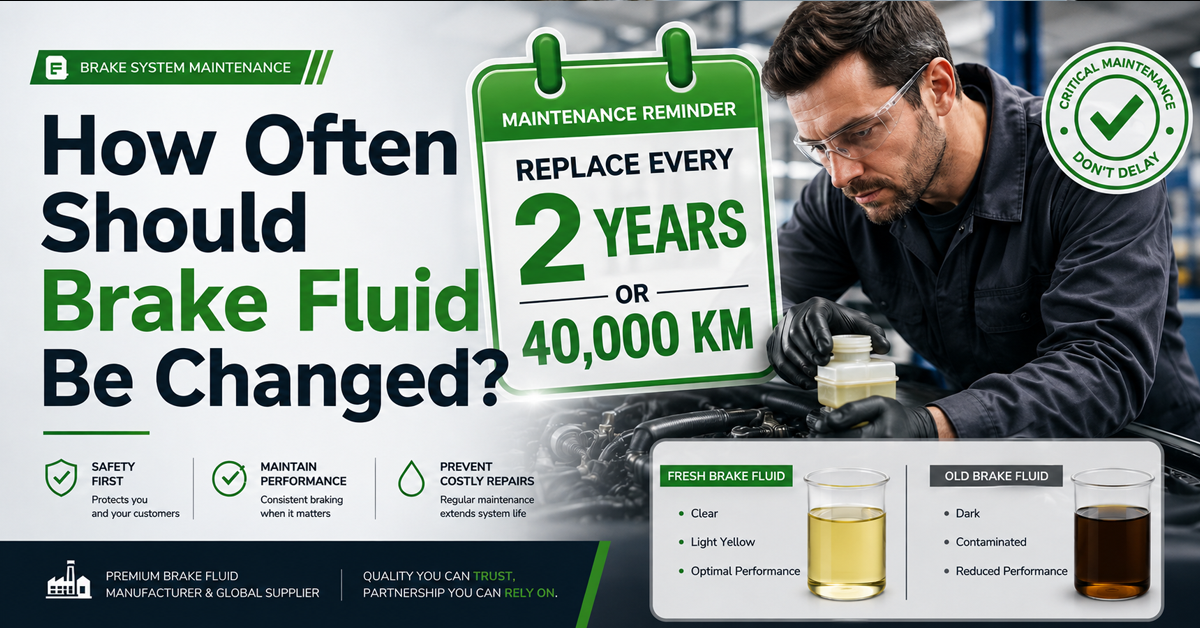
Skipping scheduled brake fluid changes creates double losses: compromised driving safety and inflated maintenance costs. For fuel cars, faulty brake fluid only damages basic calipers and metal tubing. For electric vehicles, contaminated fluid can ruin the integrated EHB module, a single component costing thousands to replace. All major EV OEMs specify a 2–3 year brake fluid replacement cycle regardless of annual mileage. Even city EVs driven short distances daily accumulate moisture inside brake lines over time. Most car owners focus solely on battery and motor health while ignoring brake fluid service, leaving a hidden critical safety flaw.
Final Conclusion
Regenerative braking acts only as an auxiliary deceleration tool, never a full replacement for hydraulic brake hardware. All electric vehicles require periodic brake fluid replacement. Repeated thermal cycling, natural moisture absorption and high-precision EHB brake structures make EVs more demanding of brake fluid performance than gasoline vehicles.
GAFLE DOT4 EV608 brake fluid is specially developed for all passenger EVs, electric SUVs and light electric commercial vehicles, delivering ultra-high boiling points, superior moisture resistance and full compatibility with electronic hydraulic brake systems. We offer bulk wholesale, private label custom packaging and complete export certification documents for global auto repair shops and cross-border importers.
Get in touch with our sales team for customized EV brake fluid supply solutions for your market.
Welcome to contact GAFLE for more information & cooperation!
peter
ZHEJIANG GAFLE AUTO CHEMICL CO.,LTD
Tel:86-579-8222 1665
Fax:86-579-8246 4690
Cel/Wechart:86-13335993986
E-mail:peter@gafle.net
Web:www.gafle.net
peter
ZHEJIANG GAFLE AUTO CHEMICL CO.,LTD
Tel:86-579-8222 1665
Fax:86-579-8246 4690
Cel/Wechart:86-13335993986
E-mail:peter@gafle.net
Web:www.gafle.net