
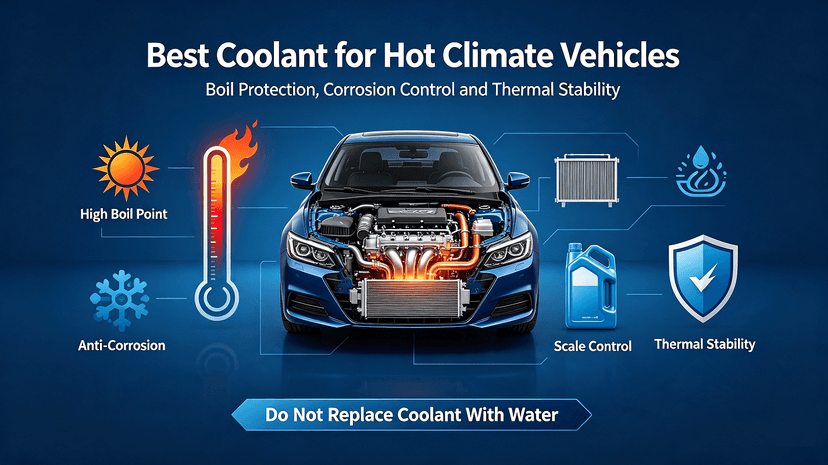
Many people think coolant is only needed for cold winter protection. In fact, high-temperature climates also place heavy demands on engine coolant. In tropical regions, high ambient temperature, slow city traffic, long highway driving and heavy-duty fleet operation all increase cooling system load. Without the right coolant, engines can overheat, corrode and suffer accelerated component wear.
High boiling point is critical for hot climate use
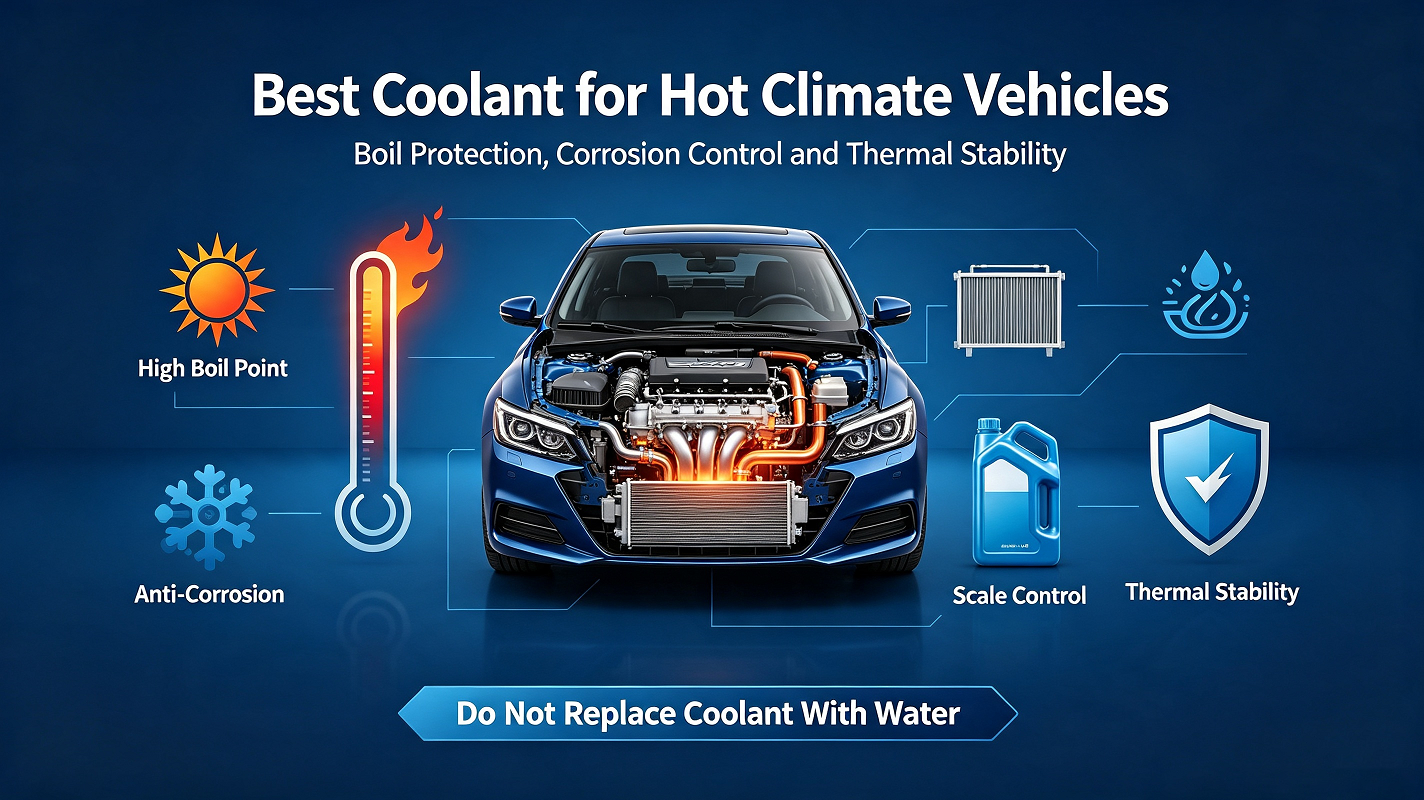
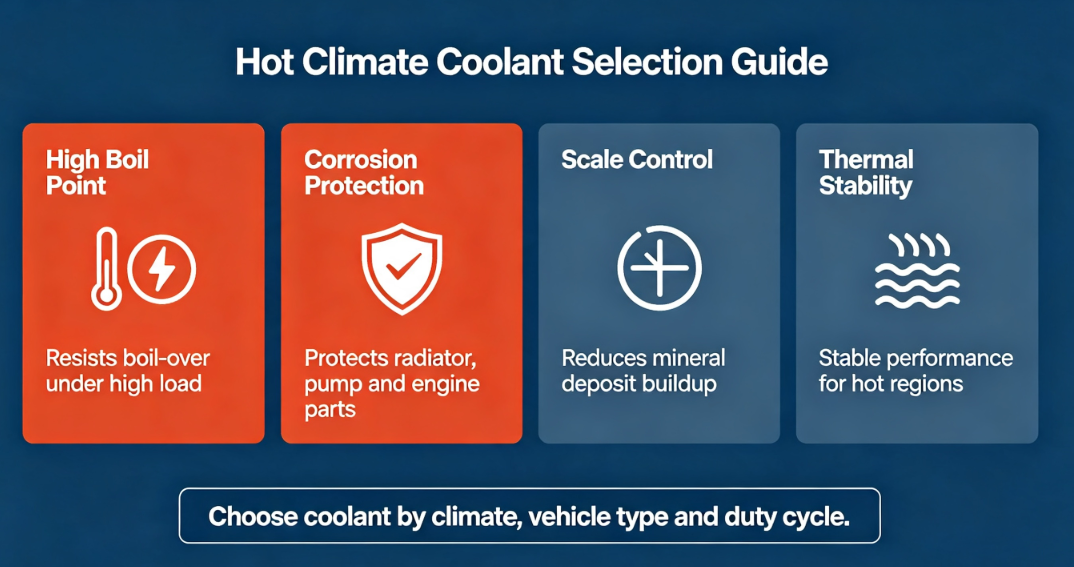
In hot weather, the cooling system needs reliable boil-over resistance. Coolant with a high boiling point helps the engine maintain stable operating temperature even under high load. If the boiling point is too low, the liquid may turn into vapor, reduce heat transfer and cause the temperature gauge to rise quickly.
Corrosion protection becomes more important in hot regions
High temperature accelerates oxidation and metal corrosion inside the cooling system. Aluminum radiators, water pumps, engine galleries and heater cores are all at risk. Good quality coolant contains corrosion inhibitors that protect metal parts, prevent rust formation and extend the service life of the entire cooling system.
Scale and deposit control affects long-term performance
In many hot climate regions, water quality may contain minerals, calcium and magnesium. If coolant is repeatedly mixed with untreated water, limescale and deposits will form inside radiators and engine channels. These deposits reduce heat dissipation and can eventually cause blockage. Using a pre-mixed or high-quality concentrated coolant with anti-scale additives helps avoid this problem.
Heavy-duty fleets need stronger thermal stability
Trucks, buses, construction machinery and delivery fleets often operate under heavy load in hot weather. They need coolant with better thermal stability and longer service life. Long-life OAT or HOAT coolant is usually more suitable for modern fleets because it provides extended protection and reduces maintenance frequency.
Does hot climate coolant need a lower freeze point?
Not necessarily. Freeze point selection should match the actual local climate. In tropical lowland regions, a -25°C coolant may be sufficient. In regions with occasional cold nights or highland temperature drops, a -35°C product is safer. The key is to balance boiling protection, corrosion resistance and freeze protection according to real operating conditions.
Common mistake: using water as a cheap solution
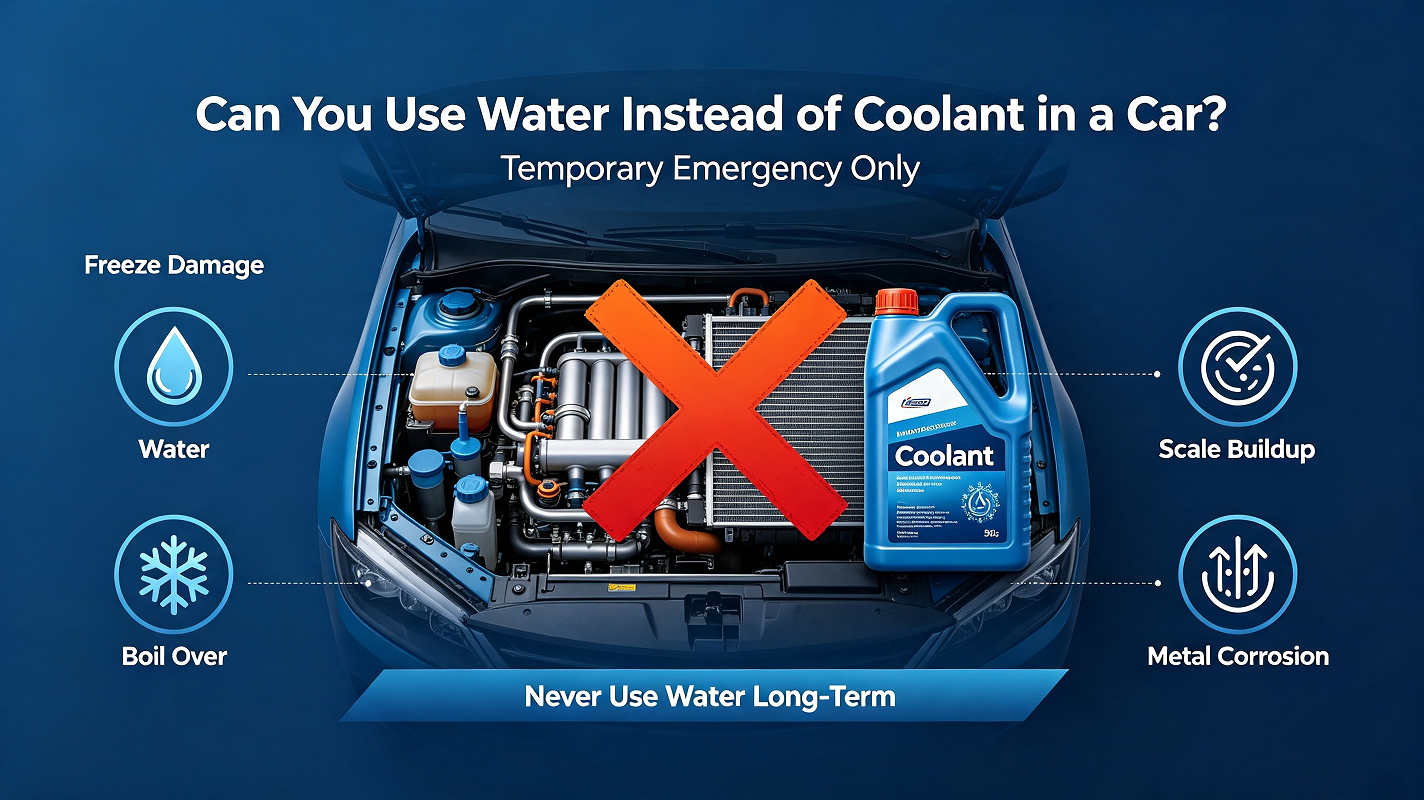
Some drivers in hot countries think water is enough because it does not freeze. This is a risky mistake. Water boils easily, promotes corrosion and forms scale over time. It may cool the engine temporarily, but it damages the radiator, water pump and seals in the long run. Water is only suitable for short emergency topping-up.
B2B recommendation for tropical markets
For wholesalers, garages and fleet managers in Africa, the Middle East, Southeast Asia and Latin America, it is important to stock coolant that matches local vehicle types and climate conditions. Passenger cars usually need high-performance OAT or HOAT coolant. Heavy-duty fleets need thermal-stable heavy-duty formulas. Old vehicles may still require compatible IAT products.
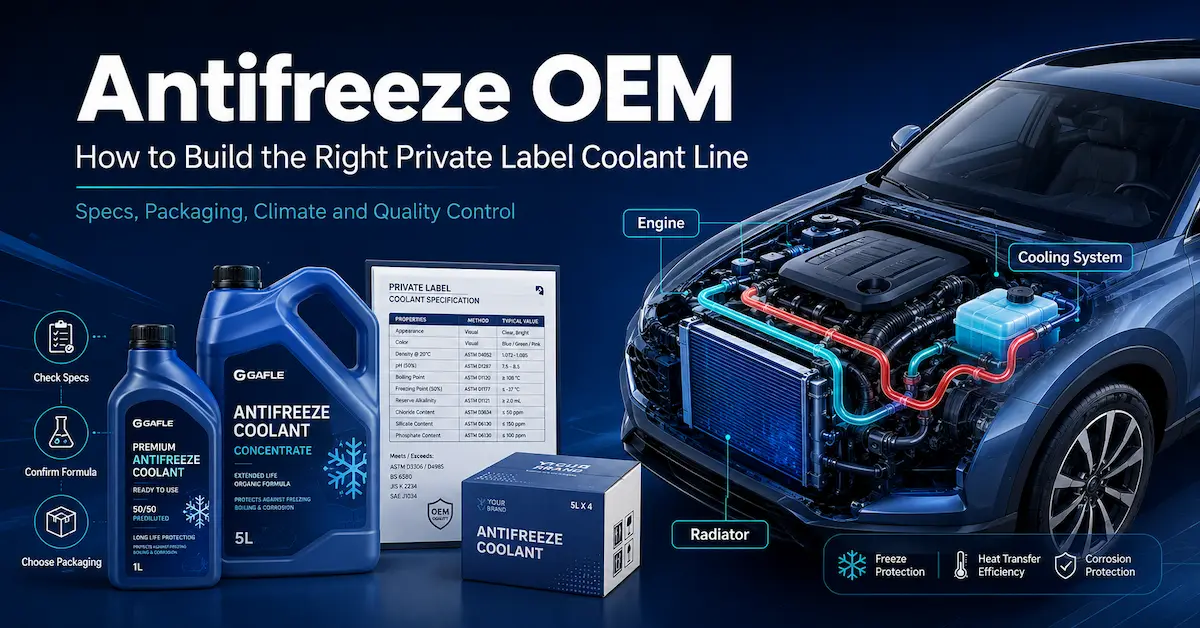
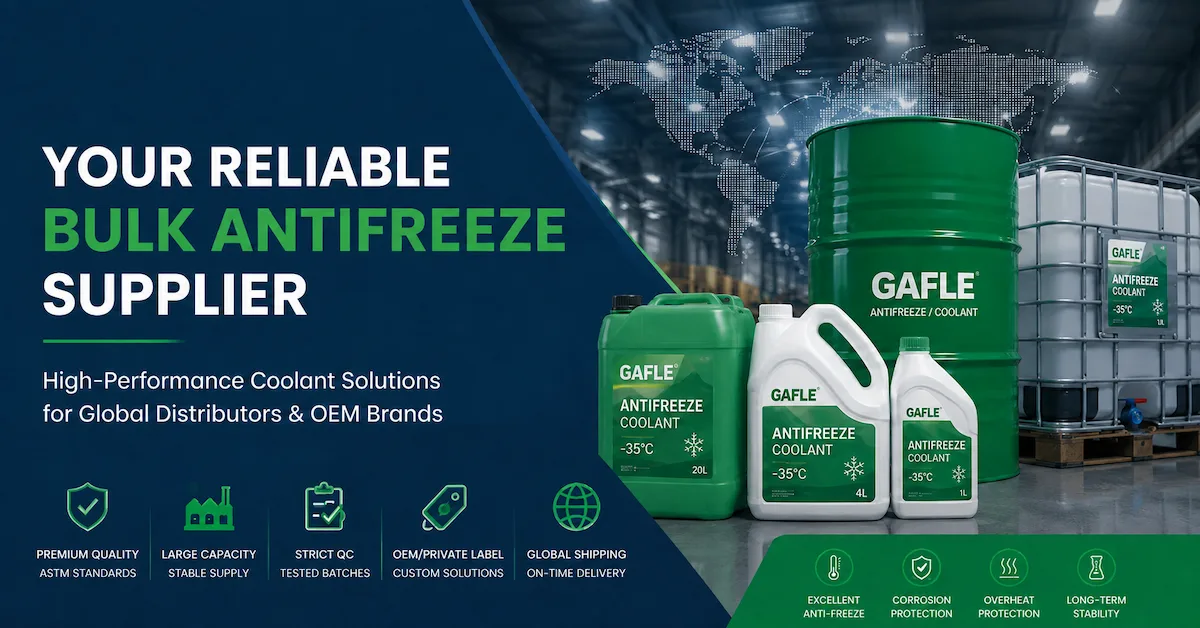
GAFLE offers a wide range of coolant products for hot climate markets, including -25°C, -35°C and long-life OAT / HOAT formulas. We also provide product labeling, technical documents and private label support for global wholesale partners. Contact us to select the right coolant grade for your market.
Welcome to contact GAFLE for more information & cooperation!
peter
ZHEJIANG GAFLE AUTO CHEMICL CO.,LTD
Tel:86-579-8222 1665
Fax:86-579-8246 4690
Cel/Wechart:86-13335993986
E-mail:peter@gafle.net
Web:www.gafle.net