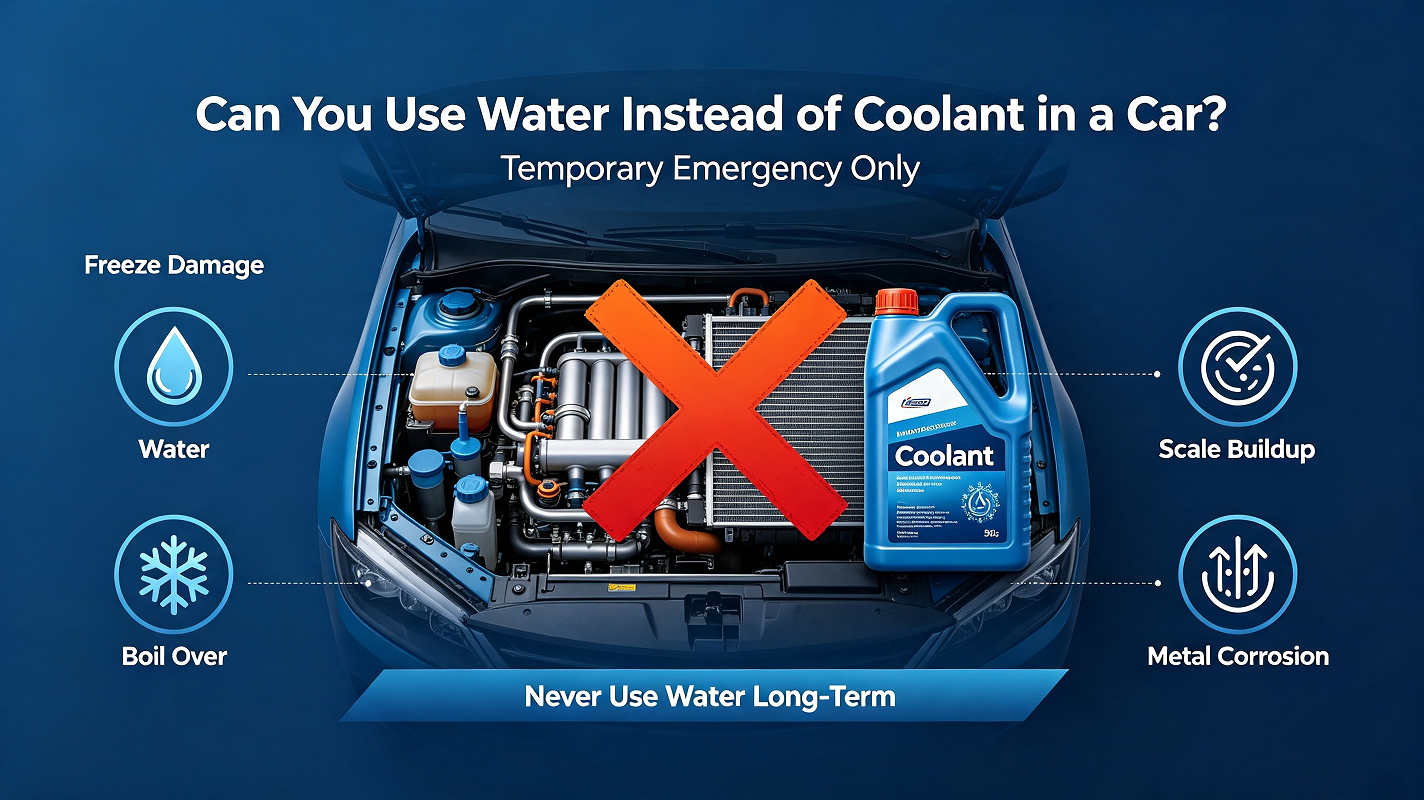
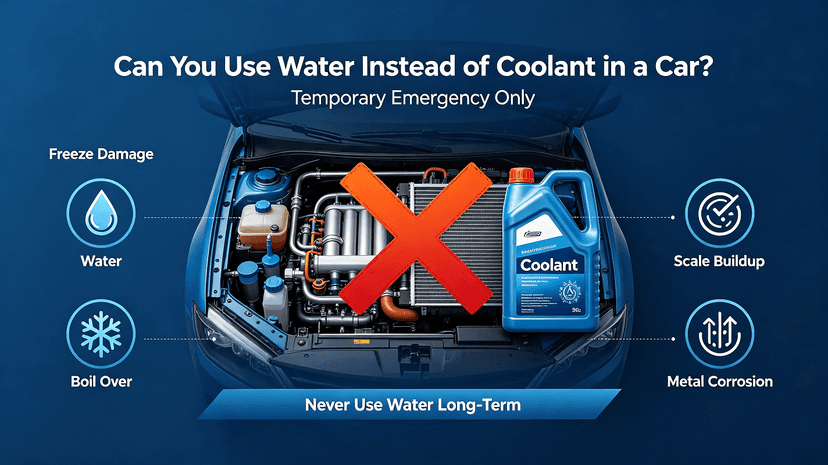
Many drivers use tap water or pure water as a substitute for coolant to save cost. This is one of the most common and dangerous mistakes in vehicle maintenance. Although water can temporarily cool the engine, it cannot replace professional antifreeze in daily or long-term use. This blog explains why you should never replace coolant with water and the only acceptable emergency scenario.
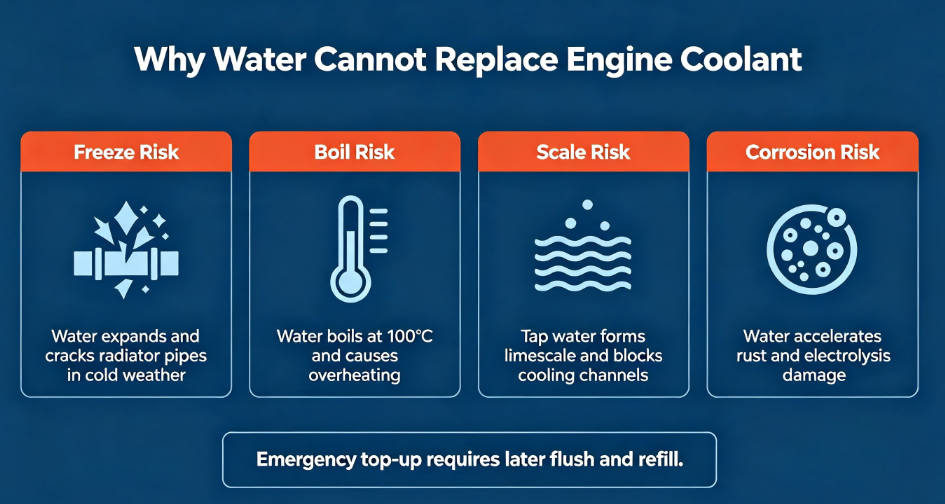
Water has no freeze protection and will crack your engine in cold weather. Pure water freezes at 0°C. Once the temperature drops below freezing point, water expands inside radiator pipes, engine cooling channels and heater cores. The expansion force will crack aluminum radiators, block pipelines and even damage the engine cylinder block. Coolant contains glycol formula to lower the freezing point and avoid winter damage.
Water boils easily and causes engine overheating in hot weather. Water boils at 100°C, while engine working temperature often exceeds this threshold in summer or during heavy load driving. Coolant is engineered with a high boiling point up to 108°C–113°C. Running with water causes frequent boiling, steam generation and overheating, which burns gaskets and deforms engine parts.
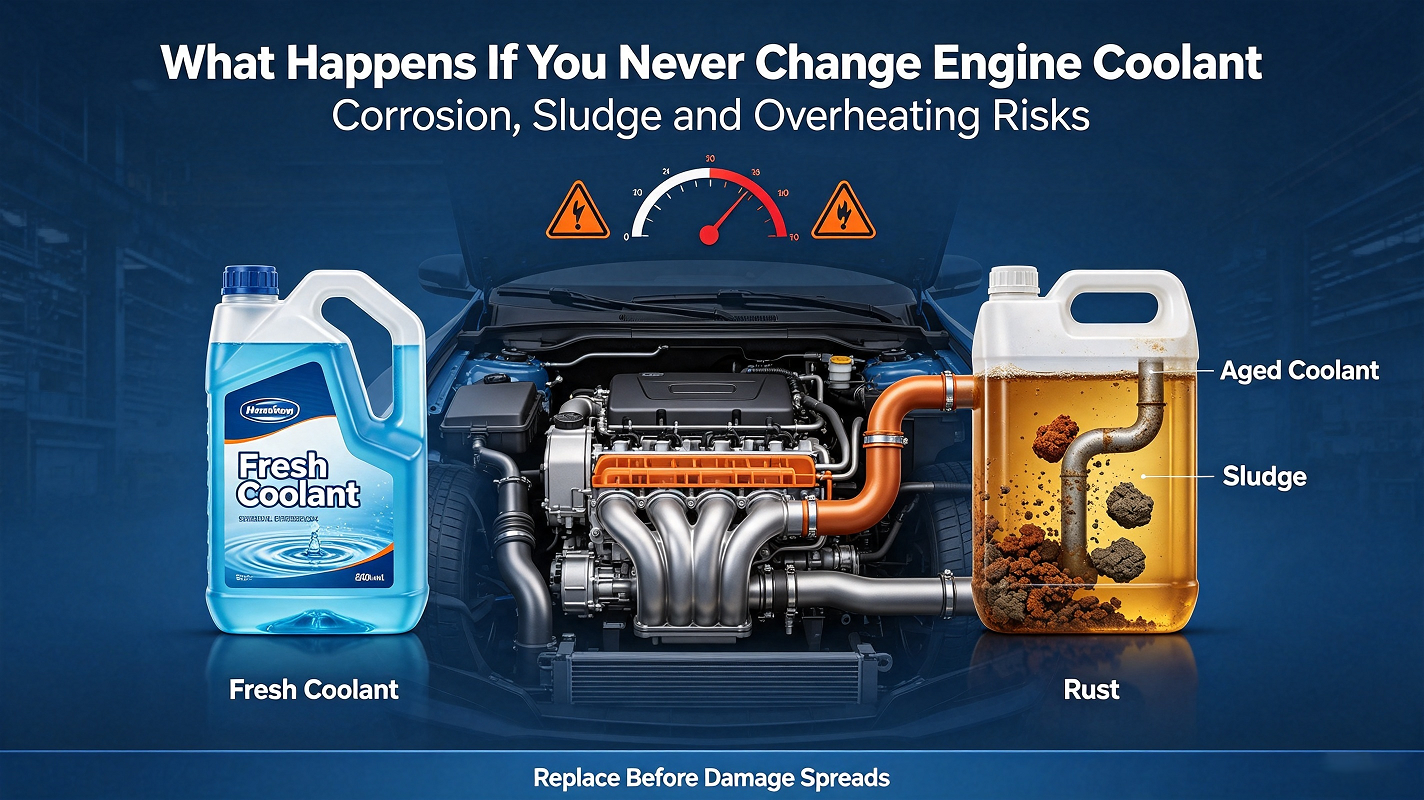
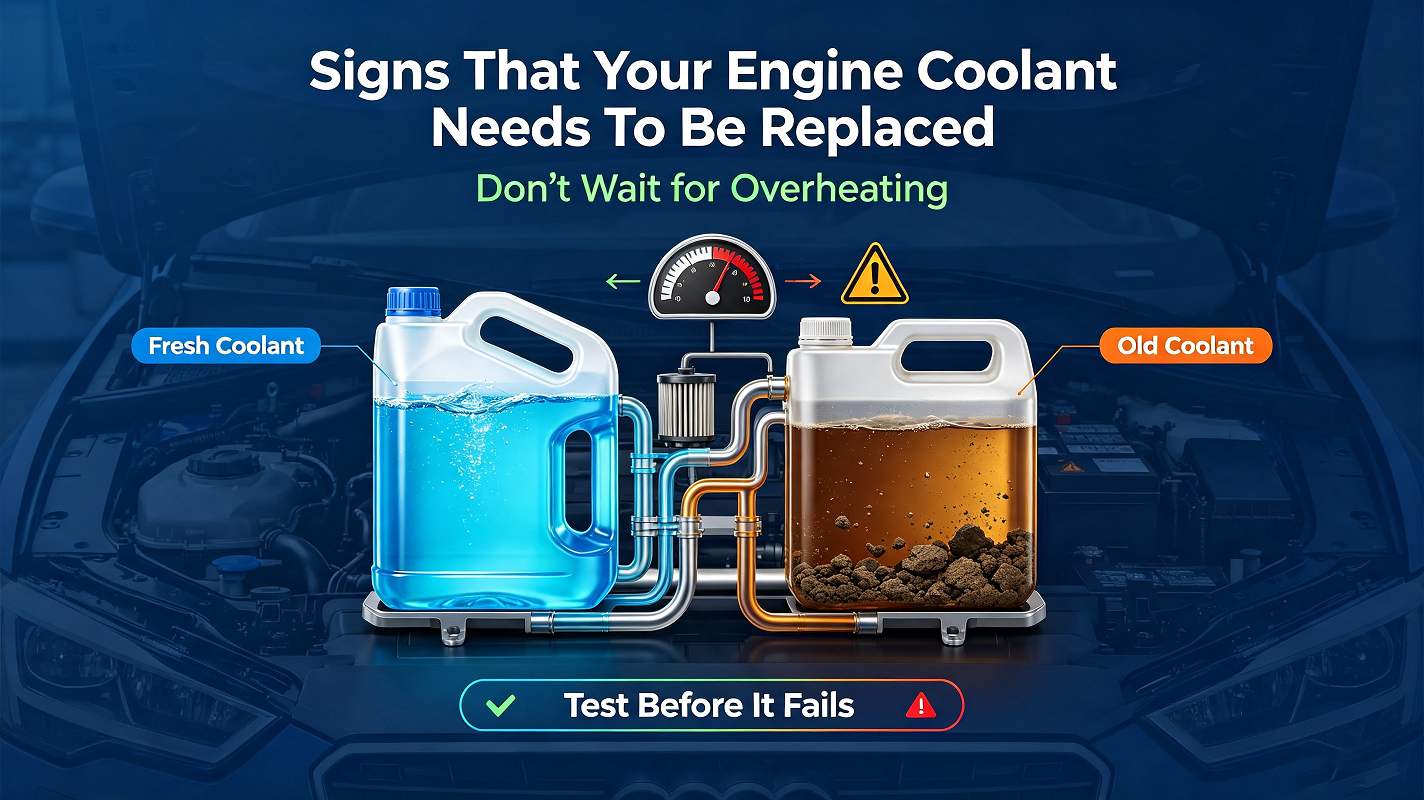
Tap water produces scale and blocks the entire cooling system. Tap water and mineral water contain calcium, magnesium and impurities. After repeated heating and circulation, they form hard limescale and mineral deposits. These scales stick to radiator inner walls, reduce heat dissipation efficiency and eventually cause permanent blockage. Unlike water, professional coolant contains scale inhibitors to keep the system clean for years.
Water causes severe metal corrosion and rust. Water is conductive and chemically active. It accelerates oxidation, rust and electrolysis inside aluminum, iron and copper cooling components. Long-term water use leads to rusty water pumps, corroded radiators and leaking gaskets. Coolant adds complete anti-corrosion additives to protect all metal parts for long service life.
The only acceptable scenario: short-term emergency use. If your coolant suddenly leaks and you have no antifreeze on hand, you can add a small amount of clean distilled water to continue driving for a short distance. This is only a temporary rescue solution. You must flush the system and refill with standard coolant at the nearest repair shop. Never keep water in the system long-term.
Distilled water is not a long-term solution either. Even pure distilled water lacks anti-rust, anti-scale, anti-freeze and anti-boil functions. It still causes corrosion and hidden damage over time. Distilled water is only used for diluting concentrated coolant, not for independent vehicle cooling.
B2B tips for garages and fleet owners. Always educate customers that coolant is not just “anti-freeze liquid”. It is a multi-functional protective fluid for all seasons. Avoid low-cost water replacement maintenance to reduce after-sales repair rates.
GAFLE full-spec coolant provides all-season anti-freeze, anti-boil, anti-rust and anti-scale protection for passenger cars, trucks and engineering machinery. Contact us for bulk wholesale and stable market supply.
Welcome to contact GAFLE for more information & cooperation!
peter
ZHEJIANG GAFLE AUTO CHEMICL CO.,LTD
Tel:86-579-8222 1665
Fax:86-579-8246 4690
Cel/Wechart:86-13335993986
E-mail:peter@gafle.net
Web:www.gafle.net