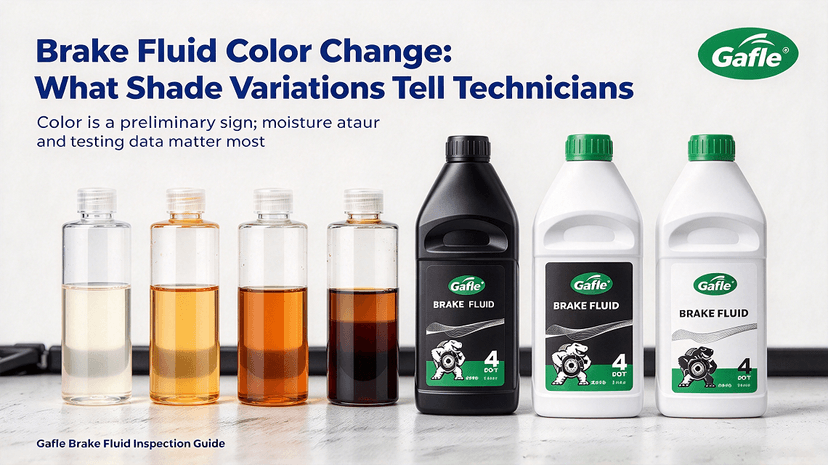
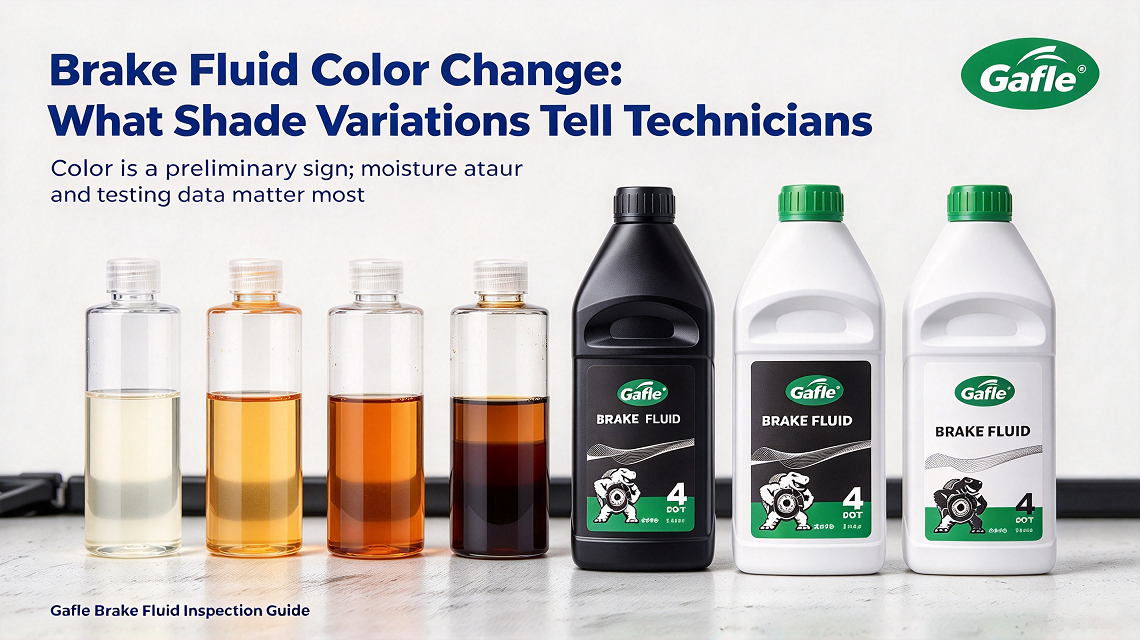
Visual inspection of brake fluid color is a fast, simple preliminary check during routine vehicle maintenance, though color alone cannot replace boiling point or water testing.
Brand-new, high-quality brake fluid from Gafle is usually clear or pale straw/light amber. Many people mistakenly believe dark fluid automatically means the fluid is expired, but we need to understand the root causes of discoloration to make correct service decisions.
Normal slow color darkening comes from natural additive aging.
Over service time, brake fluid additives gradually degrade from repeated heat cycling. The fluid slowly turns from clear to light amber. This mild color shift does not immediately make the fluid unsafe, but it is a warning sign to schedule testing. It shows the protective additives are starting to wear out, and moisture absorption risk rises. Regular inspection can catch this stage before serious safety risks emerge.
Dramatic dark brown or black brake fluid points to heavy contamination.
Severe discoloration typically means fine metal particles, rubber seal debris and sludge have mixed into the fluid. This happens when internal brake components corrode or seals wear down. Dark contaminated fluid is abrasive. It circulates through the whole hydraulic system, scratching master cylinder bores, caliper pistons and valve components. In this scenario, a simple fluid drain is insufficient; technicians must inspect the whole brake circuit for internal wear and flush the entire system thoroughly.
External contamination can also alter brake fluid color drastically.
If mineral oil, engine oil, transmission fluid or grease accidentally mixes into glycol-based brake fluid, chemical reactions will destroy rubber seals rapidly. The fluid may turn cloudy and dark. Even a tiny amount of mineral oil contamination can ruin the whole brake hydraulic system within weeks. This type of contamination is extremely dangerous, requiring complete replacement of all rubber parts plus full fluid flush.
Limitations of color inspection for brake fluid maintenance.
Color cannot measure water content accurately. Brake fluid can remain clear while absorbing large amounts of moisture. That’s why professional workshops combine visual check with electronic brake fluid testers that measure boiling point or water percentage. As a distributor, you can advise your repair shop customers to combine visual inspection and digital testing for reliable brake condition assessment, delivering more professional vehicle service.
Welcome to contact GAFLE for more information & cooperation!
peter
ZHEJIANG GAFLE AUTO CHEMICL CO.,LTD
Tel:86-579-8222 1665
Fax:86-579-8246 4690
Cel/Wechart:86-13335993986
E-mail:peter@gafle.net
Web:www.gafle.net
peter
ZHEJIANG GAFLE AUTO CHEMICL CO.,LTD
Tel:86-579-8222 1665
Fax:86-579-8246 4690
Cel/Wechart:86-13335993986
E-mail:peter@gafle.net
Web:www.gafle.net