logo

How Brake Fluid Overfilling Causes Brake System Faults

logo

Published

Oct 13 2026

  • Buying Guide

Follow us

how-brake-fluid-overfilling-causes-brake-system-faults
overfilled brake fluid reservoir
Vehicle technicians and DIY car owners commonly make the mistake of overfilling the brake fluid reservoir. Most people assume more fluid equals safer braking, but excess brake fluid inside the reservoir can create unexpected brake system issues.
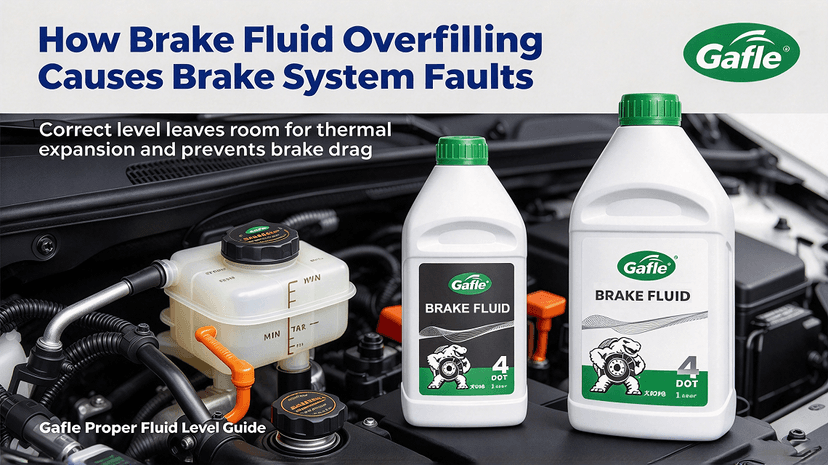
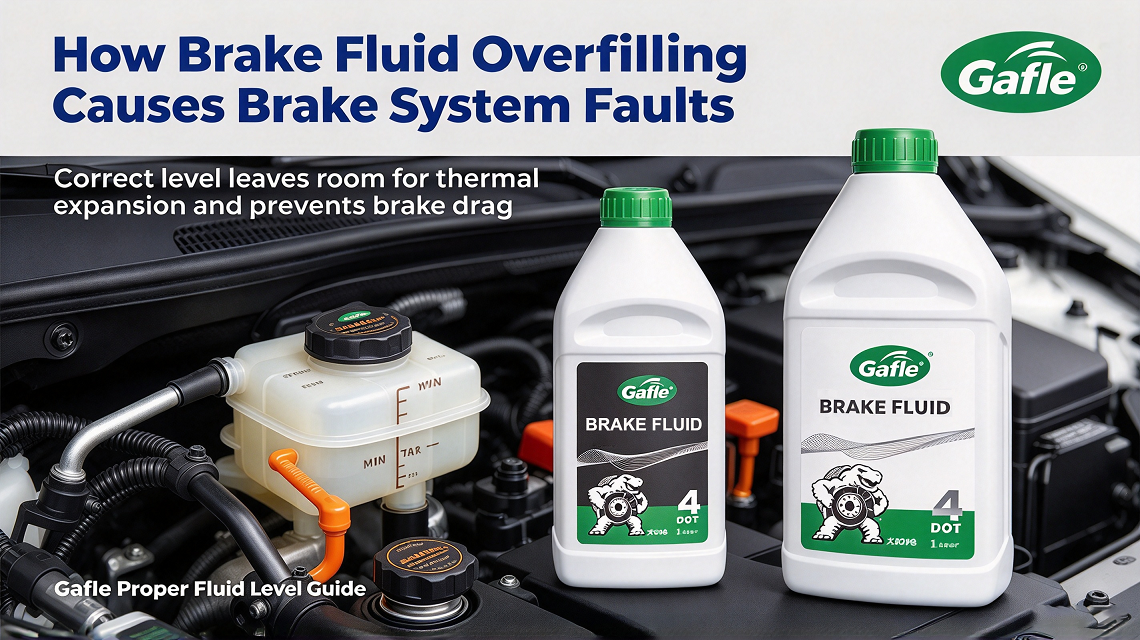
The brake fluid reservoir is designed with dedicated empty space, reserved for thermal expansion of brake fluid when brakes heat up during operation. Removing this expansion room leads to hydraulic pressure problems.
What physically happens when brake fluid is overfilled.
When braking repeatedly, calipers heat up and brake fluid temperature rises. Liquid expands and needs extra space inside the reservoir. If the tank is filled to the absolute top, there is no room for expansion. Rising fluid volume creates unwanted residual pressure in the closed hydraulic brake circuit. This residual pressure prevents brake pistons from retracting fully after releasing the brake pedal. The brake pads keep lightly pressing against rotors continuously, which is called brake drag.
Symptoms caused by overfilled brake fluid.
Brake drag brings multiple obvious signs: hot rotors after normal driving, burning smell from brakes, accelerated pad and rotor wear, higher fuel consumption. In some modern vehicles, continuous residual pressure can trigger ABS or brake system warning lights on the dashboard. In severe cases, constant friction overheats brakes, increasing vapor lock risk under heavy braking. Many technicians spend hours troubleshooting these symptoms without checking reservoir fluid level.
The correct procedure to set brake fluid level.
The reservoir has MIN and MAX marked lines printed on the plastic tank. The fluid level should sit between MIN and MAX marks. Do not fill all the way to the cap. The fluid level will naturally drop slowly over vehicle service life as brake pads wear down. When pads thin out, caliper pistons extend outward, consuming volume in the hydraulic circuit and lowering reservoir fluid level. This normal drop does not automatically mean there is a brake leak.
Advice for distributors educating workshop clients.
Remind your customers that topping up brake fluid is not about filling it to the top. Explain the expansion space principle. If a reservoir was overfilled during service, siphon excess fluid carefully to bring the level back within the marked range. Pair Gafle high-quality brake fluid with proper level maintenance to help repair shops avoid unnecessary brake drag faults and premature brake component replacement.
Welcome to contact GAFLE for more information & cooperation!
peter
ZHEJIANG GAFLE AUTO CHEMICL CO.,LTD
Tel:86-579-8222 1665
Fax:86-579-8246 4690
Cel/Wechart:86-13335993986
E-mail:peter@gafle.net
Web:www.gafle.net
Featured Blogs
Rust Proof Brake Fluid: How Buyers Verify Corrosion Protection Before Ordering

Rust Proof Brake Fluid: How Buyers Verify Corrosion Protection Before Ordering

Rust Proof Brake Fluid buyers need evidence of internal corrosion protection, the correct vehicle specification and reliable packaging. This guide helps importers, distributors and private-label brands evaluate test reports, approve product claims and prepare a complete sourcing inquiry.

How Brake Fluid Overfilling Causes Brake System Faults

How Brake Fluid Overfilling Causes Brake System Faults

1. Vehicle technicians and DIY car owners commonly make the mistake of overfilling the brake fluid reservoir. Most people assume more fluid equals safer braking, but excess brake fluid inside the reservoir can create unexpected brake system issues. 2. What physically happens when brake fluid is overfilled. 3. Symptoms caused by overfilled brake fluid. 4. The correct procedure to set brake fluid level. 5. Advice for distributors educating workshop clients.

The Difference Between Glycol Brake Fluid and Silicone-Based Brake Fluid

The Difference Between Glycol Brake Fluid and Silicone-Based Brake Fluid

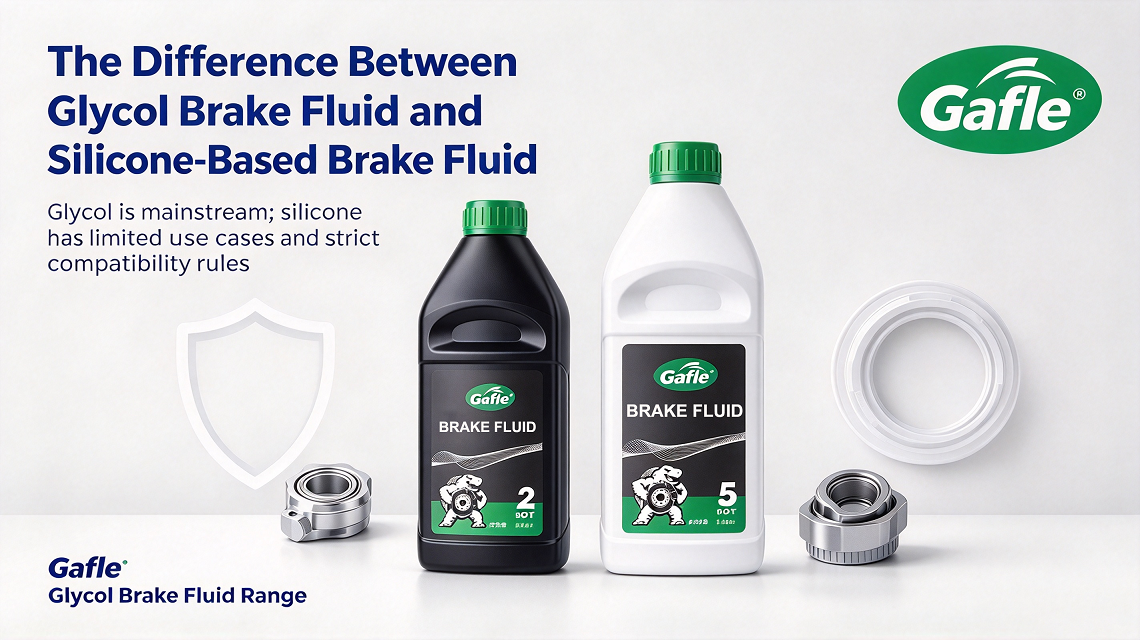
1. Two major chemical families dominate the global brake fluid market: glycol-based brake fluid and silicone-based brake fluid. Many buyers confuse DOT 5 silicone fluid with DOT 5.1 glycol fluid, which is one of the most dangerous misjudgments in brake service. 2. Glycol brake fluid: the mainstream choice for nearly all modern passenger cars, motorcycles and light commercial vehicles. 3. Silicone brake fluid (DOT5) is non-hygroscopic and does not absorb water. 4. Typical application scenarios for silicone brake fluid. 5. Key takeaways for importers, distributors and repair shops.

Why Brake Fluid Reservoir Cap Design Matters for Long-Term Fluid Quality

Why Brake Fluid Reservoir Cap Design Matters for Long-Term Fluid Quality

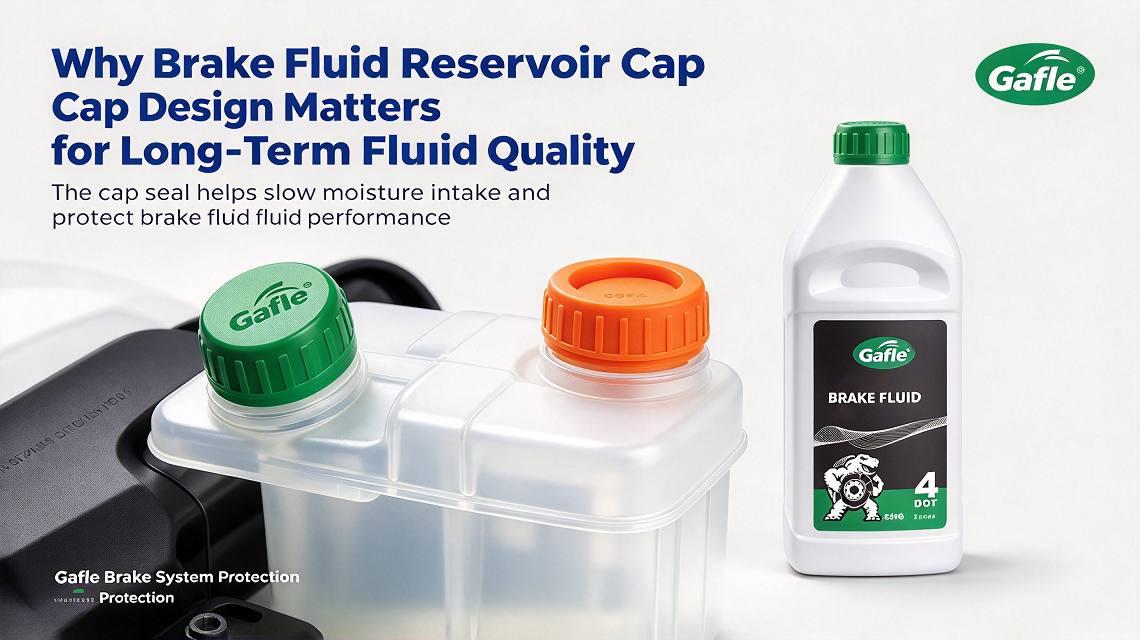
1. Most vehicle owners and technicians overlook the brake fluid reservoir cap, yet this small component plays a critical role in slowing moisture absorption of brake fluid. 2. How the diaphragm seal inside reservoir caps works. 3. Common signs of a faulty brake reservoir cap. 4. Best practices for inspecting and maintaining reservoir caps during brake service 5. For auto parts wholesalers and distributors.

Brake Fluid Color Change: What Shade Variations Tell Technicians

Brake Fluid Color Change: What Shade Variations Tell Technicians

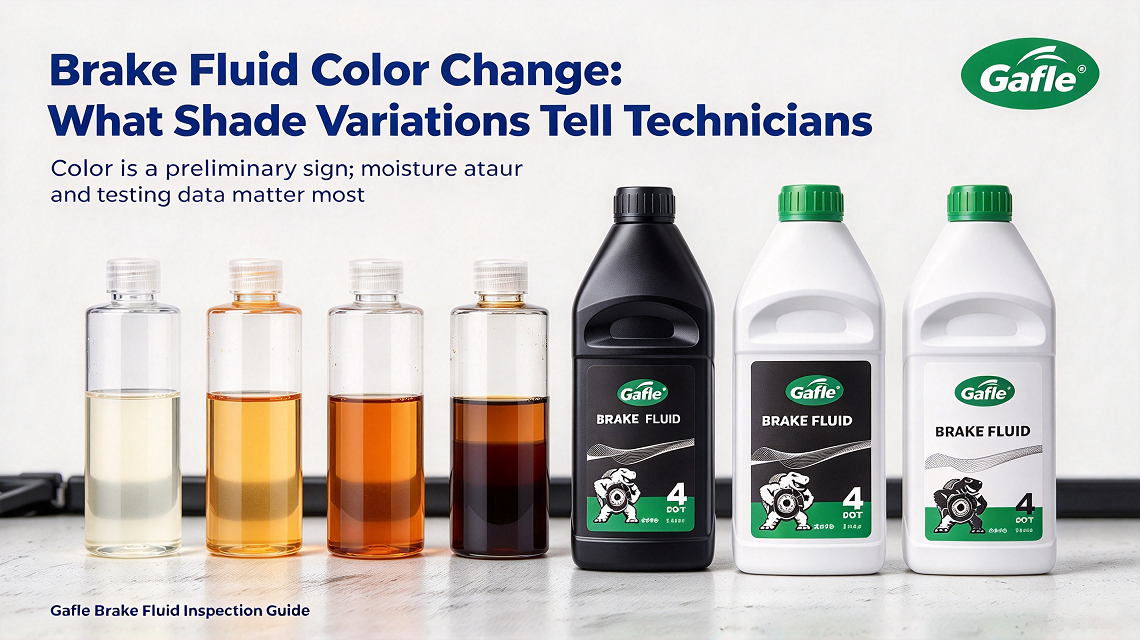
1. Visual inspection of brake fluid color is a fast, simple preliminary check during routine vehicle maintenance, though color alone cannot replace boiling point or water testing. 2. Normal slow color darkening comes from natural additive aging. 3. Dramatic dark brown or black brake fluid points to heavy contamination. 4. External contamination can also alter brake fluid color drastically. 5. Limitations of color inspection for brake fluid maintenance.

Can Brake Fluid Mix With Air? Understanding Air Entrapment in Hydraulic Brake Lines

Can Brake Fluid Mix With Air? Understanding Air Entrapment in Hydraulic Brake Lines

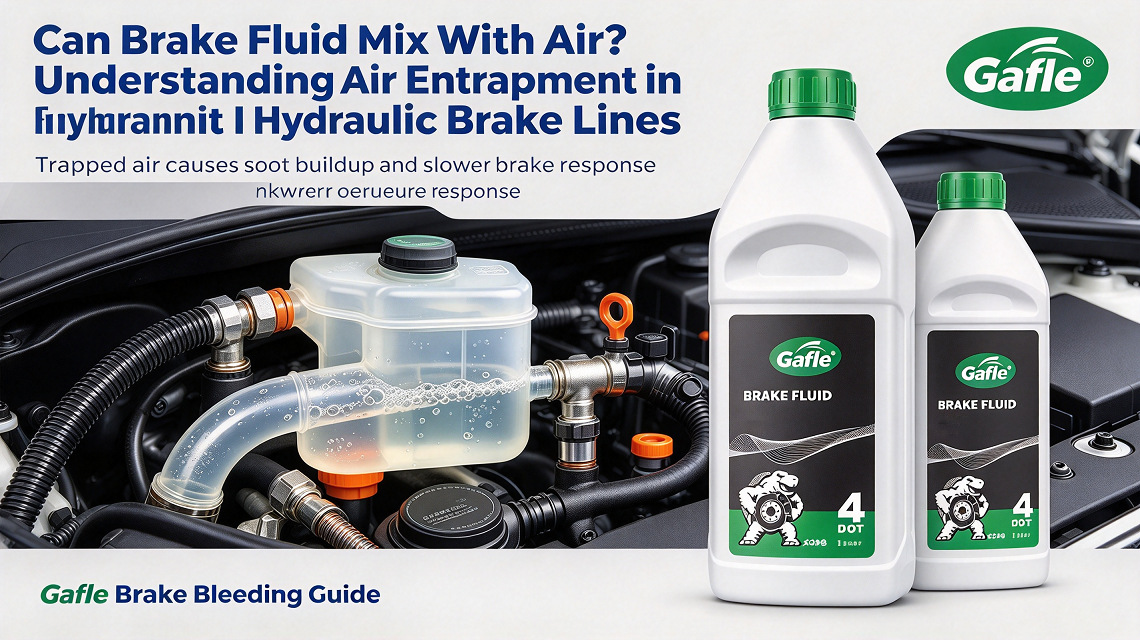
1. Air and brake fluid behave completely differently in a hydraulic brake system, and trapped air is one of the most frequent causes of spongy brake pedals. 2. The common ways air enters the closed brake hydraulic circuit. 3. Distinguish air bubbles from moisture in brake fluid. 4. Challenges of air bleeding for modern vehicles with ABS/ESC modules. 5. Advice for auto parts distributors to support your garage clients.