
Heavy-duty trucks, semi-trailers and commercial vehicles operate under extreme load and thermal stress. Ordinary passenger car brake fluid often cannot meet the rigorous demands of commercial fleet use.
Fleet managers, truck repair centres and commercial auto parts importers understand that brake failure on a loaded heavy truck can lead to catastrophic accidents. Commercial vehicle brake systems operate in a completely different environment compared with light passenger vehicles. Fully loaded trucks carry tens of tons of weight. When travelling on mountain highways, repeated braking on long downhill stretches generates massive heat at brake callipers and drums. This heat transfers directly into the brake fluid, pushing it close to its boiling point. Selecting the correct heavy-duty brake fluid is a core part of fleet safety management.
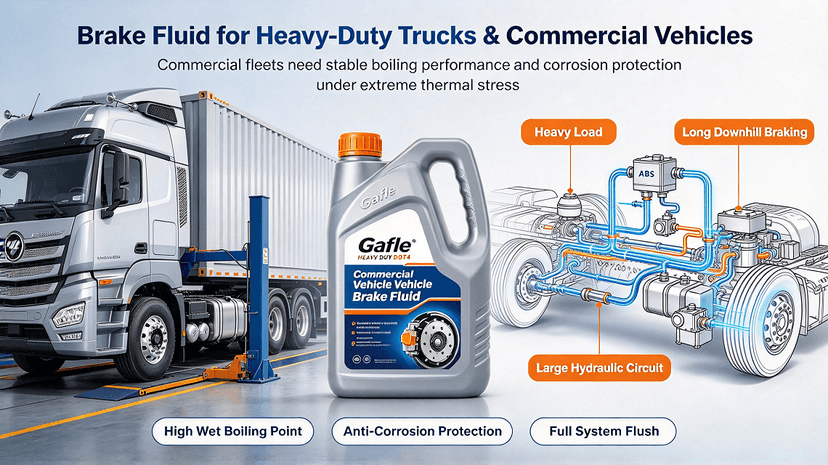
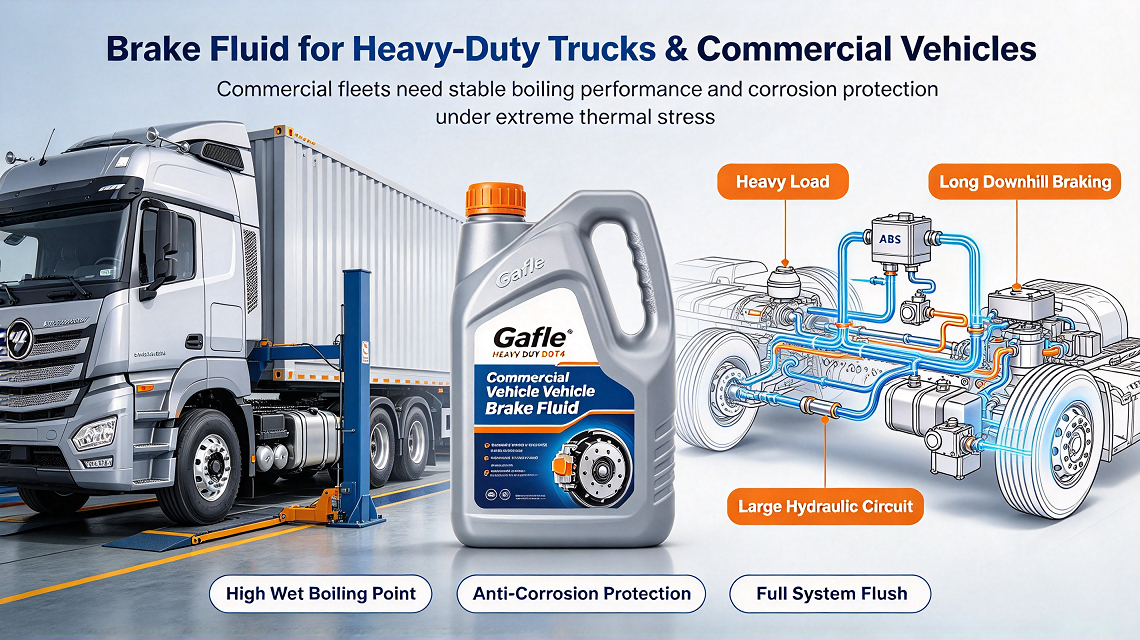
Sustained high heat from heavy loads and downhill braking is the biggest challenge for truck brake fluid.
Light vehicles rarely expose brake fluid to continuous high temperature. For a loaded commercial truck descending a long mountain grade, drivers apply brakes repeatedly to control speed. Brake assemblies build up extreme heat, which conducts into the brake fluid inside wheel cylinders and brake lines. If the brake fluid has a low wet boiling point, the fluid will boil and form vapour bubbles. Vaporization causes a soft brake pedal, extended stopping distance and sudden loss of braking power. This risk is one of the major safety hazards for truck fleets.
Commercial brake fluid must retain a high boiling point even after it absorbs moisture over time. All polyglycol brake fluid absorbs water gradually. For light cars, slow moisture uptake is manageable within normal service cycles. For heavy-duty trucks, even small amounts of water in the brake fluid drastically reduce high-temperature performance. Heavy-duty brake fluid formulations are engineered to resist the impact of moisture and maintain stable performance under repeated thermal shocks.
Commercial brake systems have larger circuits and more metal components that require anti-corrosion protection.
Heavy truck brake hydraulic systems contain long steel brake lines, multiple wheel cylinders, relay valves and ABS modules spread across the tractor and trailer. The total hydraulic circuit has far more metal surfaces than a passenger car brake system. Moisture-contaminated brake fluid accelerates rust and corrosion across this extensive network.
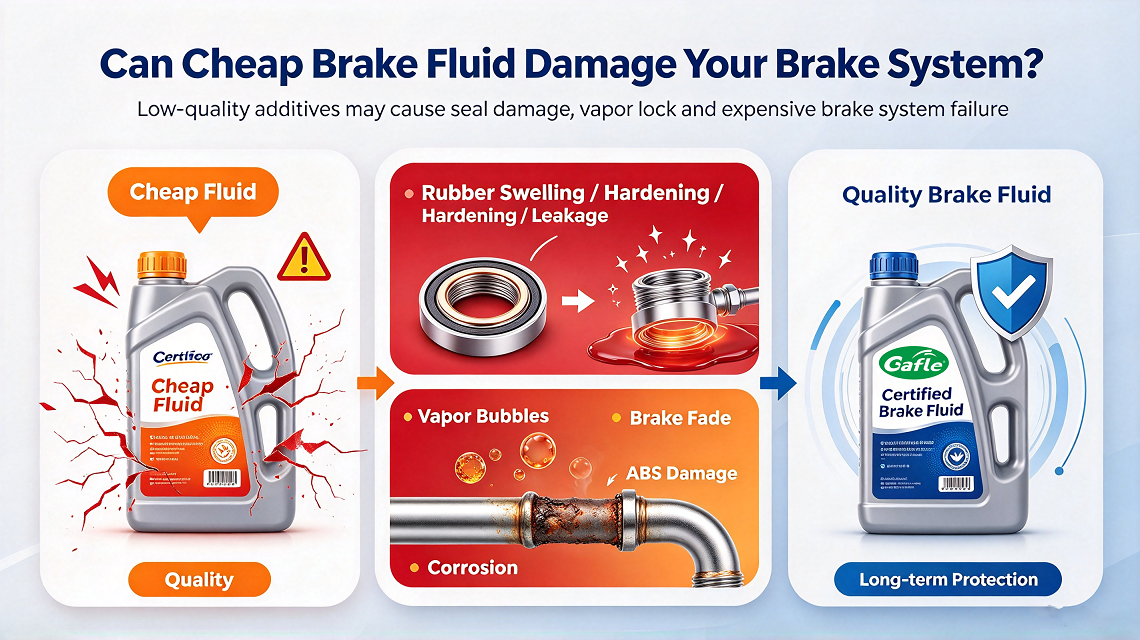
Corrosion creates tiny metal particles that circulate through the whole brake circuit. These particles wear seals, block small valve openings and damage commercial ABS components. Repairing truck brake systems and ABS units involves high parts costs and long vehicle downtime. Downtime for commercial trucks directly cuts fleet operating revenue. High-quality heavy-duty brake fluid contains enhanced corrosion inhibitor packages to protect all metal surfaces and elastomer seals throughout the brake circuit.
Fleet maintenance considerations for commercial brake fluid
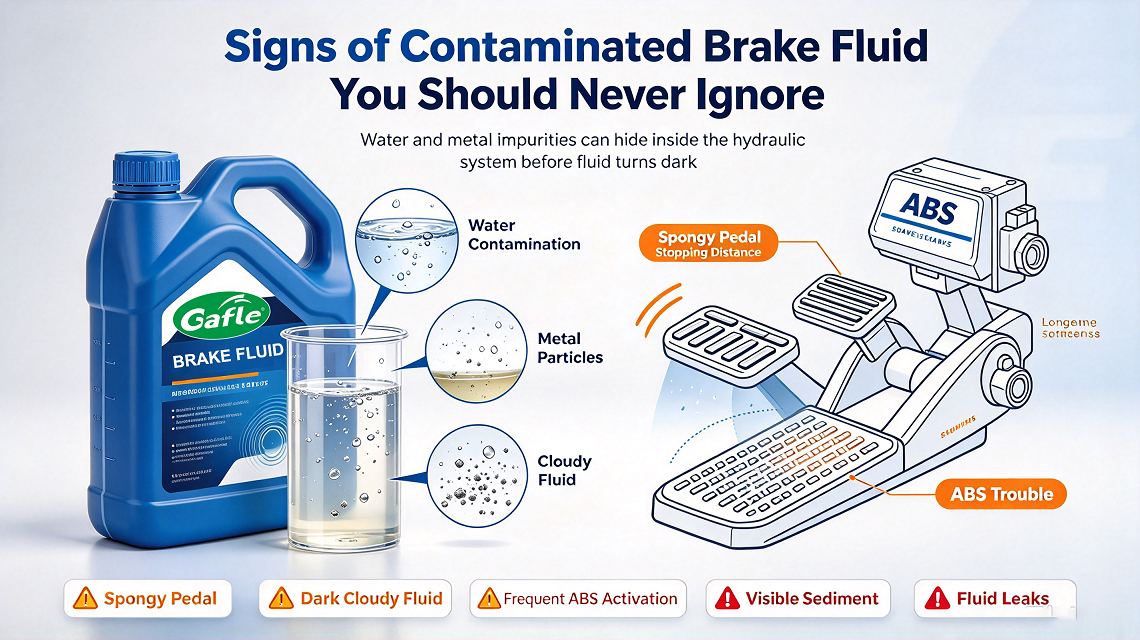
Fleets should establish regular brake fluid testing schedules, not just rely on visual inspection. Use brake fluid testers to monitor water content. Replace brake fluid according to operating conditions, not fixed mileage alone. Trucks operating in mountainous regions or humid environments will degrade brake fluid faster than trucks used on flat dry highways. When servicing tractor-trailer combinations, technicians must remember that both tractor and trailer brake hydraulic circuits need inspection and fluid maintenance.
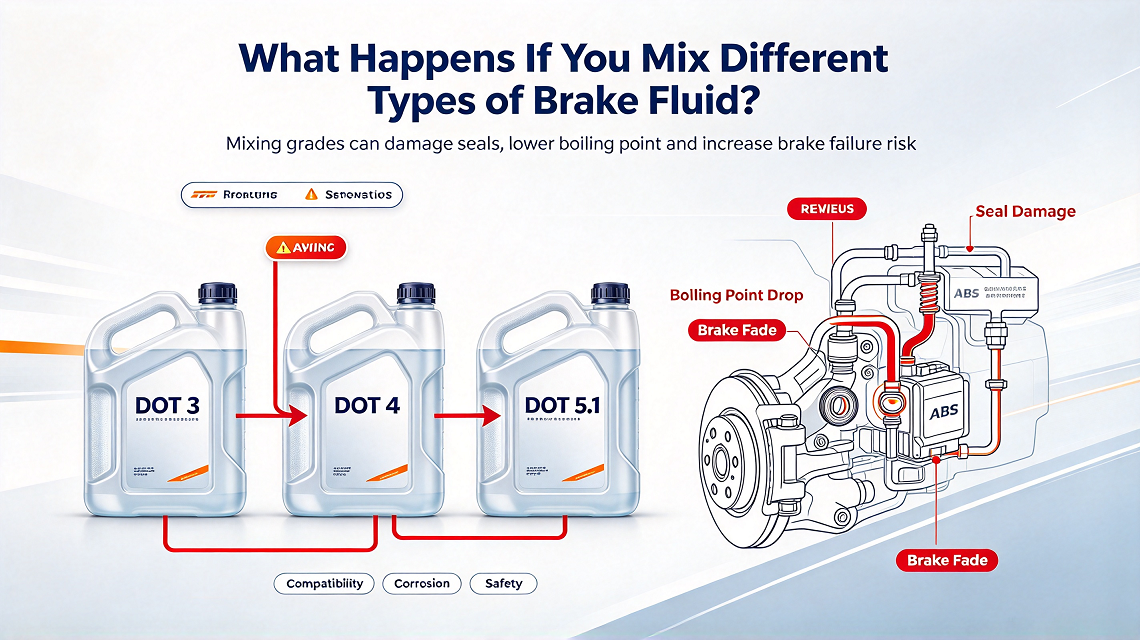
Never mix different brake fluid grades or brands during top-ups. For commercial vehicles, mixing formulations breaks down additive systems and reduces high-temperature performance. Always perform full brake flushes during scheduled maintenance to remove all old contaminated fluid from the lengthy brake lines.
Gafle heavy-duty brake fluid is built for commercial vehicle applications.
Zhejiang Gafle Environmental Technology manufactures high-performance DOT3 and DOT4 brake fluid engineered for heavy load commercial vehicles. Our heavy-duty brake fluid maintains excellent dry and wet boiling points and provides robust anti-corrosion protection for extensive truck brake hydraulic circuits. All products pass strict laboratory testing and come with complete COA, MSDS and certification documents. Gafle supports bulk supply and OEM packaging for commercial vehicle parts distributors and large fleets worldwide.
Final Takeaway
Heavy-duty commercial trucks need brake fluid capable of handling extreme heat, heavy loads and long hydraulic circuits. Standard light vehicle brake fluid does not offer sufficient safety margin for downhill braking. For fleet safety and reduced maintenance costs, always select brake fluid specially formulated for heavy-duty commercial vehicle applications.
Welcome to contact GAFLE for more information & cooperation!
peter
ZHEJIANG GAFLE AUTO CHEMICL CO.,LTD
Tel:86-579-8222 1665
Fax:86-579-8246 4690
Cel/Wechart:86-13335993986
E-mail:peter@gafle.net
Web:www.gafle.net
peter
ZHEJIANG GAFLE AUTO CHEMICL CO.,LTD
Tel:86-579-8222 1665
Fax:86-579-8246 4690
Cel/Wechart:86-13335993986
E-mail:peter@gafle.net
Web:www.gafle.net