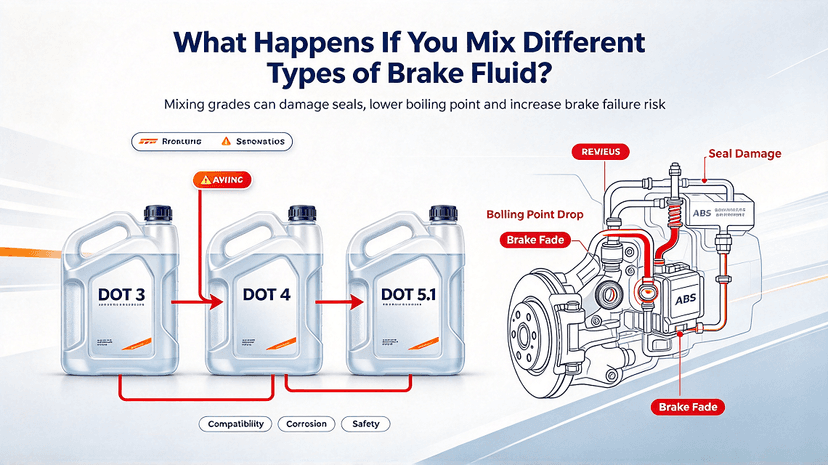
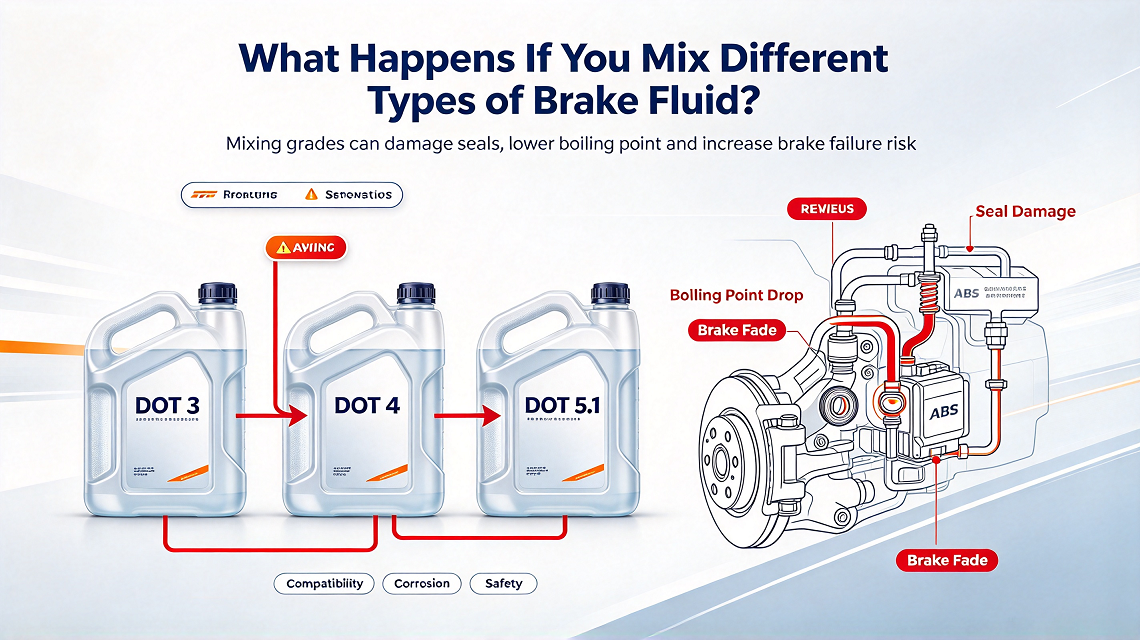
Mixing different brake fluid grades is a common mistake that can lead to dangerous brake system failure.
Different brake fluid formulations will react and degrade the fluid performance rapidly.
DOT3, DOT4 and DOT5.1 all fall into the polyglycol family of brake fluids, which means they are physically miscible. This is why many technicians mistakenly believe they can safely mix these grades. While they can blend together in the bottle, their additive packages are engineered for different operating temperatures and system requirements. Each formulation uses a unique combination of anti-oxidants, pH stabilizers and corrosion inhibitors. When mixed, these additives interact unpredictably. The balanced chemical structure breaks down, leading to a sharp drop in both dry and wet boiling points. Lower boiling points increase the chance of vapor lock and brake fade under heavy load, such as long downhill descents or repeated hard braking.
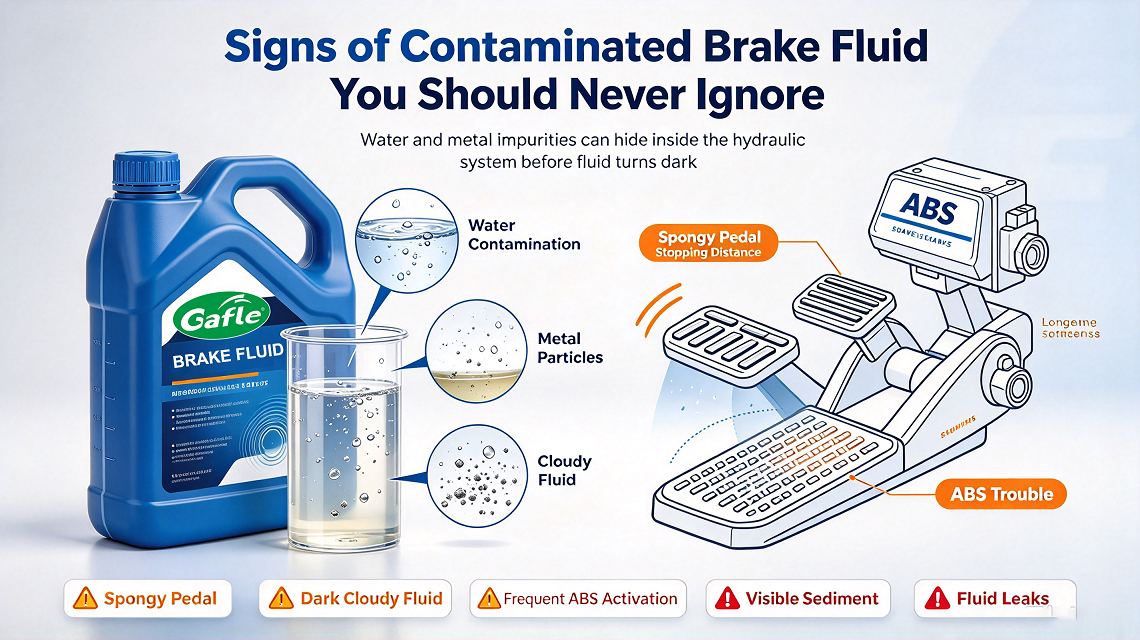
It is critical to separate polyglycol brake fluids from DOT5 silicone brake fluid. DOT5 is not compatible with any DOT3, DOT4 or DOT5.1 product. Once silicone fluid enters a polyglycol brake circuit, the two liquids will not combine. They separate into layers, trap air bubbles and coat the inner walls of brake lines, seals and ABS valves. This contamination cannot be solved by bleeding brakes. Full system disassembly and cleaning is required, which means extremely high repair costs for vehicle owners and warranty headaches for repair shops.
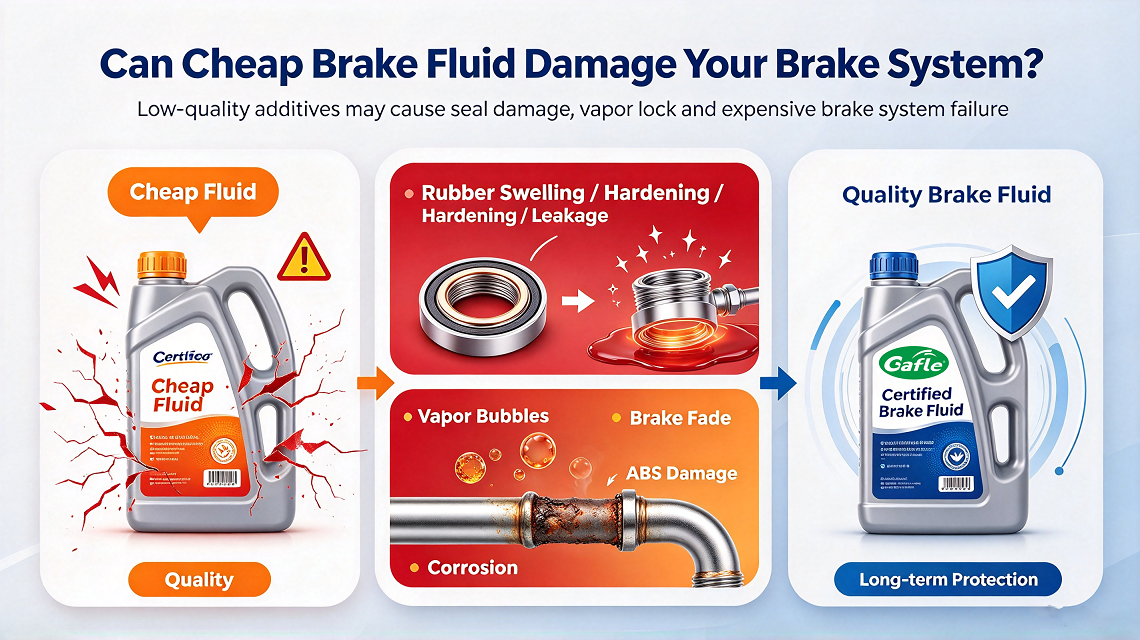
Mismatched brake fluid mixtures corrode rubber seals, hoses and pistons over time.
Rubber components inside the brake system, including caliper seals, wheel cylinder cups, brake hoses and O-rings, are formulated to work with a specific additive environment. When incompatible brake fluid blends contaminate the hydraulic circuit, the protective additives break down. Some mixtures cause rubber parts to swell and soften. Swollen seals stick inside caliper bores, leading to dragging brakes, excessive pad wear and overheating. Other blends dry out rubber compounds, making them brittle and prone to cracking.
Rubber degradation progresses slowly. Vehicle owners may not notice any symptoms for weeks or months after mixing fluids. Once tiny leaks start to appear, the damage has already spread throughout the entire brake hydraulic circuit. For auto repair shops and parts wholesalers, these hidden failures can result in customer complaints, liability claims and damage to business reputation.
Always follow brake fluid compatibility rules before refilling or flushing.
The safest rule is simple: never mix different brake fluid grades or different brands unless the manufacturer explicitly confirms compatibility. If you plan to switch from DOT3 to DOT4, or upgrade to DOT5.1, a partial top-up is not acceptable. You must perform a full brake fluid flush. A complete flush removes nearly all residual old fluid from the master cylinder, brake lines, calipers and ABS unit. Only after fully purging the old fluid can you add the new brake fluid.
When servicing vehicles, always refer to the original manufacturer’s service manual. The manual defines the exact brake fluid grade recommended for that model. Do not substitute grades just because a product is conveniently available in the workshop.
Gafle brake fluid offers stable formulation and clear compatibility instructions for mechanics and distributors.
Zhejiang Gafle Environmental Technology manufactures a full range of polyglycol-based Gafle brake fluids, complying with ISO standards and national brake fluid specifications. Every Gafle product comes with complete technical datasheets and MSDS documents that clearly list compatibility information, boiling point data and maintenance guidance.
For auto parts importers, wholesalers and repair shop operators, Gafle’s consistent formulation reduces unexpected brake system issues. When you recommend Gafle brake fluid to your customers, you can share accurate technical guidance about fluid replacement, flushing and compatibility. This builds trust with end users and reduces after-sales support workload.
Final Takeaway
Never mix different brake fluid types casually to save time during maintenance. A quick shortcut during brake service can lead to degraded brake performance, damaged hydraulic components and potentially life-threatening brake failure. If you have questions about brake fluid selection, system flushing procedures or compatibility for specific vehicle models, contact the Gafle technical team for professional support.
Welcome to contact GAFLE for more information & cooperation!
peter
ZHEJIANG GAFLE AUTO CHEMICL CO.,LTD
Tel:86-579-8222 1665
Fax:86-579-8246 4690
Cel/Wechart:86-13335993986
E-mail:peter@gafle.net
Web:www.gafle.net
peter
ZHEJIANG GAFLE AUTO CHEMICL CO.,LTD
Tel:86-579-8222 1665
Fax:86-579-8246 4690
Cel/Wechart:86-13335993986
E-mail:peter@gafle.net
Web:www.gafle.net