
Why racing coolant performance matters when temperatures climb
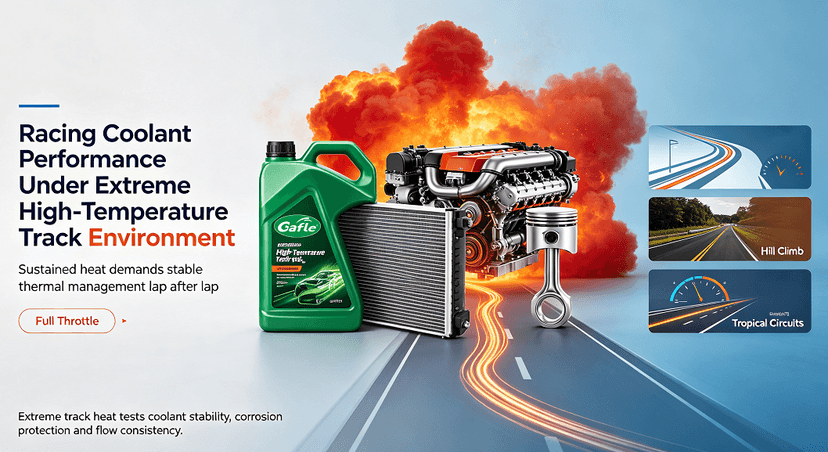
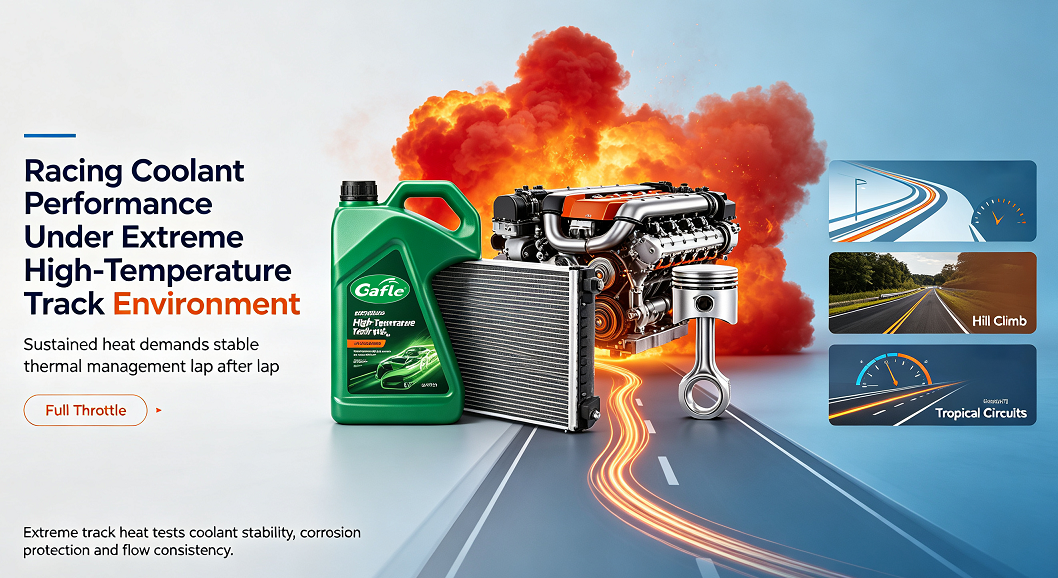
Racing coolant performance in extreme high‑temperature track conditions is not a niche concern. For anyone running endurance sessions, sprint events, time attack, or a hill climb race, cooling margin can decide whether the engine stays consistent or starts shedding power a few laps in. Once the car is pushed into long-duration racing or repeated full-throttle pulls, the cooling system is no longer just a support system. It becomes part of the drivetrain’s survival plan.
The practical question for buyers is simple: what kind of Coolant actually helps an engine hold temperature under stress, and what trade-offs come with it? That answer depends on the engine, the circuit, ambient heat, airflow, and whether the priority is heat transfer, corrosion control, boiling resistance, or rule compliance. There is no single product that solves every case, and that is where many teams get caught out.
What high heat does to a cooling system
In extreme high-temperature track use, the cooling system is asked to do more than reject heat. It must keep the engine stable during repeated thermal spikes, vibration, and long periods of sustained load. A stock passenger-car setup is often designed around mixed driving, not a full session at race pace.
When temperatures rise too far, the effects are usually familiar: rising oil temperatures, detonation risk, reduced power, and in some cases localized hot spots around the head and cylinder walls. Even when a gauge looks manageable, poor heat rejection can create uneven temperature distribution inside the engine. That is a subtle problem, but it is often the one that costs the most.
What to look for in a high-temp racing coolant
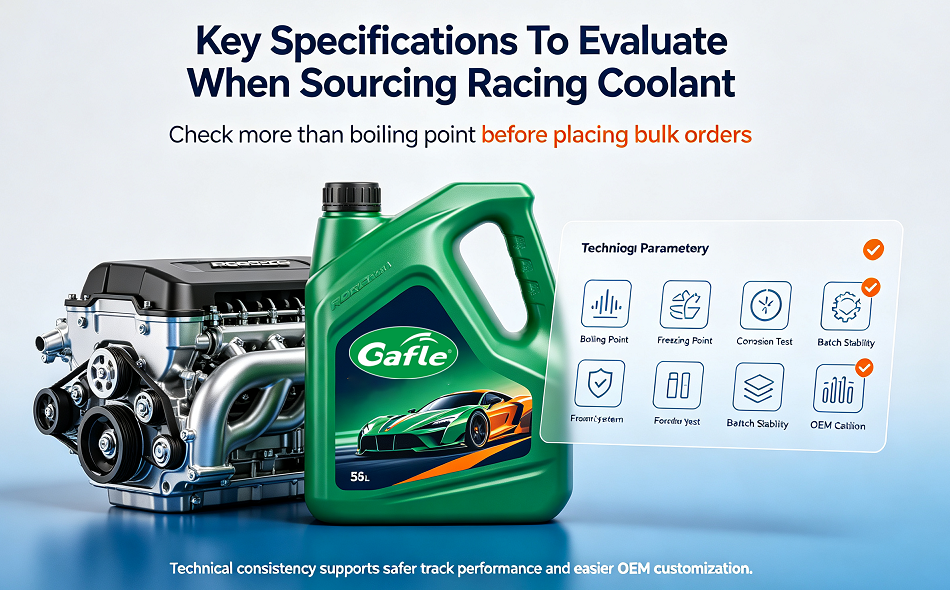
A high-temp racing coolant should be judged on more than the label. Buyers generally need to weigh a few practical factors:
Heat transfer behavior
The primary job is moving heat out of the engine. Some coolant formulations are built to improve thermal management under racing use, while others are optimized more for street durability or winter protection. For track work, especially in hot weather, the margin that matters is often how consistently the fluid handles repeated heat soak.
Boiling resistance and system pressure
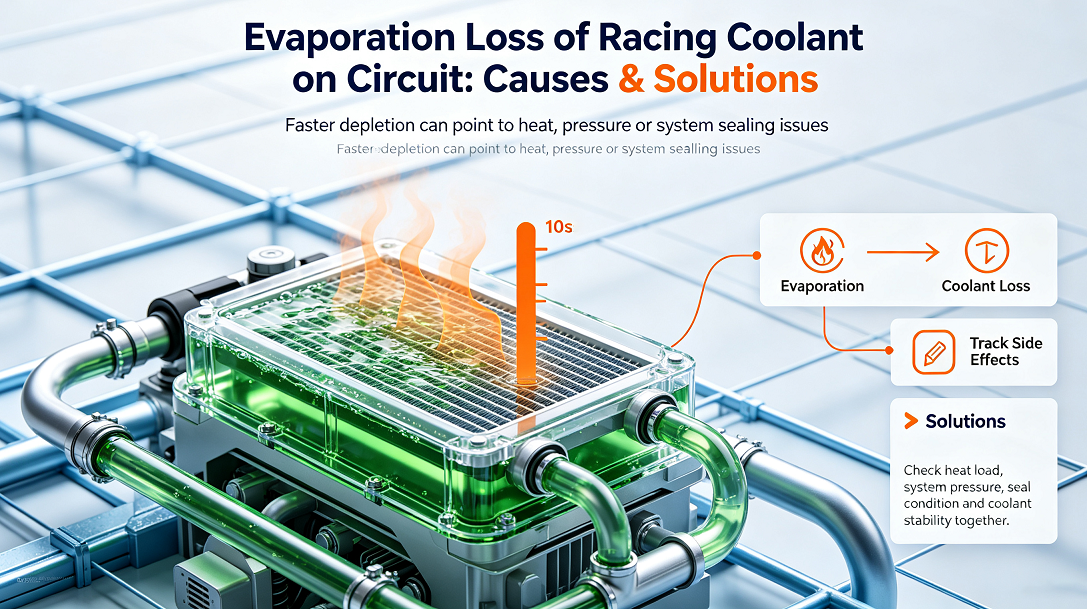
Boiling is not just an emergency issue. Once vapor pockets form, heat transfer drops sharply. That is why teams running aggressive setups pay close attention to pressure caps, radiator condition, hose integrity, and the coolant’s behavior near boiling.
Compatibility with regulations and hardware
Not every racing series allows the same fluid type. Some motorsport thermal performance decisions are shaped by track rules, spill concerns, or safety requirements. It is also wise to confirm compatibility with aluminum radiators, water pumps, seals, and any aftermarket components in the system.
Maintenance reality
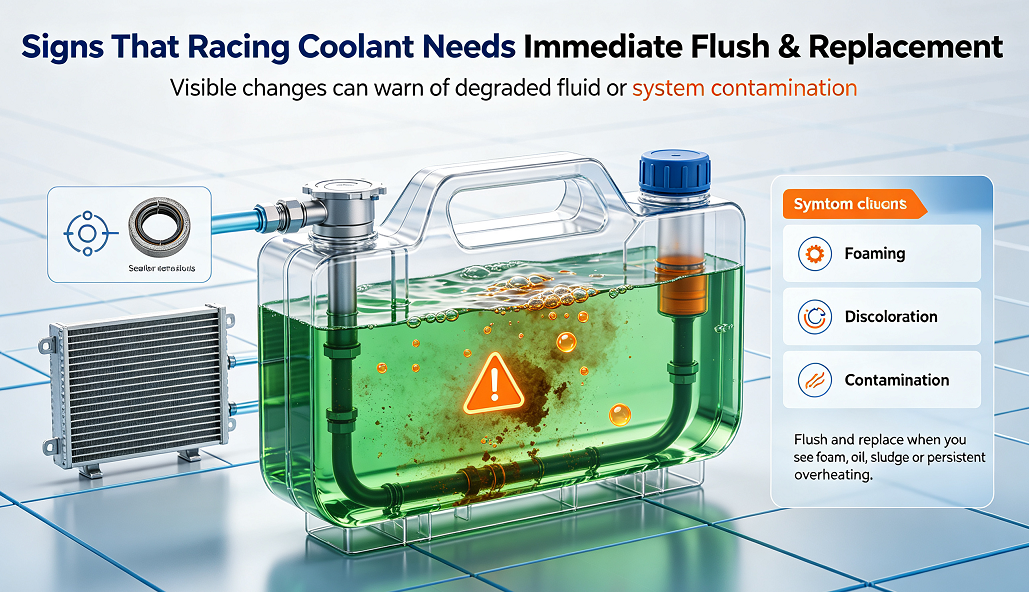
Some coolants are marketed as “race-only,” but the buyer still has to think about service life, flushing, and contamination. A fluid that performs well on paper can become less useful if it is not maintained properly or if it mixes poorly with what is already in the system.
Common mistakes teams make
One of the most common errors is assuming a hotter, more aggressive formula automatically fixes overheating. It rarely does. If the radiator is undersized, the airflow is poor, the fan strategy is weak, or the engine tune is running too hot, coolant choice alone will not rescue the setup.
Another mistake is ignoring the whole system. A high-temp racing coolant can only do so much if there is air trapped in the circuit, a weak cap, scale buildup, or a thermostat that is not behaving as expected. In practice, the cooling system is a chain. The weakest link usually shows up first on track.
Buyer advice for track and motorsport use
If you are choosing coolant for a track car, start with the event type and the climate. A car used in a hill climb race may need quick heat control for shorter bursts, while an endurance car needs stable behavior over much longer periods. That distinction matters more than marketing language.
It also helps to think in terms of system balance. The best result often comes from combining the right coolant with clean internals, proper bleed procedure, a healthy radiator, and verified airflow at speed. Teams sometimes chase exotic fluid solutions when the real gain is in maintenance and setup discipline.
For engineering and sourcing teams, the decision is usually not “which coolant is best?” but “which coolant suits this engine, this rulebook, and this thermal load profile?” That is a more useful question, and it leads to fewer surprises once the car is on circuit.
Practical takeaway
Racing coolant performance in extreme high‑temperature track conditions should be evaluated as part of the complete thermal system, not as a standalone product claim. If the car sees long-duration racing, repeated full-throttle use, or sustained high ambient heat, the safer approach is to match coolant chemistry, hardware condition, and event requirements before the first session.
If you are sourcing for a program, build a short comparison sheet around compatibility, boiling margin, maintenance burden, and rules compliance. That is usually enough to separate a sensible choice from a flashy one.
FAQ
Does a racing coolant fix overheating by itself?
Usually not. It can improve thermal management, but radiator capacity, airflow, engine tune, and system condition matter just as much.
Is all high-temp racing coolant suitable for every motorsport event?
No. Event rules, climate, and engine design all influence the right choice.
Should teams focus on coolant or hardware first?
Start with hardware condition and system setup, then choose the coolant that fits the use case.
Welcome to contact GAFLE for more information & cooperation!
peter
ZHEJIANG GAFLE AUTO CHEMICL CO.,LTD
Tel:86-579-8222 1665
Fax:86-579-8246 4690
Cel/Wechart:86-13335993986
E-mail:peter@gafle.net
Web:www.gafle.net