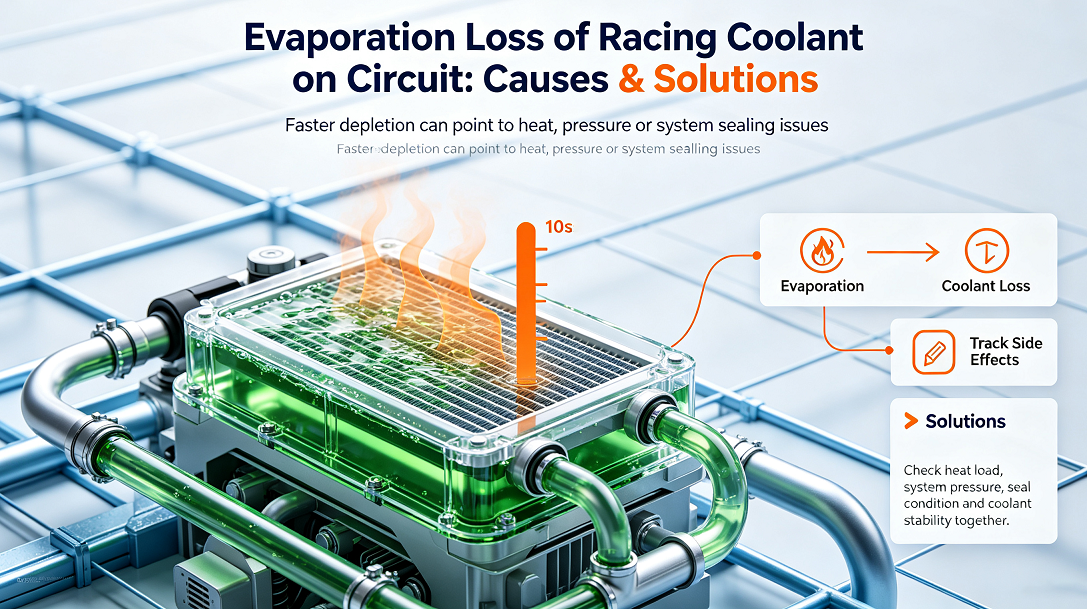
Why racing coolant evaporation becomes a real problem on track
Racing coolant evaporation is one of those issues that looks minor in the paddock and turns expensive halfway through a session. A car may leave the garage with a healthy level in the expansion tank, then come back down on fluid after hard laps, repeated heat cycles, or a long stint in traffic. For engineers and race teams, the practical question is not just whether the level dropped, but why it dropped and what that means for cooling performance, engine protection, and consistency over a race distance.
This matters because coolant loss is not always the same as a leak. On a circuit, heat soak, pressure changes, venting, overflow behavior, and local hot spots can all make a cooling system behave differently from what the workshop data suggests. The right decision is often a mix of thermal management, system sealing, and setup discipline rather than a single “fix.”
What usually drives coolant loss in motorsport conditions
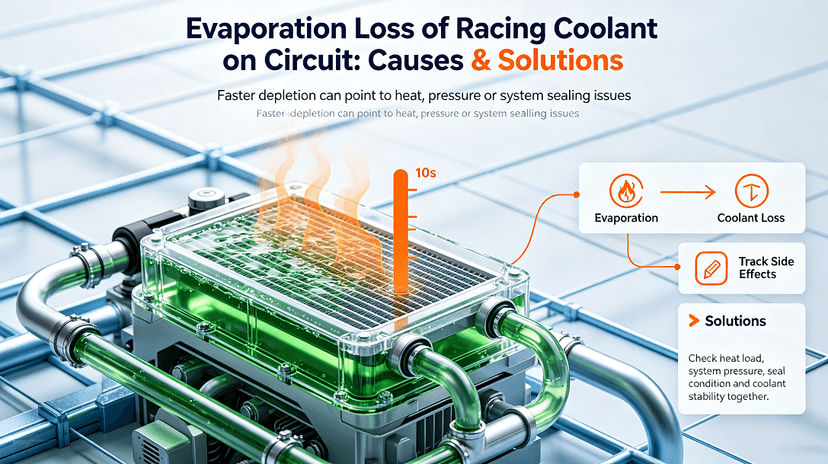
The causes of racing coolant evaporation loss on circuit are often tied to temperature and pressure, but the root picture is broader. At high load, coolant temperatures rise quickly, and if the system is near its boiling margin, small amounts of vapor can form in hot areas around the head, exhaust ports, or water pump inlet. Once vapor appears, the system can expel fluid through the cap or overflow path, which looks like evaporation even when the coolant is actually being pushed out of the circuit.
Track use also creates long periods of sustained high RPM, followed by sudden deceleration and heat soak in the pits. That cycle can force the cooling system through repeated expansion and contraction. If the cap rating is not matched to the system, or if the header tank is poorly positioned, the result is often an apparent loss that keeps repeating. In other words, why racing coolant depletes fast is rarely one single answer.
Quick reference: where the fluid is going
1. True vaporization
Coolant reaches a local boiling point and turns to vapor in the hottest zones. This is more likely when the system is overloaded, airflow is poor, or the coolant mix is not appropriate for the temperature range.
2. Expulsion through the cap or overflow
Pressure relief is doing its job, but perhaps too often. The system may be protecting itself while quietly losing volume lap after lap.
3. Small leaks that only show under race load
Some joints seal fine in the workshop but open slightly once hoses expand, the engine rocks, or pressure spikes. A damp clamp after a session can become a meaningful loss over time.
4. Maintenance-related consumption
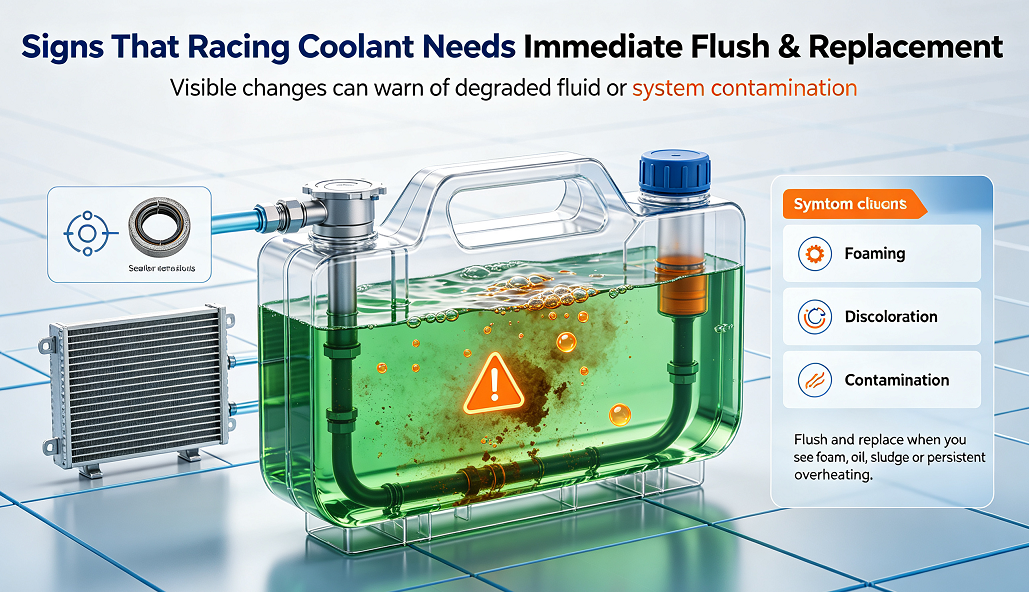
Air in the system, poor bleeding, or repeated top-offs with inconsistent mixtures can create confusing readings. That is where consumption troubleshooting becomes more about process than parts.
Motorsport coolant selection and system setup
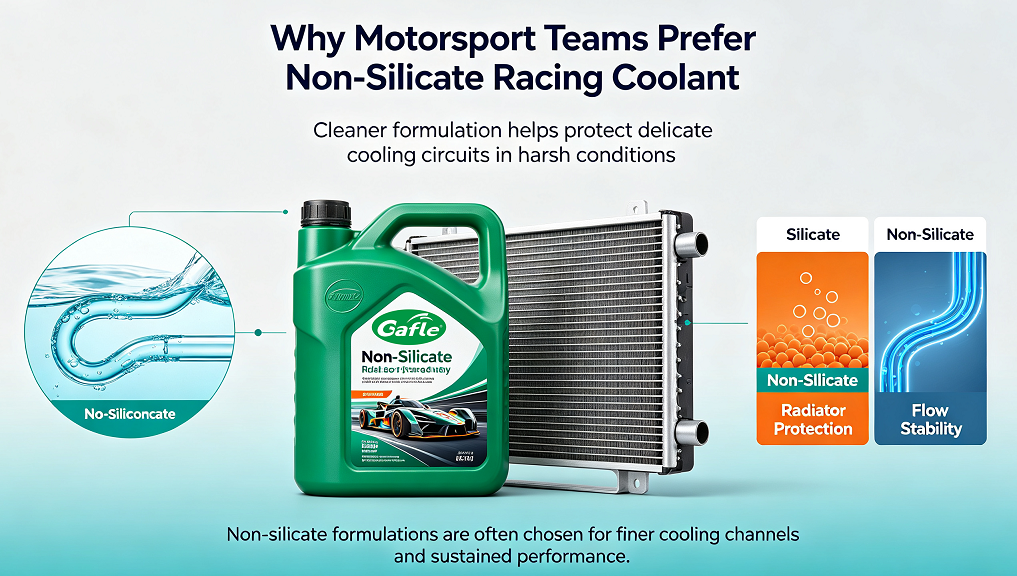
Motorsport coolant choices matter, but not in the simplistic “race coolant versus street coolant” way people sometimes assume. The better question is whether the coolant formulation, water quality, corrosion package, and operating temperature suit the actual use case. Some race teams prioritize thermal transfer; others need broader protection for mixed conditions, storage, or variable ambient temperatures. A fluid that works in sprint racing may not be the best fit for endurance running or a hot climate weekend.
System setup can matter just as much as fluid choice. Adequate header tank volume, proper hose routing, secure clamps, and careful bleeding all reduce the chances of high evaporation. A surprisingly common mistake is assuming a larger radiator alone will solve loss issues. It may help overall temperature control, but if pressure control or venting is the real culprit, the symptom remains.
Practical checks before changing parts
Before replacing hardware, teams usually get better results by checking the basics in order. Confirm whether the loss is visible on the track surface, in the overflow bottle, or only as a lower level after cooldown. Inspect the cap, neck, hoses, and the upper parts of the system for dried residue. Review the temperature trace if data logging is available. A steady climb toward an overheating event tells a different story from a stable temperature with repeated fluid drop.
It also helps to compare hot and cold levels consistently. Some cars look low when they are simply being measured at different points in the thermal cycle. That sounds obvious, but in a busy pit environment it gets missed more often than people admit.
Solutions for high evaporation that actually hold up on track
The best solutions for high evaporation are usually combined measures: improve bleeding, verify pressure-cap behavior, reduce local hot spots, and confirm that the coolant mix is suitable for the engine and event conditions. If the engine is running too hot in one area, a system change may be needed to improve circulation or reduce trapped air. If the cap is venting too early, a correctly specified replacement may restore stability. If the issue is chronic, the team may need to look at combustion heat, lean running, or cooling duct efficiency rather than the fluid alone.
One useful caution: don’t chase the problem with endless top-ups. That can hide a worsening fault and make it harder to see whether the rate of loss is improving. For race teams, consistency is the real metric.
Common mistakes engineers and buyers make
Teams often overfocus on the coolant itself and underfocus on the operating system. Another frequent error is treating a street car solution as interchangeable with race service. Track duty is harsher, more cyclical, and less forgiving of marginal sealing. Buyers sourcing cooling products should ask whether the component is built for pressure, vibration, and repeated thermal cycling, not just nominal temperature capacity.
There is also a temptation to ignore minor seepage because the engine is still running “fine.” That approach tends to age poorly. Small coolant losses can become bigger reliability problems once the car is pushed harder or ambient conditions rise.
FAQ: short answers for track-side decisions
Is every coolant drop caused by evaporation?
No. On track, loss can come from boiling, overflow, seepage, or bleeding issues. The pattern of loss matters more than the headline number.
Does a different fluid always solve the issue?
Not always. The fluid matters, but pressure control, airflow, and system design often determine whether the problem continues.
What should a team check first?
Start with the cap, expansion path, hose condition, and temperature data. Those checks usually tell you more than a blind parts swap.
What to do next
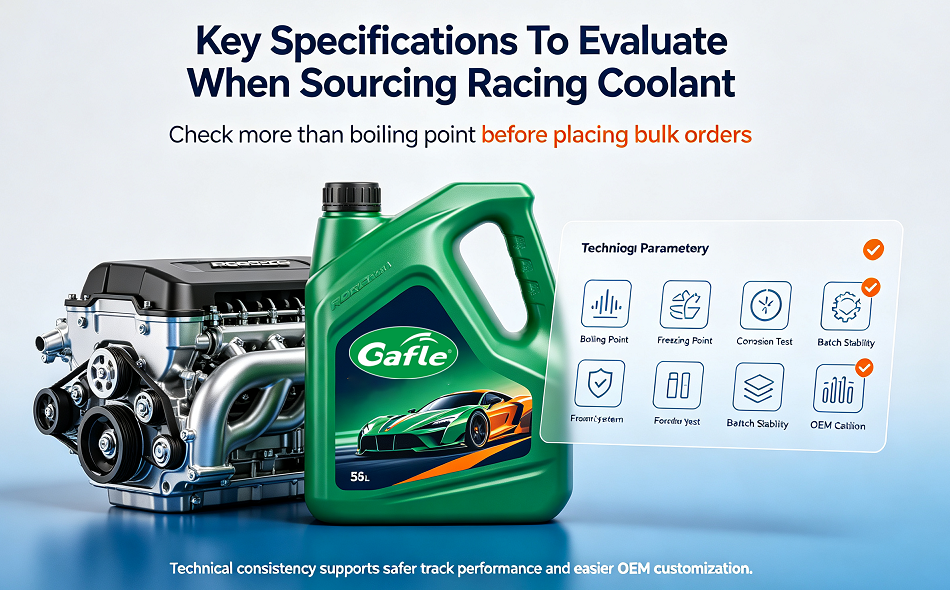
If racing coolant evaporation is showing up in your program, treat it as a system issue, not a single-component nuisance. Review the thermal data, inspect the pressure side of the circuit, and compare how the car behaves from cold start to post-session cooldown. That approach usually leads to faster answers than guessing at the reservoir level alone. For sourcing and engineering teams, the key decision is whether you need a better coolant specification, a more stable cooling layout, or a complete consumption troubleshooting exercise before the next event.
Welcome to contact GAFLE for more information & cooperation!
peter
ZHEJIANG GAFLE AUTO CHEMICL CO.,LTD
Tel:86-579-8222 1665
Fax:86-579-8246 4690
Cel/Wechart:86-13335993986
E-mail:peter@gafle.net
Web:www.gafle.net