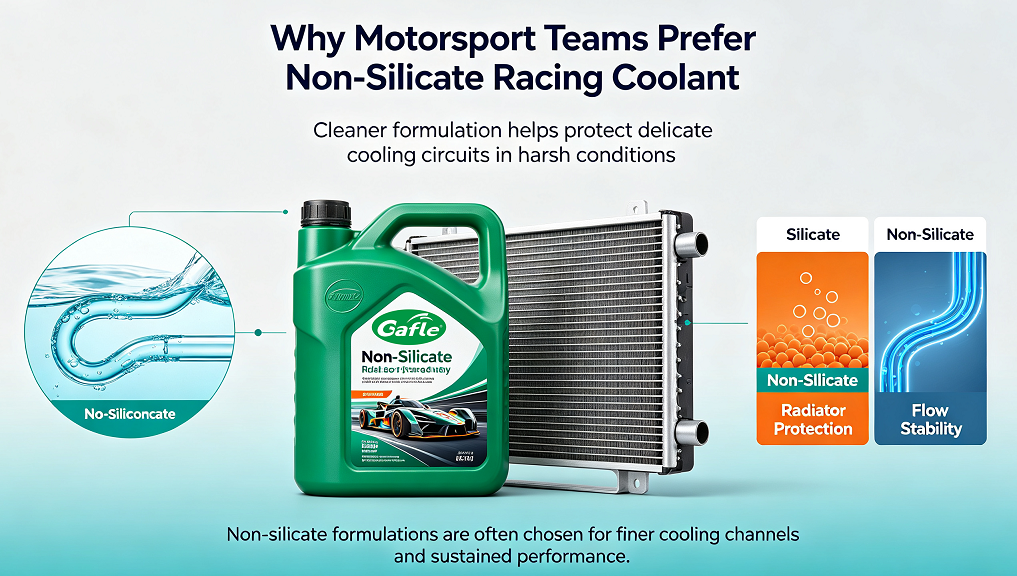
Why race teams use non-silicate racing coolant
Race teams pay close attention to small chemistry choices, and the decision to run non-silicate racing coolant is one of those details that can have an outsized effect on cooling system reliability. In a road car, coolant is mostly about freeze protection, corrosion control, and long service life. In motorsport, the priorities shift. Teams want stable heat transfer, predictable behavior at high temperature, and as little risk as possible of deposits forming where they should not. That is why the question of why race teams use non‑silicate racing coolant comes up so often in pit discussions and purchasing decisions.
The short answer is simple: silicates can protect metal surfaces, but they can also create abrasive or deposited material if the formulation is not right for the system or operating conditions. In a racing radiator and the rest of a high-speed cooling circuit, that is a trade-off many teams do not want to make.
What makes racing coolant different from standard coolant
A motorsport coolant formula is usually chosen for a narrower job than a passenger-car product. The formula has to work in a system that sees higher sustained load, frequent thermal cycling, and aggressive maintenance schedules. Teams may drain and refill between events, inspect radiators often, and prioritize clean internal passages over long drain intervals.
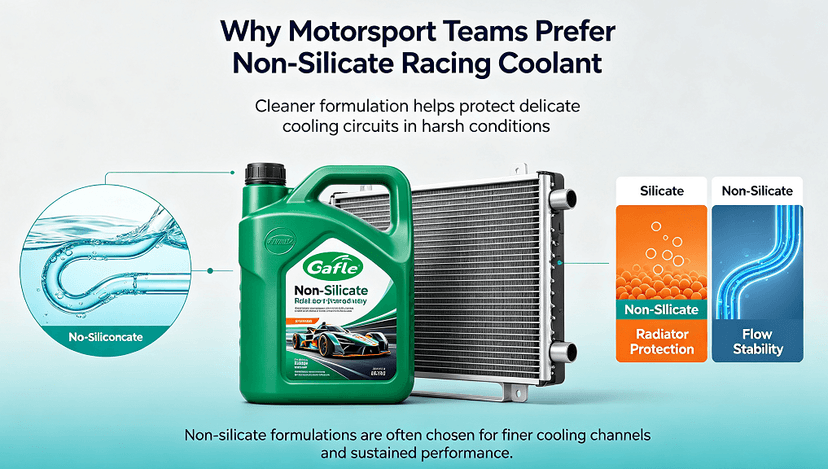
That changes the chemistry conversation. Conventional coolants often include silicates as part of a corrosion-inhibitor package. Those additives can be useful, but in racing they raise concerns about deposit formation, pump wear, and long-term compatibility with aluminum-heavy systems. A non-silicate coolant benefit is that it can reduce that risk while still offering corrosion protection through other inhibitor technologies.
The practical concern: deposits and restricted flow
One of the most talked-about issues is the risk of silicate precipitate in a racing radiator. If silicates come out of solution or react under heat, contamination, or poor mixing, they can leave behind fine particulate or gel-like residue. Even a small amount can matter. Narrow tubes, tight coolant passages, and high-output heat exchangers do not have much tolerance for buildup.
That buildup can do more than reduce efficiency. It can complicate maintenance, make flushing less effective, and introduce variability from one race weekend to the next. For a team trying to control every variable, variability itself is the problem.
Why teams choose non-silicate formulations
Cleaner heat transfer surfaces
Heat moves best when the coolant can stay in contact with clean metal surfaces. Anything that forms a film or deposit creates a barrier, even if it is thin. Non-silicate products are often selected because they are less likely to leave this kind of residue in a radiator, cylinder head, or water pump housing.
Better match for frequent service intervals
Race teams often service cooling systems more aggressively than street users. They may want a fluid that can be drained, inspected, and replaced without leaving behind troublesome residue. That is not a luxury choice; it is a workflow choice. Less cleanup means faster turnaround and fewer unknowns.
Compatibility with performance cooling hardware
Many motorsport cooling systems use aluminum components, lightweight radiators, and tightly packaged plumbing. These systems can be more sensitive to contamination than older, more forgiving designs. A non-silicate racing coolant can be a safer fit when the goal is stable operation across repeated heat cycles.
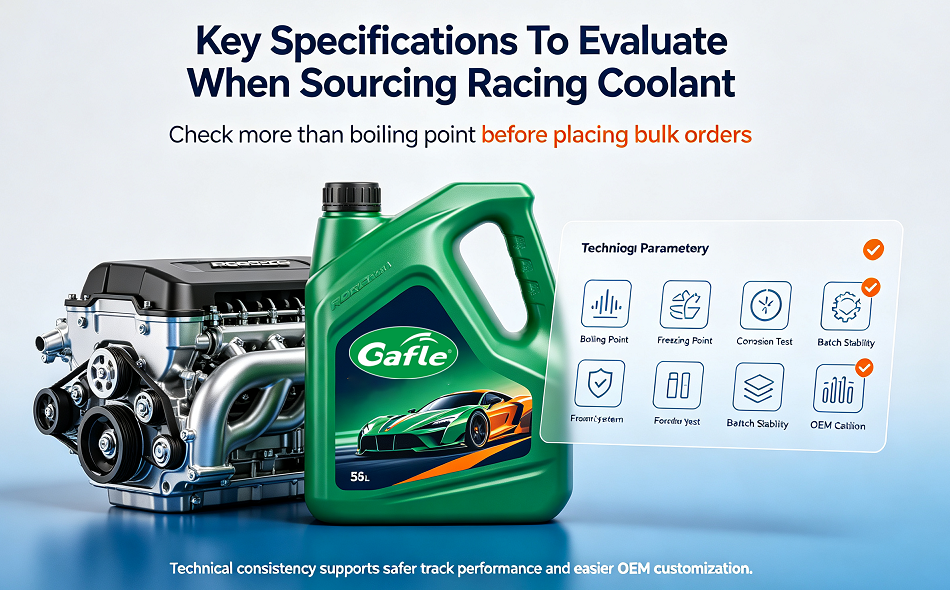
What buyers should check before specifying coolant
Not every product labeled for performance use is automatically the right choice. Engineers and sourcing managers should look at the full inhibitor package, the intended water mix ratio, and whether the product is meant for track use, street/track dual use, or closed-course racing only. A common mistake is to assume that “coolant” and “water wetter style additive” do the same job. They do not, and the wrong assumption can create overheating or corrosion problems later.
It is also worth checking whether the team’s rules permit glycol-based coolant at all. Some race series require plain water or approved additives only. That detail matters more than a glossy product label.
Common mistakes teams still make
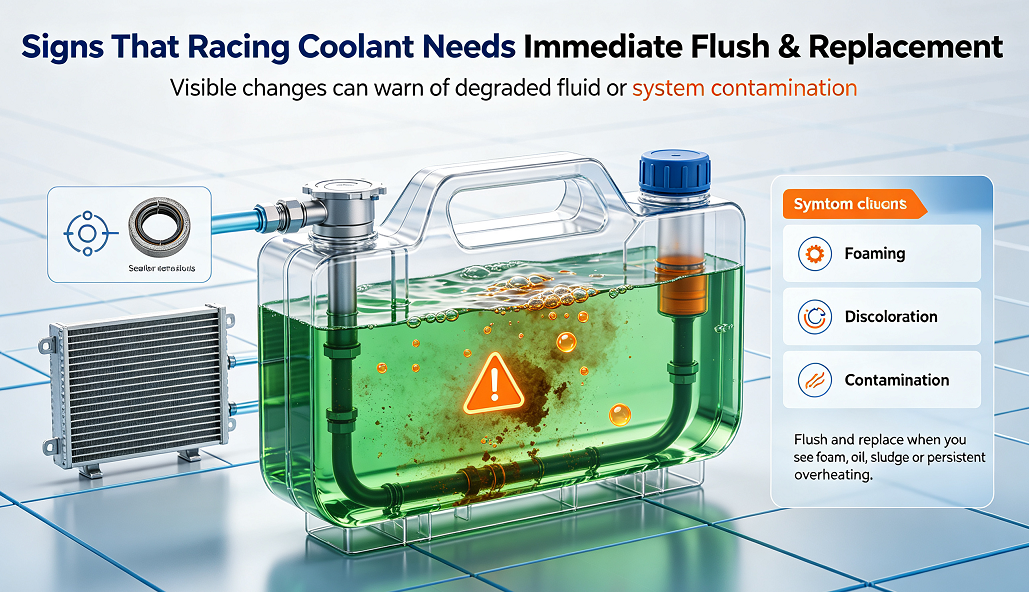
The first is mixing incompatible coolant chemistries. Even if both products are technically “high performance,” mixing them can upset the inhibitor balance. The second is neglecting system cleanliness before switching formulations. If a system already contains scale, corrosion residue, or old additive debris, a new non-silicate product may not fix the underlying issue.
The third mistake is assuming the coolant alone will solve a thermal problem. It will not. Radiator sizing, ducting, pump capacity, cap pressure, and airflow all matter. Coolant is part of the system, not the whole answer.
Quick buyer takeaway
If your priority is minimizing residue, maintaining clean cooling passages, and reducing the chance of silicate-related deposits, a non-silicate formula is often the sensible motorsport choice. If your application demands a specific inhibitor package or series compliance, that requirement comes first. In other words, the chemistry should fit the cooling system and the rulebook, not the other way around.
FAQ
Is non-silicate coolant always better for racing?
Not always, but it is often preferred where cleanliness and flow consistency matter most.
Can race teams run straight water instead?
Some do, especially when regulations or track rules require it. Water transfers heat well, but it needs proper corrosion control and freeze considerations depending on use.
Does non-silicate coolant prevent overheating?
No coolant can compensate for a poorly designed or poorly maintained cooling system. It can help the system perform more predictably, which is a different thing.
Next step for teams and buyers
Before specifying a coolant for a race program, review the system materials, the sanctioning-body rules, and the maintenance routine. Then choose the chemistry that supports clean flow and repeatable service. That is usually where the case for non-silicate racing coolant becomes strongest: not as a marketing feature, but as a practical decision that keeps the cooling system easier to trust on race day.
Welcome to contact GAFLE for more information & cooperation!
peter
ZHEJIANG GAFLE AUTO CHEMICL CO.,LTD
Tel:86-579-8222 1665
Fax:86-579-8246 4690
Cel/Wechart:86-13335993986
E-mail:peter@gafle.net
Web:www.gafle.net