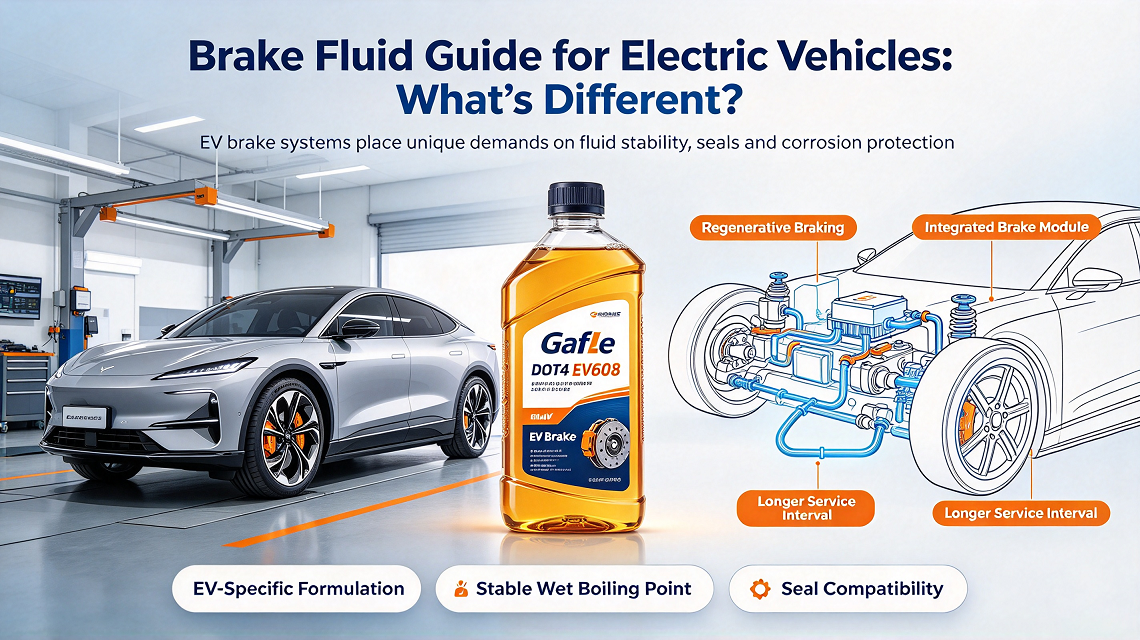
Electric vehicles place unique demands on brake fluid, and traditional brake fluid formulated for gasoline cars may not deliver the same long-term reliability.
As global adoption of electric passenger vehicles continues to rise, auto repair workshops, fleet operators and auto parts distributors face new challenges in vehicle maintenance. Many technicians still rely on conventional brake fluid knowledge when servicing EVs, assuming brake fluid selection follows the same rules as internal combustion engine vehicles. This common oversight can lead to premature seal degradation, fluid contamination and hidden brake system issues over time. To properly maintain EV hydraulic braking systems, it is essential to understand how EV operating characteristics change the requirements for brake fluid.
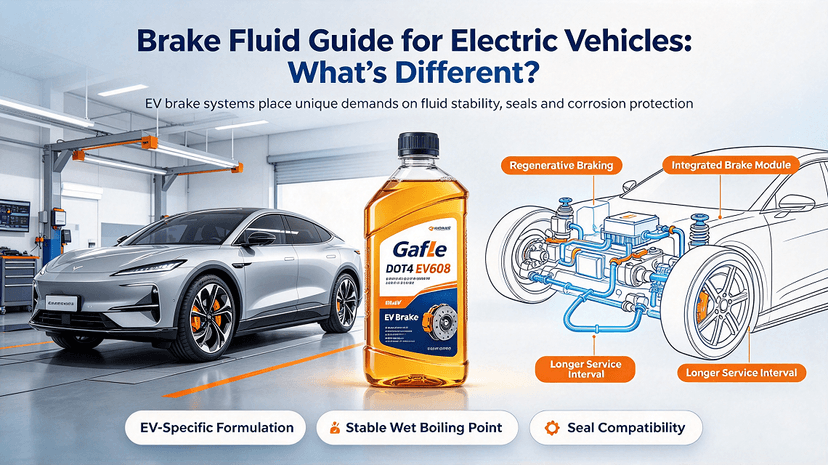
Regenerative braking alters the working cycle of the hydraulic brake system.
One of the most obvious differences between EVs and gasoline cars is regenerative braking. EVs recover kinetic energy by using the electric motor to slow the vehicle. This means the hydraulic brake system is used far less frequently during normal daily driving. In many urban driving scenarios, the friction brakes remain inactive for hundreds of miles.
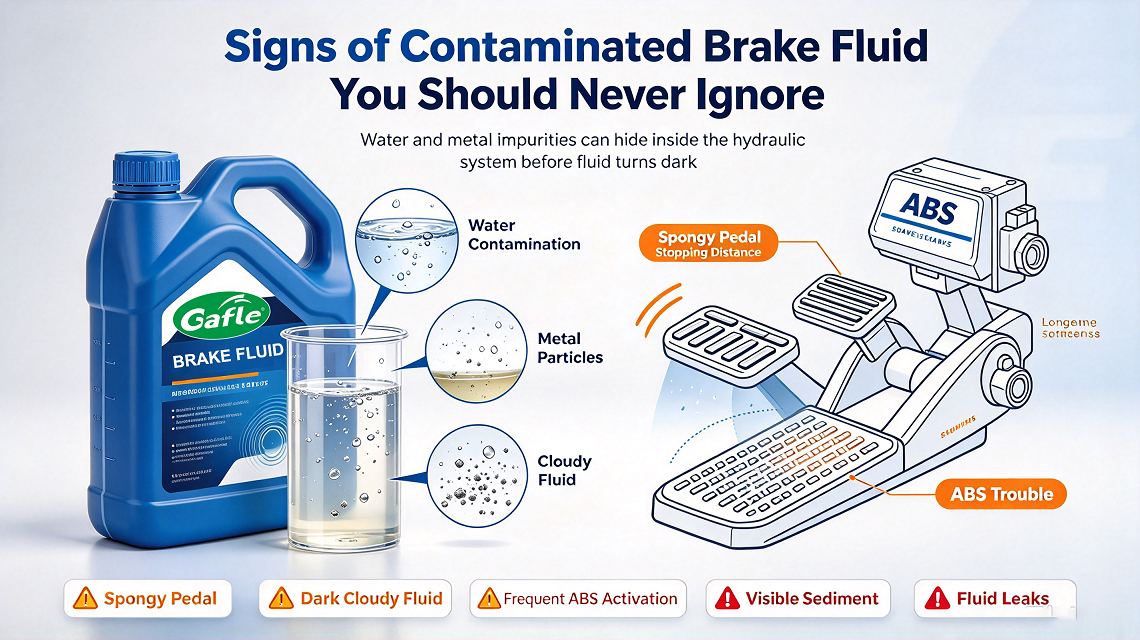
Less frequent actuation creates a new set of problems. Brake fluid sits static inside the hydraulic circuit for extended periods. Longer stationary exposure accelerates moisture absorption. Water trapped in the fluid cannot be purged by regular brake use. Over time, absorbed water reduces the wet boiling point of the fluid and increases the risk of internal corrosion. When drivers perform hard braking or emergency stops, the hydraulic system must activate instantly, and degraded brake fluid can compromise brake response.
EV brake systems use upgraded sealing materials to match longer service intervals.
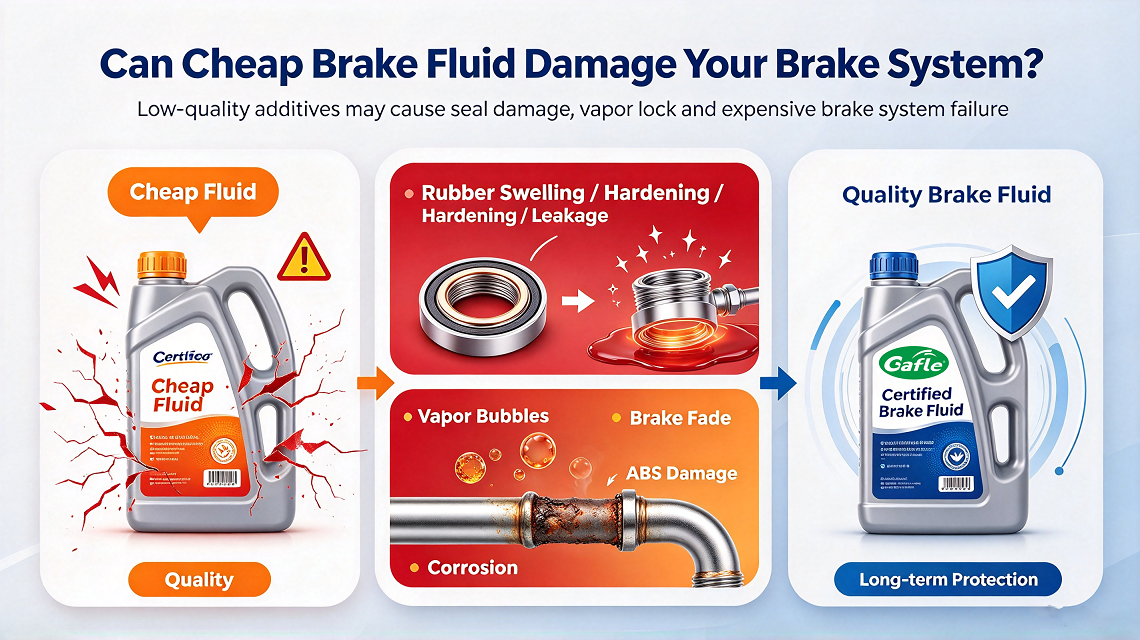
Automakers design electric vehicles with longer recommended service cycles compared to ICE cars. Brake system rubber seals, hoses and O-rings for EVs are engineered to remain stable for many more years. Standard DOT4 brake fluid is formulated for the service life of traditional fuel vehicles. When paired with EV-specific elastomer materials, ordinary brake fluid may cause gradual seal shrinkage or swelling over extended idle periods.
Dedicated EV brake fluid such as Gafle DOT4 EV608 is formulated with a refined additive package optimized for modern EV sealing components. It maintains stable pH levels and outstanding anti-corrosion performance during long static storage inside the brake circuit. The formula controls moisture absorption rate, preserving boiling point performance through longer service intervals. This reduces the risk of hidden corrosion inside calipers, master cylinders and integrated brake control modules.
EV integrated brake modules demand consistent hydraulic fluid performance.
Nearly all modern electric vehicles use integrated brake control units that combine ABS, ESC and regenerative braking coordination. These compact hydraulic modules contain tiny precision valves and channels. Any sediment, corrosion particles or fluid degradation can interfere with the precise pressure modulation required during the transition between regenerative braking and friction braking.
Substandard brake fluid may form deposits as it ages. These deposits can restrict small passages within the integrated brake unit, leading to uneven brake response or diagnostic fault codes. For repair shops and parts wholesalers, repeated brake module repairs create high labour costs and customer dissatisfaction. Using EV-specific brake fluid reduces these maintenance risks.
Best practices for EV brake fluid maintenance
Do not automatically reuse brake fluid specifications from gasoline vehicles. Always check the OEM service manual for the recommended brake fluid grade. Even if the label says DOT4, confirm whether it requires an EV-specific formulation. Test brake fluid water content regularly, rather than only replacing fluid based on mileage. Extended idle periods mean EV brake fluid can absorb moisture even when the vehicle’s mileage is low. When performing a full brake flush, select certified brake fluid designed for electric vehicle hydraulic systems.
Gafle DOT4 EV608 is engineered for electric vehicle brake systems.
Zhejiang Gafle Environmental Technology developed DOT4 EV608 brake fluid specifically to meet the special operating conditions of electric vehicles. It maintains excellent wet boiling point performance and provides outstanding protection for EV rubber seals and metal hydraulic components. Gafle EV brake fluid complies with global DOT standards and comes with complete MSDS, COA and technical datasheets. For auto parts importers and repair shop partners, Gafle EV brake fluid opens up a targeted product line for the fast-growing electric vehicle service market.
Final Takeaway
EV brake systems are not simply copies of gasoline vehicle brakes. Regenerative braking, longer service cycles and integrated brake modules create unique requirements for brake fluid. Choosing an EV-specific brake fluid like Gafle DOT4 EV608 protects sophisticated EV brake hardware and delivers safer, more reliable braking performance for your customers.
Welcome to contact GAFLE for more information & cooperation!
peter
ZHEJIANG GAFLE AUTO CHEMICL CO.,LTD
Tel:86-579-8222 1665
Fax:86-579-8246 4690
Cel/Wechart:86-13335993986
E-mail:peter@gafle.net
Web:www.gafle.net
peter
ZHEJIANG GAFLE AUTO CHEMICL CO.,LTD
Tel:86-579-8222 1665
Fax:86-579-8246 4690
Cel/Wechart:86-13335993986
E-mail:peter@gafle.net
Web:www.gafle.net