logo

Can DOT 4 replace DOT 3 brake fluid?

logo

Published

Oct 26 2026

  • Buying Guide

Follow us

can-dot-4-replace-dot-3-brake-fluid

can DOT 4 replace DOT 3 brake fluid

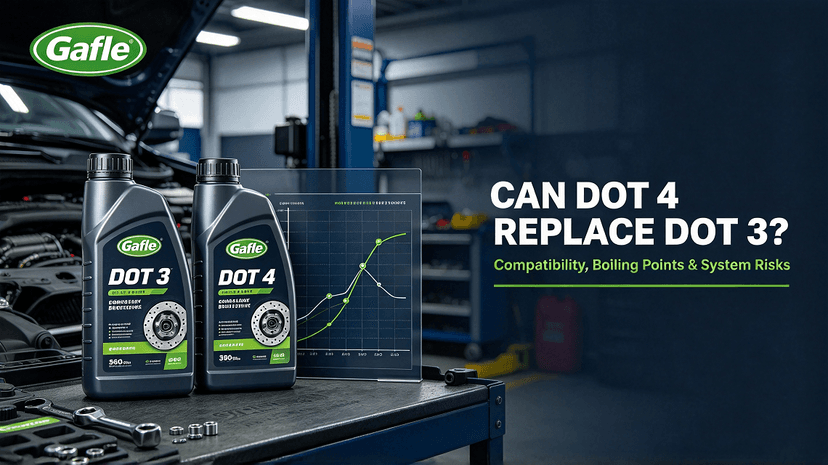
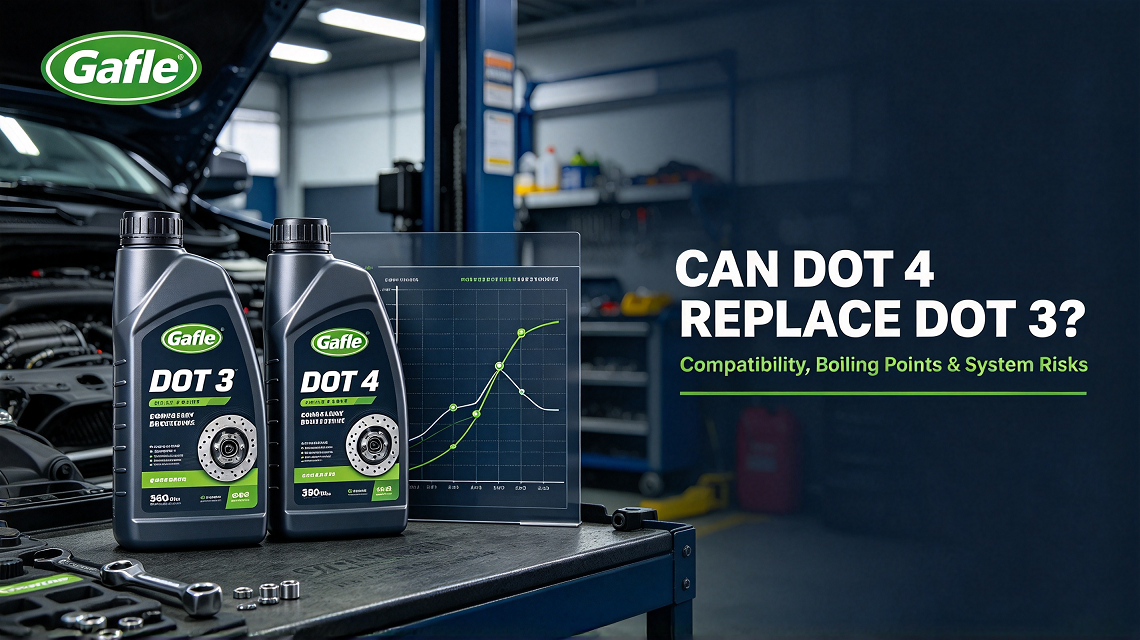
Many technicians and bulk buyers keep asking whether DOT 4 brake fluid can directly replace DOT 3 brake fluid. The answer is not a simple yes or no; we need to start by comparing their core technical specifications.

Both DOT 3 and DOT 4 brake fluids belong to the glycol-based brake fluid family regulated by FMVSS 116 standard. The most obvious gap lies in boiling point performance. DOT 3 requires a minimum dry boiling point of 205°C and wet boiling point of 140°C, while DOT 4 raises the bar to 230°C dry boiling point and 155°C wet boiling point. Higher boiling point means better resistance to vapor lock under heavy braking. Many people misunderstand that higher grade brake fluid can be used arbitrarily on any brake system, which is a risky misconception we need to clarify first.

DOT 4 shares the same glycol chemical base with DOT 3, which makes them chemically compatible in theory. However, replacement comes with strict preconditions instead of universal suitability for every vehicle.

Since they use the same base material, mixing DOT 4 into a DOT 3 system will not trigger immediate chemical corrosion like silicone-based DOT 5 fluid. But compatibility does not equal a trouble-free upgrade. Older vehicles originally factory-specified for DOT 3 usually use rubber seals formulated to match DOT 3’s additive package. Long-term use of DOT 4 may accelerate seal swelling or aging in some old brake calipers and master cylinders, even if there is no immediate failure.

DOT 4 is a beneficial upgrade choice for vehicles facing heavy braking loads. Its superior high-temperature performance effectively reduces the chance of vapor lock on downhill routes or frequent stop-and-go driving.

Vapor lock is one of the most dangerous brake failures. When brake fluid boils under continuous hard braking, vapor bubbles form inside the closed hydraulic circuit. Unlike liquid brake fluid, gas can be compressed, which leads to a spongy brake pedal and extended stopping distance. For light commercial trucks, delivery vans and vehicles regularly driving mountain roads, switching to DOT 4 as an upgrade brings tangible safety improvements, as long as the system is properly serviced.

Blind replacement is not recommended for all vehicles, and there is a standard operating procedure if you decide to upgrade from DOT3 to DOT4.

If the vehicle manufacturer strictly marks DOT 3 as the only approved fluid, we suggest sticking with the original specification. If an upgrade is confirmed, you cannot simply top up DOT4 on the old DOT3 fluid. The correct workflow requires fully draining all old brake fluid from master cylinder, calipers and wheel cylinders, flushing the whole hydraulic circuit, refilling new DOT4 fluid and bleeding air completely. Partial replacement leaves residual old fluid and weakens the high-temperature advantage of DOT4.

For bulk buyers and auto parts distributors, we recommend matching the factory specification first, and introducing DOT4 as an optional performance upgrade with clear technical notes for your repair shop customers.

Gafle supplies stable DOT 3 and DOT 4 glycol brake fluid for global aftermarket customers. When selling to repair shops, you can separate two usage scenarios: routine maintenance follows OEM requirements, and performance upgrade uses DOT4 with full system flush service. Clear technical communication will reduce after-sales complaints and build trust with your end clients.

Welcome to contact GAFLE for more information & cooperation!
peter
ZHEJIANG GAFLE AUTO CHEMICL CO.,LTD
Tel:86-579-8222 1665
Fax:86-579-8246 4690
Cel/Wechart:86-13335993986
E-mail:peter@gafle.net
Web:www.gafle.net
Featured Blogs
What type of coolant does my car need?

What type of coolant does my car need?

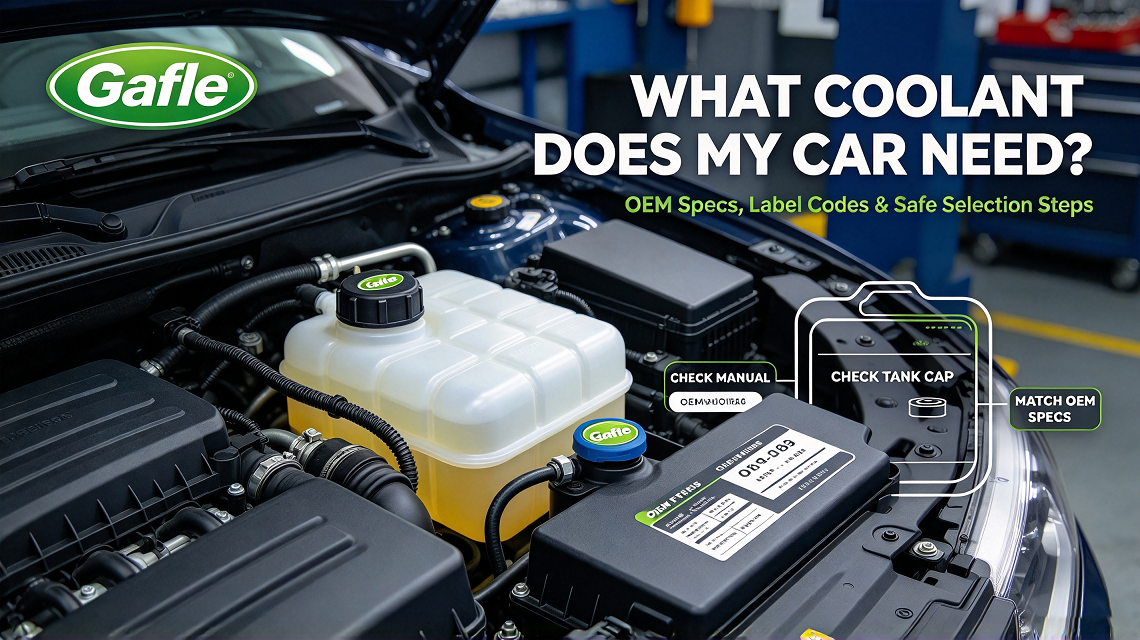
1. If you lose the manual, the second fast check point is the expansion tank cap or reservoir label inside the engine bay. Many European and Asian automakers print coolant standards directly there. 2. Vehicle brand and manufacturing year serve as a helpful secondary reference when you cannot access manual or tank labels. Different auto groups have long-standing coolant preferences. 3. Once you know the required specification, verify the aftermarket coolant label carefully, and tell the difference between equivalent replacement and formal OEM approved coolant. 4. When you cannot confirm the original coolant type at all, the safest practice is full cooling system flush and refill with universal OAT coolant, instead of randomly topping up unknown fluid. 5. Gafle supports B2B auto parts clients with coolant fitment reference materials, helping your team quickly match the correct coolant type for your repair and retail customers.

What is the best coolant for cars?

What is the best coolant for cars?

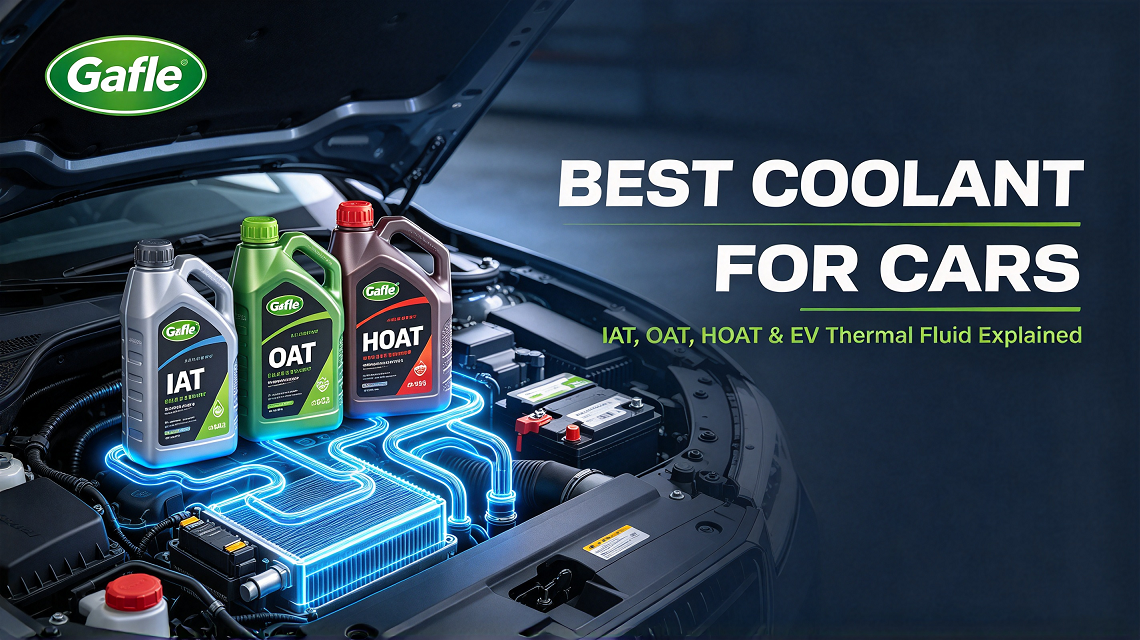
1. Three mainstream coolant technologies dominate the aftermarket: conventional IAT, long-life OAT, and hybrid HOAT, built for different generations of passenger cars. 2. EV and hybrid vehicles form a separate category. They require special low-conductivity coolant for battery thermal management, instead of ordinary combustion-engine antifreeze. 3. Key buying mistakes you need to avoid: never match coolant only by color, never mix different chemistry families casually, and always verify OEM compatibility approvals on product labels. 4. For auto parts wholesalers, organize your inventory by coolant chemistry and vehicle application. Gafle’s coolant lineup covers conventional gasoline cars, hybrid models and new energy electric vehicles.

What is the difference between antifreeze and coolant?

What is the difference between antifreeze and coolant?

1. Concentrated antifreeze cannot be poured directly into the radiator. It must be diluted with deionized water to reach the designed freezing and boiling protection level. 2. Pre-mixed coolant is antifreeze concentrate blended with deionized water at factory. It is ready for direct filling, perfect for repair shops, while concentrated antifreeze suits bulk fleet buyers with on-site mixing capacity. 3. Beyond freezing protection, antifreeze and finished coolant share three core duties: overheat boil-over prevention, multi-metal corrosion inhibition and scale deposit control. Many buyers only check freezing point and ignore these vital functions. 4. For bulk purchasers, match your stock type to your end users. Gafle supplies both concentrated antifreeze and factory pre-mixed coolant to meet different regional market demands.

How to choose a bulk antifreeze supplier?

How to choose a bulk antifreeze supplier?

1. The first and non-negotiable check is product certification. Complete test certificates, ASTM standards, OEM approvals, MSDS and COA documents are essential for customs clearance and local market sales. 2. Second, confirm the supplier can supply the correct coolant chemistry. Coolant color is not a reliable indicator; you need to distinguish IAT, OAT and HOAT formulations for different vehicle lines. 3. Third, evaluate production capacity, MOQ and custom packaging options, especially for export clients who need IBC tote, 200L drum and private label OEM service. 4. Fourth, review logistics capability, chemical storage standards and technical support. Trusted antifreeze suppliers can offer shipping documents and professional technical guidance for your downstream clients.

Can DOT 5.1 be mixed with DOT 4?

Can DOT 5.1 be mixed with DOT 4?

1. DOT 5.1 is a high-grade glycol brake fluid with higher boiling points than standard DOT 4, designed for heavy-duty, performance and modified vehicles that demand more stable braking under extreme heat. 2. Small-volume mixing of DOT 4 and DOT 5.1 works for emergency use, but long-term mixed fluid leads to degraded heat resistance, faster water absorption and accelerated seal wear. 3. The proper maintenance rule is full system replacement rather than mixing. We can clearly separate the suitable application scenarios for DOT 4 and DOT 5.1. 4. For aftermarket wholesalers and distributors, store DOT4 and DOT5.1 separately with clear labels, and educate your repair shop customers to avoid confusing DOT 5.1 with silicone DOT 5 fluid.

Can DOT 4 replace DOT 3 brake fluid?

Can DOT 4 replace DOT 3 brake fluid?

1. Many technicians and bulk buyers keep asking whether DOT 4 brake fluid can directly replace DOT 3 brake fluid. The answer is not a simple yes or no; we need to start by comparing their core technical specifications. 2. DOT 4 shares the same glycol chemical base with DOT 3, which makes them chemically compatible in theory. However, replacement comes with strict preconditions instead of universal suitability for every vehicle. 3. DOT 4 is a beneficial upgrade choice for vehicles facing heavy braking loads. Its superior high-temperature performance effectively reduces the chance of vapor lock on downhill routes or frequent stop-and-go driving. 4. Blind replacement is not recommended for all vehicles, and there is a standard operating procedure if you decide to upgrade from DOT3 to DOT4. 5. For bulk buyers and auto parts distributors, we recommend matching the factory specification first, and introducing DOT4 as an optional performance upgrade with clear technical notes for your repair shop customers.