Why Laboratory Verification Must Precede Bulk Chemical Procurement
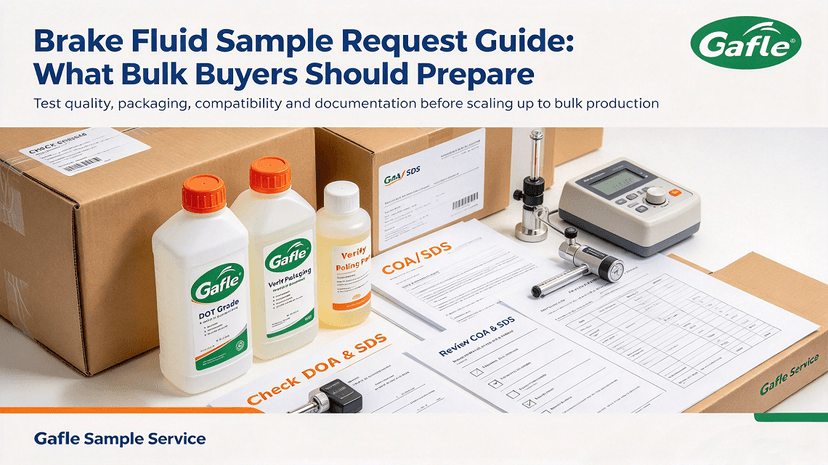
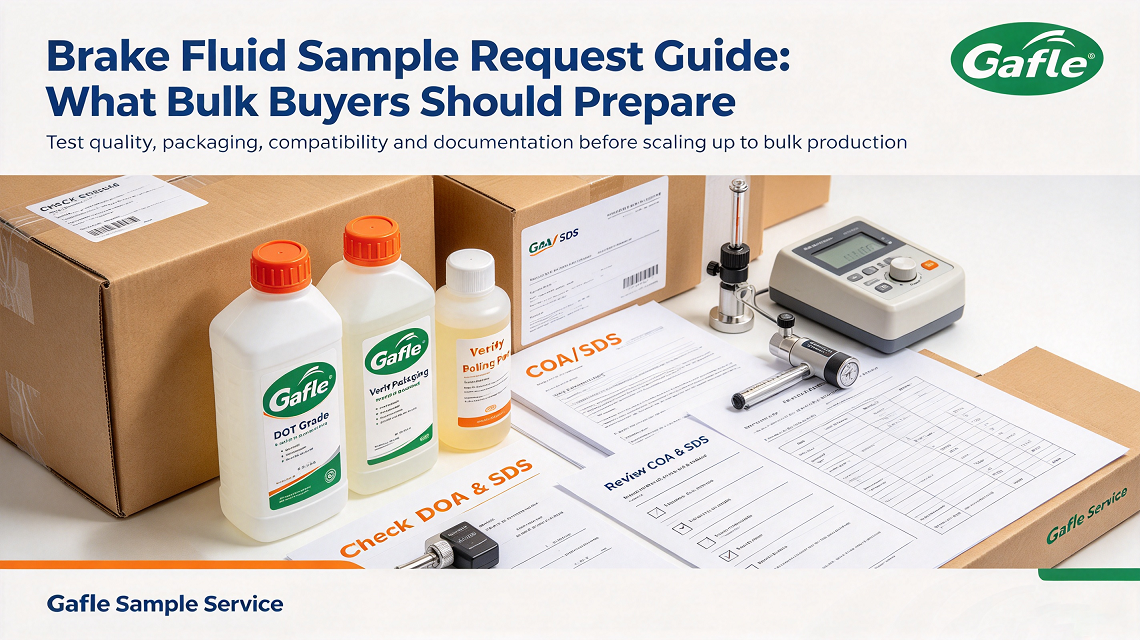
Committing to an entire container of hydraulic formulation involves substantial capital, but the true commercial exposure lies in post-sale liability. If an off-spec polyglycol mixture enters distribution, the downstream consequences range from premature ABS valve wear to dangerous vapor lock under hard deceleration. For procurement officers and private-label distributors, evaluating a qualified brake fluid sample before bulk order signing is the single most effective barrier against variable blending quality and sub-par base stocks.
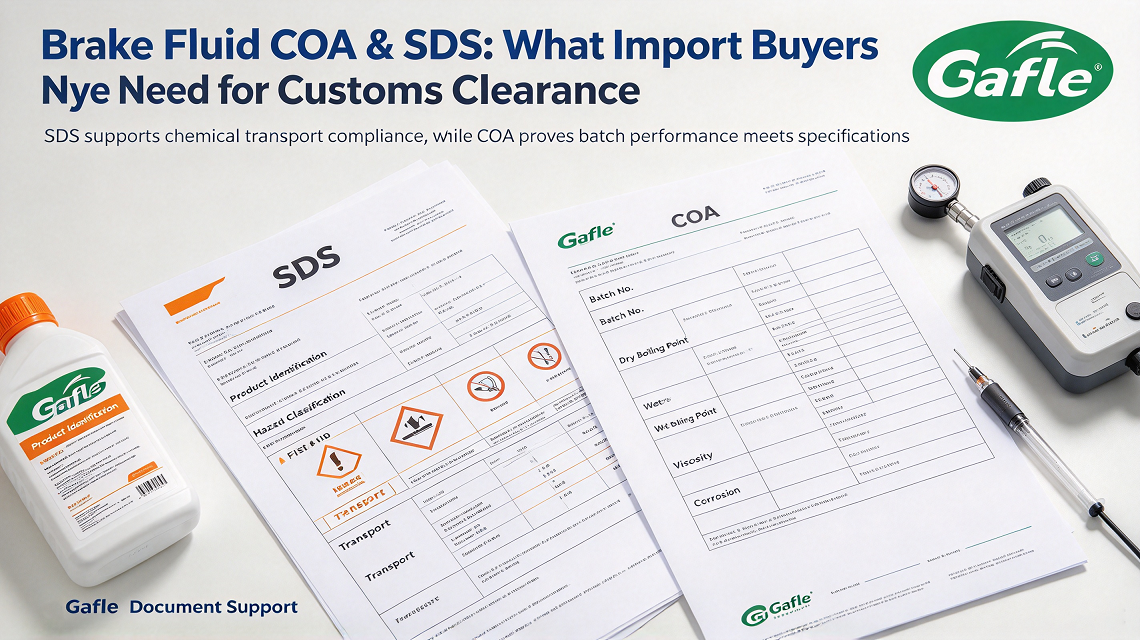
Relying solely on a manufacturer's self-issued Certificate of Analysis (CoA) often creates a false sense of security. While factory-supplied documentation indicates what the blender intended to produce, physical evaluation of the fluid reveals raw material consistency, packaging seal integrity, and how strictly the facility adheres to international standards such as FMVSS 116, ISO 4925, or SAE J1703.
Critical Testing Parameters for Sourcing Teams
When you receive evaluation containers from a prospective manufacturer, routing them directly to an accredited laboratory should be standard operating procedure. A comprehensive quality check ought to focus on four primary physical and chemical metrics:
- Equilibrium Reflux Boiling Point (ERBP): Both dry and wet boiling thresholds must meet or exceed target classification ratings. If a DOT 4 blend drops below its required wet boiling point due to initial moisture contamination, service life is compromised before installation.
- Low-Temperature Kinematic Viscosity: Modern electronic stability control and antilock systems demand low viscosity at -40°C. An excessively thick fluid under sub-zero conditions causes sluggish valve response, which no reputable brand can afford.
- Corrosion Inhibition and pH: Glycol formulations naturally oxidize into acidic byproducts over time. Testing reserve alkalinity and pH levels indicates whether the anti-corrosion additive package has been properly metered.
- Elastomer Compatibility: Unchecked solvents or incorrect additives cause styrene-butadiene (SBR) or EPDM rubber cups to swell, shrink, or soften beyond acceptable tolerances, inviting master cylinder leaks.
How to Test Brake Fluid Sample Batches Without Skewing Results
Glycol-ether bases are hygroscopic; they actively strip moisture from ambient air. Consequently, the method of collection and transit packaging directly impacts bench results. Before you test brake fluid sample specimens, inspect the physical delivery container. Metal cans with induction-sealed closures are vastly superior to unlined plastic bottles, which allow atmospheric moisture to permeate through the sidewalls during extended transit.
If a lab report indicates elevated water content upon arrival, verify whether the issue stemmed from factory blending or moisture migration through porous temporary packaging. When testing, ensure the laboratory conducts wet ERBP tests using standard humidification chambers rather than rapid, non-standard bench heaters that can yield distorted readings.
Managing the Commercial Sample Request Process
A poorly communicated sample request frequently results in a factory submitting a hand-crafted "golden sample" prepared in an R&D laboratory rather than a draw from standard bulk blending tanks. To avoid this disconnect, clearly state that the evaluation volume must represent active commercial production.
Expect suppliers to charge for hazardous material shipping or administrative handling, even if they promote a free sample program for qualified trade buyers. Specialized packaging and carrier declarations for flammable or regulated industrial fluids incur legitimate logistics costs. Sourcing managers should readily absorb reasonable freight charges if it ensures delivery of an untampered, batch-traceable specimen.
Common Procurement Pitfalls
One frequent mistake in automotive fluid procurement is testing only the initial qualification draw and neglecting subsequent lot surveillance. Chemical blenders occasionally switch raw chemical suppliers or alter secondary corrosion inhibitors when commodity pricing shifts. Treat pre-order verification as a baseline benchmark, preserving remaining portions in sealed, desiccated storage to resolve any future quality disputes.
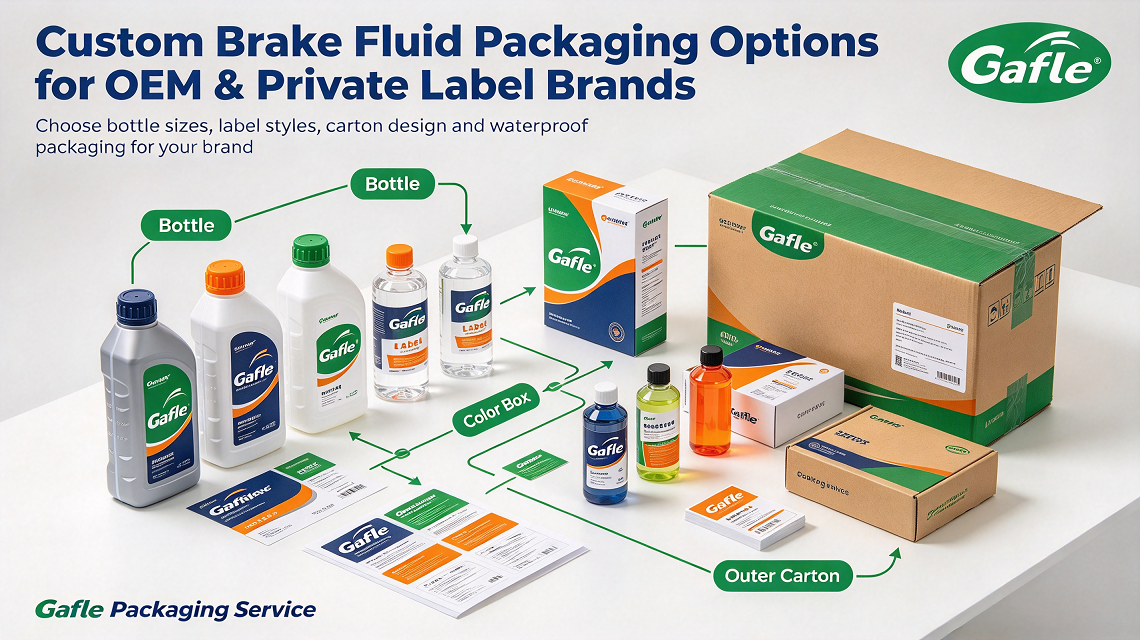
Another blind spot is container material interaction. If you intend to purchase bulk volumes for regional packaging, evaluate how the chemical formulation behaves within your specific retail bottles, cap liners, and carton designs over accelerated shelf-life tests.
Frequently Asked Questions
How much volume is required for complete laboratory verification?
A full battery of ASTM or SAE homologation tests generally requires between 500 ml and 1 liter of fluid. Requesting two separate 500 ml factory-sealed containers ensures your testing facility has sufficient material for duplicate runs while leaving a sealed control sample intact.
Can a factory Certificate of Analysis substitute for bench testing?
No. A CoA serves as a baseline comparison document. Independent verification confirms that the batch matches the chemical fingerprint on paper and proves the blender's internal quality control instruments are accurately calibrated.
Next Steps for Procurement Managers
Before issuing commercial purchase contracts, establish a standardized fluid testing protocol with an independent laboratory. Formulate a technical questionnaire for prospective chemical manufacturers, request representative production lots sealed in moisture-impermeable containers, and benchmark the empirical laboratory data directly against your regional performance mandates.
Welcome to contact GAFLE for more information & cooperation!
peter
ZHEJIANG GAFLE AUTO CHEMICL CO.,LTD
Tel:86-579-8222 1665
Fax:86-579-8246 4690
Cel/Wechart:86-13335993986
E-mail:peter@gafle.net
Web:www.gafle.net