Choosing Between a Brake Fluid Manufacturer or Trading Company for Global Sourcing
When scaling an automotive aftermarket brand or securing fluids for an assembly line, purchasing managers eventually face the classic supply chain fork: should you contract directly with a brake fluid manufacturer or trading company? On surface level, buying factory-direct promises lower unit costs and clearer transparency. Yet, procurement teams regularly find that dealing directly with a chemical plant brings unexpected headaches around batch minimums, international packaging certifications, and export logistics. Understanding how these two vendor types actually operate on the plant floor and in port warehouses is critical before signing supply agreements.
Brake hydraulic systems rely on fluids formulated to exact standards—predominantly glycol ether blends (DOT 3, DOT 4, DOT 5.1) or silicone bases (DOT 5). Because brake fluid is a critical safety item governed by standards such as FMVSS No. 116, ISO 4925, and SAE J1703, the operational competence of your partner matters far more than standard commercial terms.
Core Operational Differences: Production vs. Intermediation
To make an informed decision, procurement teams need to look beyond sales pitches and analyze how each entity handles formulation, filling, and accountability.
The Factory Supplier Model
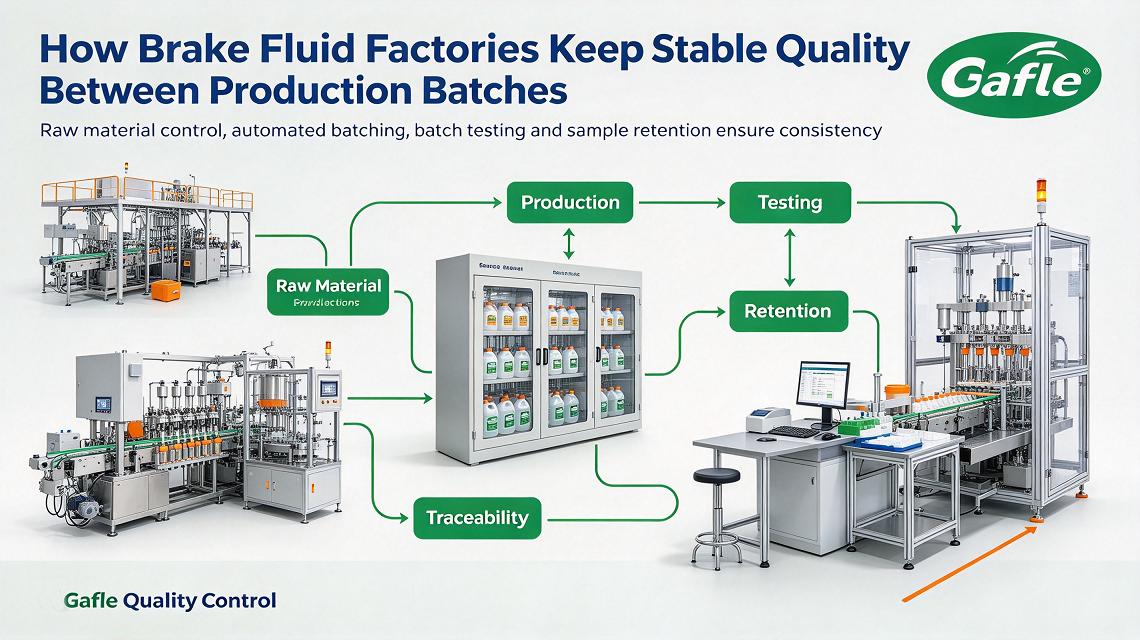
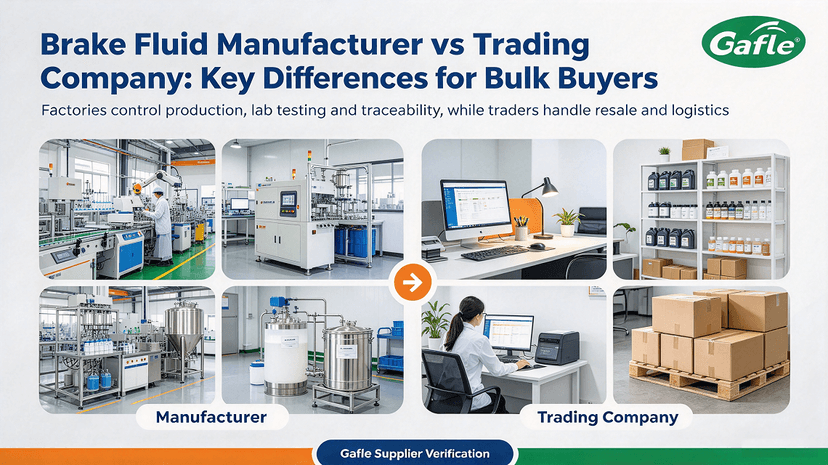
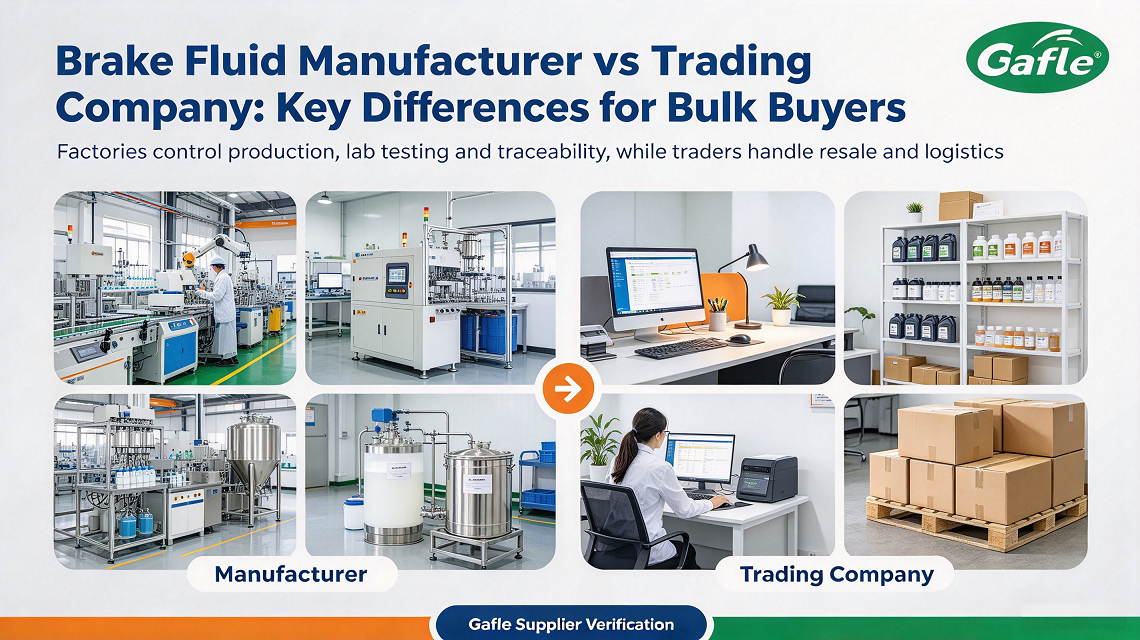
An authentic factory supplier operates dedicated synthesis reactors, automated blending vessels, and inline moisture-controlled bottling lines. When working with an OEM brake fluid direct manufacturer, your team communicates directly with formulation chemists and quality assurance managers who oversee boiling point consistency (both dry and wet equilibrium reflux boiling points) and kinematic viscosity checks.
However, true manufacturers prefer stability over flexibility. Their automated filling lines are engineered for continuous output—often requiring thousands of liters per batch run. If you need 500 bottles of specialized DOT 4 racing fluid packaged under a custom label alongside standard fluids, a primary chemical refiner will likely turn down the order or quote an exorbitant setup fee.
The Trading Company Model
A trading company acts as an intermediary, maintaining relationships across multiple chemical producers, bottle blow-molders, carton printers, and freight forwarders. For mid-sized importers or regional distributors who need mixed-container loads—such as brake fluid combined with coolants, degreasers, or workshop consumables—a trading firm offers consolidation capabilities that single-product chemical plants simply will not provide.
The trade-off lies in visibility. In many cases, the trading house obscures the original blending facility to protect its margin, meaning your technical team may struggle to obtain raw batch testing records or trace formulation changes back to the original reactor lot.
Trade-Off Matrix: Sourcing Profiles Compared
- Minimum Order Quantities (MOQs): Direct manufacturers typically demand full-batch runs or full container loads (FCL) per SKU. Trading intermediaries can aggregate smaller volumes, sometimes offering less-than-container-load (LCL) or mixed SKU shipments.
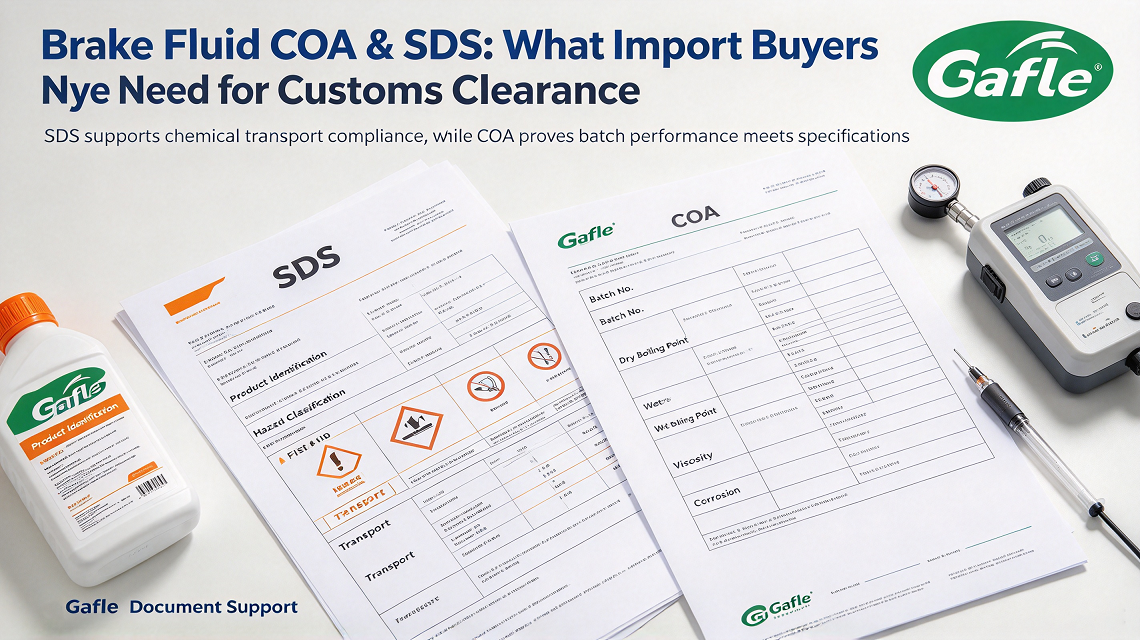
- Technical Support and Formulations: Manufacturers supply precise safety data sheets (SDS), technical data sheets (TDS), and direct lab batch retention data. Intermediaries often provide standardized technical documentation and may experience delays when answering non-standard lab queries.
- Pricing Structure: Direct plants offer raw base pricing without intermediary markups, though they rarely absorb packaging design or complex multi-point shipping fees. Trading firms incorporate an administrative margin but often offset this through bundled logistics.
- Risk and Accountability: If a batch fails dry boiling point verification after delivery, dealing with an OEM brake fluid direct manufacturer enables direct root-cause investigation. With an intermediary, warranty claims and liability reviews involve an extra layer of negotiation.
Critical Evaluation: How to Verify What You Are Dealing With
It is common in international chemical trading for trading agencies to market themselves as primary producers. If your risk assessment mandates direct production oversight, simple verification steps can clarify the vendor's actual operational status.
First, review their business license and environmental permits. Chemical blending and hydrocarbon-handling facilities require specialized environmental impact approvals and hazardous chemical storage licenses. A trading company's registration will typically list commercial sales, consulting, or general import-export activities rather than chemical synthesis or fluid packaging.
Second, schedule a third-party factory audit. Commissioning an on-site auditor to inspect the automated packaging lines, nitrogen-purging equipment (used to prevent ambient humidity from degrading fluid prior to sealing), and internal laboratory equipment quickly sorts pure brokerages from operational production facilities. If a vendor hesitates to allow a technical audit of the specific facility where your product will be blended and bottled, you are almost certainly communicating with an intermediary.
Which Sourcing Route Fits Your Operation?
Neither option is universally superior; suitability depends entirely on your annual volume, internal technical resources, and product mix.
Contracting directly with an OEM chemical plant makes sense if:
- You manage high-volume SKUs (such as volume distribution of standard DOT 4) and can consistently meet multi-pallet or full-container run minimums.
- Your brand supplies OEM assembly or tier-one automotive programs that require documented supply-chain traceability, strict ISO/IATF quality controls, and unannounced line audits.
- Your internal team has dedicated import coordinators capable of managing hazardous-material maritime shipping, customs clearances, and separate packaging supplier coordination.
Partnering with an experienced trading entity is often the smarter route if:
- You are launching a private-label chemical line and need modest initial volumes across several fluid types without heavy inventory carrying costs.
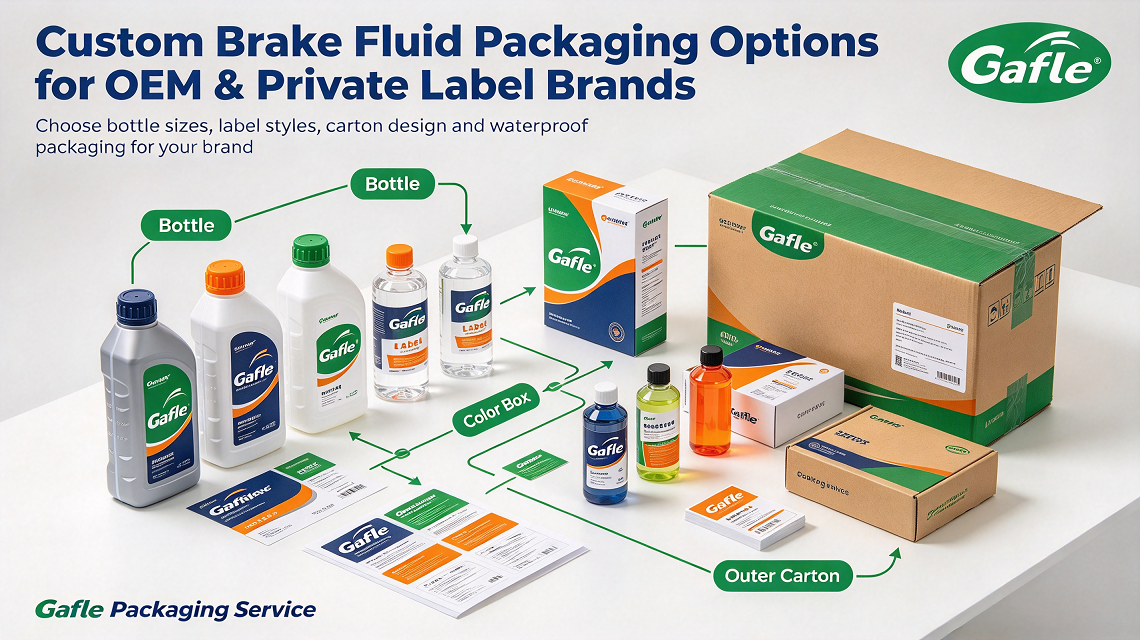
- You lack the staff to independently source metal tins, specialized barrier plastic bottles, induction-sealed caps, and secondary master cartons from disparate component vendors.
- You want single-source consolidation for hydraulic fluids alongside related workshop maintenance products.
Frequently Asked Questions
Can a trading company supply legitimate DOT-compliant fluid?
Yes. Many established trading firms source their fluid from large, certified chemical refineries that simply do not maintain internal export sales divisions. The quality of the chemical product can be entirely sound, provided the trading company maintains proper inventory rotation and ensures packaging seals prevent moisture ingress.
Why is moisture control so critical when auditing suppliers?
Polyglycol-based fluids are hygroscopic; they absorb moisture directly from ambient air. Any facility blending or bottling brake fluid must maintain dedicated moisture-exclusion systems, including nitrogen blanket storage and strict relative-humidity controls on filling lines. A factory audit should always verify how the vendor prevents atmospheric contamination between bulk storage and final bottle sealing.
Next Steps for Sourcing Teams
Before issuing requests for quotation, define your annual volume per SKU, packaging requirements, and compliance parameters. If your volume warrants a factory supplier relationship, request plant-level environmental registrations and schedule an on-site line inspection. If flexibility and packaging support are your priority, thoroughly vet the trading firm's chemical blending partners and establish strict testing requirements on every delivered batch.
Welcome to contact GAFLE for more information & cooperation!
peter
ZHEJIANG GAFLE AUTO CHEMICL CO.,LTD
Tel:86-579-8222 1665
Fax:86-579-8246 4690
Cel/Wechart:86-13335993986
E-mail:peter@gafle.net
Web:www.gafle.net