logo

Can you customize brake fluid packaging?

logo

Published

Oct 22 2026

  • Buying Guide

Follow us

can-you-customize-brake-fluid-packaging
brake fluid packaging
Custom packaging is one of the most effective ways to distinguish your private label brake fluid from generic competitors. Professional brake fluid manufacturers support flexible packaging customization to match your brand positioning and target market regulations.
Whether you run a regional auto retail chain or an online auto parts brand, tailored packaging can lift your product value significantly.
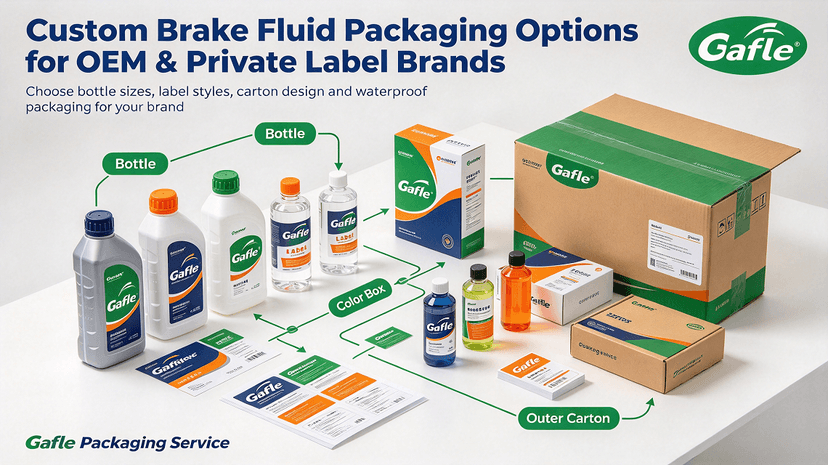
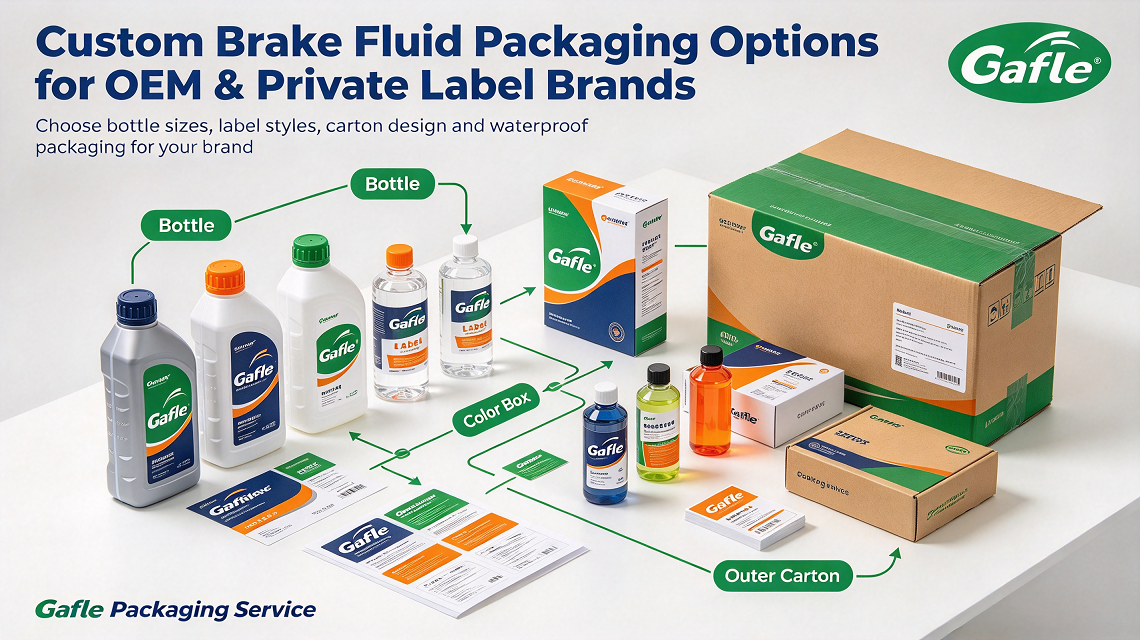
You can select from multiple standard bottle sizes or request new mould development.
Common ready bottle specifications include 250ml, 500ml and 1L, which have low MOQ for label customization. If you want a unique bottle shape, special neck design or embossed brand logo on the bottle body, the factory needs to open a new plastic mould, which brings higher minimum order quantity and mould cost. Colored bottles such as amber or translucent plastic are also available on request.
Custom labels support different printing materials and multi-language content.
Waterproof synthetic paper, matte and glossy adhesive labels are all widely used for brake fluid bottles. You can print your logo, brand name, DOT grade specification, safety warning text and multi-language instructions on labels. QR codes for product traceability, technical data sheets or warranty information can also be added for your customers.
Color boxes and export outer cartons can also be fully customized.
Retail-facing brake fluid often uses printed color boxes to attract buyers in auto shops. For bulk export, custom outer cartons with your brand mark help you identify goods easily in warehouses. The factory can adjust carton size, thickness and printing according to your pallet loading and container packing plan.
Custom packaging has different MOQ and lead time rules.
If you only print your labels on existing standard bottles, the MOQ is relatively moderate. New bottle mould development requires large order volume and longer lead time for mould making and testing. A packaging sample will be sent for your confirmation before mass production to avoid printing mistakes.
All custom labels must follow chemical and safety labeling regulations.
Brake fluid is a hazardous chemical for transport. Your label must clearly show DOT grade, hazard warning symbols, storage tips and manufacturer information. Our technical team can review your label artwork to make sure it meets REACH, GHS and local import requirements before printing.
For new brand owners, starting with standard bottle + custom label is the best low-risk plan.
This method lets you launch your branded brake fluid quickly without huge upfront investment in moulds. After your market sales grow steadily, you can invest in exclusive bottle shapes to build stronger brand recognition.
Welcome to contact GAFLE for more information & cooperation!
peter
ZHEJIANG GAFLE AUTO CHEMICL CO.,LTD
Tel:86-579-8222 1665
Fax:86-579-8246 4690
Cel/Wechart:86-13335993986
E-mail:peter@gafle.net
Web:www.gafle.net
Featured Blogs
Can I get brake fluid samples before placing a bulk order?

Can I get brake fluid samples before placing a bulk order?

1. Why Laboratory Verification Must Precede Bulk Chemical Procurement 2. Critical Testing Parameters for Sourcing Teams 3. How to Test Brake Fluid Sample Batches Without Skewing Results 4. Managing the Commercial Sample Request Process 5. Common Procurement Pitfalls 6. Frequently Asked Questions 7. Next Steps for Procurement Managers

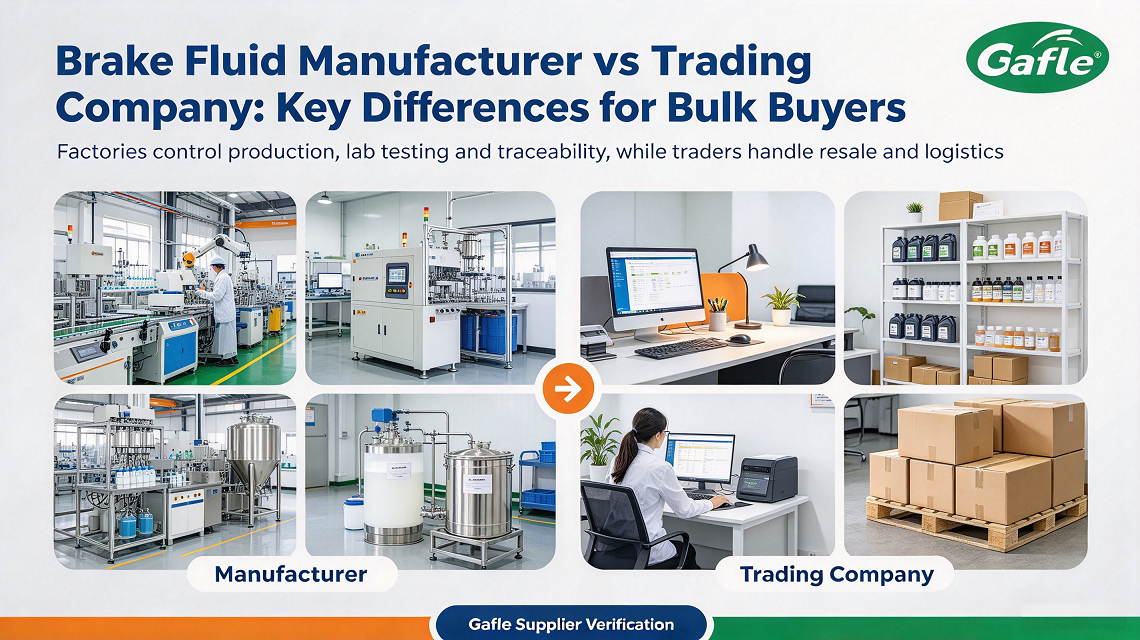
Are you a brake fluid manufacturer or trading company?

Are you a brake fluid manufacturer or trading company?

1. Choosing Between a Brake Fluid Manufacturer or Trading Company for Global Sourcing 2. Core Operational Differences: Production vs. Intermediation 3. Trade-Off Matrix: Sourcing Profiles Compared 4. Critical Evaluation: How to Verify What You Are Dealing With 5. Which Sourcing Route Fits Your Operation? 6. Frequently Asked Questions 7. Next Steps for Sourcing Teams

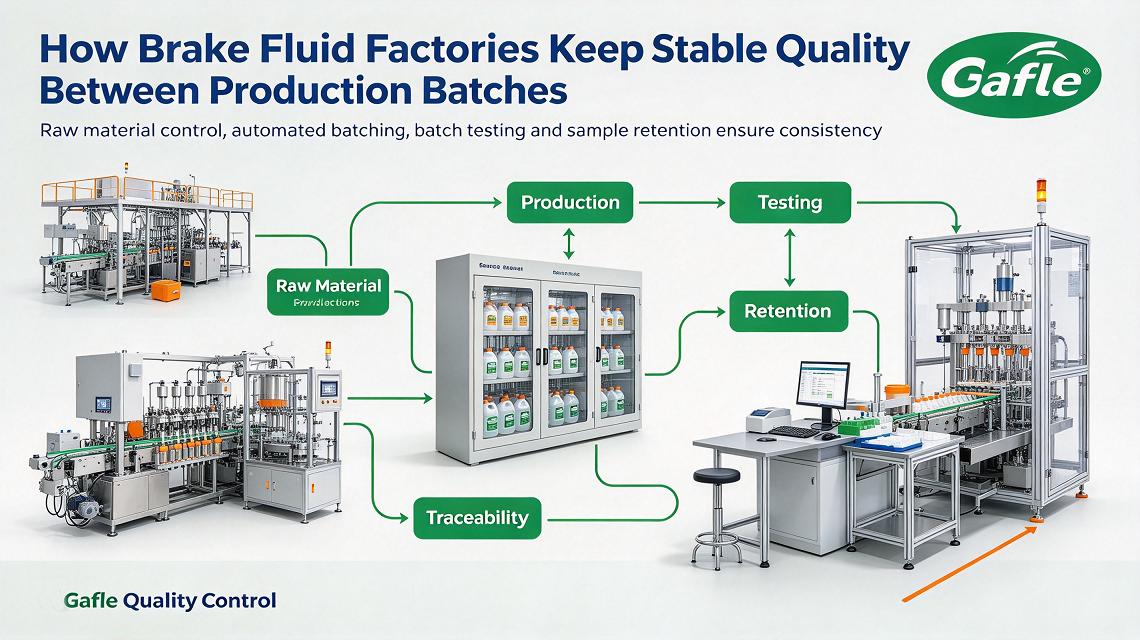
How Do Manufacturers Guarantee Batch-to-Batch Consistency of Brake Fluid?

How Do Manufacturers Guarantee Batch-to-Batch Consistency of Brake Fluid?

1. Why Brake Fluid Batch Consistency Matters to Brake System Longevity 2. The Chemistry Behind the Drift: Raw Material Control 3. Essential Protocols for Brake Fluid Batch Testing 4. Where Quality Control Often Breaks Down 5. Buyer's Guide: Auditing a Fluid Formulator 6. Frequently Asked Questions 7. Next Steps for Engineering and Procurement

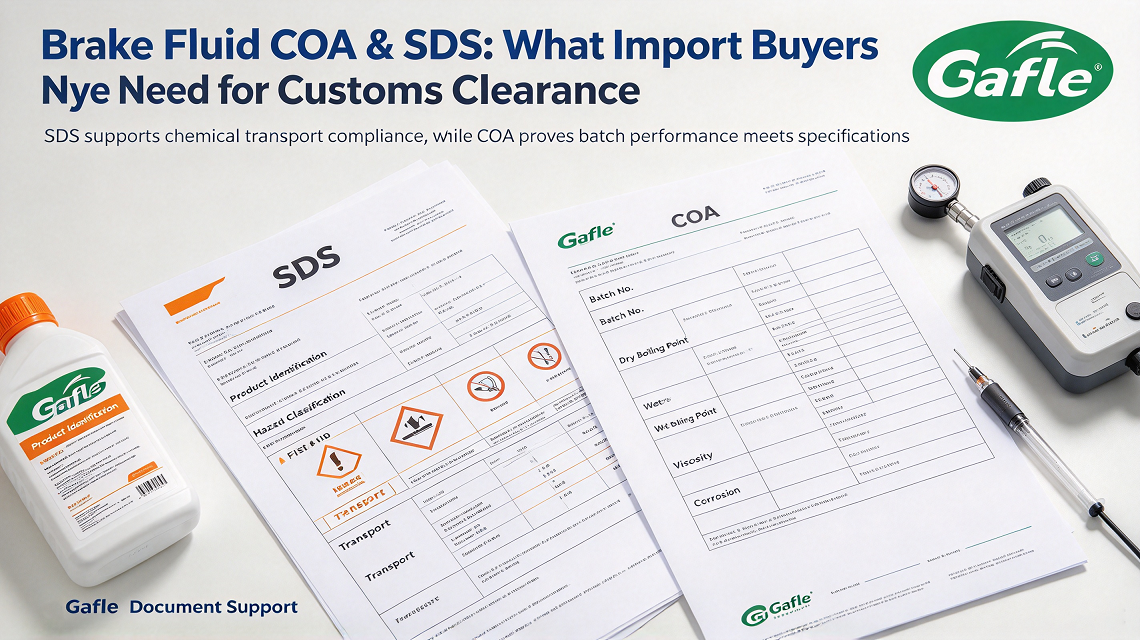
Can you provide COA and SDS for brake fluid?

Can you provide COA and SDS for brake fluid?

1. SDS, also known as MSDS, is the safety data sheet for hazardous chemical management. 2. COA, Certificate of Analysis, is the batch-specific lab test report. 3. These two documents serve different purposes for your import business. 4. Document information must match your ordered brake fluid grade and batch number. 5. Standard SDS can be reused for the same stable formula, while COA must be newly issued per batch. 6. Request COA and SDS from your supplier before shipment.

Can you customize brake fluid packaging?

Can you customize brake fluid packaging?

1. You can select from multiple standard bottle sizes or request new mould development. 2. Custom labels support different printing materials and multi-language content. 3. Color boxes and export outer cartons can also be fully customized. 4. Custom packaging has different MOQ and lead time rules. 5. All custom labels must follow chemical and safety labeling regulations. 6. For new brand owners, starting with standard bottle + custom label is the best low-risk plan.

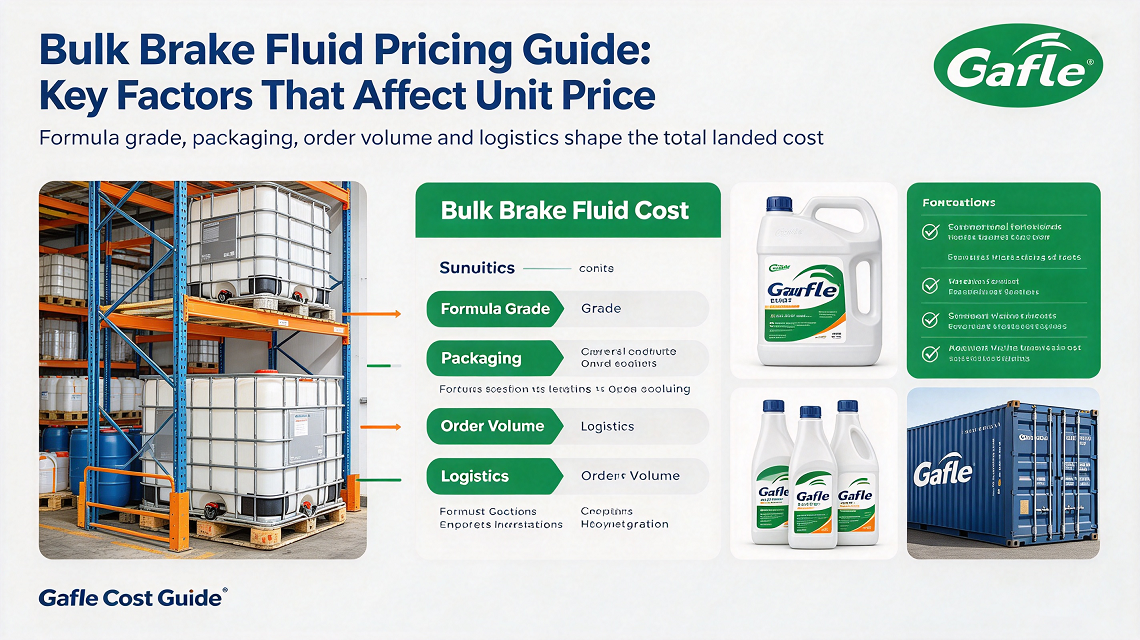
How much does bulk brake fluid cost?

How much does bulk brake fluid cost?

1. Brake fluid grade and formula are the biggest drivers of raw material cost. 2. Packaging style and order volume directly reduce the unit cost. 3. Custom private label packaging and special formulas add extra charges. 4. Cross-border logistics and compliance documents form your landed cost. 5. Extremely cheap bulk brake fluid usually comes with hidden quality risks. 6. Smart buyers evaluate total landed cost instead of only comparing unit prices.