logo

Can you provide COA and SDS for brake fluid?

logo

Published

Oct 22 2026

  • Buying Guide

Follow us

can-you-provide-coa-and-sds-for-brake-fluid
batch test certificate brake fluid
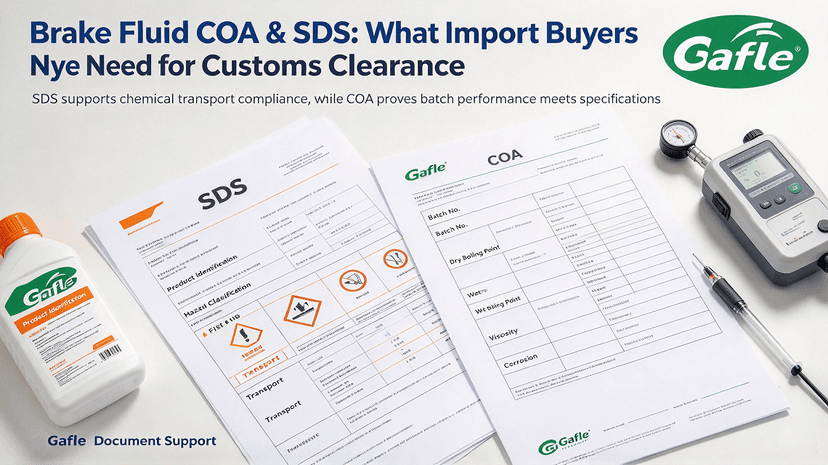
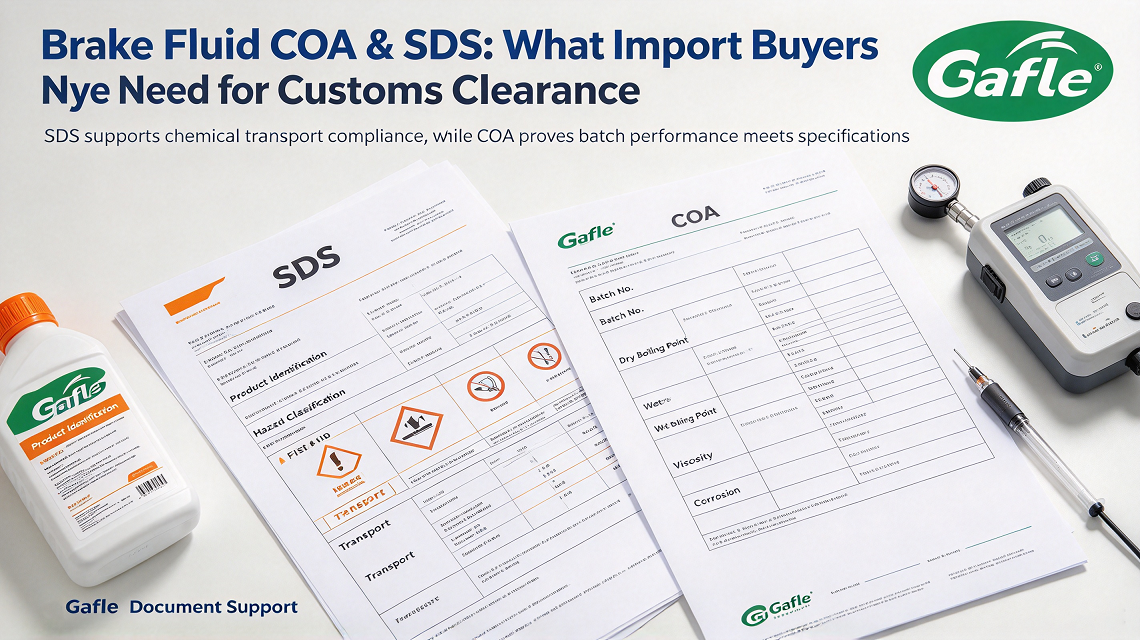
COA and SDS are essential supporting documents for international brake fluid shipments. Many new cross-border auto chemical buyers mix them up and fail customs inspection because they do not prepare correct paperwork. Reliable brake fluid manufacturers provide these two sets of documents for every bulk order to support smooth import and local compliance.
SDS, also known as MSDS, is the safety data sheet for hazardous chemical management.
It covers 16 standard sections including product identification, hazard classification, first-aid measures, fire-fighting instructions, handling and storage rules, transport information and disposal guidance. Freight forwarders, port customs and warehouse operators will ask for SDS to confirm safe transport requirements.
COA, Certificate of Analysis, is the batch-specific lab test report.
Unlike the fixed template SDS, every COA corresponds to one production batch of brake fluid. It records actual tested values of core indicators: dry boiling point, wet boiling point, kinematic viscosity, corrosion test result, pH value and appearance. It proves this exact batch meets FMVSS 116 DOT specifications.
These two documents serve different purposes for your import business.
Customs officers mainly check SDS to confirm chemical hazard classification. Distributors and workshop clients often request COA to verify product quality before resale. If local authorities carry out random sampling inspection, you need to provide matching COA for the tested batch.
Document information must match your ordered brake fluid grade and batch number.
The DOT grade, formula type, manufacturer name and batch code on COA and SDS need to be consistent with the printed information on bottle labels. Using an expired COA or COA from a different batch will lead to customs detention and shipment delays.
Standard SDS can be reused for the same stable formula, while COA must be newly issued per batch.
Since the brake fluid formula stays unchanged, the SDS template remains valid as long as regulations do not update. But each production run has independent lab testing, so you cannot reuse an old COA for a new bulk shipment.
Request COA and SDS from your supplier before shipment.
Confirm the file format (PDF is standard) and whether they can be issued in English or multi-language versions according to your target market requirements. Preparing these documents in advance is a simple way to avoid expensive port storage fines and cargo hold-ups.
Welcome to contact GAFLE for more information & cooperation!
peter
ZHEJIANG GAFLE AUTO CHEMICL CO.,LTD
Tel:86-579-8222 1665
Fax:86-579-8246 4690
Cel/Wechart:86-13335993986
E-mail:peter@gafle.net
Web:www.gafle.net
Featured Blogs
Can I get brake fluid samples before placing a bulk order?

Can I get brake fluid samples before placing a bulk order?

1. Why Laboratory Verification Must Precede Bulk Chemical Procurement 2. Critical Testing Parameters for Sourcing Teams 3. How to Test Brake Fluid Sample Batches Without Skewing Results 4. Managing the Commercial Sample Request Process 5. Common Procurement Pitfalls 6. Frequently Asked Questions 7. Next Steps for Procurement Managers

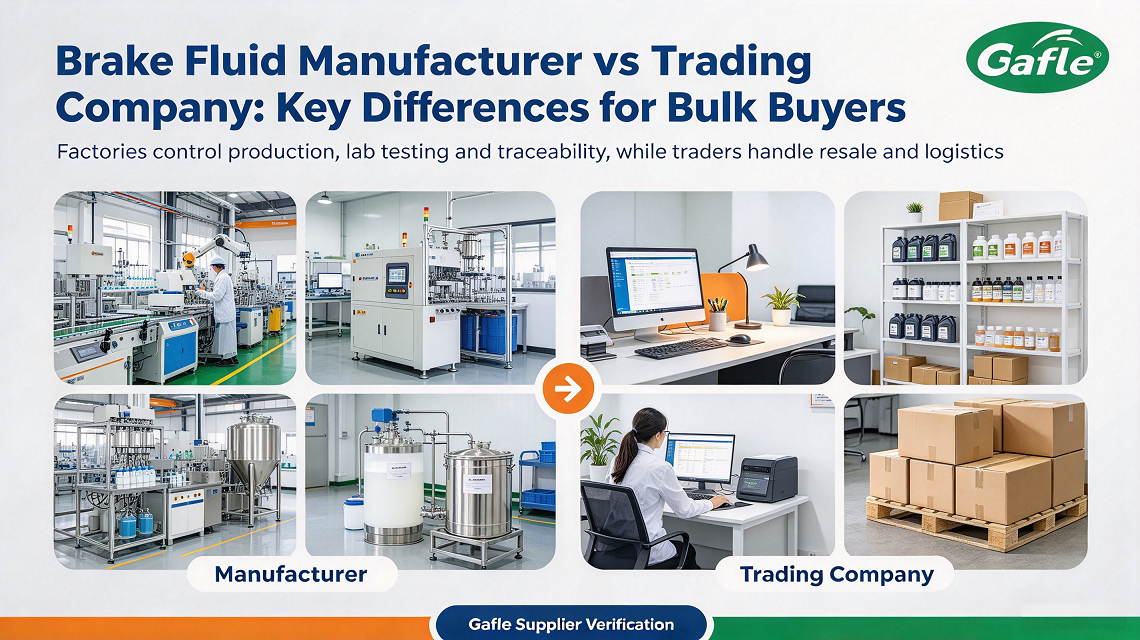
Are you a brake fluid manufacturer or trading company?

Are you a brake fluid manufacturer or trading company?

1. Choosing Between a Brake Fluid Manufacturer or Trading Company for Global Sourcing 2. Core Operational Differences: Production vs. Intermediation 3. Trade-Off Matrix: Sourcing Profiles Compared 4. Critical Evaluation: How to Verify What You Are Dealing With 5. Which Sourcing Route Fits Your Operation? 6. Frequently Asked Questions 7. Next Steps for Sourcing Teams

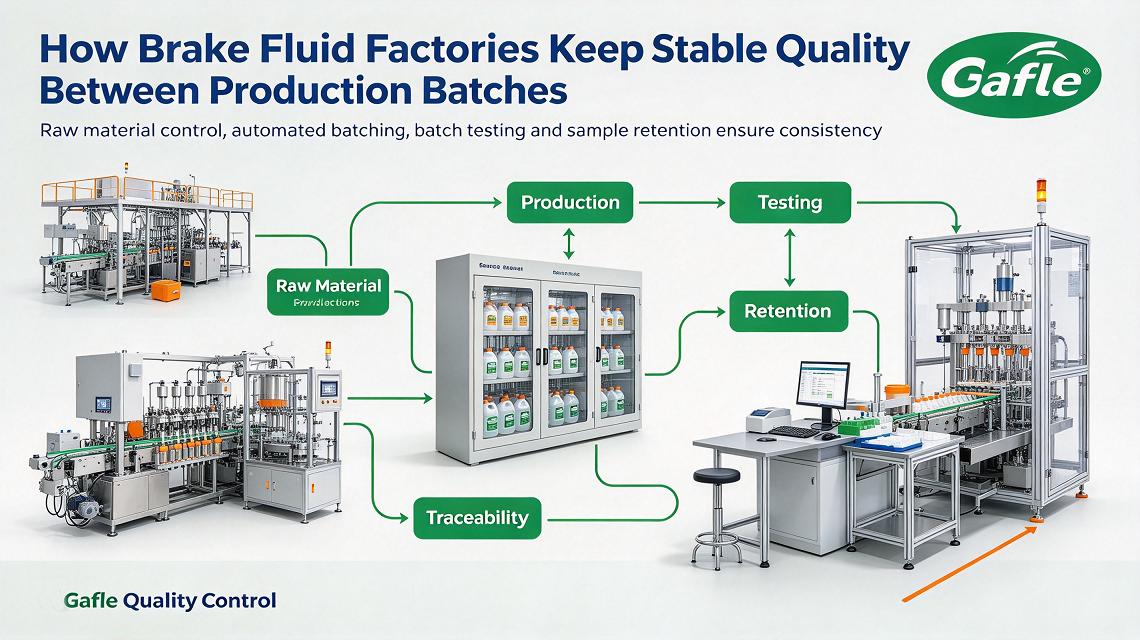
How Do Manufacturers Guarantee Batch-to-Batch Consistency of Brake Fluid?

How Do Manufacturers Guarantee Batch-to-Batch Consistency of Brake Fluid?

1. Why Brake Fluid Batch Consistency Matters to Brake System Longevity 2. The Chemistry Behind the Drift: Raw Material Control 3. Essential Protocols for Brake Fluid Batch Testing 4. Where Quality Control Often Breaks Down 5. Buyer's Guide: Auditing a Fluid Formulator 6. Frequently Asked Questions 7. Next Steps for Engineering and Procurement

Can you provide COA and SDS for brake fluid?

Can you provide COA and SDS for brake fluid?

1. SDS, also known as MSDS, is the safety data sheet for hazardous chemical management. 2. COA, Certificate of Analysis, is the batch-specific lab test report. 3. These two documents serve different purposes for your import business. 4. Document information must match your ordered brake fluid grade and batch number. 5. Standard SDS can be reused for the same stable formula, while COA must be newly issued per batch. 6. Request COA and SDS from your supplier before shipment.

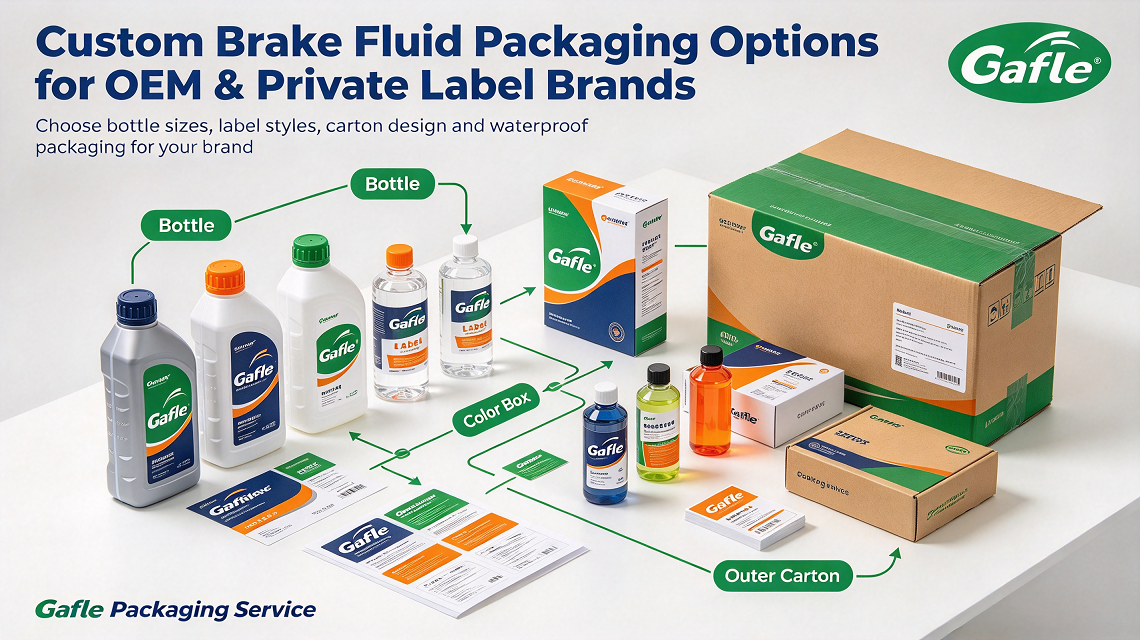
Can you customize brake fluid packaging?

Can you customize brake fluid packaging?

1. You can select from multiple standard bottle sizes or request new mould development. 2. Custom labels support different printing materials and multi-language content. 3. Color boxes and export outer cartons can also be fully customized. 4. Custom packaging has different MOQ and lead time rules. 5. All custom labels must follow chemical and safety labeling regulations. 6. For new brand owners, starting with standard bottle + custom label is the best low-risk plan.

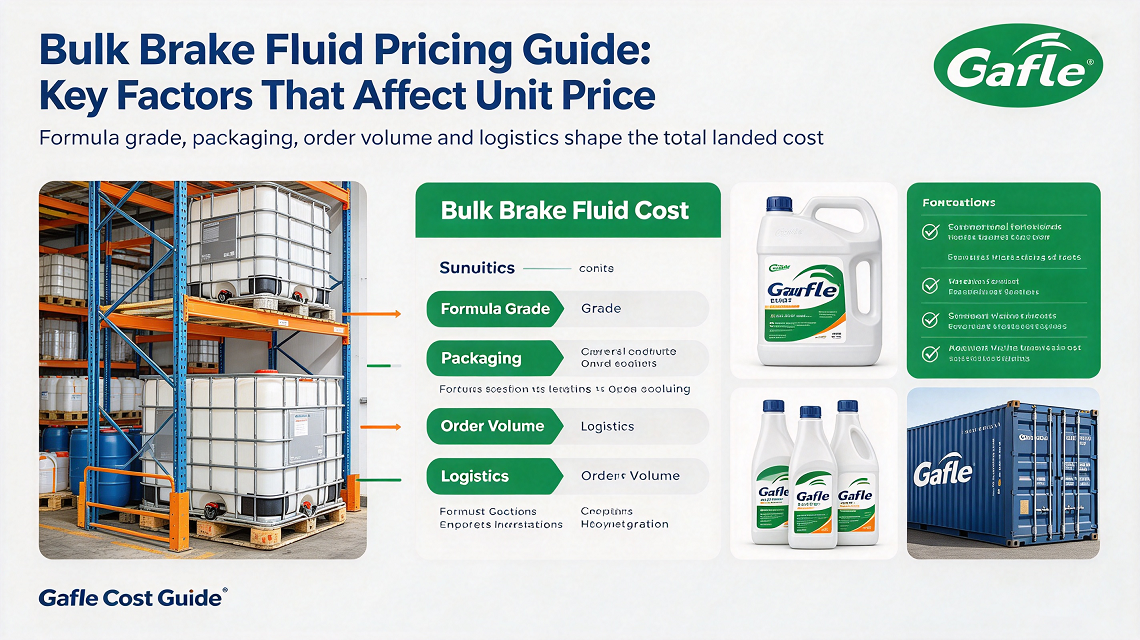
How much does bulk brake fluid cost?

How much does bulk brake fluid cost?

1. Brake fluid grade and formula are the biggest drivers of raw material cost. 2. Packaging style and order volume directly reduce the unit cost. 3. Custom private label packaging and special formulas add extra charges. 4. Cross-border logistics and compliance documents form your landed cost. 5. Extremely cheap bulk brake fluid usually comes with hidden quality risks. 6. Smart buyers evaluate total landed cost instead of only comparing unit prices.