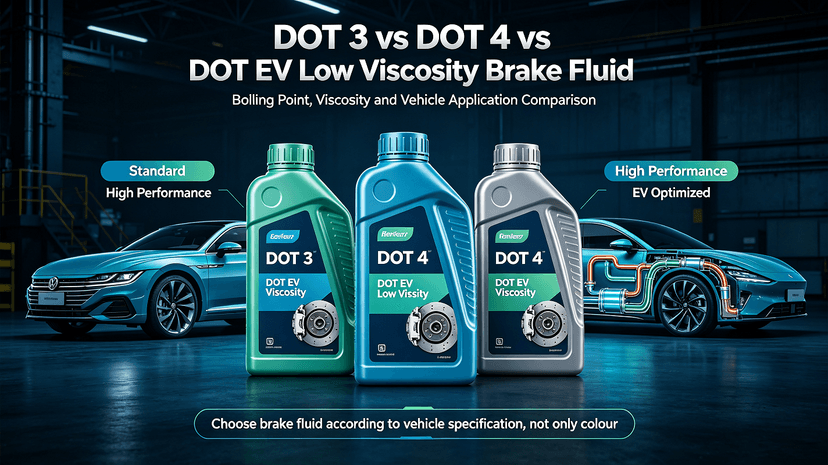
DOT3 DOT4 EV brake fluid comparison: why the label matters more than the bottle color
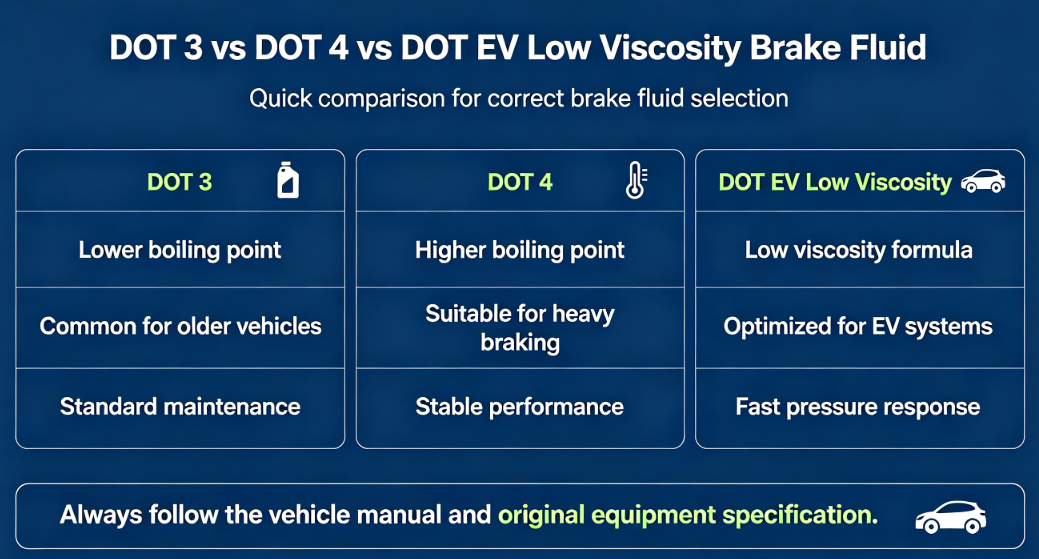
When buyers look at a DOT3 DOT4 EV brake fluid comparison, the real question is not which fluid sounds newer on the shelf. It is which specification matches the braking system, operating temperature range, and service expectations of the vehicle. That matters even more on EVs, where regenerative braking can change how often hydraulic brakes are used, but does not eliminate the need for dependable fluid performance.
For engineers, sourcing teams, and service planners, the choice is usually less about marketing and more about heat tolerance, moisture behavior, compatibility, and maintenance intervals. In practice, the wrong fluid can shorten service life, create pedal feel complaints, or complicate warranty and fleet maintenance work. The better decision is the one that fits the vehicle platform and the operating profile, not the one with the highest spec number on the back label.
Quick comparison: DOT 3 vs DOT 4 in an EV context
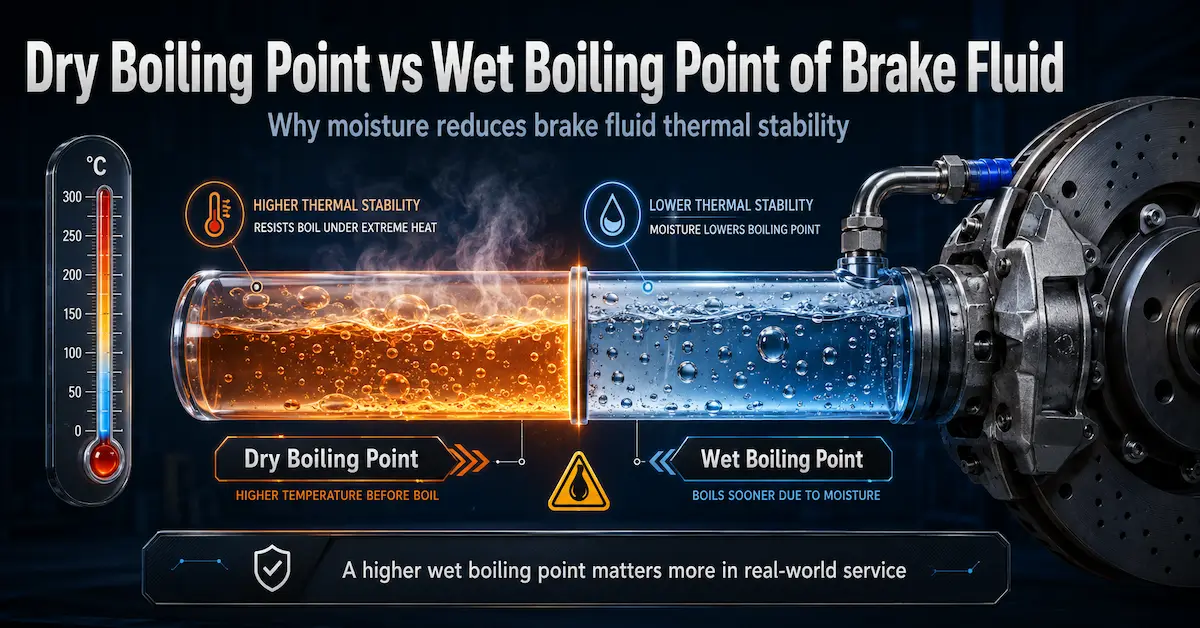
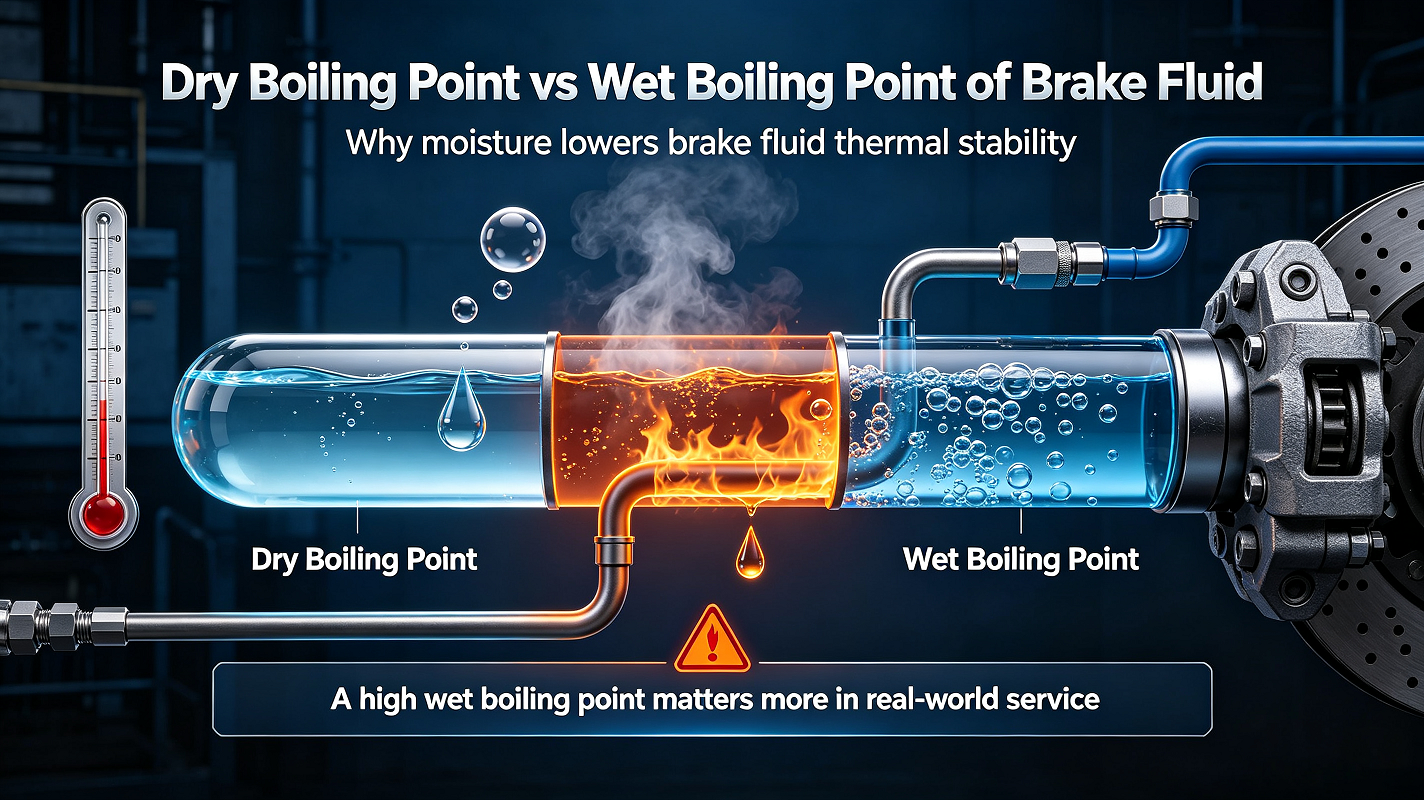
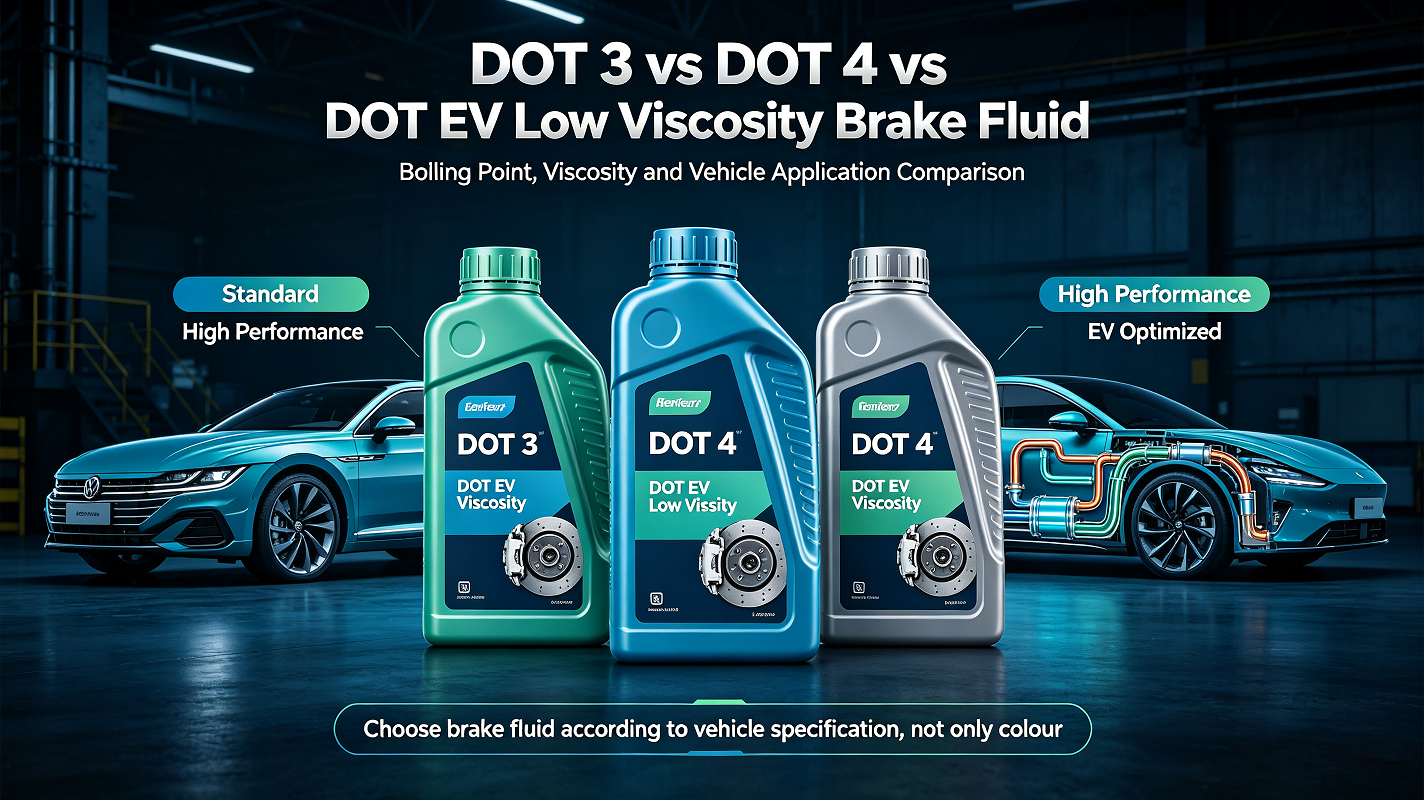
DOT 3 brake fluid and DOT 4 brake fluid are both glycol-ether based fluids used in many hydraulic braking systems. The core distinction is that DOT 4 generally offers a higher dry and wet boiling point than DOT 3, which can make it more suitable for vehicles that see greater brake heat or heavier-duty service. That does not automatically make DOT 4 the right answer for every EV, though.
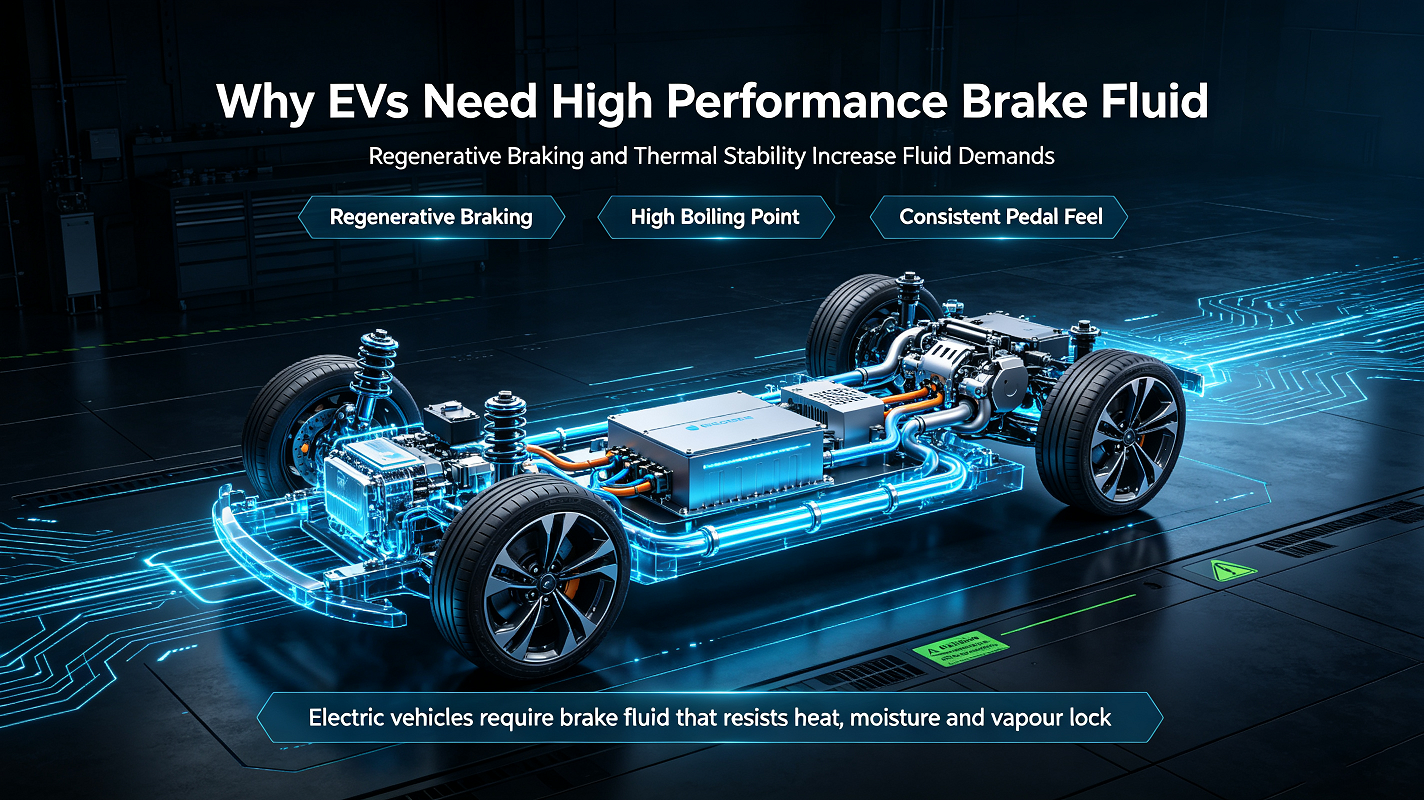
EVs often rely on regenerative braking for a portion of everyday deceleration, so the friction brakes may be used less frequently in routine driving. That can create a different service reality: the fluid still ages by absorbing moisture over time, even when the brakes are not being worked as hard as in some internal-combustion vehicles. So the comparison is not simply about braking intensity. It is also about how the vehicle is used, stored, and maintained.
Where DOT 3 can still make sense
DOT 3 brake fluid remains common in many vehicles and service environments because it is familiar, widely available, and suitable for applications designed around its properties. If the braking system was engineered for DOT 3, staying within that specification is usually the safest route. Substituting based on assumption is a mistake that still shows up in workshops and procurement spreadsheets.
Where DOT 4 usually has the edge
DOT 4 brake fluid is often preferred when the vehicle’s braking system may see higher thermal stress, or when the manufacturer specifies it for a particular platform. In EVs, that can matter if the platform is heavier, used in stop-and-go duty, operated in hot climates, or expected to carry passengers and cargo frequently. A higher boiling point can offer more margin, though it is not a cure-all for poor maintenance.
What EV buyers should actually compare
A useful brake fluid comparison should go beyond the DOT number. Buyers should look at these practical points:
1. Vehicle specification: Always start with the OEM requirement. If the platform calls for DOT 3, DOT 4 should not be treated as a casual upgrade without confirmation.
2. Boiling point performance: Higher boiling resistance can help in demanding service, but the published dry and wet values only matter when paired with the correct specification and maintenance plan.
3. Moisture sensitivity: Brake fluids absorb water over time, which gradually lowers performance. This is one of the main reasons service intervals matter even on EVs.
4. System compatibility: Brake master cylinders, seals, ABS modules, and electronic braking systems all depend on fluid chemistry staying within design limits.
5. Service environment: Fleet vehicles, delivery vans, and high-mileage commuter EVs may need a different maintenance mindset than low-mileage passenger cars.
Common mistake: assuming EVs need a special fluid by default
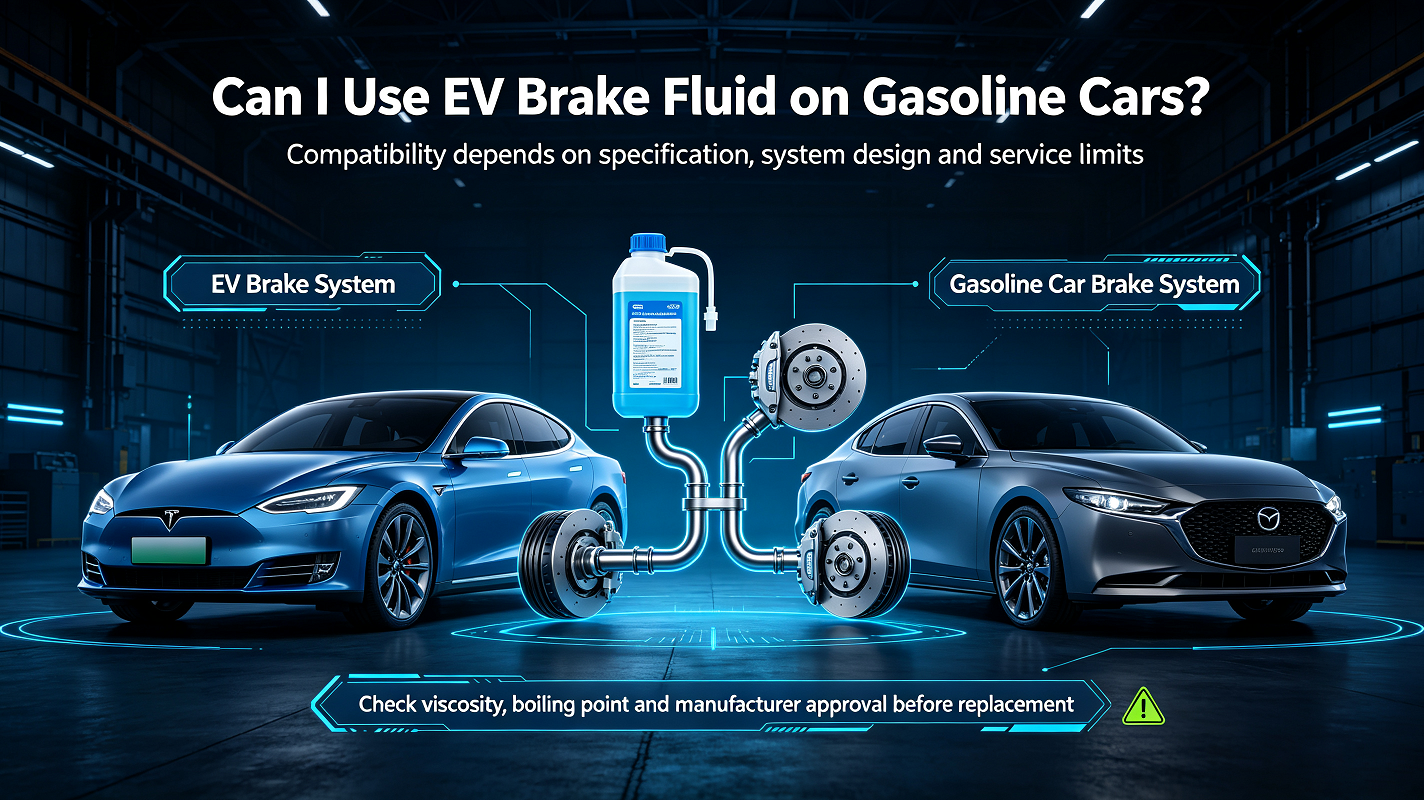
The phrase DOT EV brake fluid sometimes appears in product discussions, but in many cases it is more of a market label than a separate universal standard. What matters is whether the fluid meets the vehicle’s required DOT classification and any manufacturer-specific requirements. Buyers should be careful here. A fluid marketed for EVs is not automatically better unless the technical data supports it and the vehicle maker allows it.
Another easy trap is to focus only on regeneration. Regenerative braking reduces wear on pads and rotors, but the hydraulic system still needs reliable fluid. In fact, because friction braking may be used less often, routine inspections become more important, not less. Stale fluid and moisture buildup can hide longer in a lightly used system.
Selection criteria for sourcing and service teams
If you are comparing DOT 3 brake fluid and DOT 4 brake fluid for an EV program, the decision usually comes down to these questions:
Is the OEM specification already fixed?
Will the vehicle operate in severe heat, hills, or repeated stop-start duty?
Does the maintenance schedule account for moisture accumulation over time?
Are the service teams trained to avoid mixing products unless allowed by the manufacturer?
Will the fleet use one fluid standard across multiple platforms, or do different models need different fluids?
That last point matters. Fleet standardization saves time, but only when it does not conflict with the vehicle spec. A broad purchasing policy can become a liability if it treats all brake fluids as interchangeable.
Practical buyer advice
If you are sourcing for an EV program, ask suppliers for clear technical documentation rather than broad claims. Compare the required DOT class, boiling point data, and any vehicle-compatibility notes. For service organizations, keep labeling strict and storage clean. Brake fluid contamination is easy to introduce and hard to undo.
And if the application is uncertain, slow down. It is better to confirm compatibility than to discover a mismatch after installation. That is especially true in EVs, where braking systems may integrate hydraulic, electronic, and regenerative elements more tightly than older platforms.
FAQ
Is DOT 4 always better than DOT 3?
No. DOT 4 generally has higher boiling performance, but the correct choice is the fluid specified for the vehicle. Higher numbers do not justify ignoring OEM guidance.
Do EVs need special brake fluid?
Not necessarily. Most EVs still use standard brake fluid types such as DOT 3 or DOT 4, depending on the platform design. The important point is compatibility and approved specification.
Can DOT 3 and DOT 4 be mixed?
Sometimes glycol-based fluids are technically compatible in certain systems, but mixing should not be treated casually. The safer approach is to follow the vehicle manufacturer’s instructions and service procedures.
Next step
For any DOT3 DOT4 EV brake fluid comparison, start with the OEM requirement, then evaluate thermal margin, moisture management, and service environment. That sequence keeps the decision grounded in the real job the fluid has to do, which is keeping the braking system predictable long after the vehicle leaves the showroom or depot.