Why dry boiling point matters more than most buyers think
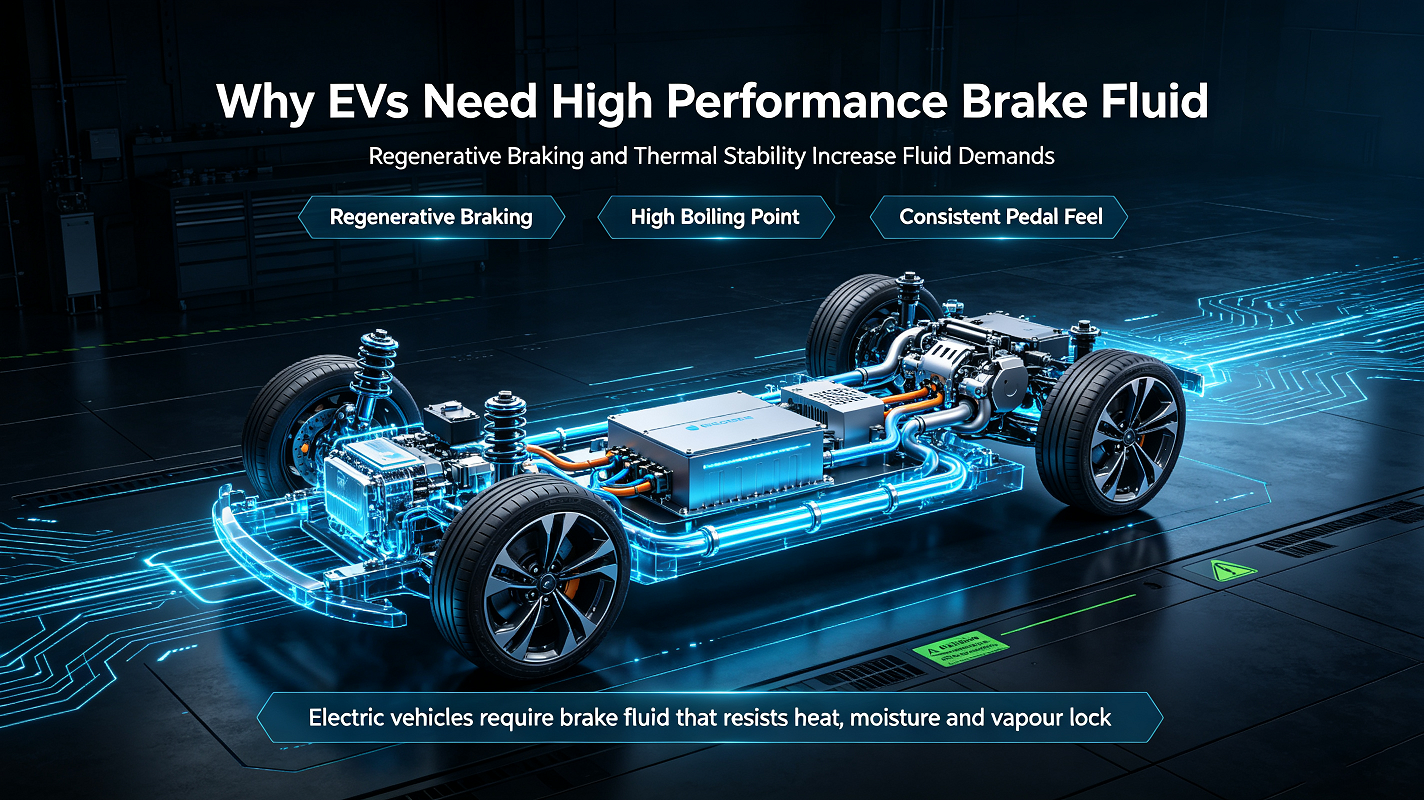
If you are comparing dry boiling point brake fluid values on a datasheet, you are really comparing how much thermal margin the fluid gives your braking system before trouble starts. That matters on the road, but it matters even more in repeated stop-and-go duty, towing, track use, heavy vehicles, and any application where heat builds faster than it can escape. Once temperatures climb, the fluid’s behavior changes, and so does pedal feel.
Braking systems are often discussed in terms of pads, rotors, or calipers, yet the fluid is the part that transmits force through the whole hydraulic circuit. If it loses stability under heat, the driver may notice a soft pedal, longer stopping distances, or inconsistent response. That is why buyers evaluating brake fluids should look past marketing language and focus on the numbers that describe thermal resistance.
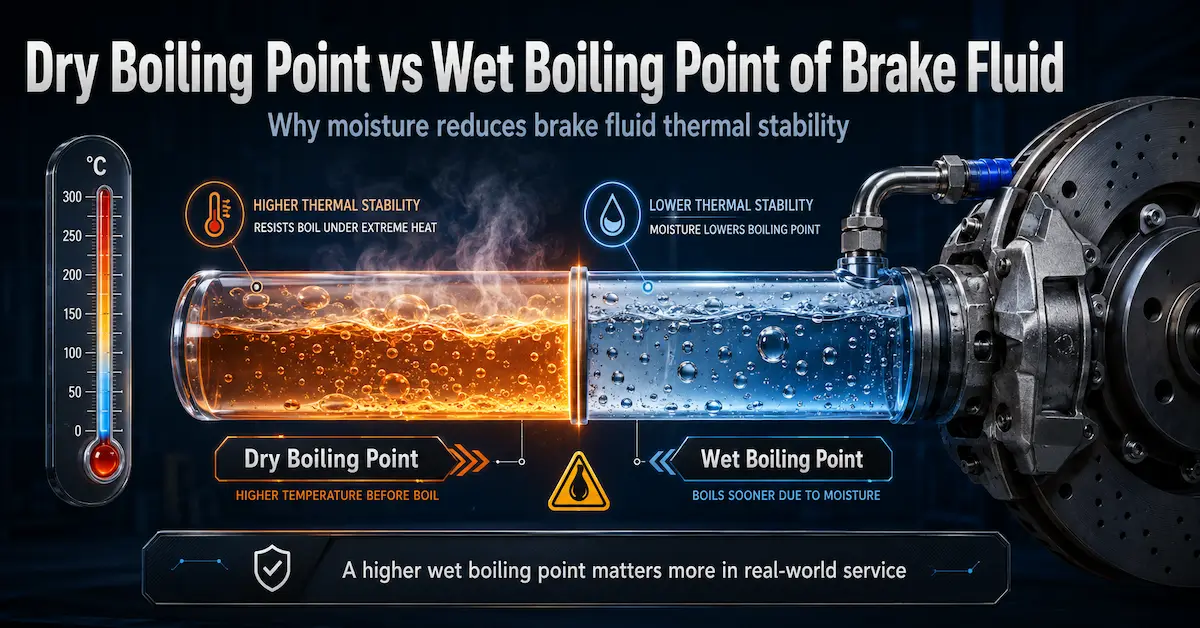
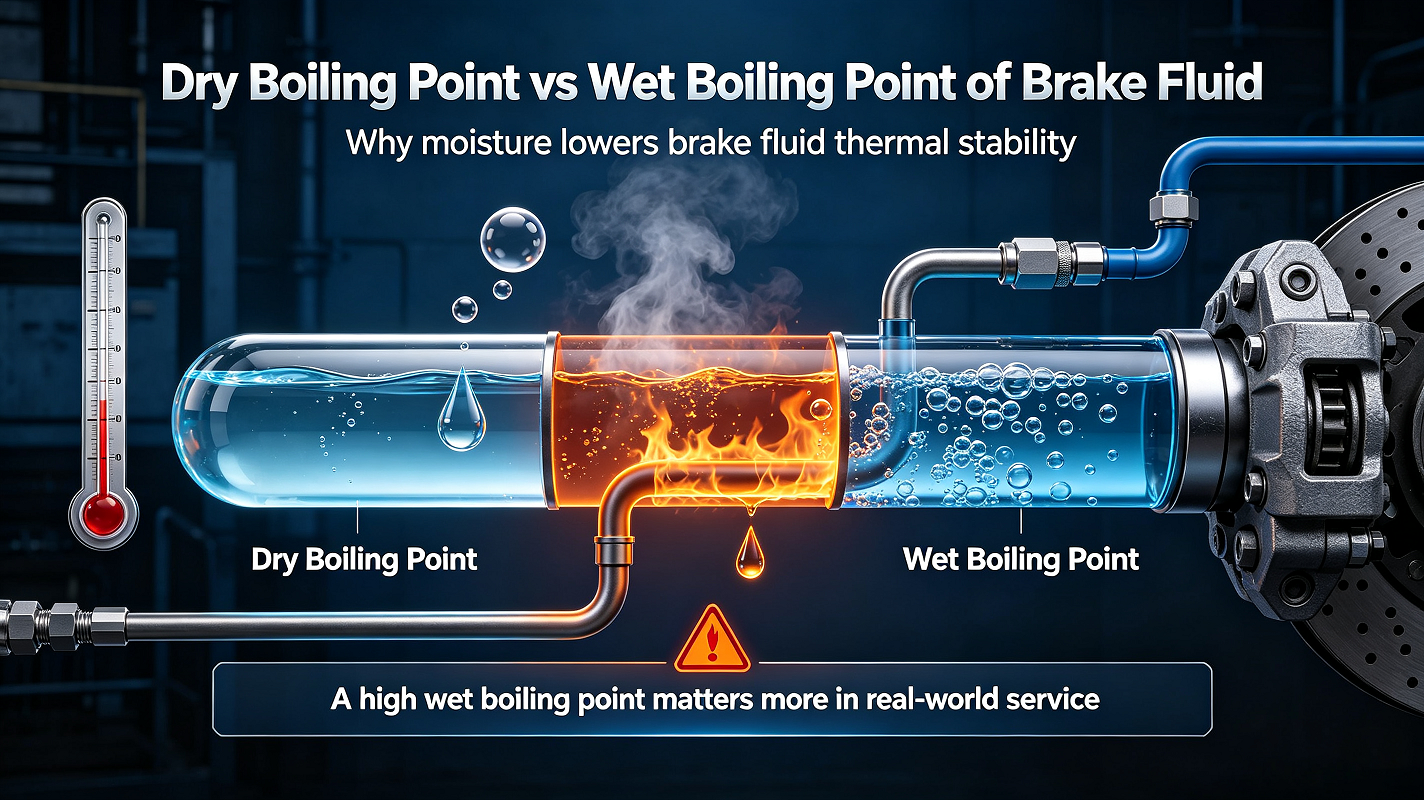
Dry boiling point vs. wet boiling point
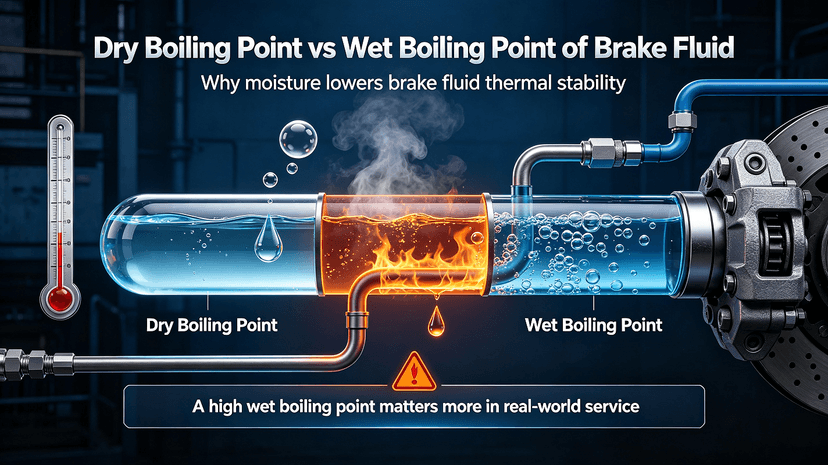
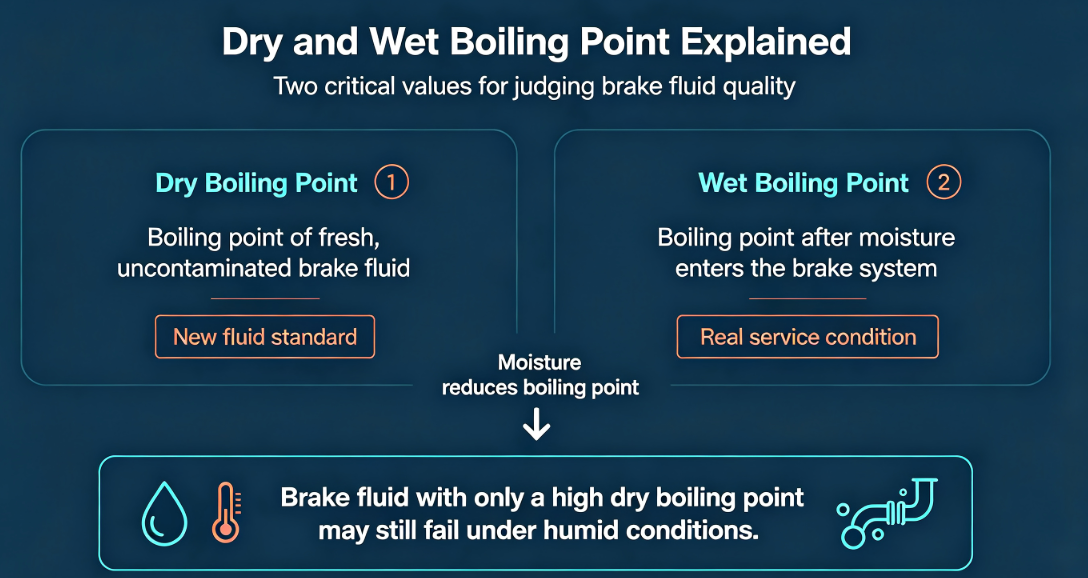
The term brake fluid boiling point is usually split into two figures. Dry boiling point refers to fresh, unused fluid. Wet boiling point refers to fluid after it has absorbed moisture over time. That distinction is not academic. Brake fluid is hygroscopic in most common formulations, which means it naturally picks up water from the atmosphere through hoses, reservoir caps, and service exposure.
Wet boiling point brake fluid ratings are often lower than the dry value by a meaningful margin. For buyers, that gap is the real-world reminder that fluid performance changes during service. A product can look excellent on paper when fresh but lose a large portion of its thermal reserve if it spends years in a humid environment or in a fleet that delays maintenance.
How boiling point affects braking performance
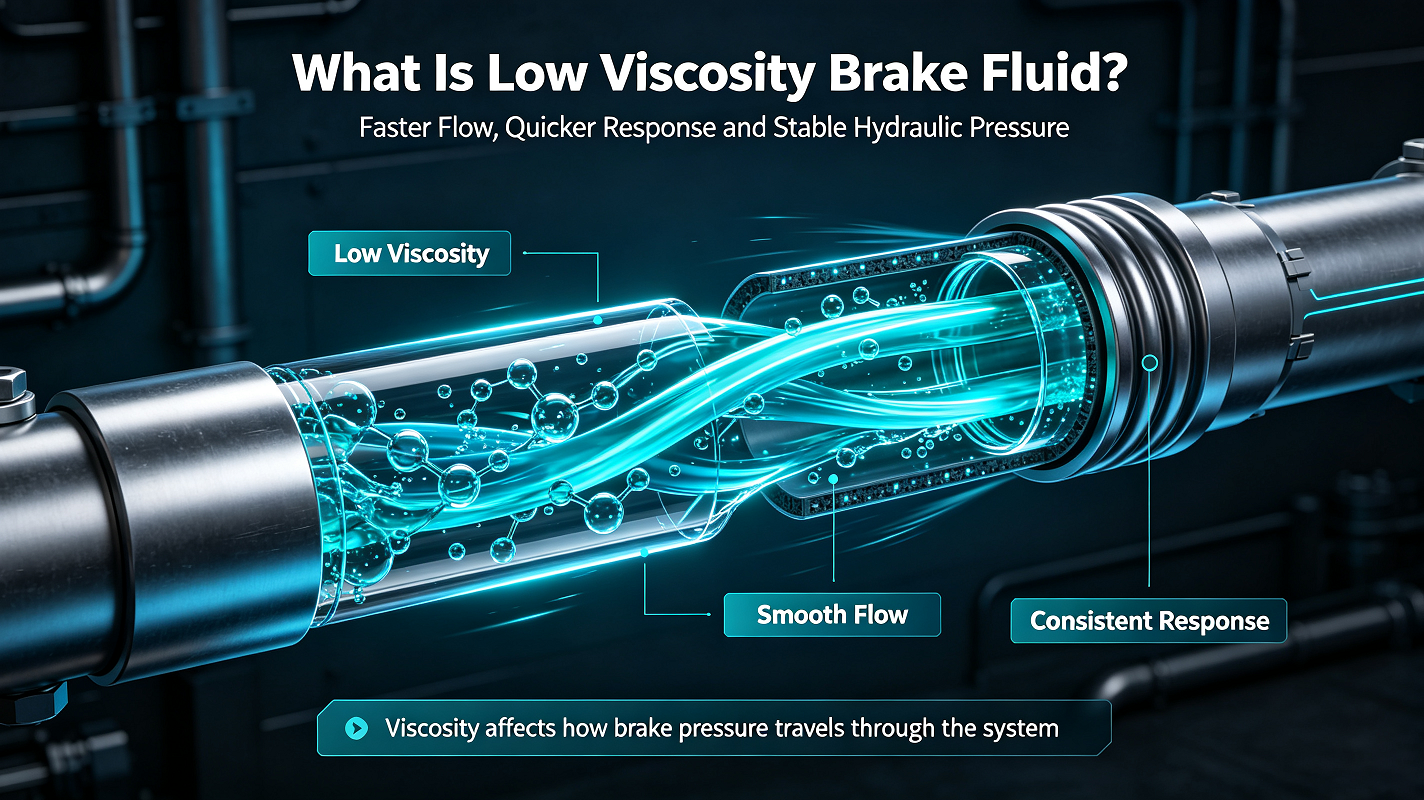
When brake fluid overheats, it can begin to vaporize. Vapor compresses; liquid does not, at least not nearly as much. That difference is what turns a firm pedal into a long, spongy one. So when people ask how boiling point affects braking performance, the practical answer is simple: higher boiling resistance helps preserve hydraulic integrity under heat load.
That does not mean the highest number is always the right choice. A fluid with a high dry rating may still be a poor fit if the rest of the system, maintenance schedule, or seal compatibility is not considered. For example, a commuter car that rarely sees severe braking may not need the same specification as a performance car, while a commercial vehicle in mountain service may need more thermal margin than its normal duty cycle suggests.
What to compare when selecting brake fluid
Engineers and sourcing teams usually need a quick way to compare options without getting lost in lab terminology. The most useful starting points are the dry boiling point, the wet boiling point, and the fluid’s service environment. From there, look at compatibility with the vehicle’s braking system and the maintenance interval the customer can realistically support.
In practical terms, the buyer is deciding whether the fluid offers enough heat resistance for the application and enough stability over time to remain reliable between service events. That is especially important in fleets, motorsport support programs, delivery vehicles, and other duty cycles where brake temperatures can rise unpredictably.
Common selection mistakes
One common mistake is treating a high dry figure as the only metric that matters. Another is assuming a fresh fill will stay fresh indefinitely. It will not. Moisture absorption changes the fluid, and in harsher climates that process can move faster than expected. A third mistake is choosing by brand reputation alone and skipping the actual specification sheet.
There is also a tendency to overbuy performance. Some applications do not benefit from an aggressive fluid if the rest of the braking package is moderate. That can create unnecessary cost without meaningful gain. Better to match the fluid to duty cycle than to chase the biggest number on the page.
Quick buyer guidance
If you are selecting brake fluid for procurement, start with the operating temperature profile, then check the service interval, then confirm the fluid’s dry and wet boiling point ratings. If the system sees repeated heat soak, towing loads, mountain descents, or track use, put more weight on thermal reserve. If the vehicle lives in normal road service, pay close attention to wet performance and maintenance discipline.
A sensible purchasing decision is rarely about one figure alone. The useful question is whether the fluid will still protect the braking system after real-world exposure, not just on day one.
FAQ
Is dry boiling point the same as performance in use?
No. It is an important indicator, but real performance also depends on moisture pickup, system condition, brake hardware, and duty cycle.
Why does wet boiling point matter if the fluid starts out dry?
Because brake fluid changes over time. The wet value gives a better sense of how the fluid may behave after months or years in service.
Should every application buy the highest boiling point fluid available?
Not necessarily. The right choice depends on the vehicle, the environment, and the maintenance plan. Over-specifying can add cost without solving a real problem.
What to do next
For sourcing or engineering teams, the next step is to compare product datasheets against the actual brake duty cycle, not just the vehicle class. Use the dry and wet boiling point figures together, and keep an eye on service intervals. That combination gives a far more reliable picture of brake fluid performance than a single headline number.
Welcome to contact GAFLE for more information & cooperation!
peter
ZHEJIANG GAFLE AUTO CHEMICL CO.,LTD
Tel:86-579-8222 1665
Fax:86-579-8246 4690
Cel/Wechart:86-13335993986
E-mail:peter@gafle.net
Web:www.gafle.net