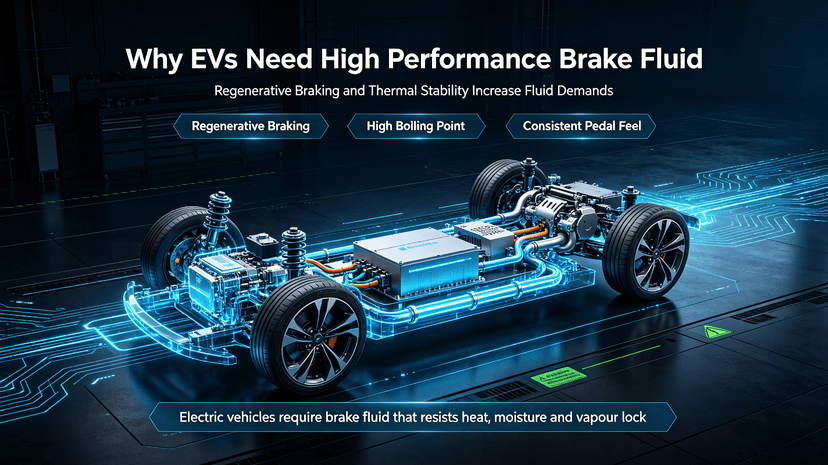
Why EV brake fluid deserves more attention than it usually gets
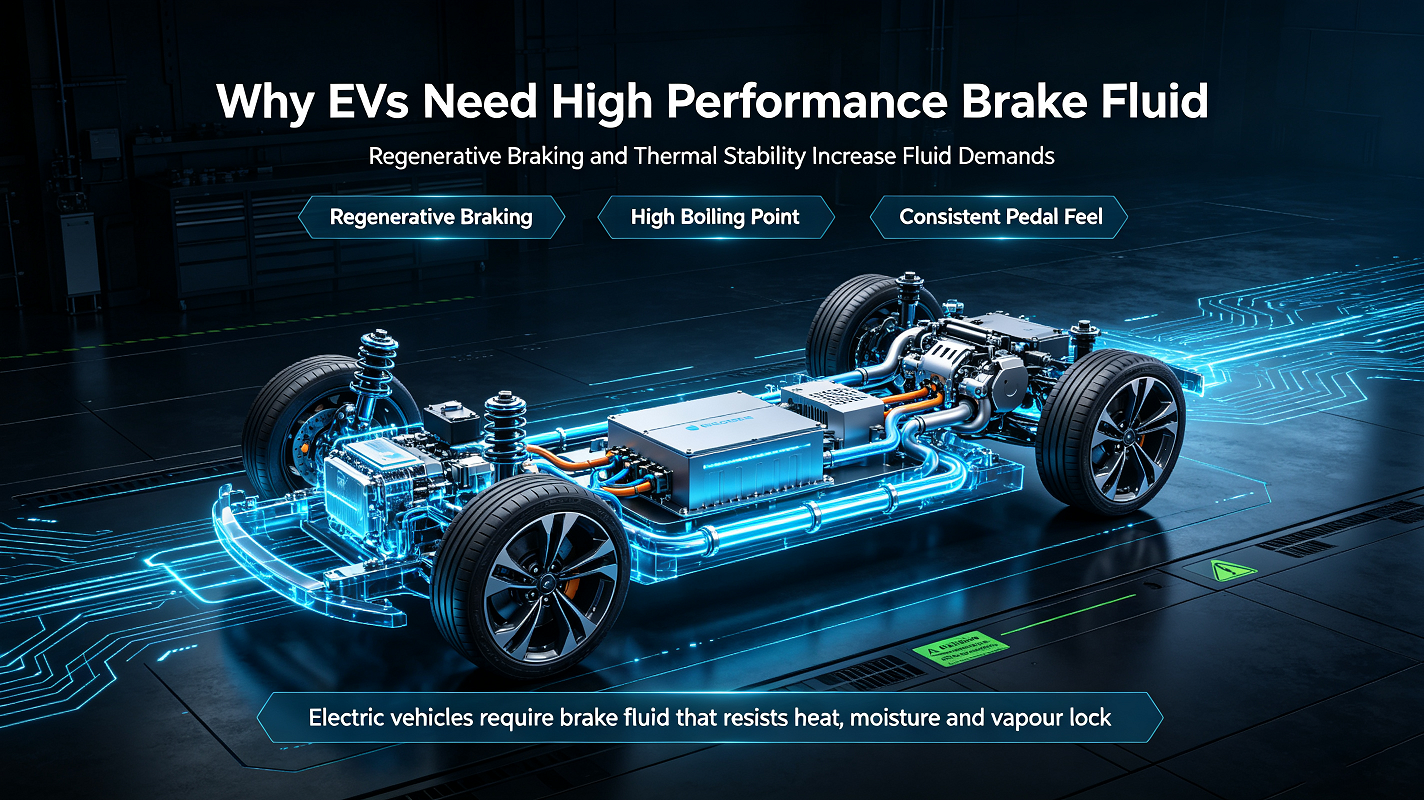
EV brake fluid is easy to overlook because electric vehicles use regenerative braking and often wear pads and rotors more slowly than combustion vehicles. That leads some buyers to assume the hydraulic side of the brake system is less demanding. It isn’t. The fluid still has to transmit pedal force, resist moisture absorption, protect internal components, and perform consistently when the vehicle moves from light city driving to longer downhill stops or emergency braking.
For engineers, sourcing managers, and product teams, the real decision is not whether the brake fluid matters, but which fluid chemistry and viscosity profile best fit the vehicle’s brake system, climate exposure, and service interval expectations. That is where the selection gets more nuanced than a normal passenger-car fluid conversation.
What changes in an electric vehicle brake system
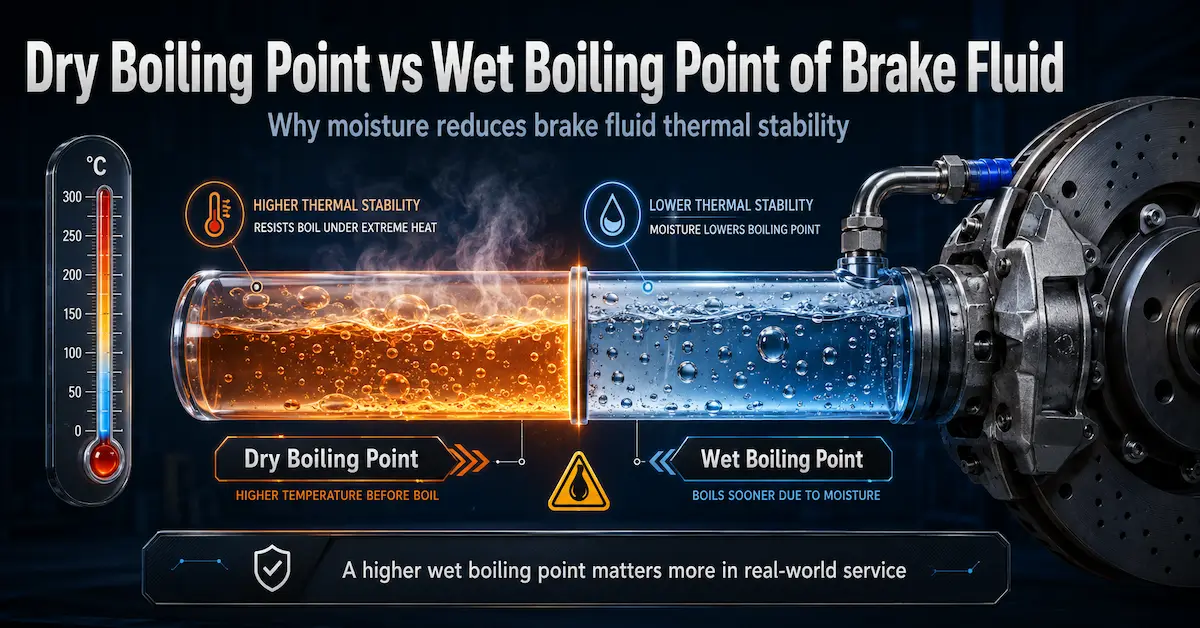
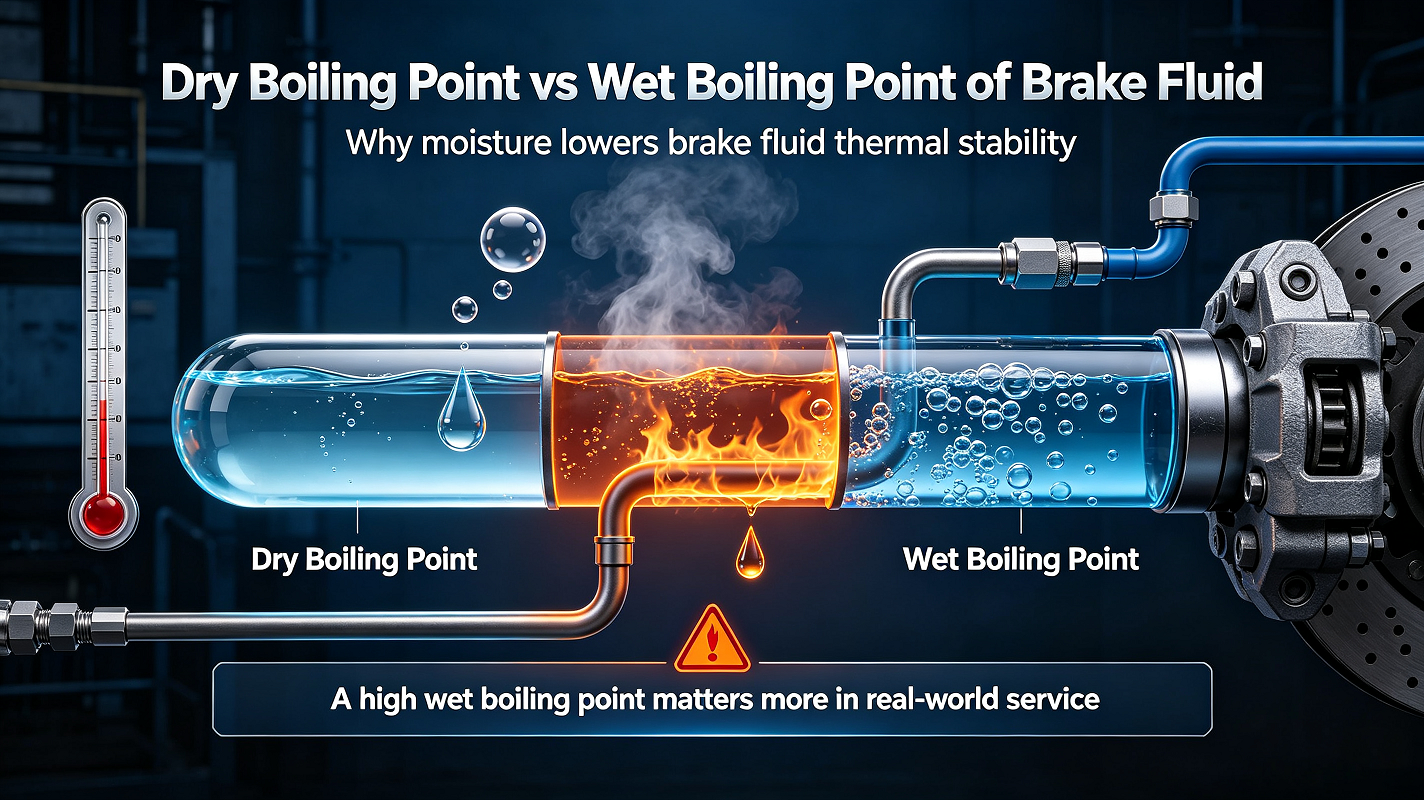
The braking hardware in an EV still depends on a hydraulic circuit, but the operating pattern is different. Regenerative braking handles a meaningful share of deceleration in many driving conditions, so the friction brakes may see less frequent use. That can reduce pad wear, but it can also mean the brake fluid sits in the system longer without being worked hard. Over time, moisture ingress remains a concern, and moisture lowers boiling margin.
This is why a high performance brake fluid for electric vehicles is often discussed in terms of stability and reliability rather than just outright stopping power. The fluid must stay compatible with seals, resist vapor formation, and preserve pedal feel even when the hydraulic system is called into action after periods of lighter use.
Key performance traits buyers should compare
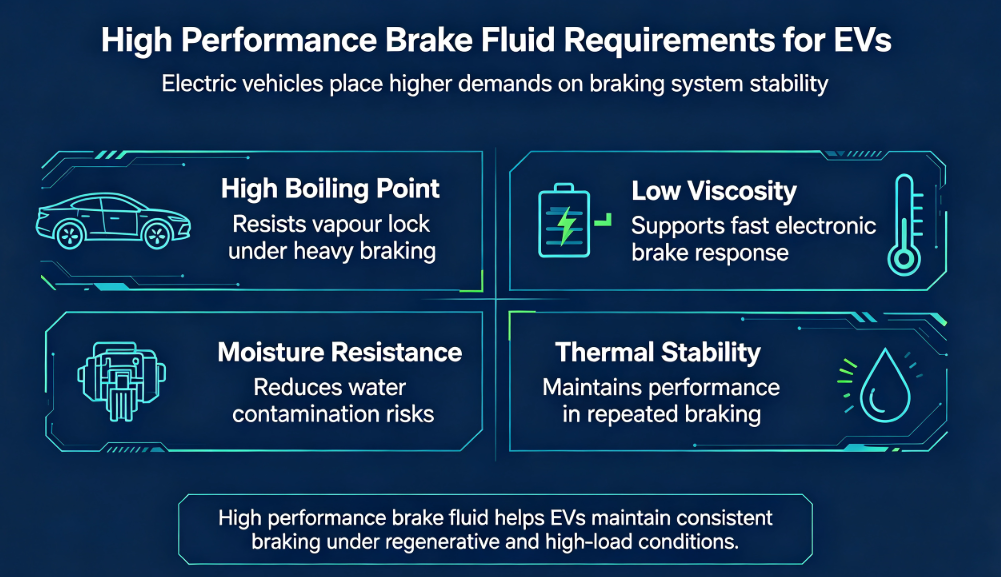
A practical comparison starts with four basics: viscosity, boiling point, moisture resistance, and compatibility with the brake system design.
Viscosity at low temperatures
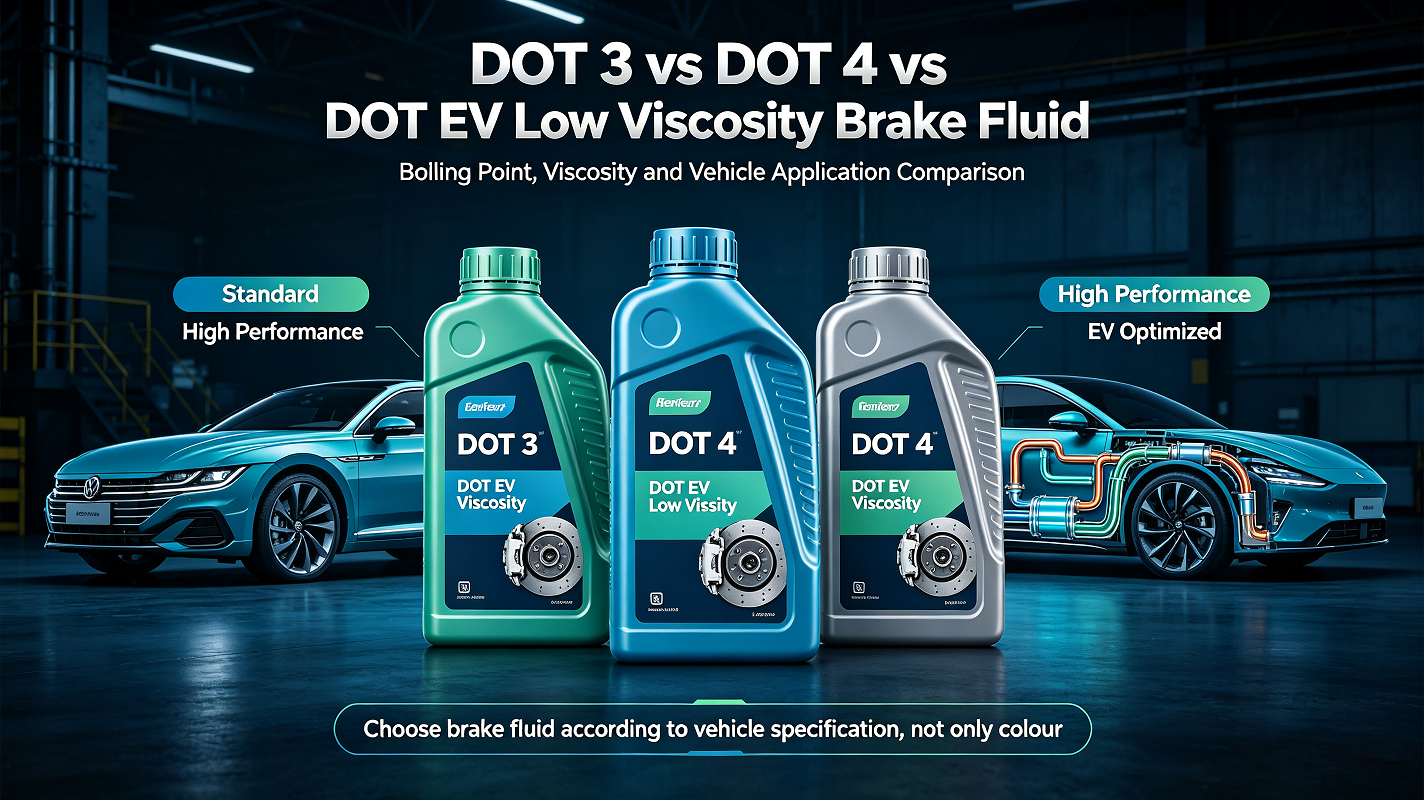
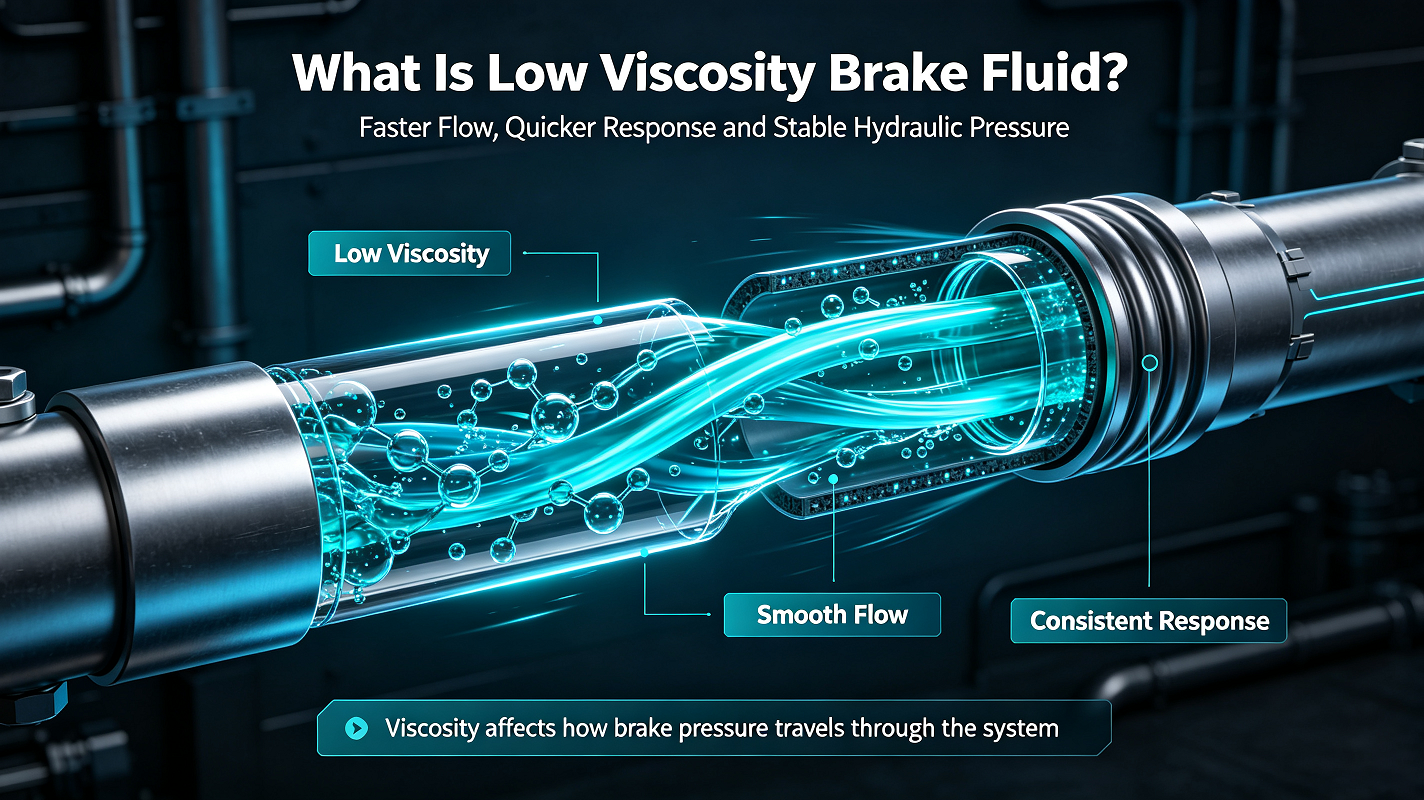
Many modern braking systems, especially those with advanced electronic controls, benefit from a low viscosity brake fluid for electric vehicles. Lower viscosity can support faster hydraulic response in colder conditions and help the system move fluid more efficiently through fine passages and valves. That matters in winter markets and in vehicles that rely heavily on electronically managed braking.
Boiling point margin
A high boiling point brake fluid for electric vehicles gives more safety margin during repeated braking, steep descents, or heavy loading. EVs can be heavier than similar-size conventional cars because of battery mass, and that extra weight still has to be stopped. The fact that regenerative braking reduces some friction-brake workload does not eliminate the need for thermal reserve in the hydraulic fluid.
Moisture control
All glycol-based brake fluids gradually absorb moisture. That is not unique to EVs, but it becomes important when a vehicle spends much of its life in low-brake-use driving patterns. A premium brake fluid for EVs should be chosen with an eye toward service discipline, storage conditions, and the real-world maintenance habits of the fleet or end customer.
System compatibility
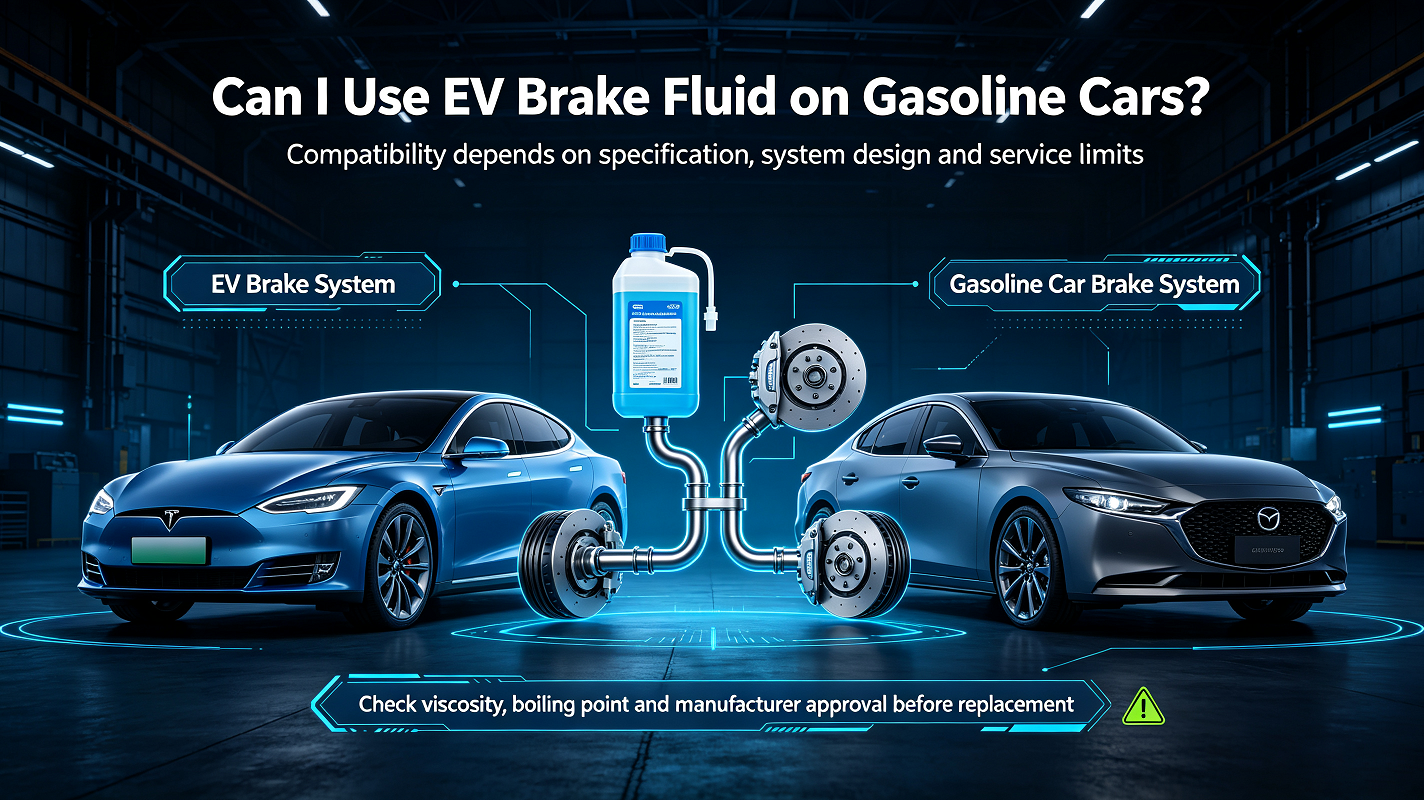
Not every formulation is suitable for every brake system. Fluid selection should follow the vehicle manufacturer’s specification first, then account for climate, duty cycle, and service expectations. A mismatch can create issues that are more expensive than the fluid change itself.
Why EVs need high performance brake fluid in the first place
The short answer is that reduced brake usage does not mean reduced brake risk. In fact, it can create a different risk profile. Less frequent caliper movement may allow moisture and contamination issues to go unnoticed longer. At the same time, when friction brakes are finally needed, the system has to respond immediately and predictably.
That is the core reason why EVs need high performance brake fluid: consistency. The fluid must protect against boiling, maintain a stable pedal, and support the braking system across seasonal temperature swings and infrequent mechanical use.
Buying guidance for sourcing and product teams
When evaluating electric vehicle brake fluid, start with the vehicle platform requirements and then sort products by actual duty profile rather than marketing language. A fluid described as “premium” may still be a poor fit if its viscosity or specification does not align with the braking architecture.
A few practical cautions are worth stating plainly:
The fluid should not be selected only on boiling point claims. Those numbers matter, but they do not tell the full story.
If a fleet has long service intervals, maintenance planning matters as much as product choice. A good fluid used too long becomes a weak fluid.
Climate is not a side note. Cold-weather response can be just as important as high-temperature durability.
Common mistakes buyers still make
One common mistake is treating EV brake fluid as a niche accessory rather than a core maintenance item. Another is assuming regenerative braking means the fluid lasts indefinitely. It doesn’t. A third is mixing general aftermarket language with technical procurement requirements. The safest path is to confirm the vehicle specification, then evaluate whether the candidate fluid meets the temperature and viscosity needs of the application.
What this means in practice
For most programs, the best choice is not the flashiest label on the bottle. It is the fluid that matches the braking system, supports low-temperature response, and retains enough thermal headroom for the heaviest real-world use case. That is especially true for EV platforms where braking patterns differ from legacy vehicles and where maintenance assumptions can lag behind the engineering reality.
If you are sourcing for a platform, a fleet, or a service channel, the next step is simple: compare the OEM brake-fluid requirement, the expected climate range, and the maintenance interval before you shortlist any product.
FAQ
Is EV brake fluid different from regular brake fluid?
Sometimes yes, sometimes no. The fluid still has to meet the vehicle’s brake-system specification, but EVs may benefit more from low viscosity and strong thermal stability depending on the platform.
Do electric vehicles need brake fluid changes?
Yes. Reduced brake use does not remove the need for regular inspection and replacement based on service guidance.
Should buyers always choose the highest boiling point fluid?
Not automatically. Boiling point is important, but compatibility, viscosity, and the vehicle specification matter just as much.
Welcome to contact GAFLE for more information & cooperation!
peter
ZHEJIANG GAFLE AUTO CHEMICL CO.,LTD
Tel:86-579-8222 1665
Fax:86-579-8246 4690
Cel/Wechart:86-13335993986
E-mail:peter@gafle.net
Web:www.gafle.net