Consider three RFQs for DOT3 Synthetic Brake Fluid. A workshop chain asks for small sealed bottles for an ageing car population. An importer sends a label drawing and wants to compare a retail carton with drums. A city fleet reports hot routes and continual stop-and-go work. Although the heading on each RFQ is identical, the approval cannot be: the handbook requirement, local operating conditions, actual test report, and shipping-lot records have to be read together.
The vehicle maker's instruction is the first filter. Where that instruction names DOT 3, the candidate fluid still has work to do: its boiling and viscosity results must be read under the correct test methods, and its corrosion, compatibility, package, and lot records must stand up to review. "Synthetic" may describe how a glycol-based fluid was formulated. It does not create another DOT grade, nor does the word on a front label prove that the contents comply.
The discussion follows the decisions made by an importer, a workshop network, a fleet buyer, or a private-label owner before approval. One distinction runs through every section: a limit printed in a standard is a baseline, not the test result for a particular product. Equally, a strong number on a catalogue page remains a sales claim until the dated TDS, SDS, COA, stated method, and lot-control plan support it.
The purchasing answer in plain language
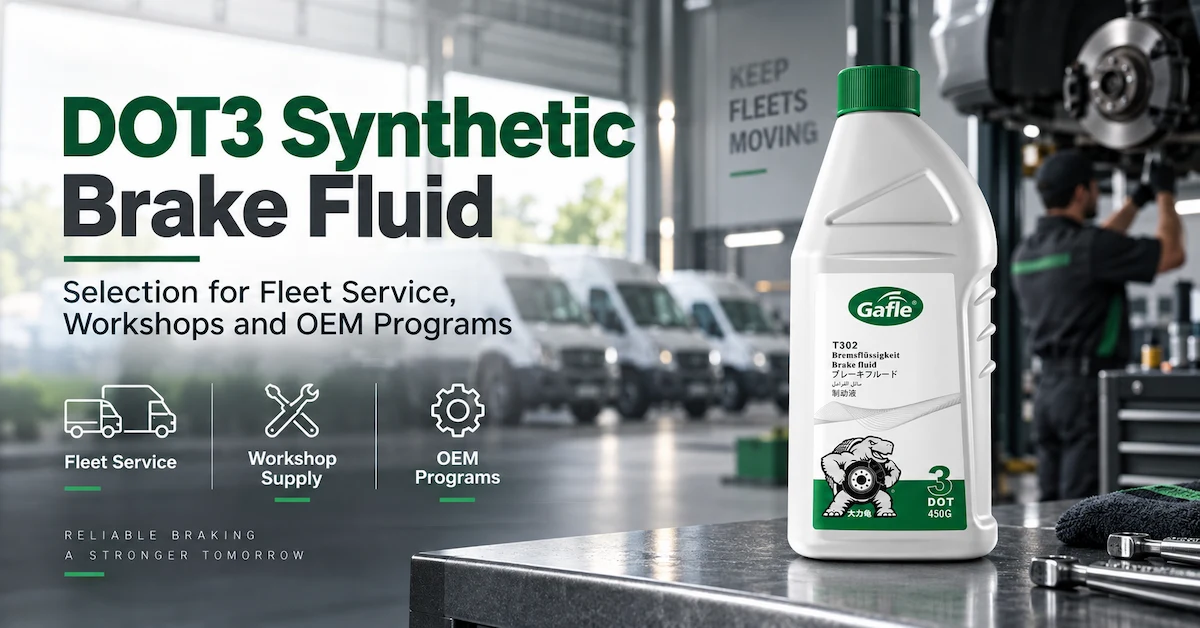
When a vehicle handbook specifies DOT 3 and the service conditions stay within that system's limits, there is no purchasing prize for ignoring it. The grade continues to appear in passenger cars, light vans, and compatible hydraulic clutch circuits. It also has a practical place in aftermarket channels where technicians recognize the specification, small sealed packs move steadily, and dependable restocking counts for more than a dramatic number on the carton.
A competent purchasing team should ask five questions before it discusses price. What exact standard and edition apply in the destination market? Are the dry and wet boiling values product results or merely grade minimums? At what temperatures and by what method was viscosity measured? Which elastomers and metals were included in compatibility and corrosion testing? Finally, will the supplied batch arrive with the documents, lot code, closure, label language, and shelf-life information that the receiving team needs?
The answer may still be DOT 3, but it will be a defensible DOT 3 decision. That distinction matters. A workshop can recover from a slightly inconvenient carton. It cannot easily recover from contaminated fluid, an unsupported label claim, or an untraceable lot after vehicles have already been serviced.
What synthetic means beside the DOT 3 designation
DOT 3 names a performance category; "synthetic" does a different job on the label. In this market the adjective is generally used for a formulated, non-petroleum glycol-ether fluid. Its additive package will be designed around concerns such as oxidation, corrosion, moisture, and contact with specified system materials. Useful description though that may be, only the relevant test evidence can support the claimed DOT grade.
An RFQ should therefore say what the word means for this order. The response ought to identify the fluid family, claimed DOT grade, governing performance specification, and master-formula revision. Where "fully synthetic" is proposed, have the supplier explain that wording in technical terms. Then compare it across the approved artwork and the current TDS, SDS, registration file, and shipping documents. Discovering that the sample and production label use different claims is a costly way to reopen a compliance review.
The number after DOT is not a simple quality ranking. U.S. labeling identifies DOT 5 as silicone based and DOT 5.1 as non-silicone; mineral hydraulic oil is different again. The purchase specification should spell out both fluid family and grade. Otherwise, one ambiguous line on the order can create problems for seals and hoses and can also send the wrong product into shared service tools or the wrong workshop procedure.
The DOT 3 performance baseline buyers should recognize
For a U.S. order, consult the Government Publishing Office copy of 49 CFR Section 571.116, Federal Motor Vehicle Safety Standard No. 116. It addresses the fluid tests as well as certification, container sealing, markings, and label language. The selected DOT 3 limits below are a reading aid; the linked rule remains the source.
Read each number as a threshold under the method named by the rule, not as the measured specification of an untested bottle. Product approval needs the supplier's dated limits and results, with methods and tolerances shown. The importer should also verify the rule in force when the goods are sold rather than reusing an old downloaded copy without review.
| FMVSS No. 116 reference point | DOT 3 threshold | What the buyer should request | Why it matters in use |
|---|---|---|---|
| ERBP for new fluid | Minimum permitted: 205°C / 401°F | Product result, method, minimum release limit, and COA field | Shows new-fluid heat margin under the defined test |
| Wet ERBP after prescribed conditioning | Minimum permitted: 140°C / 284°F | Conditioning procedure, product result, and label value where required | Shows retained boiling margin after controlled moisture exposure |
| Kinematic viscosity at -40°C | No more than 1,500 mm²/s | Measured value, unit, method, and production tolerance | Relates to fluid movement in cold hydraulic circuits |
| Kinematic viscosity at 100°C | At least 1.5 mm²/s | Measured value and lot-release control | Confirms the fluid does not become too thin under the defined hot test |
| pH for non-silicone fluid | 7.0 to 11.5 | Initial and, where applicable, post-test results | Supports corrosion and stability review; it is not a stand-alone quality score |
Some international tenders refer to ISO 4925:2026, shown by ISO as published in June 2026. The scope is road-vehicle hydraulic brake and clutch fluid that is non-petroleum based and intended for systems using SBR and EPDM components. ISO's public summary covers performance testing and the fluid's behavior with water, metals, and rubber. When the standard appears in an RFQ, add the class and edition; "tested to ISO" is too vague to approve.
Where DOT 3 still fits well
A typical DOT 3 job is an ordinary passenger car whose handbook names that grade, driven at a moderate duty cycle and serviced on schedule. Light vans, older fleets, and compatible hydraulic clutch circuits also appear in real orders. None of those descriptions is an approval by itself. A model-year change can bring different brake-control hardware or seals, while climate and load alter the operating picture, so the manufacturer's instruction for the exact vehicle still decides the fit.
Pack size matters differently to each buyer. A workshop can open a clearly marked, tamper-evident small bottle for one job rather than carry an open container from bay to bay. A distributor can support the existing DOT 3 vehicle population without pushing customers toward a costlier grade their manuals never asked for. A municipal or delivery fleet gains consistency only when the covered vehicles share a confirmed requirement and its technicians control storage, flushing, and service records.
The phrase DOT3 Synthetic Brake Fluid for Automotive Applications should therefore lead to a fitment conversation, not a universal claim. State the vehicle population, service schedule, temperature range, load pattern, existing fluid, and destination market. A supplier can then assess whether its current formula and package suit the project or whether the application needs a different grade.
When DOT 3 is the wrong shortcut
Familiarity and a low unit price are weak reasons to select DOT 3. A handbook that calls for DOT 4, DOT 5.1, a maker-specific low-viscosity specification, or another fluid has already answered the grade question. Vehicles that spend their working lives on mountain descents, brake repeatedly under load, compete on track, or use particular electronic controls may need another thermal or viscosity margin. "Synthetic DOT 3" on the label does not silently upgrade the product to that requirement.
Passing a miscibility test is not blanket permission to top up at random. Two glycol-based fluids can mix in a defined laboratory procedure and still create the wrong blend for a vehicle, its warranty, or the fleet's maintenance rules. Once mixed, the system takes on properties of both fluids and the service record no longer describes one known product. For a planned supplier change, a documented flush and refill leaves a much cleaner audit trail.
Mineral oil or silicone DOT 5 must not be introduced into a system intended for glycol-type fluid on the strength of a general buying guide. The fluid family affects the seals, the equipment used in the workshop, and the contamination controls around the job. If the reservoir cap tells a different story from the workshop manual or purchasing record, leave the new container closed until the discrepancy is resolved.
How to read high-boiling and low-viscosity claims
A buyer asking for DOT3 Brake Fluid with High Boiling Point should put a number, a test method, and a sample state into the RFQ. "High" has no fixed meaning outside that context. Is the figure an equilibrium reflux boiling point for unused fluid, a wet ERBP after the standard conditioning process, or a typical result from one laboratory sample? Is it a release minimum or an average? Does the same value appear on the current TDS and lot COA?
Dry and wet values are not rival scores. The dry test looks at new fluid under its stated method; the wet procedure examines what happens to boiling margin after controlled moisture exposure. Because glycol-based brake fluid absorbs moisture, the second figure only makes sense alongside the fleet's storage and maintenance habits. An impressive dry result cannot rescue a bottle left loosely capped, a workshop pack kept open between jobs, or a replacement interval that bears no relation to the vehicle instruction.
Searches for Low Viscosity DOT3 Synthetic Brake Fluid need a temperature beside the claim. Ask which method produced the value and whether the vehicle specification calls for the same measurement. The cited FMVSS baseline caps DOT 3 at 1,500 mm²/s at -40°C, but a result below that ceiling does not automatically qualify a fluid for every ABS or electronic brake-control unit. The hardware maker may impose a tighter limit or use a different requirement altogether.
A proposal for High Performance DOT3 Brake Fluid should connect its hot and cold results to the rest of the approval file: corrosion, rubber effects, water tolerance, stability, and a package that keeps moisture out. The fluid has to work inside a complete hydraulic circuit. A conspicuous figure in a comparison chart describes only one part of that job.
Why a higher DOT number is not an automatic upgrade
A catalogue may arrange the grades like steps on a ladder, but that picture hides important differences. Under FMVSS No. 116, the boiling thresholds increase across DOT 3, DOT 4, and the DOT 5/DOT 5.1 level; the cold-viscosity requirements tell a less linear story. DOT 5.1 is the non-silicone route at that level, while DOT 5 is silicone based. Move to another grade only when the vehicle requirement and the full set of product data justify the change.
| Point to verify | DOT 3 | DOT 4 | DOT 5.1 non-silicone | Buyer action |
|---|---|---|---|---|
| Minimum dry ERBP in cited FMVSS | 205°C | 230°C | 260°C at the DOT 5/DOT 5.1 level in the cited rule | Compare current product data and applicable labeling, not only the grade minimum |
| Minimum wet ERBP in cited FMVSS | 140°C | 155°C | 180°C at the DOT 5/DOT 5.1 level in the cited rule | Include moisture exposure and service interval in the decision |
| Typical procurement context | Vehicles and clutch systems that specify DOT 3 | Vehicles that specify DOT 4 or need its defined grade performance | Systems explicitly requiring compatible non-silicone DOT 5.1 | Use the vehicle maker's requirement as the first filter |
| Can the grade be selected by price? | Price alone is not a selection basis | Price alone is not a selection basis | Price alone is not a selection basis | Approve technical fit before comparing delivered cost |
The table is a regulatory orientation, not an interchangeability chart. Confirm the current regulation, market requirements, vehicle manual, complete formulation, and service method before changing grade or supplier.
Match the product to the customer and operating environment
A useful RFQ describes the field conditions in ordinary language. "Passenger cars in a tropical market" is more actionable than "best brake fluid." "Delivery vans parked outdoors at -25°C with mixed model years" gives the technical team a temperature and fitment problem to solve. "Workshop chain opening many small bottles per day" raises packaging and contamination questions that a bulk-only quotation would miss.
| Buyer or user group | Typical need | Application or environment | Evidence to prioritize | Frequent purchasing error |
|---|---|---|---|---|
| Automotive-fluid importer | Compliant labels, stable lots, export documents, predictable lead time | Multi-brand aftermarket in one destination country | Market rule, TDS, SDS, COA, artwork approval, lot coding | Printing a claim before the supporting file is approved |
| Parts distributor or wholesaler | Channel-friendly package, repeat supply, manageable inventory | Retail counters, regional warehouses, workshop resale | Pack integrity, carton count, shelf life, barcode, batch consistency | Treating a website stock or price field as a firm quotation |
| Workshop group | Clean small packs, clear fitment, repeatable bleeding procedure | Daily passenger-car and light-van service | Vehicle guide, closure, opening-date policy, technician instructions | Topping up without identifying the existing fluid or a leak |
| Fleet maintenance team | Low downtime, standard work, documented service intervals | Urban delivery, municipal cars, mixed passenger fleet | Vehicle matrix, wet performance, cold viscosity, retained samples | Approving one sample but not defining production-lot release |
| Private-label brand | Owned artwork, controlled claims, repeatable formula, market distinction | Regional aftermarket or tender supply | Master specification, change control, label law, golden sample | Negotiating graphics before technical requirements are stable |
| Bulk industrial buyer | Sealed transfer, volume continuity, delivered-cost control | Central filling, fleet depot, contract packaging | Drum or IBC compatibility, transfer SOP, moisture control, COA | Focusing on price per kilogram while ignoring usable yield and handling |
Supplier, manufacturer, OEM partner and bulk source are different roles
A DOT3 Synthetic Brake Fluid Supplier can be the right partner for catalogue packs and planned replenishment, even when a separate plant blends or fills the order. What matters is a visible chain of responsibility. The quotation should name the formula owner and production site, while the quality agreement identifies the batch-release authority and the party that takes charge if a complaint arrives.
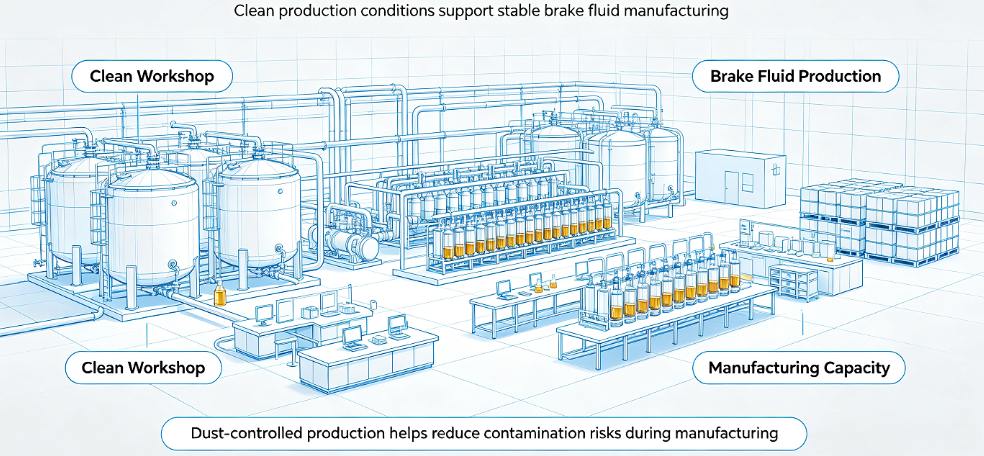
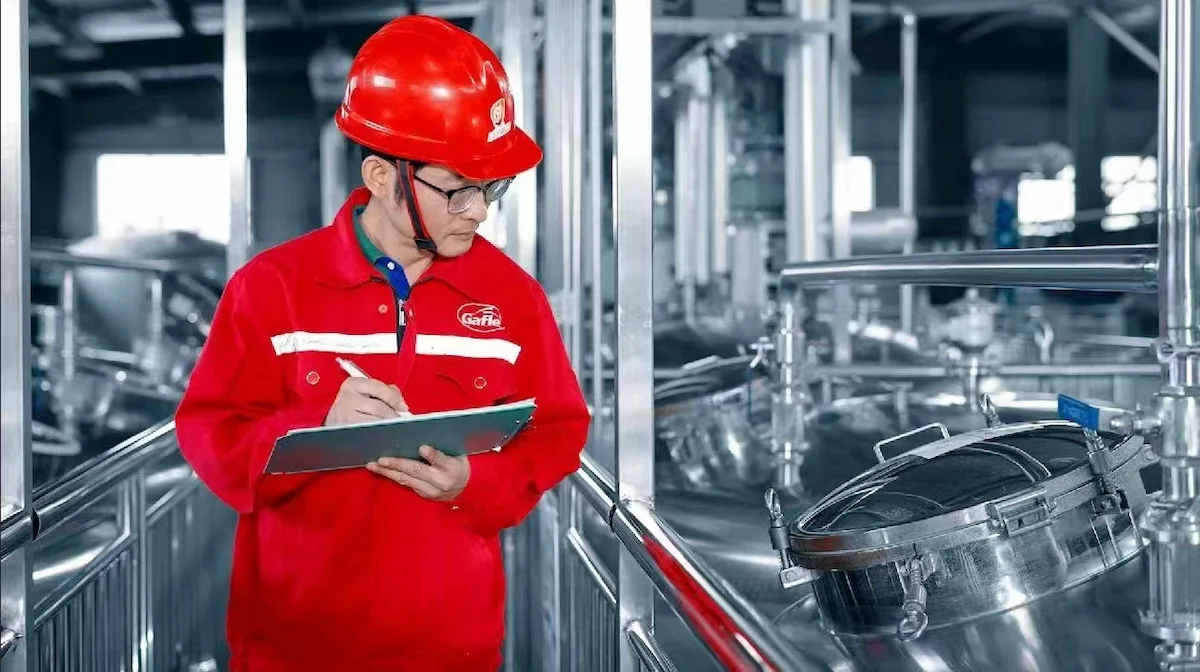
When dealing with a DOT3 Synthetic Brake Fluid Manufacturer, trace one trial lot through the plant. Follow it from incoming-material identity checks to controlled blending, any applicable filtration, filling and closure, sample testing, release, retention, and dispatch. That walk-through reveals the true process boundary better than a broad claim about factory capability. A management-system certificate supports the review, but cannot prove this product's boiling point or material compatibility; its site, scope, validity, and connection to the quoted plant still need checking.
An OEM DOT3 Synthetic Brake Fluid project includes more than putting a new label on an existing bottle. It creates decisions about formula ownership, claim wording, bottle resin, cap liner, tamper evidence, fill tolerance, color, carton strength, barcode, language, shelf life, test frequency, approved artwork, and change notification. The buyer and factory should sign off a master specification before production materials are committed.
A Bulk DOT3 Brake Fluid Supplier must solve moisture control and transfer as well as chemistry. The receiving site needs a clean, dry, compatible hose and pump, a way to protect the opened drum or IBC, a quarantine process, and a record that connects the received container to the COA. Delivered cost should include packaging loss, pallet space, port handling, local classification, unloading equipment, remaining shelf life, and disposal of residue. The lowest ex-works price can become the highest usable cost when those items are ignored.
Review the product page without turning it into a certificate
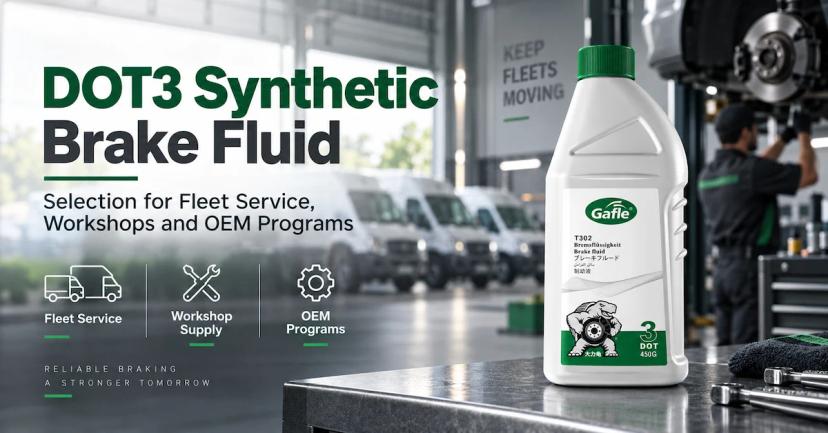
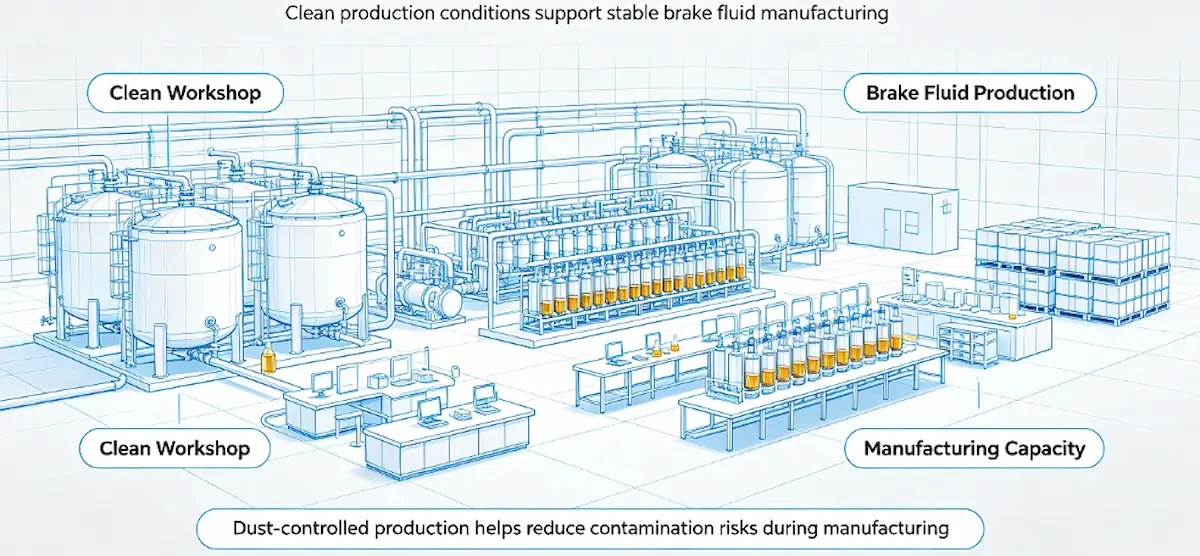
The current GAFLE DOT3 product page describes a glycol-based fluid for hydraulic brake and clutch systems, with stable response, thermal resistance, and corrosion protection for everyday driving. Its image shows a T302 450 g bottle. A separate T302 page also presents the product as DOT 3. These details can help a buyer identify the intended catalogue direction and package, but the public pages do not provide a complete product-specific TDS, test method, production tolerance, or certificate file.
There are also practical reasons to request confirmation rather than relying on the storefront fields. At the time of the captured site review, one DOT3 listing carried an availability signal that differed from the other T302 entry, and catalogue prices appeared to function as storefront fields rather than formal quotations. The order should therefore identify the exact SKU or formula, pack, quantity, destination, Incoterm, artwork status, documents, and requested delivery window. The pro-forma invoice and signed specification, not the catalogue card, should govern the transaction.
The 450 g pack raises a deceptively simple question: is that declared as net mass, and will the destination market or sales channel expect the product to be sold by mass or by volume? Put a physical sample beside the packaging drawing. Check the resin and cap, open the inner seal, locate the tamper feature and batch code, scan the barcode, and confirm how bottles sit in the carton and on the pallet. A detail that looks trivial on one sample becomes expensive across several thousand printed packs.
Documents and batch controls that make a claim usable
Read the three core documents side by side because they answer different questions. The TDS describes the product, its grade and intended use, how reported values were tested, whether they are limits or typical results, and which revision is current. The SDS deals with hazards and the rules for handling, first aid, transport, and disposal in the relevant jurisdiction. The COA comes last in that chain: it identifies the shipped lot and records the release tests agreed for the order. A generic sheet cannot do all three jobs.
For a first order, request a sample COA before approving the commercial format. Agree which results will appear on every lot: commonly the product identity, batch number, manufacture date, appearance, ERBP, wet ERBP if part of release, viscosity at specified temperatures, pH, and any project-specific control. Some tests are too long or complex to repeat on every batch, so the quality plan should distinguish routine release testing, periodic verification, type testing, and externally witnessed work. That distinction is more credible than claiming every test is performed on every container.
The quality discussion should include what happens on a bad day. Who blocks an out-of-specification lot, who may release product, and how long will a retained sample remain available if a complaint surfaces? An OEM agreement also needs a written notice period for meaningful changes. A new raw material, production site, test method, bottle system, label stock, or critical upstream supplier may leave the headline specification untouched while changing moisture ingress, print durability, freight strength, or workshop handling.
A practical OEM and bulk approval sequence
First, write the application brief. Record the vehicle types, applicable manuals or OEM codes, current fluid, operating temperatures, route or duty cycle, annual volume, trial quantity, destination country, sales channel, and preferred package. Where the vehicle population is mixed, attach a model-year matrix instead of asking the supplier to assume one grade fits everything.
Next, freeze the technical target. Name the applicable standard and edition, grade, dry and wet boiling requirements, viscosity temperatures and limits, corrosion and elastomer requirements, color, test methods, lot-release items, and document package. Mark every value as minimum, maximum, range, or typical. This small drafting habit prevents a typical laboratory result from becoming an accidental guarantee.
Then review a representative sample. Inspect the fluid and package, but also compare the sample code with its TDS, SDS, COA, and test report. A beautiful bottle with an unrelated generic certificate is not an approved sample. If the project replaces another supplier, plan compatibility review and a controlled service procedure rather than assuming a casual top-up will be acceptable.
Approve the commercial and artwork file together. Confirm MOQ, quantity tolerance, price basis, Incoterm, payment milestone, tooling, lead time, packaging specification, palletization, barcode, label text, and ownership of printing files. Compliance language should be reviewed before mass printing. A one-letter grade error on a label can stop an otherwise usable shipment.
Control production and release. Start with the finished-goods code on the shipment and make sure the factory can work backward to filling records, final test results, in-process checks, and the raw-material lots used. The batch on the COA must be the batch on the goods. During the first commercial run, an inspection or pre-shipment photographs can verify quantity, marks, cartons, pallets, and visible packaging; neither is evidence of the liquid's chemistry.
Close the loop after receipt. Quarantine damaged or leaking packs, verify documents and lot codes, record the container or seal number, and retain a sample if the quality agreement requires it. The first-order review should capture what worked and what needs correction before the repeat order. This is where an OEM program becomes repeatable rather than merely customized.
Request a DOT3 technical file and quotationStorage and workshop handling are part of performance
A clean, dry, tightly closed original container is part of the product's performance, not merely tidy housekeeping. The cited FMVSS labeling provisions require warnings that direct users to the vehicle manufacturer's recommendation and caution against contamination by water, dirt, petroleum products, or other materials. They also address keeping the fluid in its original container with the closure tight.
Warehouse staff should be able to recognize a pack that must not enter stock: a broken closure, leakage, a wet carton, an unreadable lot code, or an unexpected change in appearance. Store upright under the supplier's stated conditions and rotate by lot and shelf life. Avoid filling gaps in the specification with an assumed temperature or familiar shelf-life figure, because a change in formula, bottle, liner, or closure may change the valid instruction.
At the workshop, clean the reservoir area before opening it, use dedicated equipment, record the fluid and lot, and avoid leaving a large pack open between jobs. Never return unused service fluid to the original container. A low reservoir level can indicate leakage or wear; topping up without diagnosing the cause is not a complete maintenance decision. Bleeding and replacement should follow the vehicle maker's procedure and be performed by trained personnel.
Common buying mistakes and the cost behind them
Using "synthetic" as proof of conformity. This leaves the buyer without product-specific evidence. Correct it by naming the grade, standard edition, methods, and acceptance limits in the purchase specification.
Comparing only dry boiling point. The fluid spends most of its service life outside a sealed laboratory bottle. Wet performance, moisture control, packaging, and maintenance interval deserve equal attention.
Calling any DOT 3 product low viscosity. A grade ceiling is not a product result, and a single -40°C value does not establish fit for every electronic brake system. Request the measured value and the vehicle-specific requirement.
Approving an OEM label before the technical file. Once thousands of labels exist, people become tempted to defend the artwork instead of correcting the claim. Freeze the formula and evidence first.
Buying bulk fluid without a dry-transfer plan. An opened container, wet hose, or shared pump can undo careful manufacturing. Include receiving and dispensing controls in the sourcing project.
Accepting a generic COA. A polished template that cannot be connected to the shipped lot provides little traceability. Require the actual batch number, agreed results, release status, and authorized sign-off.
Assuming a storefront price and inventory counter are binding. Confirm production status, MOQ, schedule, currency, Incoterm, quantity tolerance, and documents in the quotation and order.
Three realistic procurement scenarios
An aftermarket distributor serving older passenger cars
The distributor sells into a market with a large population of vehicles whose manuals specify DOT 3. It needs a recognizable small pack, multilingual instructions, tamper evidence, stable cartons, and enough remaining shelf life for regional warehousing. Instead of buying by the product photo, the team sends a vehicle and market brief, requests the current TDS/SDS/COA set, confirms label rules, and conducts a trial order. The supplier's measured values are compared with the agreed standard, while the final artwork avoids unsupported phrases such as "fits every car."
A delivery fleet with hot urban routes
The fleet experiences frequent stops, high ambient temperatures, and tightly scheduled maintenance. Some vehicles specify DOT 3; newer units do not. Procurement separates the fleet by manual requirement rather than forcing one fluid across the yard. For the DOT 3 group, the technical review emphasizes wet boiling performance, packaging after opening, batch traceability, and a workable replacement schedule. A pilot records vehicle IDs, old fluid, flush procedure, new lot, date, and technician. Claims about reduced downtime wait until the fleet has its own service data.
A private-label importer planning a bulk launch
The importer wants retail bottles and a drum format under one brand. It first approves one master formula and defines whether both packs share the same lot-release specification. The retail workstream covers legal text, minimum wet boiling-point marking where applicable, packager and distributor details, tamper evidence, barcode, and carton. The bulk workstream covers closure, liner, transfer hardware, opened-container handling, and receiving inspection. Only after those points are fixed does the buyer compare MOQ and landed cost. The result is slower than choosing a label mock-up, but much faster than recalling inconsistent packs.
Questions that come up during DOT 3 sourcing
Is synthetic DOT 3 a separate official grade?
No. DOT 3 is the performance designation. Synthetic describes the formulation or market positioning and should be defined by the supplier. Approval should rest on the vehicle requirement, applicable standard, product specification, and evidence.
Does DOT 3 fit every passenger car in the market?
It does not. DOT 3 serves many cars, while other models call for DOT 4, DOT 5.1, a maker-specific specification, or a different fluid family. Check the handbook for that model and model year. Size, age, and country of sale are clues at best; none replaces the stated requirement.
What should a workshop do before combining DOT 3 and DOT 4?
Some glycol-based products may pass a compatibility or miscibility test, but that does not make every blend the right service choice. The final properties change, and warranty or vehicle instructions may require a controlled fluid. Check the manual and supplier guidance; for a planned product change, a documented flush is usually easier to manage.
Does a higher dry boiling point always mean a better fluid?
No. It is one useful measurement. Wet boiling point, viscosity, stability, corrosion, water tolerance, rubber effects, packaging, and the actual duty cycle also matter. A product must first match the required grade and vehicle system.
What should appear on a DOT 3 quotation?
The quotation should identify the exact formula or SKU, package, quantity, MOQ, price and currency, Incoterm, destination, lead time, quantity tolerance, artwork status, documents, payment terms, and quotation validity. Technical acceptance should refer to a dated specification rather than a product name alone.
Which documents should arrive before shipment?
At minimum, request the current TDS, SDS, agreed COA, label and package approval, and applicable certification or declaration. Depending on the market and route, the order may also need origin, transport, customs, test, pallet, inspection, or other commercial documents.Confirm the list with the importer and logistics provider.
What turns a supplier review into a manufacturer verification?
Begin by matching the legal entity and quoted production address to the site being reviewed. From there, follow one batch through formula control, plant records, laboratory calibration, release, sample retention, and complaint handling. Certificates matter only when their scope, site, and validity match the work in question. A remote review is useful for screening; a high-volume or higher-risk program may warrant an on-site or independent audit.
What is a reasonable replacement interval?
Use the vehicle manufacturer's interval and service instructions. Climate, duty cycle, system condition, and maintenance history can affect the practical program, but a fluid seller should not replace vehicle-specific guidance with one universal mileage or time claim.
Can DOT 3 be supplied in drums or IBCs?
Bulk formats may be possible, but feasibility depends on the formula, destination, annual volume, filling plan, transport classification, container and liner, unloading equipment, and moisture-control procedure. Ask for the exact pack specification and do not assume a retail formula can simply be moved into any available drum.
What does price per unit leave out?
It may leave out printing, tooling, test fees, cartons, pallets, inspection, inland transport, freight, insurance, duties, port charges, transfer loss, rejected packs, and remaining shelf life. Compare landed usable cost at the receiving site and the cost of controlling a complaint.
RFQ checklist for a useful DOT 3 quotation
| RFQ field | Information to provide | Expected supplier response |
|---|---|---|
| Vehicle and system | Model years, vehicle types, brake or clutch system, current fluid, manual requirement | Fit assessment, exclusions, and questions still requiring confirmation |
| Operating environment | Minimum and maximum temperature, humidity, route, load, stop frequency, storage | Relevant boiling, viscosity, water-tolerance, and handling evidence |
| Technical specification | DOT grade, standard and edition, ERBP, wet ERBP, viscosity, pH, corrosion, rubber and color | Dated TDS, methods, limits, typical values clearly identified, and exceptions |
| Market and label | Destination, sales channel, language, distributor details, barcode, warnings, claims | Artwork process, compliance responsibility, proof rounds, and approval record |
| Package | Fill size, bottle or drum, closure, liner, carton, pallet, quantity tolerance | Package drawing, material, sample, pallet pattern, and integrity checks |
| Quality documents | TDS, SDS, lot COA, test reports, certificates, retained sample, change control | Document list, sample files, issue timing, and responsible contact |
| Commercial plan | Trial quantity, annual forecast, MOQ, target date, Incoterm, port, payment | Formal quotation, production assumptions, lead time, validity, and milestones |
Sending this information allows the technical and commercial teams to answer the same question. It also exposes gaps early. A supplier who cannot yet confirm a point can label it open rather than filling the space with an assumption.
Send your vehicle, volume and packaging requirementsThe final selection rule
A sound DOT 3 purchase has a short explanation: this fluid matches the named vehicle and destination-market requirement, and the shipped lot, package, documents, and service plan all support that choice. Start there when comparing quotations. A boiling-point headline means little without the wet result; viscosity needs its temperature and method; corrosion, seals, water tolerance, and stability deserve the same attention as the largest number. Even the closure and label perform technical work by keeping moisture out and the correct instructions with the product.
For standard supply, verify the exact catalogue item and current availability. For OEM or bulk supply, freeze the master specification, artwork, quality plan, transfer method, and change-control rules before production. Then compare delivered cost and lead time. That order of work protects the importer, the workshop, the fleet, and ultimately the driver far better than choosing the largest number or the lowest unit price.
Technical note: This article provides general purchasing guidance for a safety-critical automotive fluid. Always follow the vehicle or equipment manufacturer's instructions, the law and standard applicable in the destination market, and the supplier's current product-specific TDS, SDS, COA, and test reports. Website descriptions, catalogue availability, illustrations, and displayed prices are not certificates, warranties, or formal quotations.