Engine coolant (antifreeze) is one of the most critical yet misunderstood fluids in vehicles. Most car owners and even new workshop technicians have confusion about coolant colors, mixing compatibility, service cycles and climate adaptability. To solve daily maintenance and purchasing puzzles, we have sorted out the most frequently asked questions about engine coolant with professional and practical answers.
1. Is coolant color important? Can I match coolant by color?
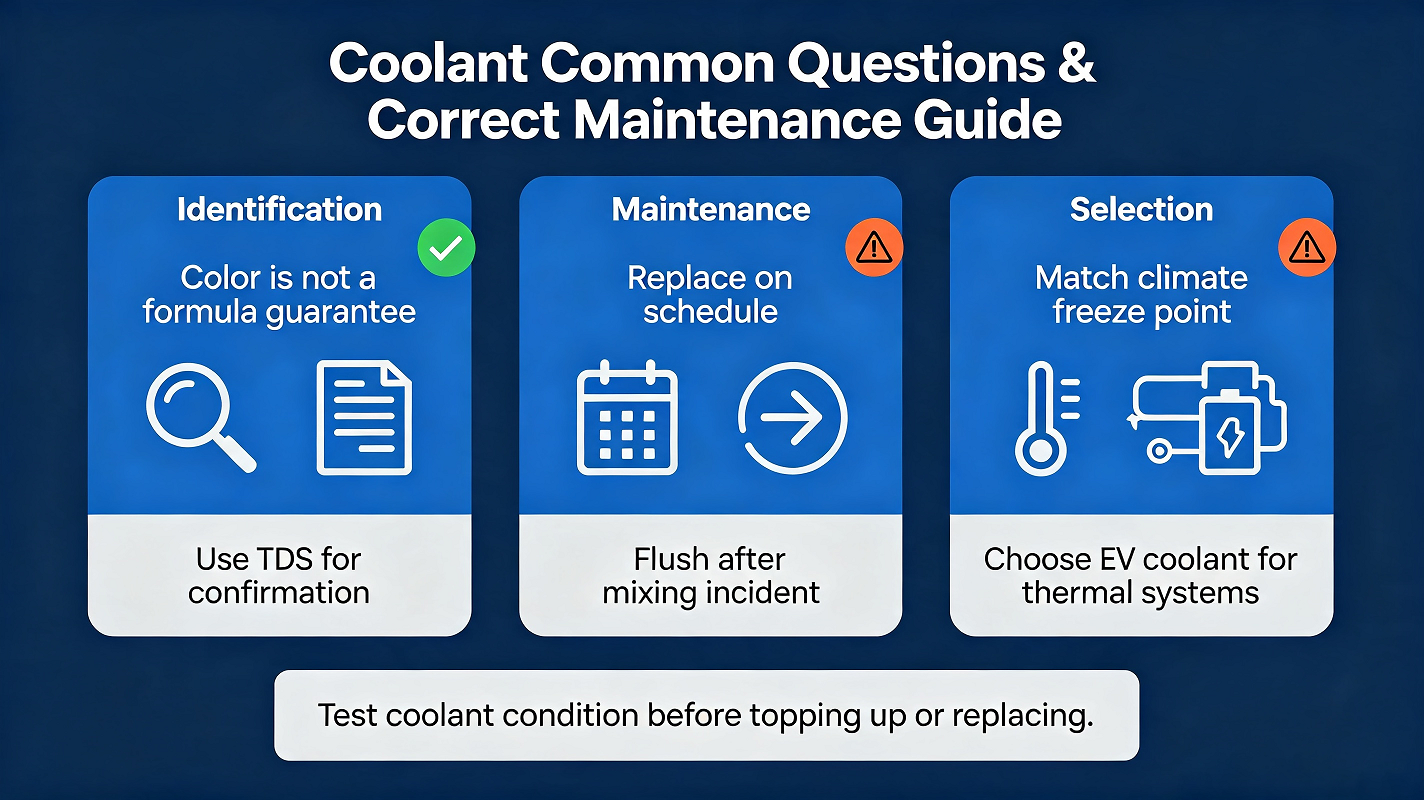
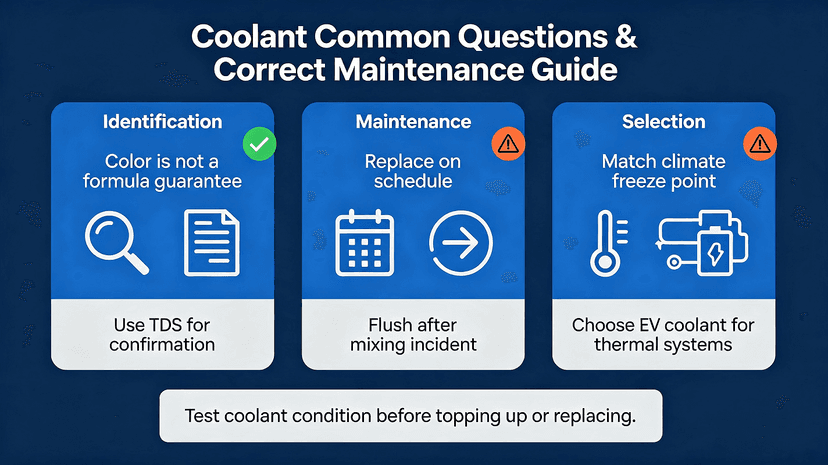
No, coolant color is not a reliable judgment standard. Coolant itself is colorless and transparent. All red, green, orange and blue shades are artificial dyes added for visual identification. There is no unified global rule for color matching coolant types. One brand’s red coolant may be long-life OAT type, while another brand’s red coolant is traditional IAT type. Never select or mix coolant simply by color.
2. Can I mix different brands or different colors of coolant?
It is not recommended in any situation. Coolant compatibility depends on its internal additive technology (IAT, OAT, HOAT) rather than brand or color. Mixing different formula coolants will cause chemical reactions between corrosion inhibitors, producing sludge, sediment and gum deposits. These impurities will block radiators, water pumps and cooling pipelines, leading to engine overheating and component corrosion. Only emergency temporary topping-up is allowed, with a full system flush required afterward.
3. How often should engine coolant be replaced?
The replacement interval is determined by the coolant type:
- IAT inorganic coolant: Replace every 2–3 years or 40,000–60,000 km
- OAT long-life coolant: Replace every 5 years or 240,000 km
- HOAT hybrid coolant: Replace every 5–7 years
Even for “lifetime coolant”, regular inspection is necessary. Aging additives will fail over time, resulting in reduced protection performance.
4. What is the difference between a coolant change and a coolant flush?
A regular drain-and-refill only replaces part of the old coolant in the radiator and water tank, leaving residual old fluid and sediment inside engine pipelines. Afull coolant flush uses professional cleaning equipment to circulate cleaning fluid through the entire cooling system, completely removing sludge, rust and residual impurities, then refills with new coolant. High-mileage vehicles, mixed coolant vehicles and vehicles with muddy fluid all require a full flush.
5. Do different regions need different types of coolant?
Yes, climate determines coolant freezing point specifications. Tropical and subtropical regions with high year-round temperatures can choose -25℃ coolant. Most global markets adopt universal -35℃ coolant. Cold high-latitude regions such as Russia, Northern Europe and Canada must use -40℃ or -45℃ low-temperature resistant coolant to avoid fluid freezing and pipeline cracking in winter.
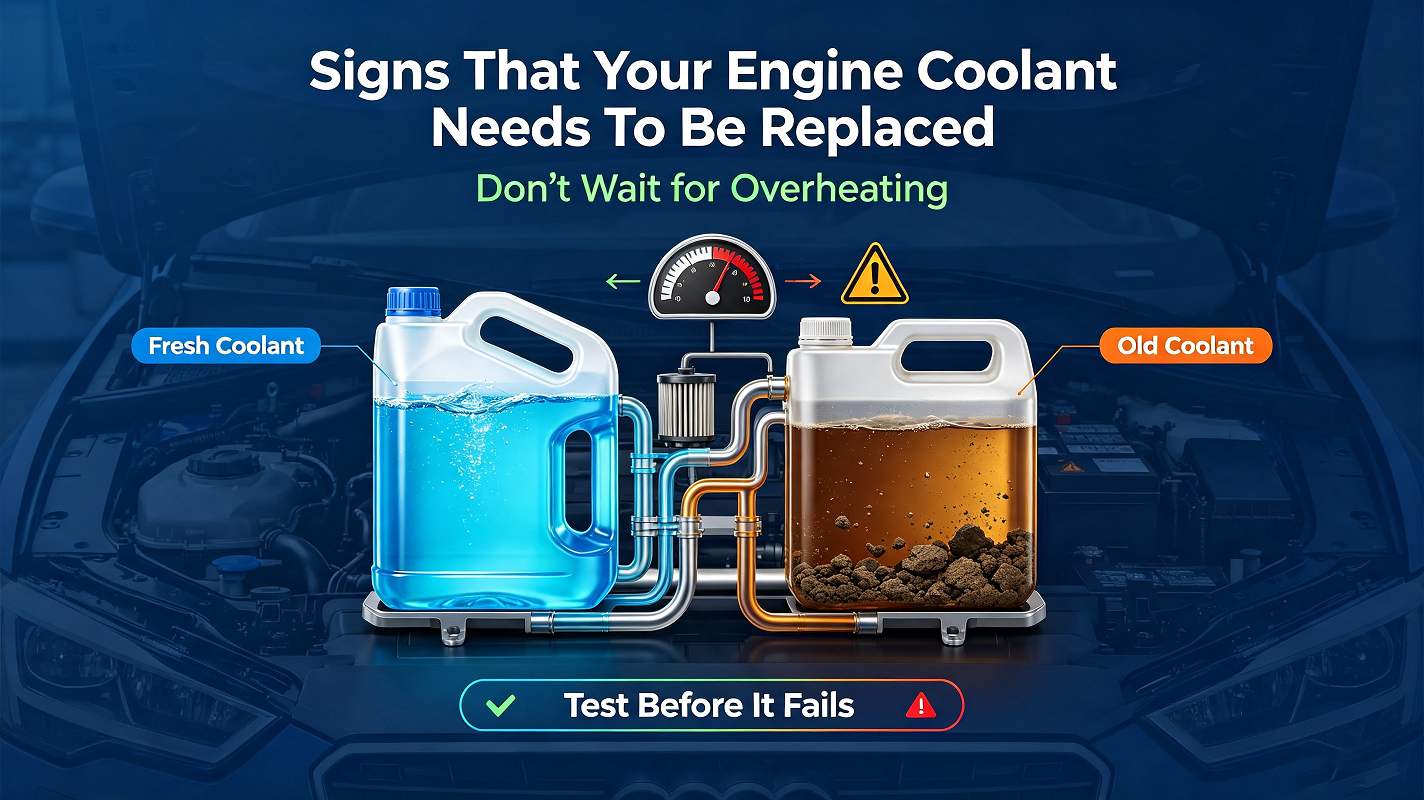
6. What are the signs that coolant needs to be replaced?
There are 4 obvious judgment signs:
- The coolant turns muddy, brown or rust-colored with floating impurities
- The engine temperature rises frequently and overheats easily
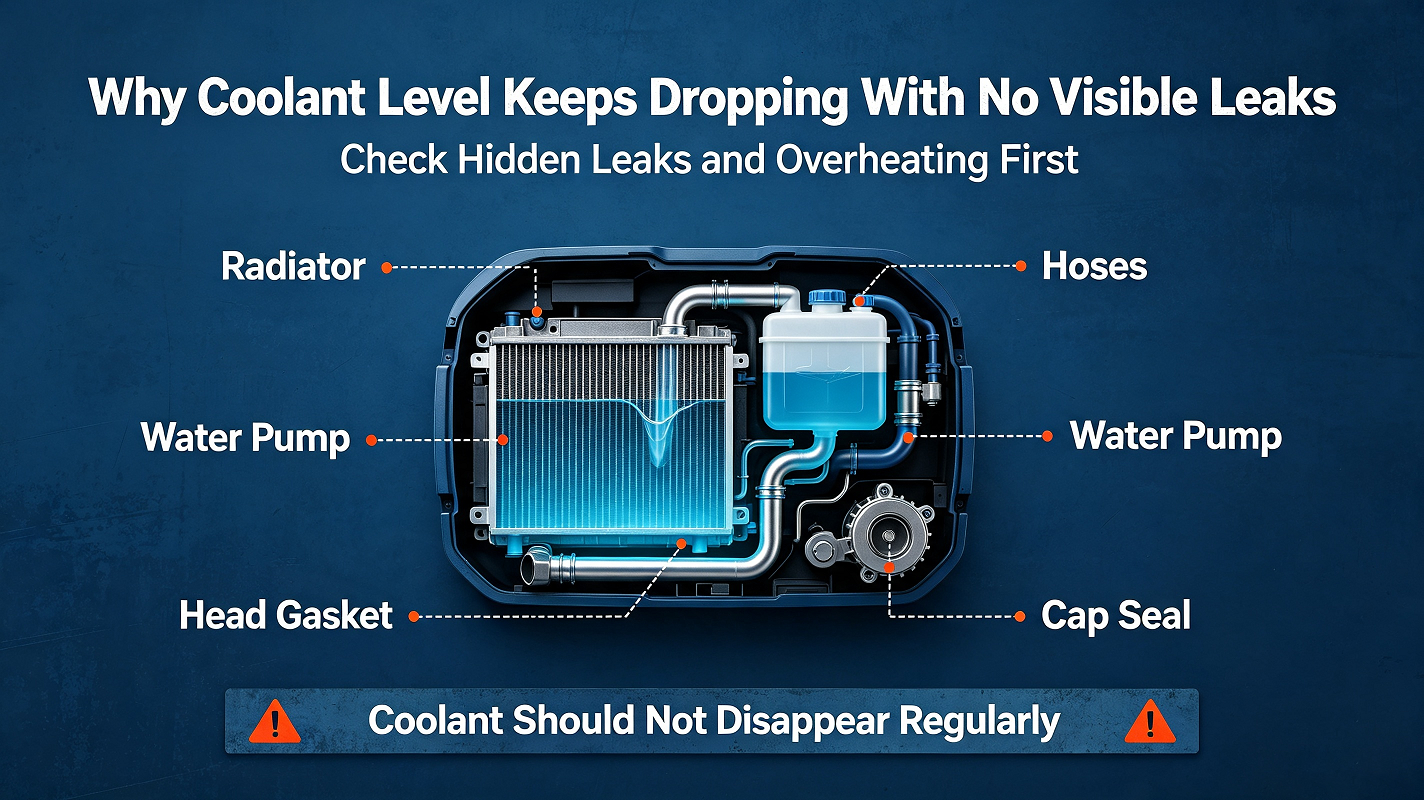
- A sweet glycol odor appears in the engine bay or small fluid leaks occur
- The vehicle has exceeded the official service interval
7. Is EV coolant different from regular fuel car coolant?
Absolutely different and not interchangeable. Electric vehicles rely on coolant for battery thermal management. EV dedicated coolant features ultra-low conductivity, which can prevent high-voltage electric leakage and protect battery packs. Ordinary antifreeze cannot meet the safety standards of new energy vehicles and will cause potential safety hazards.
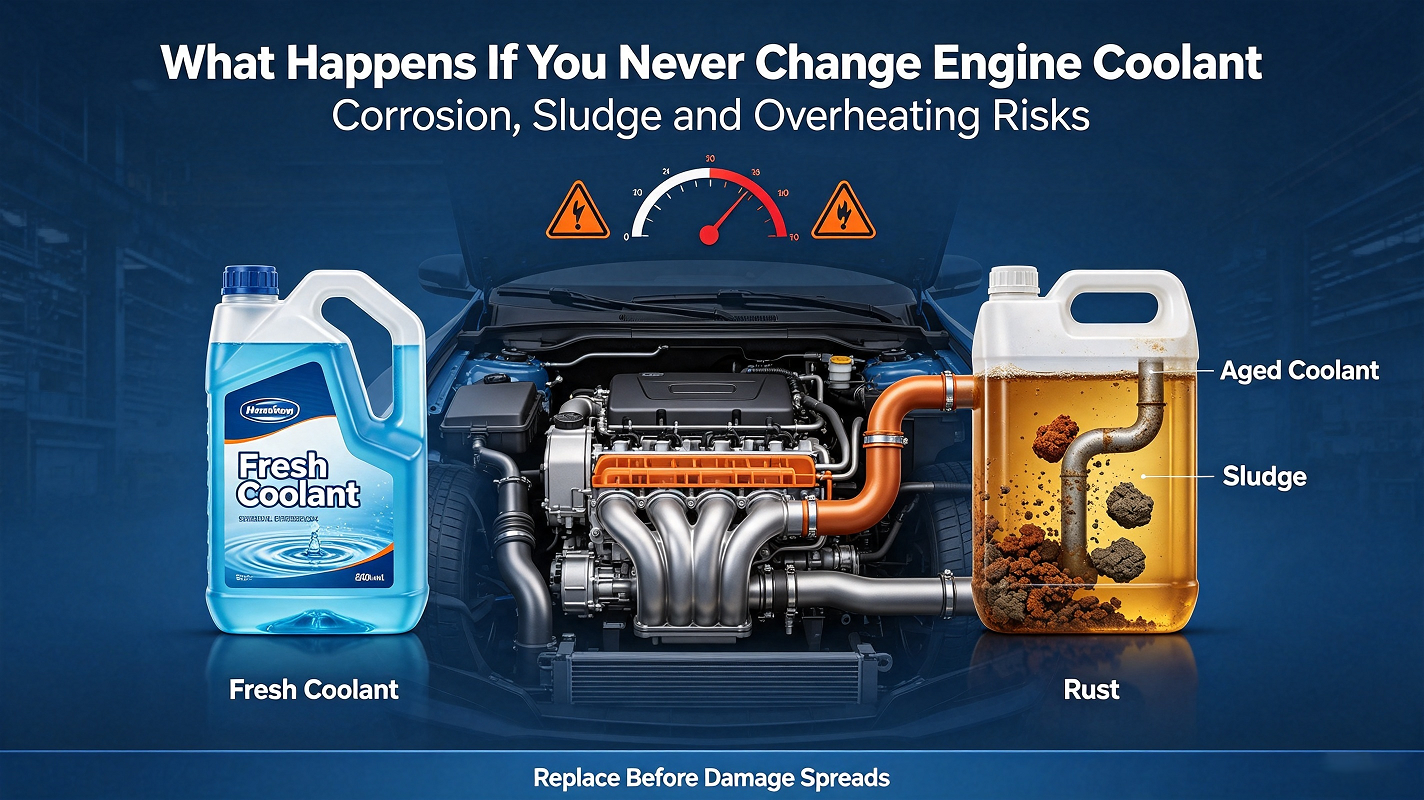
8. What happens if I never change the coolant?
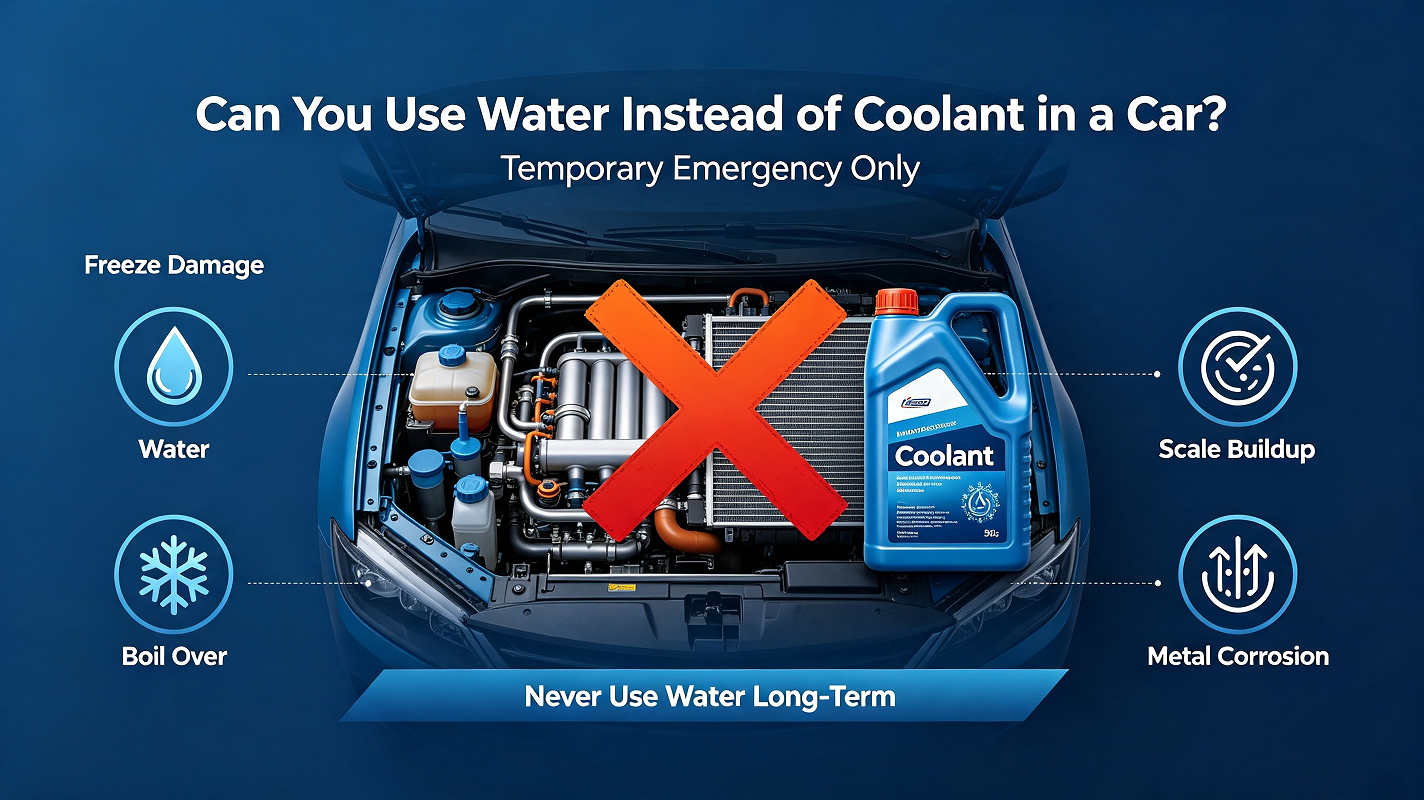
Long-term non-replacement will lead to failure of anti-corrosion and anti-oxidation additives. The cooling system will suffer from metal corrosion, pipeline sludge blockage, accelerated aging of rubber hoses and seals, and frequent engine overheating. In severe cases, it will cause cylinder head deformation, gasket damage and even permanent engine scrapping, bringing extremely high maintenance costs.
9. What is the difference between ethylene glycol and propylene glycol coolant?
Ethylene glycol coolant is the mainstream product for global automobiles and engineering machinery, with stable anti-freezing and anti-boiling performance and high cost performance.
Propylene glycol coolant is low-toxic and environmentally friendly, suitable for special equipment and partial new energy scenarios, but with higher procurement costs and smaller market coverage.
10. How do wholesalers choose suitable coolant for local markets?
B2B buyers need to comprehensively consider local climate temperature, local vehicle models (old/new, fuel/EV), and market price positioning. It is recommended to stock IAT cost-effective models for low-end markets and old vehicles, OAT/HOAT long-life models for modern passenger cars, and match different freezing point specifications according to regional temperatures.
Final Tips
Coolant maintenance is not complicated, but wrong operations will cause huge losses. Always judge coolant performance by formula parameters and TDS data, not by color or experience. For wholesale, fleet maintenance and garage matching, choose standardized and stable-quality coolant suppliers to avoid after-sales problems.
GAFLE provides full-series IAT, OAT, HOAT and EV dedicated coolant, with complete MSDS and TDS documents, supporting global bulk wholesale and private label customization. Contact us for professional market matching suggestions.
Welcome to contact GAFLE for more information & cooperation!
peter
ZHEJIANG GAFLE AUTO CHEMICL CO.,LTD
Tel:86-579-8222 1665
Fax:86-579-8246 4690
Cel/Wechart:86-13335993986
E-mail:peter@gafle.net
Web:www.gafle.net