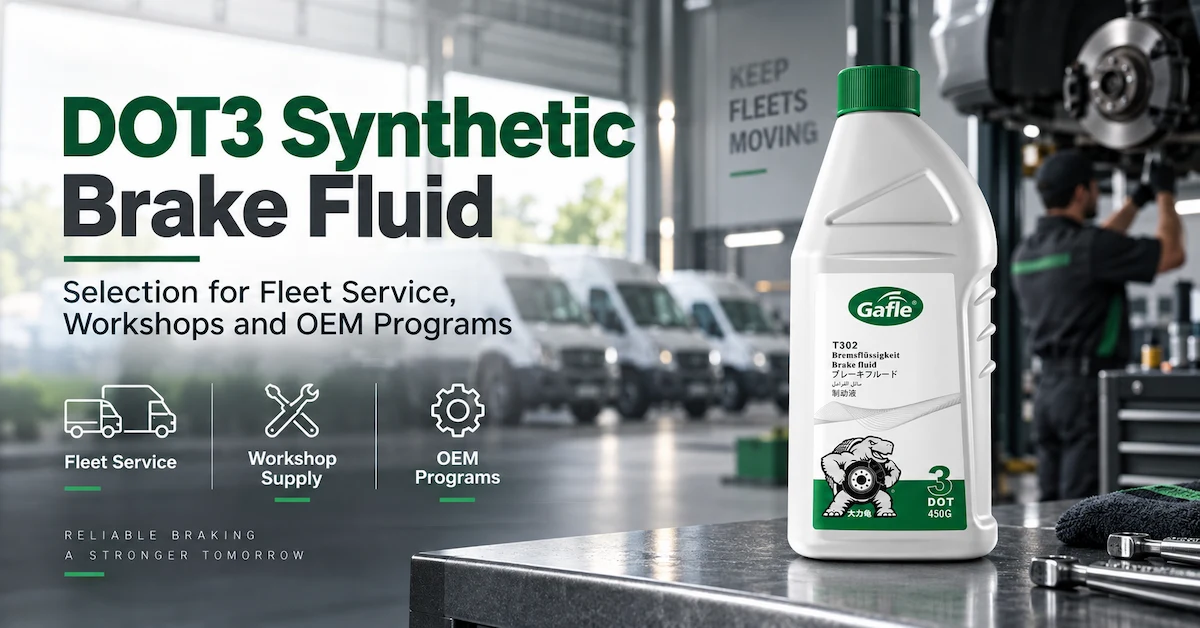
Buying Fully Synthetic DOT4 Brake Fluid is rarely a simple price comparison. A fleet buyer needs a fluid that matches the vehicle handbook, keeps a predictable pedal feel after moisture exposure, protects seals and metal parts, and arrives in packaging that survives storage and export handling. A workshop needs clear filling and flushing instructions. An OEM or private-label brand needs a controlled formula, repeatable batches, compliant labels, and documents that can be shown to a customer or an auditor.
The short answer is this: treat “fully synthetic” as a formulation and purchasing description, not as a separate DOT grade. DOT 4 is a performance and labeling category. Before approval, compare dry and wet boiling point, low-temperature viscosity, water tolerance, corrosion behavior, elastomer compatibility, packaging, and current test evidence. The vehicle manufacturer’s specification remains the first decision. A supplier’s catalogue page can start the conversation, but a current TDS, SDS, COA, sample test, and destination-market requirement should close it.
Quick answer for a purchasing team
- DOT4 is the grade reference. “Fully synthetic” does not replace the required vehicle specification or prove compliance by itself.
- Boiling point is only one part of safety. Dry boiling point is useful for a new fluid; wet boiling point shows how much margin remains after the fluid has absorbed water.
- Low-temperature viscosity matters. A fluid may look excellent at high temperature and still respond slowly in a cold ABS or ESC system if its low-temperature behavior is not verified.
- Ask for evidence by batch or formula. Request TDS, SDS, COA, test methods, shelf-life guidance, packaging drawings, and the certificate or declaration required in the destination market.
- Do not approve by colour or a marketplace price. The site’s displayed price and quantity fields are catalogue signals, not a quotation, MOQ, or long-term stock promise.
What “fully synthetic DOT4” should mean in a serious RFQ
In the automotive fluids market, “synthetic” is often used to distinguish a designed glycol-ether or related base-fluid system from a vague commodity blend. The word can be useful when a buyer wants tighter control over viscosity, thermal stability, corrosion protection, or batch consistency. It becomes risky when it is treated as a certification. A label saying “fully synthetic” does not automatically prove FMVSS No. 116, SAE J1704, ISO 4925, a vehicle maker approval, or compatibility with every seal material.
Ask the supplier to define the phrase in the formula specification. Is the product based on a declared glycol-ether/borate system? Which additives control corrosion and oxidation? Is the formulation intended for conventional hydraulic braking, a low-viscosity electro-hydraulic unit, a racing system, or a private-label service product? Which test method produced each number? A useful technical document will separate measured values from marketing language and will identify the revision date of the formula.
DOT 4 itself describes a class of hydraulic brake fluid performance requirements. It is not a promise that every DOT4 product behaves the same way in every vehicle. Some systems have narrow viscosity limits, particular EPDM or SBR seal requirements, or a specified fill fluid that must not be changed without a controlled flush. DOT 5 silicone fluid is a different chemistry and must not be treated as a higher version of DOT4. DOT 3, DOT 4, and DOT 5.1 may share glycol-family characteristics, but interchangeability still depends on the vehicle maker, the complete formula, and the service procedure.
For an export program, use the current NHTSA FMVSS 116 laboratory procedure as a verification reference when the United States market is involved. It explains that the standard covers hydraulic brake fluids, containers, and labeling. It is a reference for compliance work, not a blanket claim that every synthetic fluid on a catalogue page conforms. The same discipline applies to SAE and ISO references: request the applicable edition, the test report, and the product-specific declaration.
Why buyers compare synthetic DOT4 with conventional DOT4
Procurement teams usually begin the comparison after a practical problem: a city bus sees repeated stops and high reservoir temperatures; a mountain fleet reports a soft pedal after a long descent; an EV workshop wants stable response in a system that blends regenerative and friction braking; or a distributor needs a private-label fluid that behaves the same way in every shipment. “Synthetic” becomes valuable only when it is connected to one of those measurable needs.
Heat is the visible concern. Repeated braking can raise fluid temperature and create a risk of vapour formation if the fluid’s boiling margin is inadequate. A higher dry boiling point can help in a new, dry system. It does not remove the need to check wet boiling point, because glycol-based fluids can absorb moisture over time. The right question is not “What is the biggest number?” but “What margin is appropriate for this duty cycle, service interval, and system?”
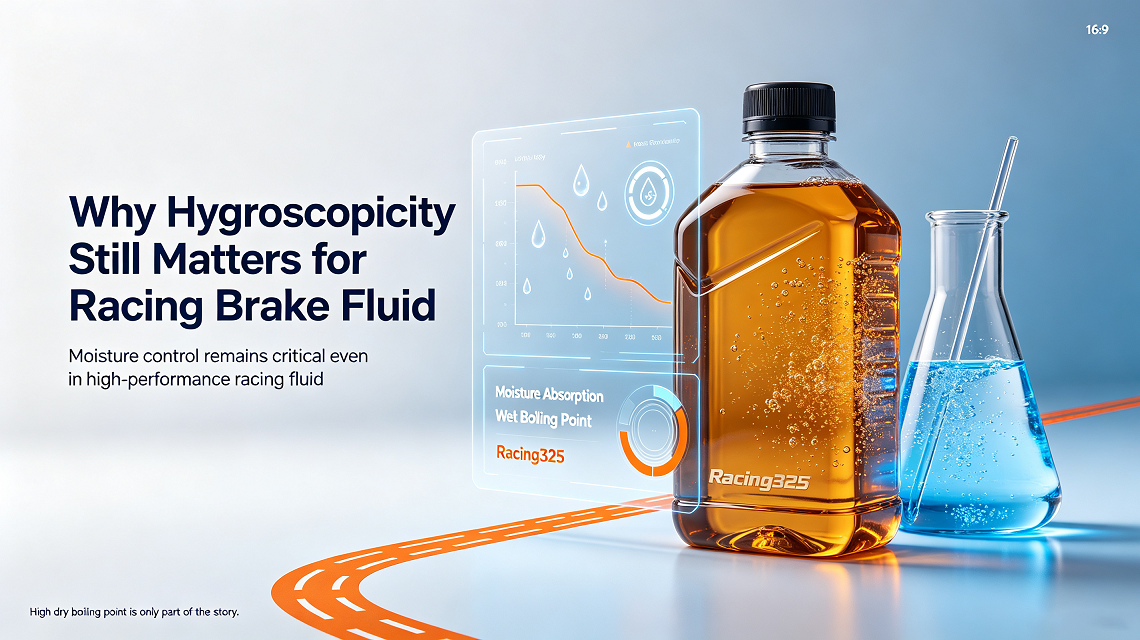
Moisture changes the maintenance conversation. A sealed bottle can be stable in storage, while an opened reservoir gradually takes on water through normal use and temperature cycling. A buyer should ask how the supplier defines wet boiling point, how the sample was conditioned, and whether the recommended change interval is a vehicle-maker requirement or only a general service suggestion.
Low-temperature response is a system issue. A modern ABS or ESC modulator contains small passages and fast valves. A fluid that is too viscous at the system’s cold test temperature can change response time, even if its high-temperature number looks impressive. This is why the phrase Low Viscosity Fully Synthetic DOT4 Brake Fluid should be treated as a request for a measured viscosity curve, not as a conclusion drawn from the product name.
Consistency often matters more than a dramatic claim. A fleet does not buy one laboratory result; it buys repeated lots, predictable packaging, clean transfer, traceable batch numbers, and a technical contact who can answer a complaint. The best supplier discussion therefore includes process controls, sampling plans, retained samples, and change-notification rules as well as chemistry.
Technical parameters that actually matter
1. Dry and wet boiling point
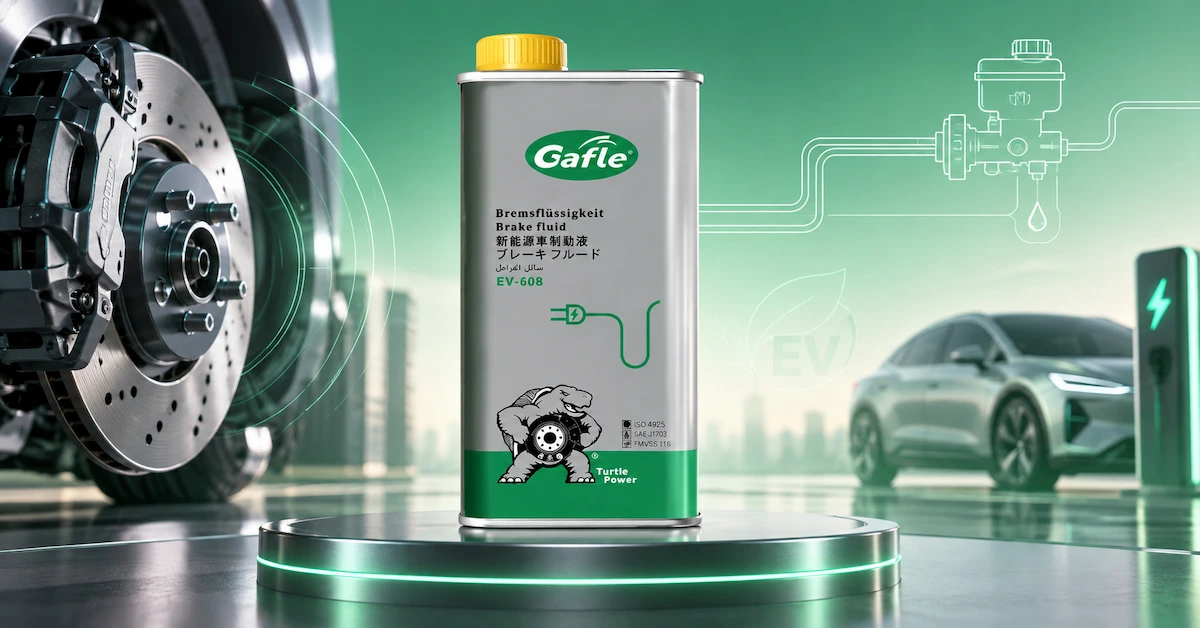
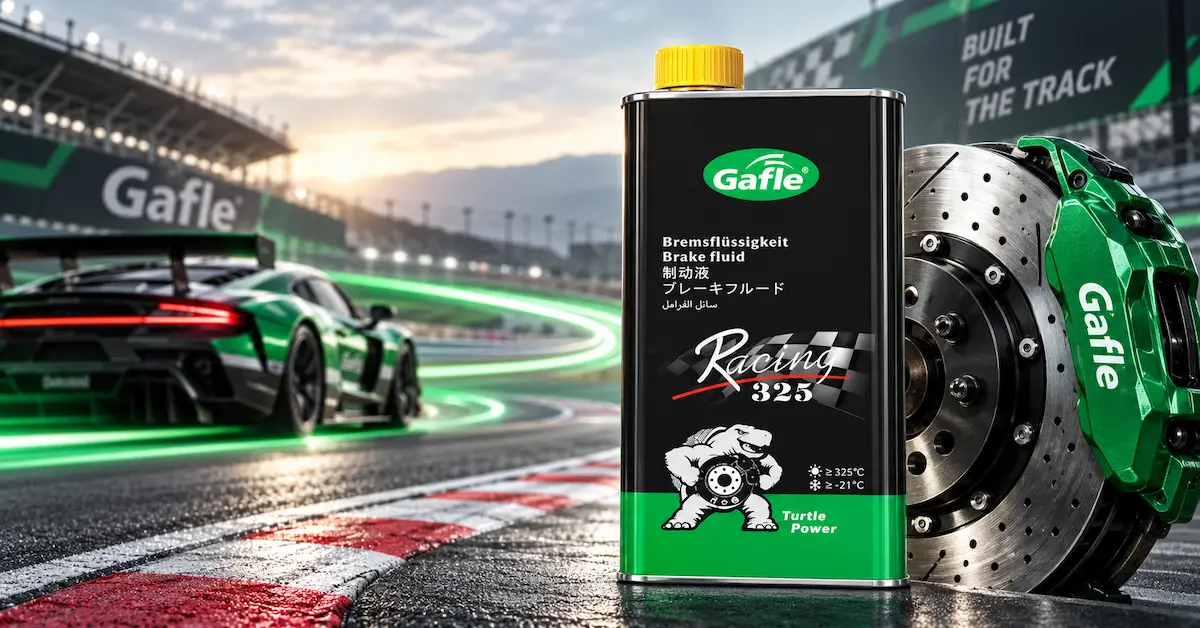
Dry boiling point describes a new fluid under a defined test method. Wet boiling point describes fluid after controlled water contamination or conditioning. Both values should include the method, sample state, and unit. A claim such as “greater than 325 degrees C” is not comparable to “at least 260 degrees C” until the buyer knows whether the number is dry, wet, equilibrium reflux, or another procedure. The official page for the listed Racing 325 product uses a “greater than 325 degrees C” claim; the listed EV608 page gives dry and wet values of at least 268 and 175 degrees C. Those are useful enquiry starting points, not substitutes for the current TDS and report.
2. Viscosity at cold and operating temperatures
Ask for kinematic or dynamic viscosity at the temperatures required by the vehicle maker or market standard, often including a very low temperature point and a warm operating point. A low-viscosity request should specify the test temperature, unit, and acceptance limit. Do not accept “fast response” as a viscosity result. For EV, hybrid, and premium passenger-car programs, also ask whether the fluid has been evaluated with the actual modulator, seal materials, and service hardware.
3. Water tolerance, corrosion, and oxidation
Brake fluid lives beside steel, aluminium, elastomers, and coated components. A formula needs to control corrosion without attacking seals or creating deposits. Request the applicable corrosion test, the water-tolerance method, and the limits for acidity, reserve alkalinity, or other controls used by the supplier. “Anti-corrosion” is a benefit statement; a pass/fail result belongs in the technical file.
4. Elastomer and material compatibility
Rubber seals and hoses are not interchangeable by appearance. Ask which elastomer families were tested, how long they were conditioned, and what changes in volume, hardness, or appearance were observed. The fluid also has to be compatible with the vehicle’s master cylinder, calipers, lines, pump, and reservoir materials. If a fleet is converting from another product, a flush and compatibility review may be needed even when both labels say DOT4.
5. Mixability and service procedure
“DOT4” on two labels does not guarantee that blending them is the best maintenance practice. A workshop should follow the vehicle manual and the supplier’s flush instructions. Ask whether the product is intended as a top-up, a complete replacement, or a controlled system fill. Record the old product, lot number, date, and technician. That information is valuable when a customer reports a pedal-feel change months later.
6. Packaging and traceability
Brake fluid is hygroscopic, so closure integrity and warehouse handling are part of performance. Confirm bottle or can material, cap and liner, induction seal if used, fill volume, lot coding, label language, pallet pattern, outer-carton protection, and dangerous-goods documents where required by destination rules. A one-litre metal canister may make sense for a workshop or fleet, while a retail bottle may be better for a parts channel. The package should support FIFO storage and a clear recall path.
Buyer decision matrix: match the fluid to the real job
The matrix below is a conversation starter. “Suitable” means a candidate for technical review, not a universal approval. A buyer should replace the illustrative questions with the vehicle maker’s specification and the destination market’s rules.
| Buying situation | What to prioritise | Evidence to request | Common mistake | Packaging question |
|---|---|---|---|---|
| Passenger-car service network | Vehicle grade, wet boiling margin, seal compatibility, clear service interval | Current TDS, SDS, COA and vehicle-fit guidance | Choosing by colour or retail price | Small bottles, tamper seal, language-compliant label |
| Light commercial vehicles and vans | Repeated braking, low-temperature flow, corrosion control | Cold viscosity data and lot test results | Using a racing number without a fleet maintenance plan | Workshop-friendly one-litre or larger pack |
| Heavy truck or bus fleet | Wet boiling point, long downhill duty, bulk continuity | Batch COA, retained sample plan, change-control policy | Approving a sample but not the production lot | Drum, IBC, or case configuration with sealed transfer |
| EV or hybrid service | Low-temperature viscosity, ABS/ESC response, material compatibility | System-specific compatibility review and test method | Assuming every DOT4 is automatically EV-ready | Clean, traceable pack with multilingual instructions |
| Track or high-performance program | Dry and wet boiling margin, pedal consistency, frequent service | Independent or witnessed test data and change interval | Using a high dry number without wet data | Small sealed packs for controlled pit-lane handling |
| Export distributor or private label | Formula stability, label law, claims, lead time, repeatability | TDS, SDS, COA, certificates, artwork approval, export files | Printing an unverified standard claim | Carton, pallet, container and dangerous-goods documents where required by destination rules |
How to match DOT4 to the vehicle and environment
For daily passenger cars: start with the manual. If it specifies DOT3, DOT4, or a manufacturer code, do not upgrade by assumption. A fully synthetic DOT4 candidate may be appropriate only after the supplier confirms the required standard and the workshop follows the correct flush or fill procedure.
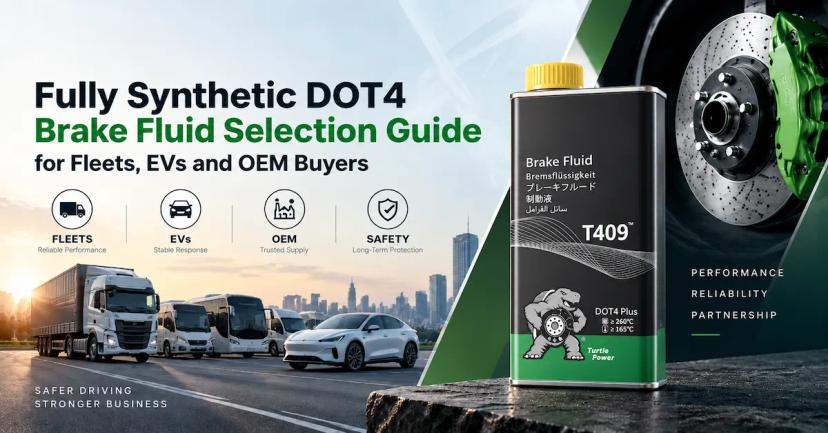
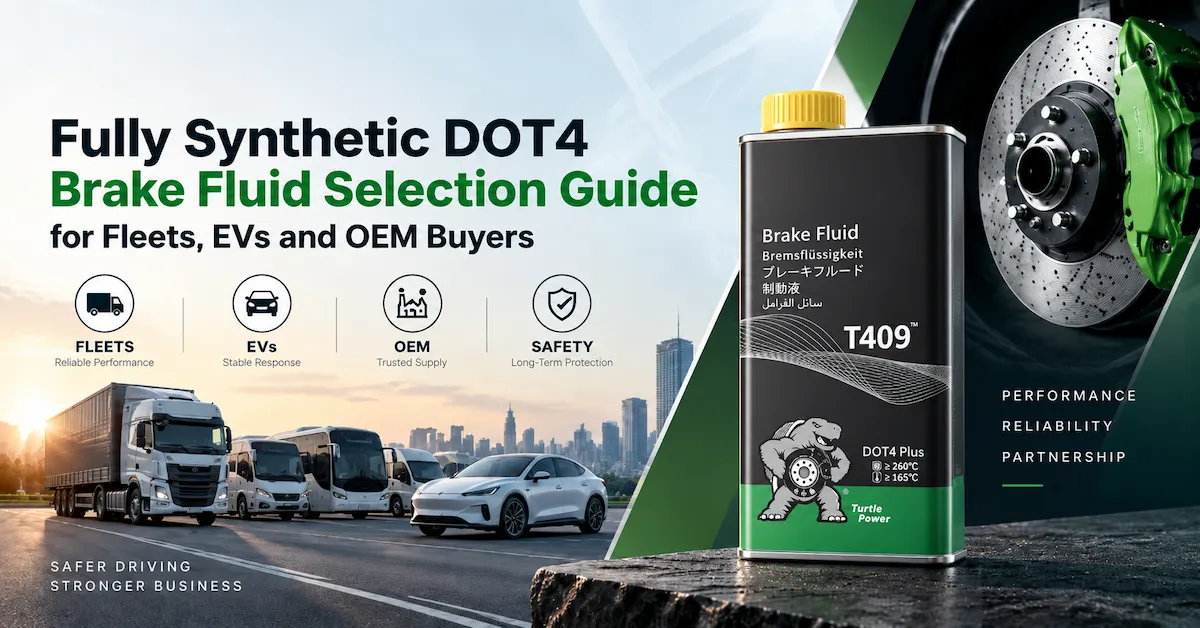
For hot cities, towing, and long descents: look beyond the new-fluid dry number. Ask for wet boiling performance, viscosity at the expected operating range, corrosion control, and a service interval that the fleet can actually follow. The phrase DOT4 Brake Fluid with High Boiling Point is relevant to this search intent, but the “up to 260 degrees C” figure listed for DOT409/T409 must be confirmed by the current product file and test method before it becomes a purchase specification.
For EV and hybrid workshops: regenerative braking can reduce friction-brake use in some driving conditions, but emergency stops, low battery state, downhill driving, and stability-control events still call on the hydraulic system. Ask about low-temperature viscosity, seal compatibility, and the exact brake-control hardware. Do not infer an approval from the word EV in a product category.
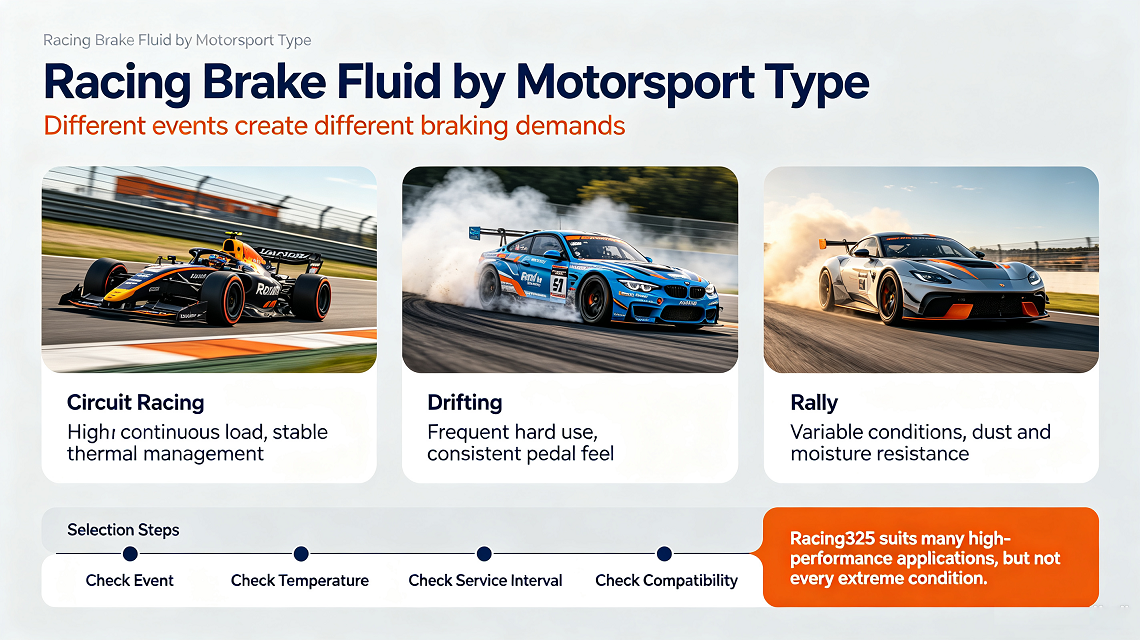
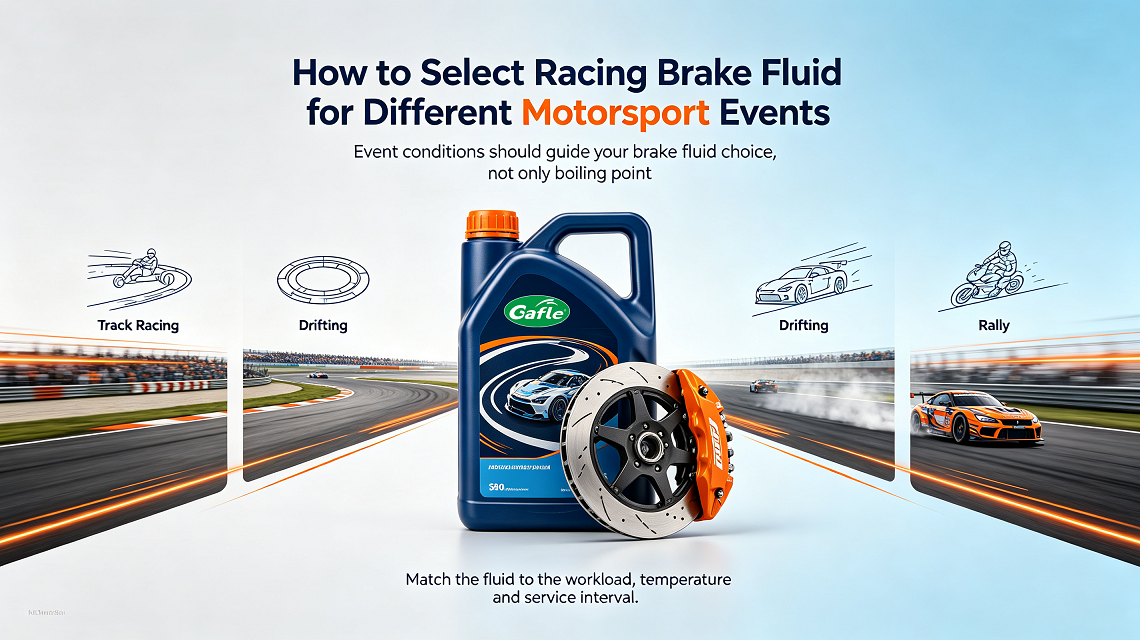
For racing and modified vehicles: a high-temperature fluid can be a sensible candidate, but it may demand more frequent changes and disciplined storage. The listed Racing 325 page describes a boiling point above 325 degrees C and high-temperature use. Treat that as a page claim until a current TDS and test report define dry versus wet performance, viscosity, and the intended service interval.
A High Performance DOT4 Brake Fluid is useful when the duty cycle, service interval, and test evidence justify it; the label alone should never be used to approve a road vehicle or a racing system.
For cold climates: ask for the low-temperature test result, not only the marketing phrase “all season.” Cold starts, ABS modulation, and outdoor warehouse storage create different requirements. Include the lowest transport and operating temperature in the RFQ, then verify the result against the applicable standard and vehicle maker’s limits.
Supplier, manufacturer, OEM partner: what changes?
A Fully Synthetic DOT4 Brake Fluid Supplier may be the right choice for a workshop that needs a stable catalogue item, local support, and regular replenishment. Ask where the product is made, who owns the formula, what lot documents accompany shipment, and whether the supplier can trace a complaint back to raw materials and filling records.
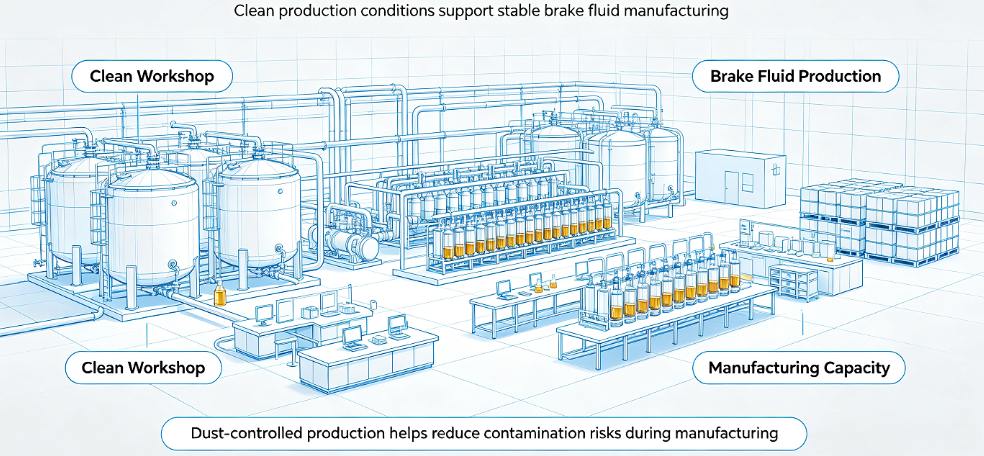
A Fully Synthetic DOT4 Brake Fluid Manufacturer should be able to explain the production boundary: raw-material receipt, controlled mixing, filtration, filling, packaging, inspection, and batch release. Management-system certificates can support an audit, but they do not replace product-specific evidence. Request the certificate number, scope, validity, and the relationship between the certified site and the plant that will fill your order.
An OEM Fully Synthetic DOT4 Brake Fluid project adds artwork, ownership, change control, label claims, packaging, and forecast risk. The buyer should agree on a master specification before a deposit or production slot is confirmed. Define what counts as a formula change, what happens when an additive or package supplier changes, and how samples and retained lots are handled.
A Bulk DOT4 Brake Fluid Supplier must also solve transfer and logistics.A low unit price is not useful if the receiving site cannot unload the drum or IBC safely, if the liner absorbs moisture, or if the shipment arrives without the documents required by the destination port. Compare delivered cost, usable shelf life, pallet space, any dangerous-goods documents required by the route, and the cost of a rejected lot.
OEM and bulk procurement workflow
- Write the application brief. List vehicle mix, brake-control system, climate, duty cycle, current fluid, market, annual volume, package sizes, label language, and desired delivery date.
- Lock the technical target. Agree on DOT grade, dry and wet boiling targets, low-temperature viscosity, materials compatibility, colour, corrosion requirements, test methods, and documents.
- Review a sample. Check packaging, seal, label, SDS, TDS, COA format, and laboratory results. If the product will replace another fluid, define the flush and compatibility review.
- Approve the commercial file. Sign off the pro-forma invoice, artwork, carton markings, pallet plan, MOQ, tolerance, Incoterm, and change-notification rule. A website price is not a pro-forma invoice.
- Release production. After the agreed deposit or commercial trigger, the factory can reserve raw materials and packaging. The schedule depends on formula, package, artwork, and production capacity; a general lead-time statement is not a guarantee.
- Control the batch. Use online checks, laboratory retesting, visual and seal inspection, lot coding, and a release decision. Ask for the COA tied to the shipped lot rather than a generic catalogue certificate.
- Ship and close the loop. Inspect empty cartons and container condition, secure pallets, cross-check documents, record the seal and container number, and retain photos and tracking files. Review the first shipment with the receiving team.
The official OEM brake fluid order workflow describes the same practical sequence from specification and PI through raw-material preparation, three levels of inspection, packaging traceability, and container loading. It is a useful framework, but the exact delivery date and quality package should be confirmed in the order documents.
Request a DOT4 specification and bulk quoteProduct and format comparison for an initial shortlist
The following table uses product-page claims as a shortlist, not as a certification table. It is intentionally conservative: a blank cell means “ask for the current document,” not “the value is zero.” Every temperature or performance number in the table should be checked against the current TDS, SDS, COA, certificate, and test method for the supplied lot.
| Candidate direction | Listed page signal | Best-fit enquiry | Must be confirmed before approval |
|---|---|---|---|
| Standard DOT4 service fluid | Higher dry and wet boiling points than DOT3; stable viscosity; corrosion and material compatibility claims | Passenger cars, SUVs, light commercial vehicles | Exact dry/wet values, low-temperature viscosity, certificate and vehicle compatibility |
| DOT4 Plus / off-road direction | DOT409/T409 page lists DOT4 Plus and up to 260 degrees C | Long descents, high-speed, off-road and heavy-duty enquiries | Test definition, wet value, viscosity, seal data and current TDS |
| EV / heavy-duty direction | EV608 page lists at least 268 degrees C dry and 175 degrees C wet | New-energy vehicles, trucks and fleet discussions | Low-temperature curve, modulator compatibility, formula scope and certificate |
| Racing / high-temperature direction | Racing 325 page lists a boiling point above 325 degrees C | Track, modified cars and severe thermal duty | Dry versus wet definition, change interval, moisture behavior and storage |
| Private-label formula | OEM entry page; technical parameters supplied during enquiry | Brand owners, importers and distributors | Master specification, artwork, MOQ, lead time, lot release and change control |
Storage, handling, and quality control after delivery
Even a well-made fluid can be compromised after it leaves the factory. Store sealed packages indoors, away from water, excessive heat, and direct sunlight. Keep caps and liners intact until use. Apply FIFO by lot and record the opening date of a bottle or drum. Do not return unused fluid to a bulk container after it has been connected to a service tool. A clean, dry transfer hose is a small cost compared with a contaminated hydraulic system.
At receiving, photograph the pallet and seal, check carton count, verify lot codes, inspect dents or wet cartons, and compare the COA with the purchase specification. Quarantine anything with a broken closure, unreadable lot, unexpected colour, leaking pack, or missing document. For a private-label program, retain a sample from each accepted lot and keep the approved artwork next to the inspection record. These habits make a technical investigation factual instead of speculative.
Purchasing mistakes that create expensive returns
- Buying the biggest dry boiling number. Without wet data and a service plan, the number says little about a used fleet.
- Confusing “synthetic” with a legal approval. The label still needs the applicable DOT, SAE, ISO, or vehicle-maker evidence.
- Assuming DOT5.1 is an automatic upgrade. The chemistry and viscosity may not match the system. DOT5 silicone is a different product family.
- Skipping low-temperature data. Cold ABS response can be the deciding factor for winter fleets and EV service.
- Using a generic COA. A catalogue certificate is not the same as a lot-specific release record.
- Ignoring the package. A formula can be correct while a poor closure, wrong liner, or untranslated label creates a market failure.
- Treating catalogue stock as a promise. Confirm production status, MOQ, schedule, and shipment quantity in writing.
Three illustrative application examples
Coastal city bus fleet
The fleet runs frequent stops in humid air and has a high number of brake applications per shift. The buyer asks for wet boiling performance, corrosion testing, low-temperature viscosity, a sealed one-litre workshop pack, and a lot-by-lot COA. The approval trial compares pedal feel and inspection results over a defined service period. No percentage improvement is promised until the fleet’s own measurements are complete.
Cold-region delivery vans
The vans park outside overnight and start early in winter. The RFQ states the minimum storage and operating temperature, the required DOT grade, the ABS/ESC system, and the current service fluid. The supplier supplies a cold-viscosity result, seal compatibility evidence, SDS, and a handling note. The workshop verifies the first batch during a controlled flush instead of topping up from an unknown bottle.
Performance-car track program
The team wants a high-temperature candidate for short track sessions, with a planned fluid change before and after events. It asks for dry and wet boiling results, viscosity, water tolerance, storage life after opening, and a small sealed pack. A listed high-boiling product may enter the shortlist, but the team still checks pedal feel, bleeding procedure, and the vehicle manufacturer’s system limits. The decision is based on the complete service plan, not a single headline number.
Frequently asked questions
Is fully synthetic DOT4 automatically better than conventional DOT4?
No. “Fully synthetic” can describe a carefully designed formulation, but performance depends on the measured properties, the test method, the vehicle system, and maintenance. Compare dry and wet boiling point, viscosity, corrosion, seals, and documents rather than relying on the adjective alone.
Can fully synthetic DOT4 be mixed with DOT3?
Some glycol-based fluids may be chemically mixable, but that is not permission to mix products in every vehicle or warranty situation. Follow the vehicle manual and the product supplier’s compatibility guidance. For a change of supplier or formula, a complete flush and documented fill is usually easier to control than an unplanned top-up.
Can DOT4 be mixed with DOT5.1?
Do not make the decision from the numbers on the labels. Check the vehicle specification, the complete chemistry, viscosity, seals, and the service procedure. DOT5 silicone is a separate family and should not be treated as interchangeable with glycol-based DOT4.
What boiling point should a fleet target?
There is no single target for every fleet. Start with the vehicle maker’s requirement and duty cycle, then choose a dry and wet margin that can be supported by test data and a realistic fluid-change interval. Mountain routes, towing, repeated urban stops, and track use may justify different technical targets.
Does an EV require low-viscosity brake fluid?
An EV does not automatically require one universal viscosity. The brake-control hardware, software, seals, temperature range, and vehicle specification decide the limit. Ask for the viscosity at the required temperature and a compatibility review with the actual system before using a low-viscosity claim in a purchase order.
How do I verify a supplier?
Check the manufacturing site, certificate scope, product ownership, batch traceability, test laboratory, change-control process, export documents, and complaint response. Ask for a current TDS, SDS, COA, sample, and the exact standard declaration. A polished catalogue is helpful, but it is not an audit.
How long can sealed brake fluid be stored?
Use the supplier’s stated shelf life and storage conditions for the exact package. Keep the container sealed, dry, upright, and protected from heat. Once opened, manage it as a moisture-sensitive material and do not pour unused fluid back into a bulk container.
What documents should an OEM buyer request?
Request the master specification, TDS, SDS, current COA format, product and package drawings, label and warning text, applicable certificates or declarations, test methods, shelf-life guidance, lot traceability plan, retained-sample policy, change-notification rule, and export or dangerous-goods documents.
Can a supplier ship bulk DOT4 brake fluid?
Many manufacturers and distributors can discuss cases, drums, IBCs, or other bulk formats, but the feasible package depends on formula, transport classification, port, unloading equipment, and annual volume. Put destination, package, Incoterm, trial quantity, forecast, and document requirements in the RFQ before comparing delivered cost.
RFQ checklist for a fast, useful quotation
| RFQ field | What to include |
|---|---|
| Vehicle and system | Passenger car, SUV, van, truck, bus, EV or racing system; ABS/ESC and current fluid if known |
| Required grade | DOT3, DOT4, DOT5.1, OEM code, or vehicle-maker specification; state whether a full flush is planned |
| Performance target | Dry and wet boiling point, low-temperature viscosity, corrosion, water tolerance, seal and hose compatibility |
| Market and compliance | Destination country, applicable FMVSS/SAE/ISO or local rules, label language and warning requirements |
| Packaging | Bottle, can, case, drum or IBC; fill volume, closure, carton, pallet, barcode and private-label artwork |
| Commercial plan | Trial quantity, annual volume, MOQ, target delivery date, Incoterm, port, forecast and payment milestone |
| Evidence package | TDS, SDS, lot COA, test reports, certificates, retained sample, shelf life and change-control requirements |
If you are evaluating DOT4 Synthetic Brake Fluid for Automotive Applications, send the completed checklist rather than only a product name. A technical team can then recommend a candidate, identify what is still unknown, and prepare a quotation that reflects the actual package and destination.
Send vehicle, volume, and packaging requirements