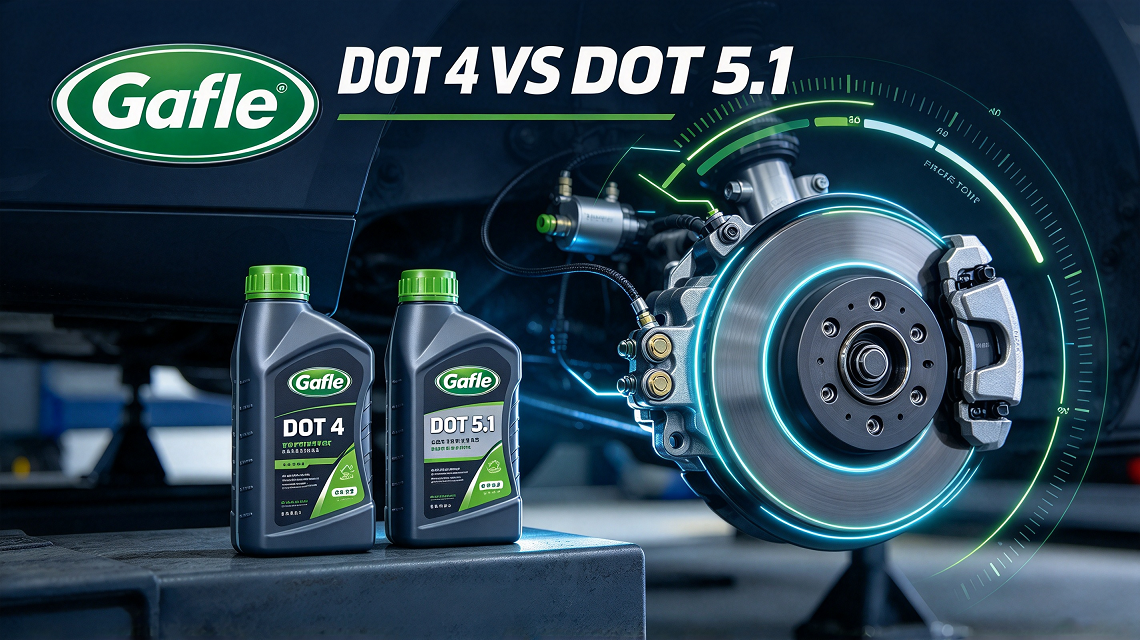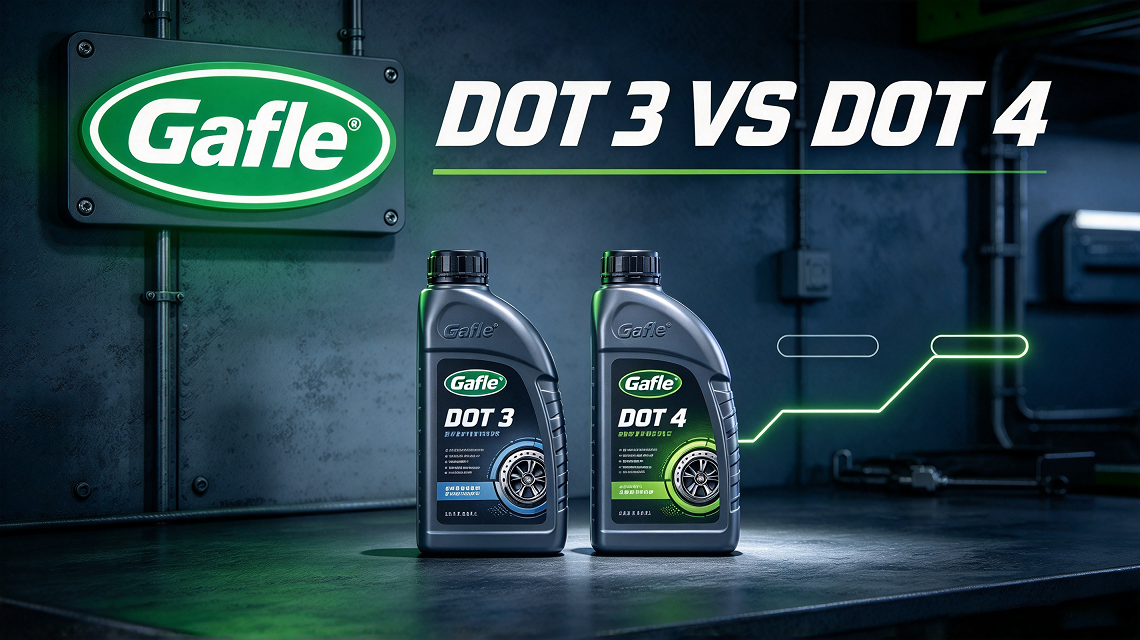
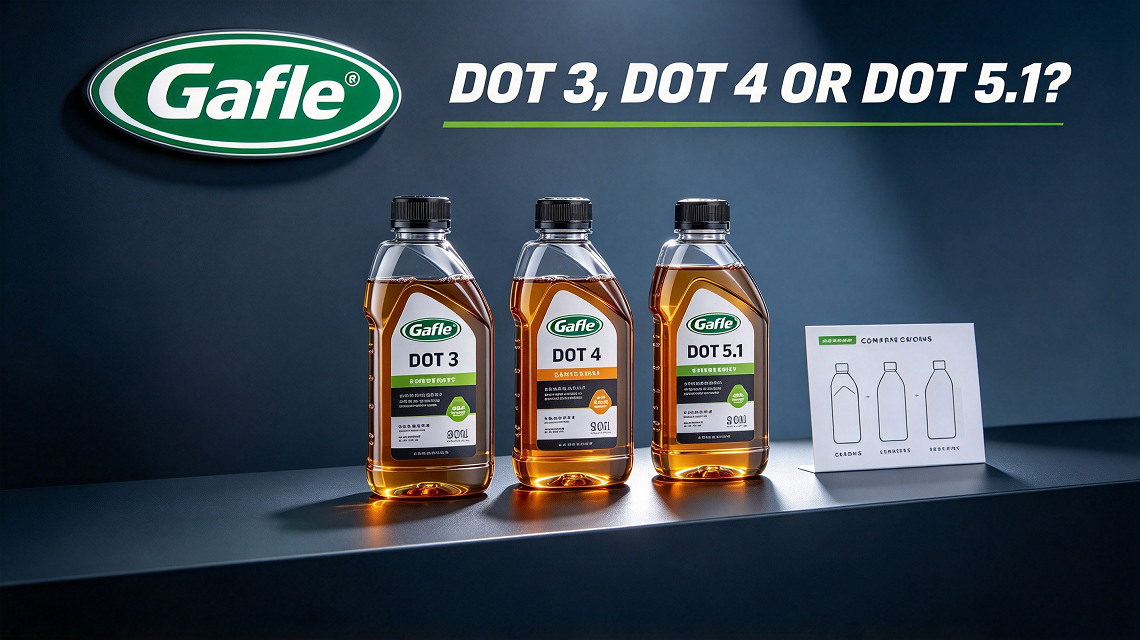
Selecting DOT brake fluid grade should follow vehicle OEM requirements and working conditions, instead of simply picking the highest DOT number. Many buyers mistakenly believe DOT 5.1 is always better for every car. DOT grades define performance limits under FMVSS 116, but older brake system rubber seals are engineered for specific formulations. Filling incompatible high-grade fluid may cause seal swelling and hidden leakage risk. The first rule: match the DOT grade marked on the vehicle brake fluid reservoir cap.
DOT 3 brake fluid serves as the economical baseline for older passenger vehicles and general repair markets. DOT 3 glycol brake fluid has the minimum acceptable wet boiling point standard. Its biggest advantage is competitive raw material cost, making it ideal for price-sensitive markets, older carburetor-era cars and basic fleet maintenance. The downside is faster moisture absorption. It needs shorter replacement intervals and is not suitable for heavy stop-and-go driving or tropical high-temperature regions. For distributors focusing on low-price auto repair shops, DOT 3 remains a steady volume product.
DOT 4 brake fluid is the mainstream all-round grade for modern passenger cars equipped with ABS and ESP. DOT 4 raises both dry and wet boiling points compared with DOT 3, delivering better resistance to brake fade under repeated braking. It shares the same glycol base formula with DOT3, so limited top-up mixing is allowed in emergency cases. Almost all new mass-market sedans, SUVs and light vans factory-fill DOT 4. This grade balances performance and cost, and it is the best-selling grade in Gafle’s global wholesale orders. It fits most temperate and tropical markets perfectly.
DOT 5.1 glycol brake fluid targets demanding scenarios including cold climates, taxi fleets and light performance driving. Critical note: DOT 5.1 is glycol-based, fully compatible with DOT 3 and DOT4, which is completely different from silicone-based DOT 5 brake fluid that cannot mix with any glycol fluid. DOT 5.1 features outstanding low-temperature viscosity, so it flows reliably at -40°C. Its wet boiling point is higher than DOT 4. It is popular in cold northern countries, ride-hailing fleets with frequent braking and light racing applications. It carries a higher price than DOT 4, so the selling crowd is more niche.
Distributors can build a mixed DOT portfolio based on local climate and local car parc structure. If your target market is hot and humid, prioritize DOT 4 as your core SKU. If you serve cold northern areas, add DOT 5.1 to your catalog. For markets with large stock of old budget vehicles, keep DOT 3 for cost-competitive repair orders. Always attach clear user reminders: avoid mixing DOT 5 silicone fluid with glycol grades, follow vehicle OEM specs, and set regular fluid replacement cycles according to local humidity.
Welcome to contact GAFLE for more information & cooperation!
peter
ZHEJIANG GAFLE AUTO CHEMICL CO.,LTD
Tel:86-579-8222 1665
Fax:86-579-8246 4690
Cel/Wechart:86-13335993986
E-mail:peter@gafle.net
Web:www.gafle.net