Understanding the import process for brake fluid from China
The import process for brake fluid from China is not just a shipping exercise. It sits at the intersection of chemical compliance, transportation rules, and buyer responsibility. For sourcing managers and product teams, the real question is rarely whether the product can be bought. It is whether the brake fluid can be imported legally, documented properly, and delivered without a customs delay that eats into margin or supply plans.
That matters because brake fluid is a regulated automotive chemical, and the paperwork behind it often deserves as much attention as the spec sheet. A low-priced quote from a China supplier can look attractive, but if the documentation to import is incomplete, the cargo can stall at the port, trigger extra inspections, or create downstream quality disputes. The practical decision this article helps with is simple: what to check before you place the order, and where the common traps usually appear.
What makes brake fluid a different kind of import
Brake fluid is not a generic consumer liquid. It is a functional automotive fluid that has to perform under heat, pressure, and moisture exposure. Depending on the grade, it may be glycol-based or silicone-based, and that changes how it is handled, labeled, packed, and shipped. Buyers often focus on the product name alone, but customs and transport systems care about classification, packaging integrity, and hazard communication.
A Chinese factory may be fully capable of producing brake fluid for export, but capability is only part of the story. The importer still has to confirm the exact product designation, the intended market standard, the shipment mode, and the documents required by the destination country. If any one of those links is weak, the whole shipment can slow down.
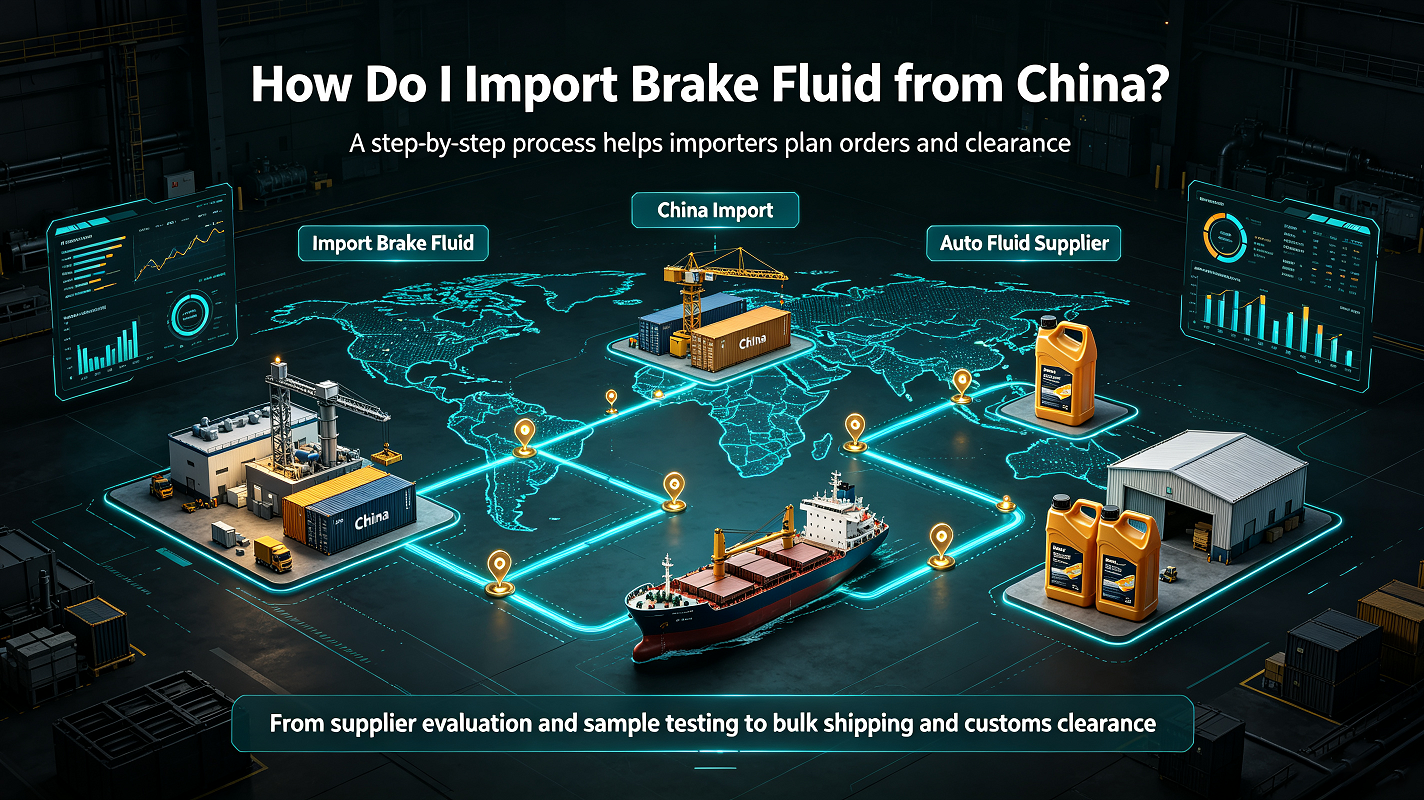
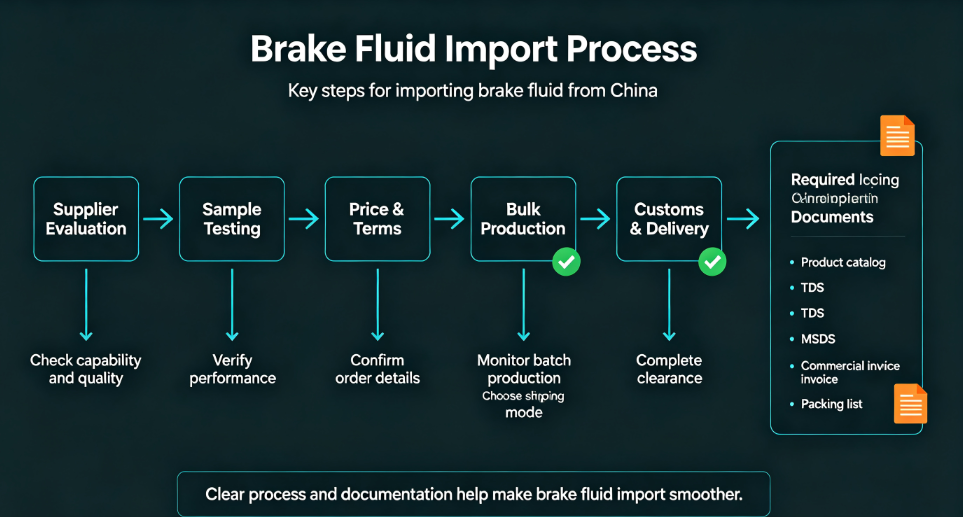
A practical view of the import workflow
In most cases, the process starts with product confirmation. Before you ask for a quote, define the brake fluid type, intended application, packaging size, and destination requirements. This reduces the risk of buying the wrong grade or receiving a label that does not match your local rules.
Next comes supplier verification. A China supplier should be able to provide product information, export documents, and packaging details that align with the shipment route. If the supplier is vague about the product identity or reluctant to share paperwork, treat that as a warning sign rather than a minor inconvenience.
After that, the commercial side and the regulatory side run together. Commercial invoices, packing lists, and transport documents are routine, but brake fluid may also require safety data, labeling that reflects the market of entry, and any local import approvals that apply to automotive chemicals. The exact set of documents depends on destination country rules, so buyers should confirm requirements with their broker or compliance team before shipping.
Documentation to import: what usually matters most
For brake fluid, the documentation to import is often where delays begin or end. The standard trade documents are only the starting point.
Core shipment documents
At minimum, buyers should expect a commercial invoice, packing list, and transport document. These need to match the product description, quantity, and packaging details exactly. Small inconsistencies, like a mismatch between carton count and invoice quantity, can trigger questions at customs.
Product and safety documents
Because brake fluid is a chemical product, safety data and product identification documents are usually important. Buyers should also check whether their market expects a specific label format or hazard communication standard. A practical aside: even when a document is technically available, it still needs to be readable, consistent, and translated in a way customs and logistics partners can work with.
Country-specific import requirements
Different markets impose different rules on automotive chemicals. Some require prior registration, some require a local agent, and some focus heavily on labeling and transport declaration. This is why an import plan built around one country rarely transfers cleanly to another. The same brake fluid from the same Chinese factory may be straightforward in one market and cumbersome in another.
Selection criteria when choosing a supplier
Buyers should judge a supplier on more than price. Look at whether the China supplier can explain the product clearly, provide consistent batch information, and support the shipment with documents that match the destination market. If your team is sourcing brake fluid for resale or industrial distribution, ask how the supplier handles export packing, document preparation, and any special labeling requests.
It is also worth checking whether the supplier understands your shipping model. A supplier who is comfortable with domestic sales may not be equally prepared for export documentation, freight coordination, or compliance requests from a foreign customs broker. That gap can be expensive.
Common mistakes buyers make
The most common mistake is treating brake fluid like a simple commodity. Another is assuming the export paperwork from the factory is automatically sufficient for import clearance. It usually is not. Buyers also sometimes approve labels or invoices before the final destination requirements are confirmed, which creates unnecessary rework.
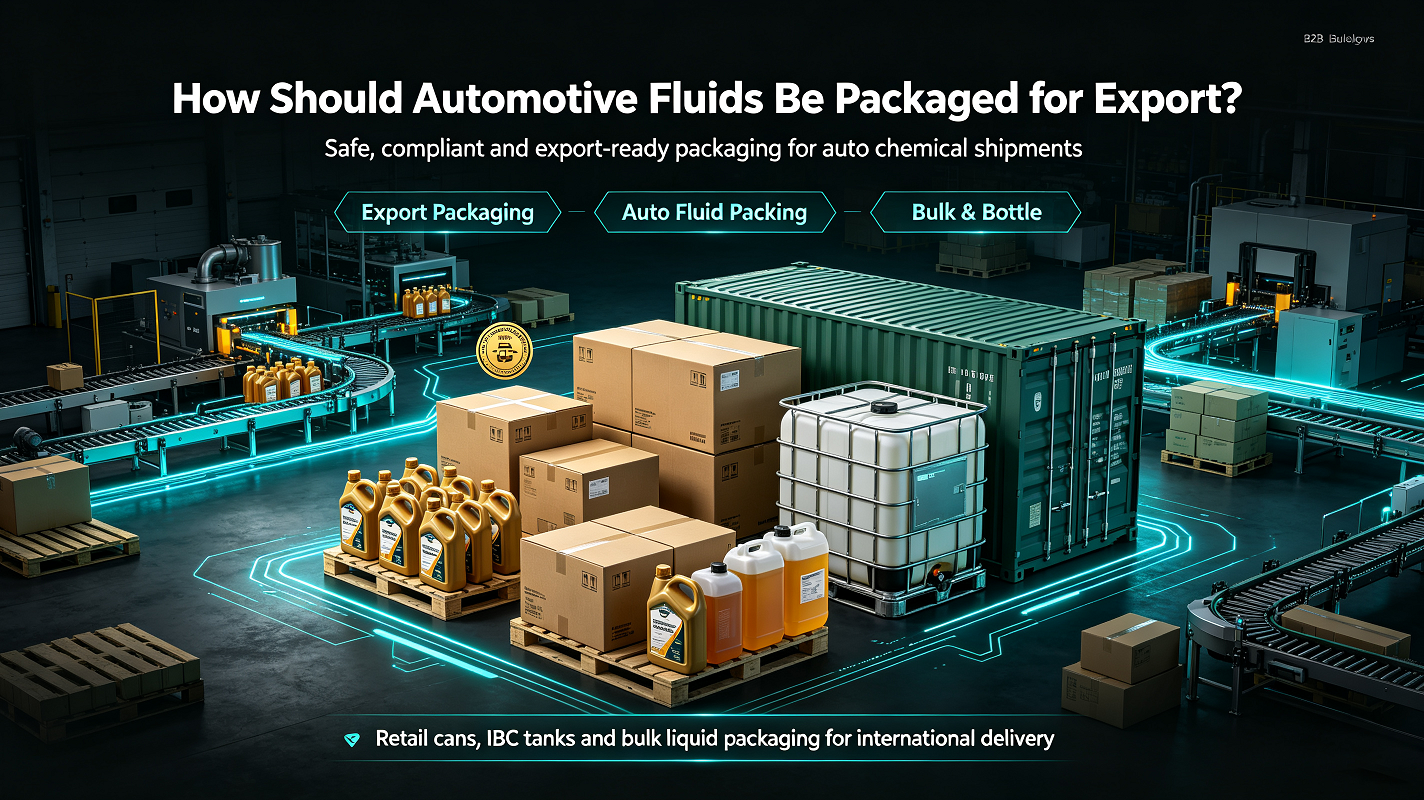
One more caution: do not assume every bottle, drum, or pail can move through the same route. Packaging affects transport classification and handling. A shipment plan that works for one container size may not be the best choice for another.
Buyer checklist before you place the order
Confirm the brake fluid grade and intended market.
Ask the Chinese factory for the exact product description and supporting documents.
Verify destination-country import rules with your broker or compliance partner.
Match invoice, packing list, labels, and shipping documents before cargo leaves origin.
Review packaging to make sure it fits the transport mode and handling conditions.
FAQ
Can any brake fluid be imported the same way?
No. The process depends on the product type, destination rules, and packaging format.
Is the supplier responsible for all documentation to import?
Not entirely. The supplier usually provides core export paperwork and product information, but the importer still has responsibility for local compliance and customs clearance.
Why do shipments from China get delayed even when the product is ready?
Usually because the documents, labels, or declarations do not line up with import requirements. That is a paperwork problem, not a manufacturing problem.
What a good import plan should achieve
A workable import plan for brake fluid from China should do three things: reduce compliance risk, keep customs clearance predictable, and prevent avoidable rework between the factory, freight forwarder, and broker. If you are comparing suppliers now, ask for the product details and the documentation set before you ask for the lowest price. That sequence saves time more often than it costs it.
If your team is preparing a purchase request or supplier shortlist, build the decision around documentation readiness as much as product cost. In this category, that is usually the difference between a shipment that moves and a shipment that waits.
Welcome to contact GAFLE for more information & cooperation!
peter
ZHEJIANG GAFLE AUTO CHEMICL CO.,LTD
Tel:86-579-8222 1665
Fax:86-579-8246 4690
Cel/Wechart:86-13335993986
E-mail:peter@gafle.net
Web:www.gafle.net