Why export packaging matters for brake fluid and coolant
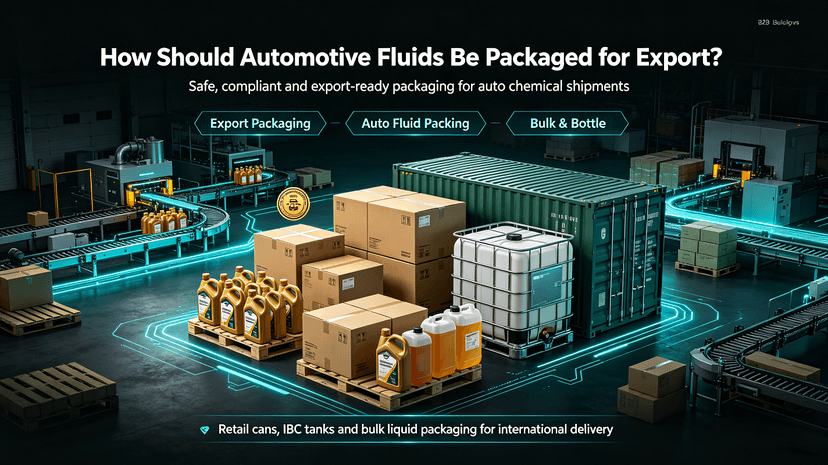
For buyers comparing the export packaging requirements for brake fluid coolant, the real issue is rarely the box or drum alone. It is whether the packaging protects product quality through long-distance transport, keeps the shipment compliant with destination rules, and arrives in a form the importer can actually handle on site. Brake fluid and engine coolant are both ordinary industrial liquids, but they behave differently in storage, packing, and customs inspection, so a one-size-fits-all export package can create avoidable trouble.
That matters because a weak pack-out can lead to leaks, contamination, label disputes, and warehouse delays. In export trade, those problems are expensive. A consignee may reject a container if inner seals are damaged, if the pack size does not match the commercial invoice, or if the labeling does not align with local market rules. For sourcing teams, the packaging decision is not just logistics; it shapes landed cost, customer acceptance, and even whether the product can be sold in retail or bulk channels.
Quick view: what buyers usually choose
In practice, brake fluid and coolant move through several standard packaging formats. The right choice depends on end market, shelf life expectations, distribution model, and the importer’s filling or resale setup.
Brake fluid standard package
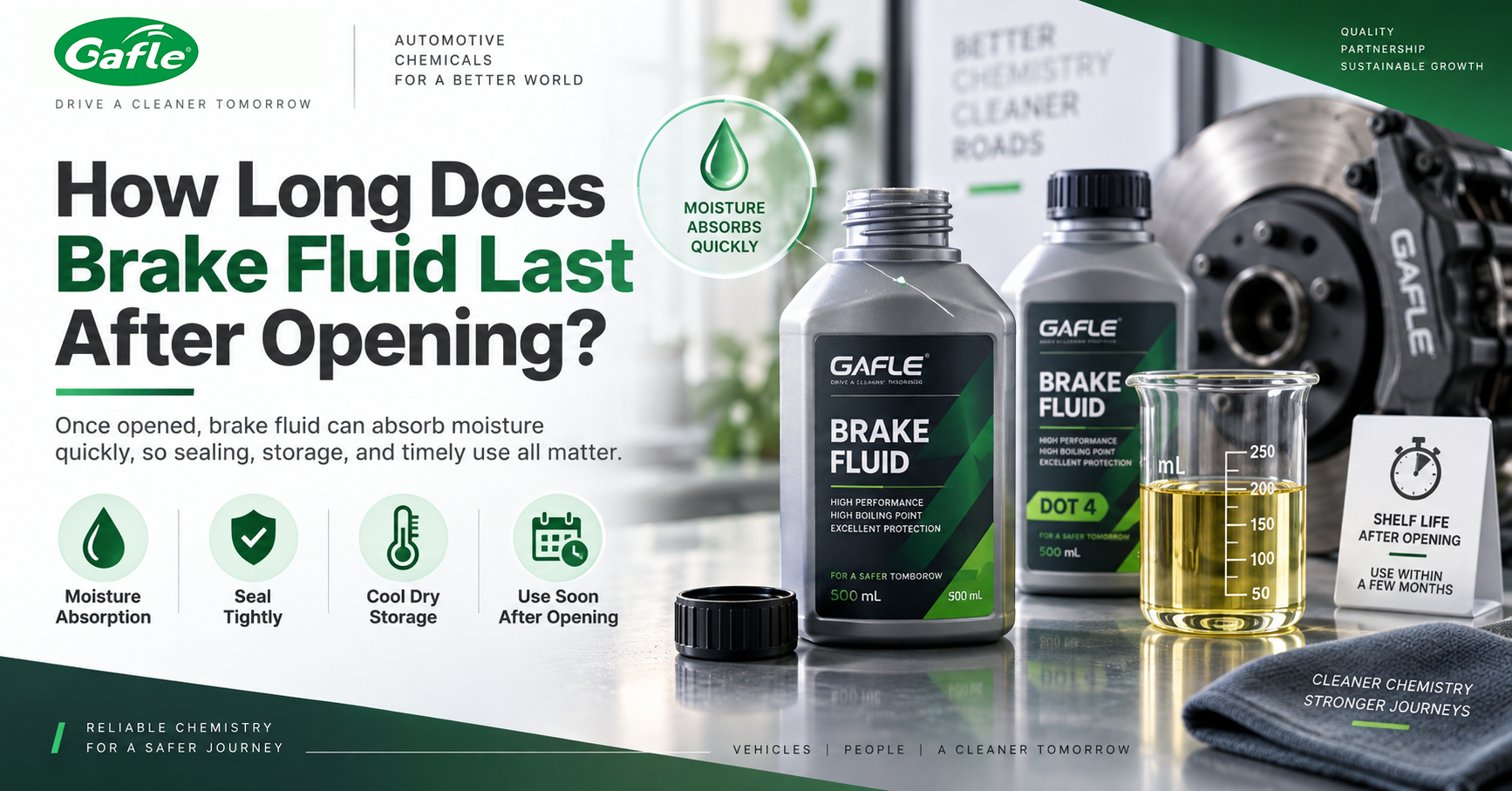
Brake fluid is often exported in smaller, tightly sealed consumer or service-pack formats because the product is sensitive to moisture uptake after opening. A brake fluid standard package typically means containers that minimize headspace exposure, are clearly labeled, and travel well in cartons or shrink-wrapped cases. For aftermarket sales, smaller packs are common because workshops and retailers prefer manageable units and traceable batch identification.
Coolant export package
Coolant is more flexible. A coolant export package may range from retail cans and jerrycans to drums or bulk containers, depending on whether the buyer is selling through retail channels or supplying a blending, filling, or fleet operation. Coolant is still a liquid product that deserves leak-proof closures and stable stacking, but it is generally less delicate than brake fluid once sealed correctly.
Common export packaging formats and where they fit
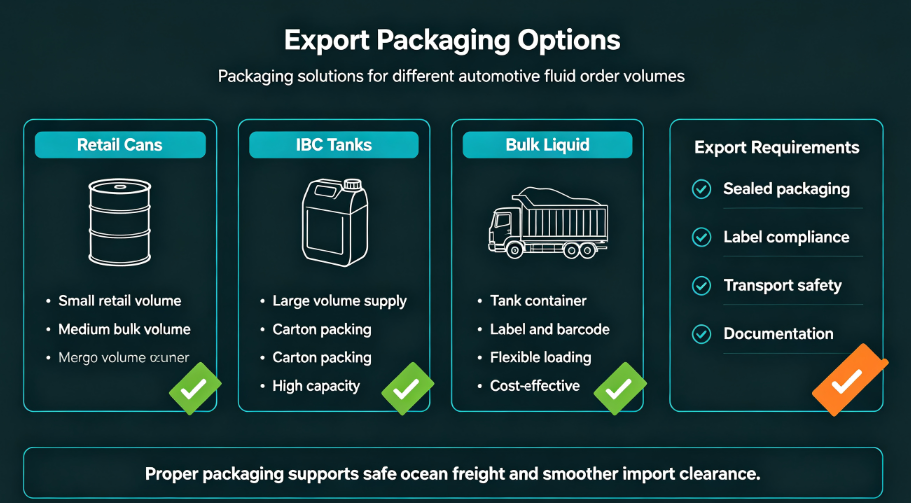
Exporters usually choose among retail cans, mid-size plastic containers, drums, and larger industrial units. The label on the pallet matters almost as much as the container itself. Buyers should look at fill volume, carton strength, cap design, liner compatibility, and whether the pack is suitable for temperature swings during ocean or inland transport.
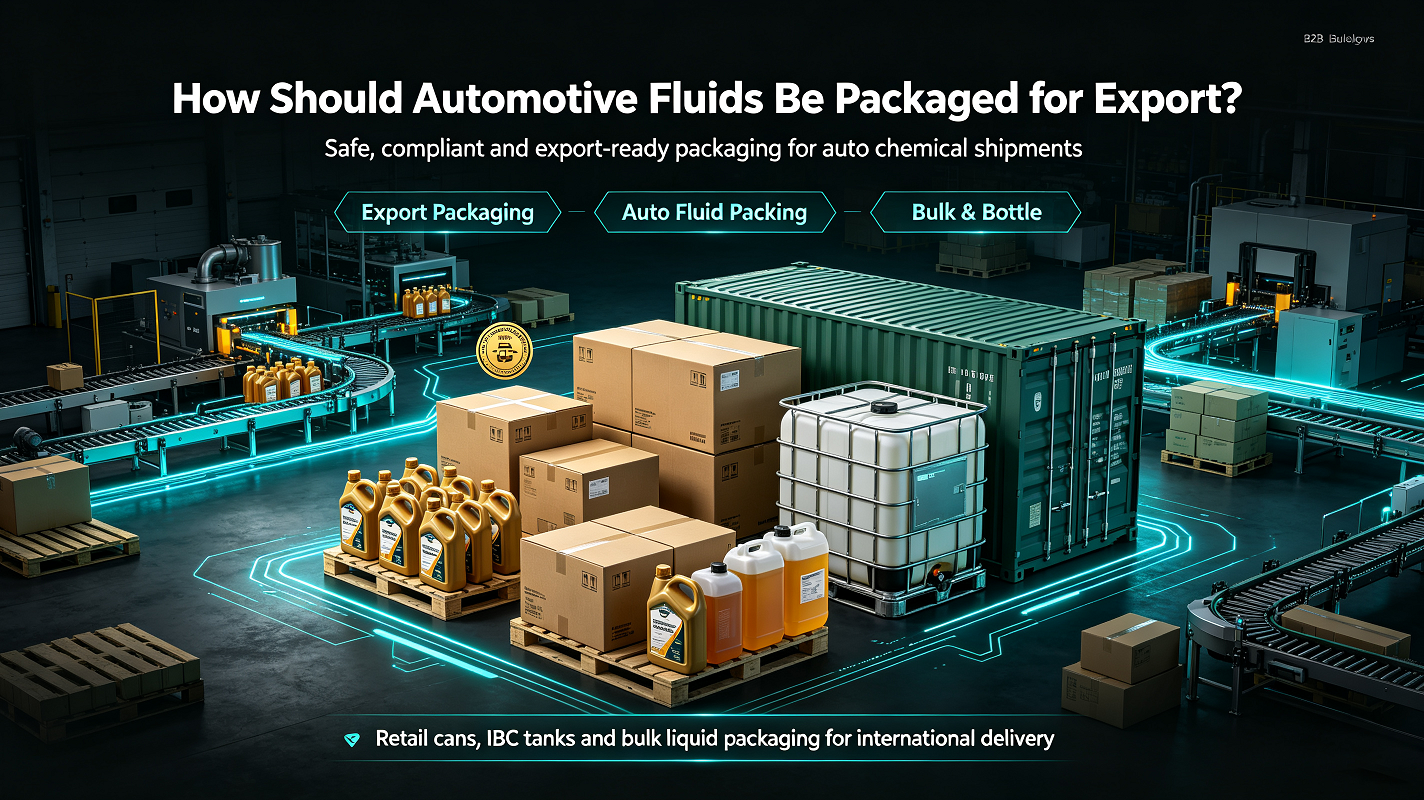
Retail cans pack
Retail cans pack is the familiar choice for consumer aftermarket sales. It works well when the importer needs shelf-ready goods, barcode scanning, and standardized carton quantities. The downside is that retail packaging is more sensitive to scuffing, label abrasion, and carton crush if the container is not tightly controlled. For export, buyers should pay attention to whether the cans are nested securely and whether the cartons can survive pallet compression.
IBC TANKS pack
IBC TANKS pack is typically used for larger-volume industrial supply, especially when the buyer needs economical transport of a liquid in bulk and has the equipment to receive it. This format can improve freight efficiency, but it is not automatically the right answer. Brake fluid and coolant in IBCs require careful attention to material compatibility, venting, sealing, and handling practices. A packaging choice that looks efficient on paper can become awkward if the consignee lacks suitable pumping and storage gear.
What export packaging must protect against
The packaging spec should address the most common export risks: leakage, evaporation, contamination, label failure, and handling damage. Brake fluid, in particular, should be packed with moisture protection in mind. Coolant needs secure seals and packaging that resists vibration and stacking pressure. If the product crosses climate zones, buyers should also think about expansion, contraction, and the effect of heat on cap integrity.
Another practical point: packaging should be built around the destination market, not only the factory line. A pack that is ideal for a domestic distributor may be awkward for export customs, palletization, or retail placement abroad. That is where many first-time exporters stumble. They standardize too early, then discover their “standard” pack is not standard anywhere else.
Selection criteria buyers should not ignore
When reviewing export packaging requirements for brake fluid coolant, sourcing managers usually get the best results by checking a few basics together rather than in isolation.
First, confirm the product channel. Retail, workshop, fleet, and industrial bulk buyers do not want the same pack size. Second, match the pack to the route: short-haul trucking, ocean freight, and mixed-container shipments place different stress on closures and cartons. Third, verify the destination’s labeling and language expectations. Fourth, ask whether the importer wants ready-for-shelf packaging or only transport protection.
One caution worth repeating: do not treat “stronger packaging” as automatically better. Overpacking can raise freight costs, waste material, and complicate unloading. The goal is fit-for-purpose packaging, not the heaviest carton in the warehouse.
Practical buyer questions before placing an order
Before confirming an export order, buyers should ask the supplier a few direct questions: What is the pack format? Is it a brake fluid standard package or a coolant export package? Are the closures lined and tested for long transit? What outer cartons or pallets are used? Is the shipment intended for retail cans pack, drums, or IBC TANKS pack? Can the supplier provide consistent labeling across batches?
These questions sound basic, but they expose whether the exporter actually understands the shipment or is only filling containers. In a liquid product business, packaging discipline is part of product quality.
A final buyer note
If you are sourcing brake fluid or coolant for export, start with the destination market and the receiving operation, then work backward to the packaging format. The best package is the one that protects the liquid, satisfies compliance needs, and fits how the buyer will store or sell it after arrival. If the shipment is going into retail shelves, lean toward shelf-ready cans and controlled carton packing. If it is headed to industrial use, bulk formats such as IBC TANKS pack may make more sense, provided the consignee can handle them properly.
For procurement teams, the next step is usually to request packaging specifications alongside product data sheets, then compare them against local import and warehouse requirements before the order is placed. That small extra round of review often prevents the kind of packaging mismatch that only becomes obvious at the port.
Welcome to contact GAFLE for more information & cooperation!
peter
ZHEJIANG GAFLE AUTO CHEMICL CO.,LTD
Tel:86-579-8222 1665
Fax:86-579-8246 4690
Cel/Wechart:86-13335993986
E-mail:peter@gafle.net
Web:www.gafle.net