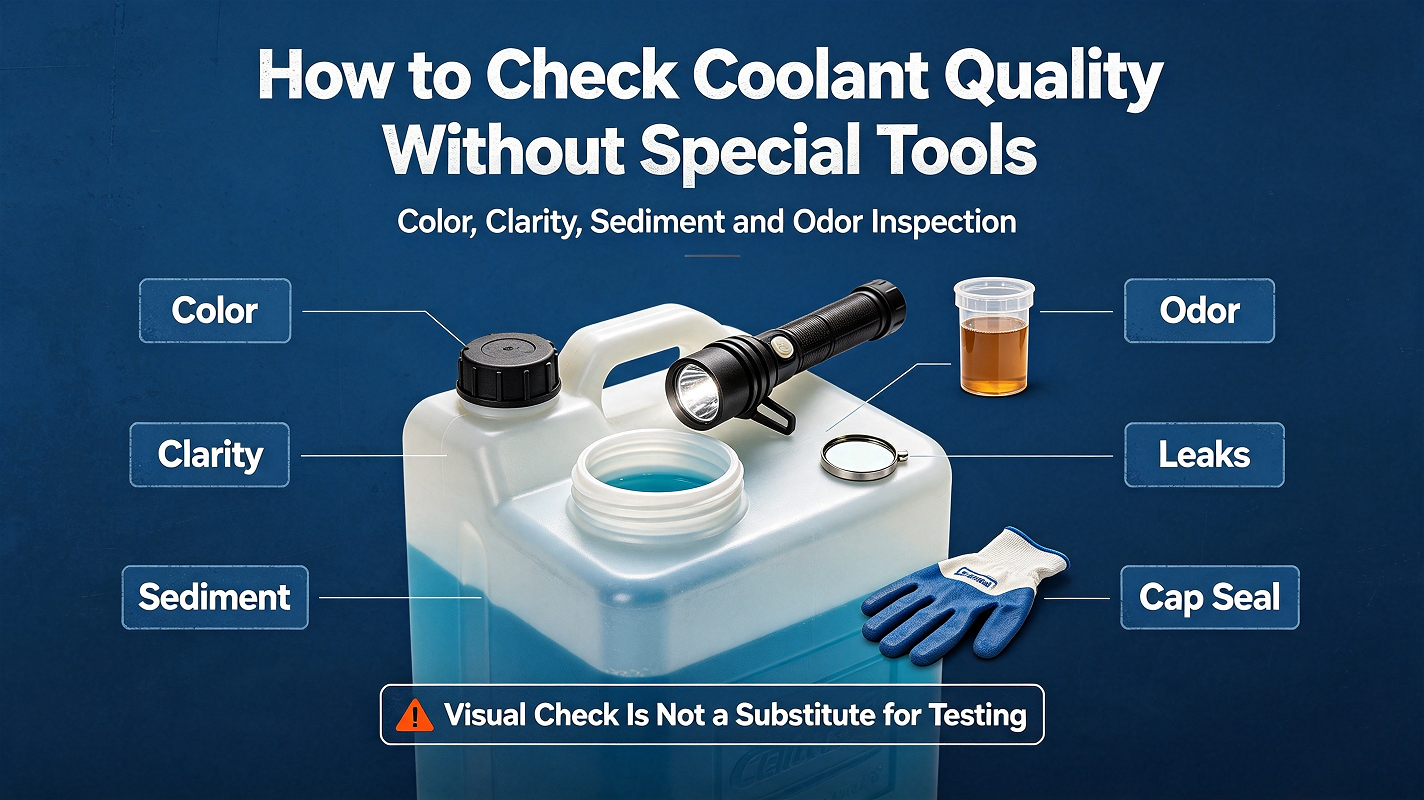
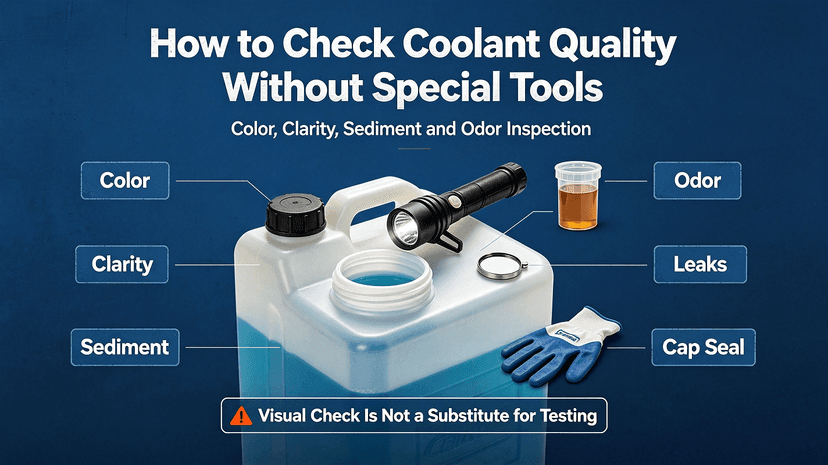
Not every vehicle owner or small workshop has a refractometer, hydrometer or coolant tester. The good news is that you can still make a basic judgment about coolant condition by checking its color, clarity, smell and overall system appearance. However, visual inspection is not a replacement for professional testing, especially for freeze point, boiling point and additive condition.
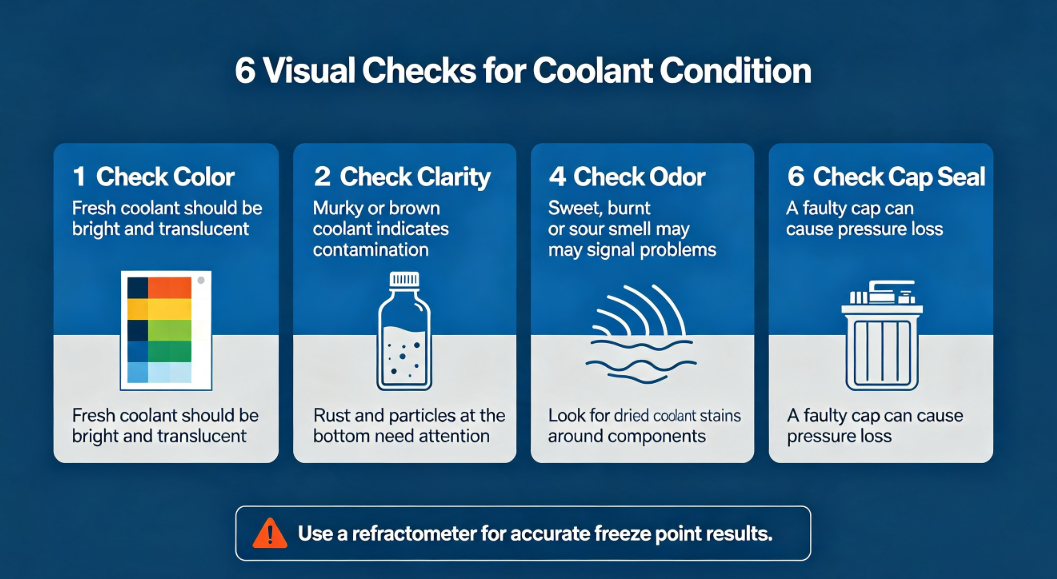
1. Check coolant color and clarity first
Fresh, good-quality coolant is usually bright and translucent. Common colors include green, red, orange, blue and yellow, depending on the formula and brand. If the coolant appears murky, brown, gray or rust-colored, it is likely contaminated or aged. Clean coolant should not look like muddy water.
2. Look for rust and sediment in the reservoir
Sediment settling at the bottom of the coolant reservoir is a warning sign. It may indicate rust, metal particles, scale or broken-down additives. Even if the upper liquid still looks relatively clean, sediment at the bottom means the cooling system needs closer inspection.
3. Smell the coolant for unusual odors
Good coolant usually has a sweet glycol odor. If it smells burnt, sour or unusually strong, it may be overheated, contaminated or chemically broken down. A sweet smell around the engine bay can also indicate a small coolant leak, which should not be ignored.
4. Check for oily or milky appearance
If the coolant looks milky, foamy or mixed with oil, it may indicate a more serious problem. Oil in coolant often suggests head gasket failure, engine damage or internal leakage. This condition requires immediate inspection and should not be ignored.
5. Observe the cooling system for leaks and stains
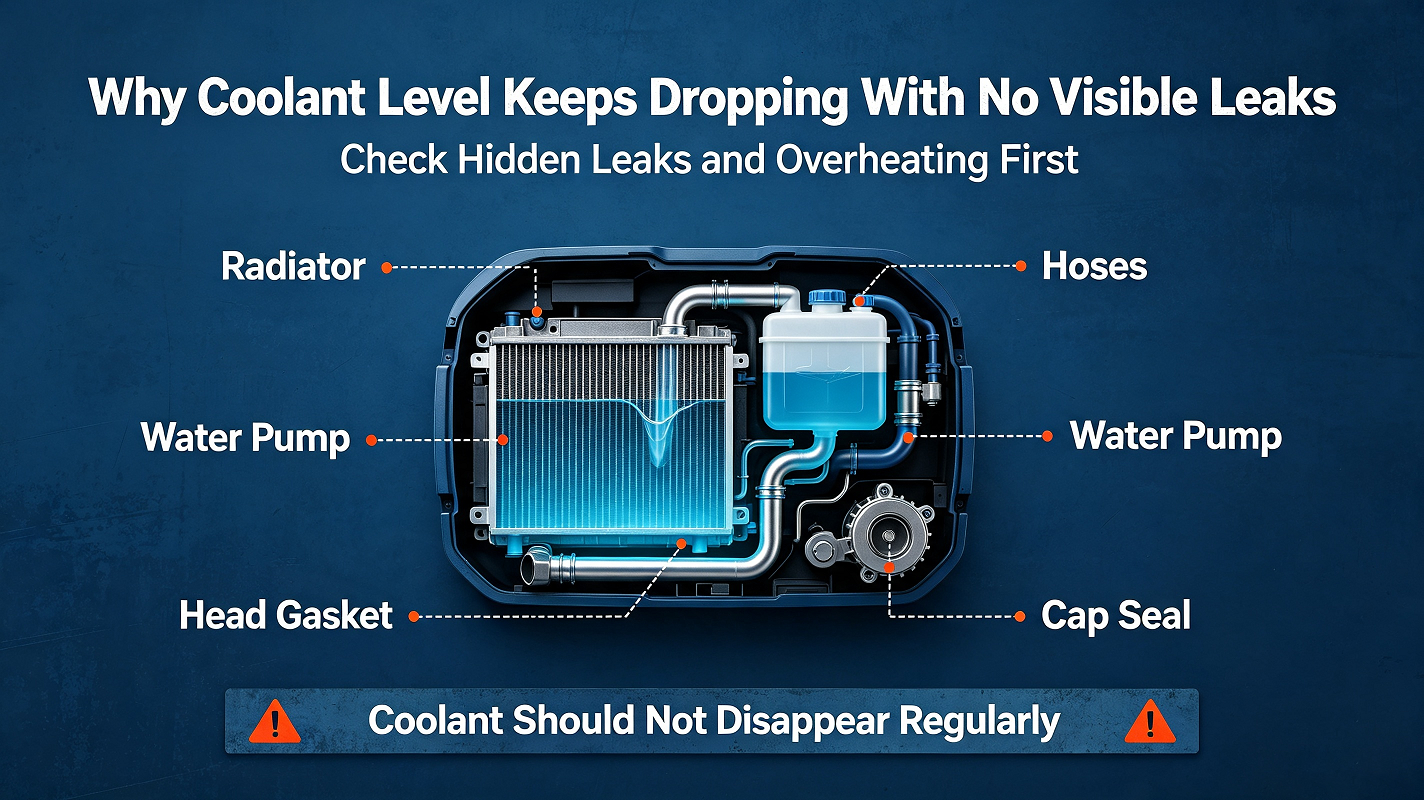
Coolant leaks do not always form large puddles. Slow leaks can dry on hot engine parts and leave sticky, crusty or colored residue around hoses, the radiator cap, water pump, thermostat housing and heater core. These stains are often more visible than the liquid itself.
6. Check the radiator cap and overflow tube
A faulty radiator cap can cause pressure loss, overheating and gradual coolant loss. Check whether the cap seal is cracked, hardened or covered with white deposits. The overflow tube should also be clear, not blocked by dirt or dried coolant residue.
When you still need professional testing
Visual inspection can tell you whether coolant looks suspicious, but it cannot accurately measure freeze point, boiling point or remaining additive life. For winter readiness, heavy-duty fleets, new vehicle warranty vehicles and customers concerned about long-term protection, use a refractometer or professional coolant tester.
B2B tip for garages
Offering a quick coolant inspection service is an easy way to build trust with customers. Explain that visual checks are for initial screening, while refractometer tests provide accurate data. This helps customers understand why some vehicles need a flush and others only need a drain-and-refill.
GAFLE provides high-quality coolant for passenger cars, trucks, heavy-duty machinery and EV thermal systems. Stable formula, clear specifications and professional documentation support global wholesale and private label partners. Contact us for product recommendations.
Welcome to contact GAFLE for more information & cooperation!
peter
ZHEJIANG GAFLE AUTO CHEMICL CO.,LTD
Tel:86-579-8222 1665
Fax:86-579-8246 4690
Cel/Wechart:86-13335993986
E-mail:peter@gafle.net
Web:www.gafle.net