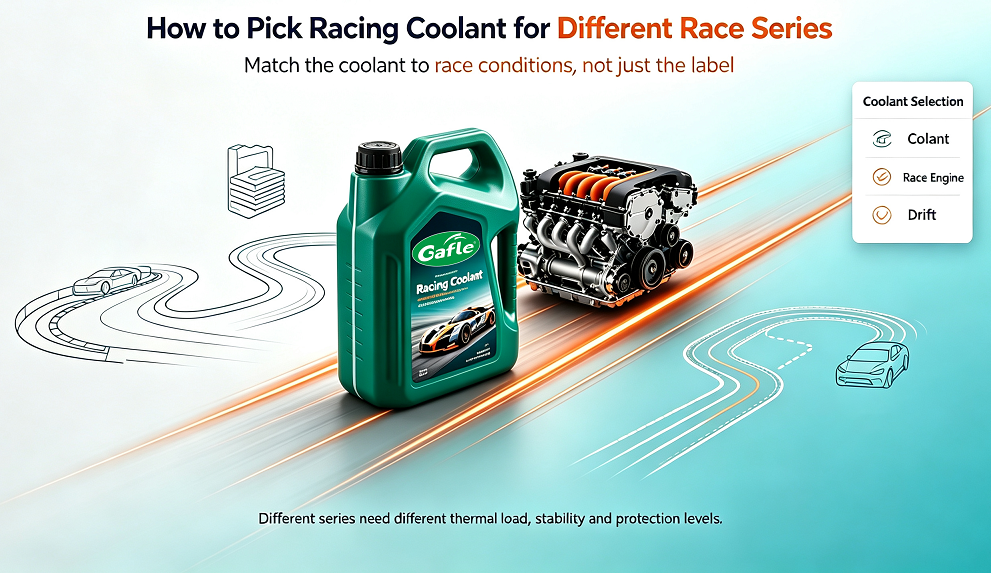
How to Pick Racing Coolant for Different Race Series
Choosing the right racing coolant is not a small detail, especially when the same car may be asked to survive circuit racing on one weekend, rally stages on the next, and maybe a drift demo after that. The wrong fluid can cost time, reduce thermal stability, or create an avoidable rules problem before the car ever reaches grid. A practical racing coolant selection process starts with the series rules, then moves to the engine’s temperature needs, track conditions, and whether the car will run sealed, vented, or under very tight maintenance intervals.
That is the real decision most teams are trying to make: not “what is the coldest coolant?” but “what coolant is acceptable, stable, and suited to this kind of racing?” The answer changes by discipline, and sometimes by venue. A compound that works well in short go-kart racing sessions may be a poor fit for a long circuit race with repeated heat soak, while a formula that helps in rally conditions can be pointless if the series only allows plain water or a specific additive.
Start with the rules, not the bottle
Before comparing products, read the technical regulations. Some series restrict ethylene glycol-based coolants because of spill risk, especially where a small leak could put other cars at risk. Others allow conventional coolant but require a water-based system, a catch tank, or a cooling additive only. This is common in circuit racing and drift, where the organizer is more concerned with track safety and cleanup than with brand preferences.
If the rules are vague, ask the scrutineer or series organizer directly. That may sound obvious, but teams still lose time trying to “interpret” a rule book after the car is built. A cooling system that passes on paper but fails tech inspection is an expensive lesson.
What actually matters in coolant selection
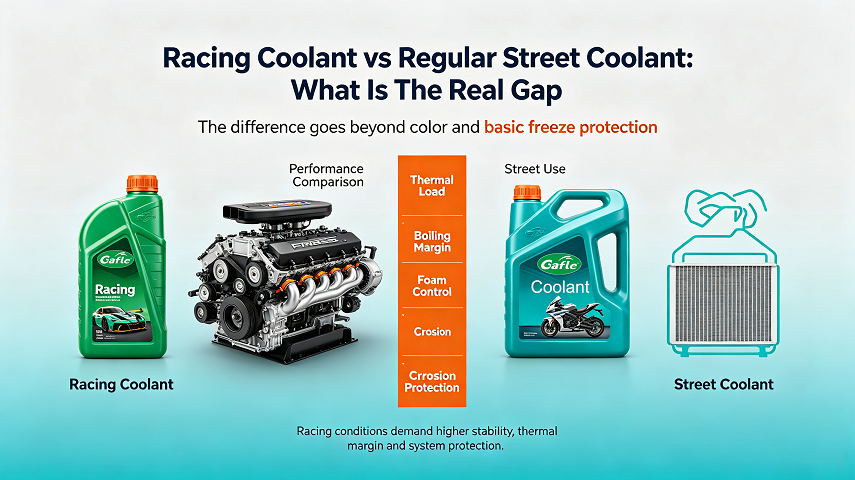
For most buyers, racing coolant selection comes down to four practical questions: heat transfer, freeze protection, corrosion control, and compliance. Heat transfer is the one racers think about first, but it is not the only one. Corrosion resistance matters whenever the system uses mixed metals or sees repeated drain-and-fill cycles. Freeze protection matters for rally and any event held in cold climates or at altitude. Compliance, meanwhile, can override everything else.
Heat transfer and operating temperature
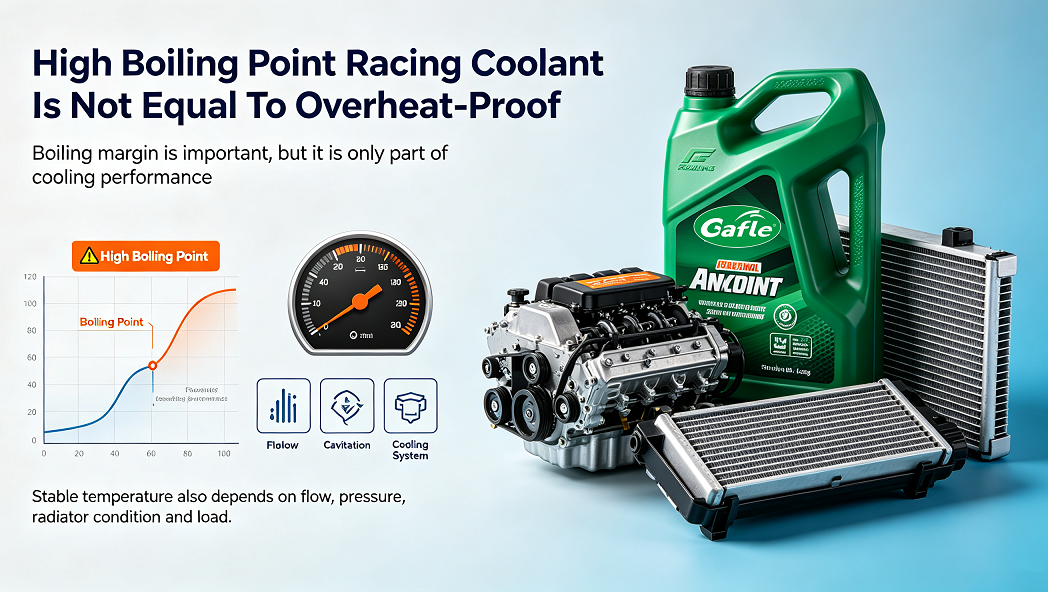
Racing engines often run under harder thermal load than road cars, but that does not mean “lower temperature” is always better. Some engines are designed to work in a fairly narrow range, and dropping temperature too far can hurt efficiency or stability. In practice, teams should choose a coolant or additive that supports consistent temperature control rather than chasing a headline number from a label.
Water content and additives
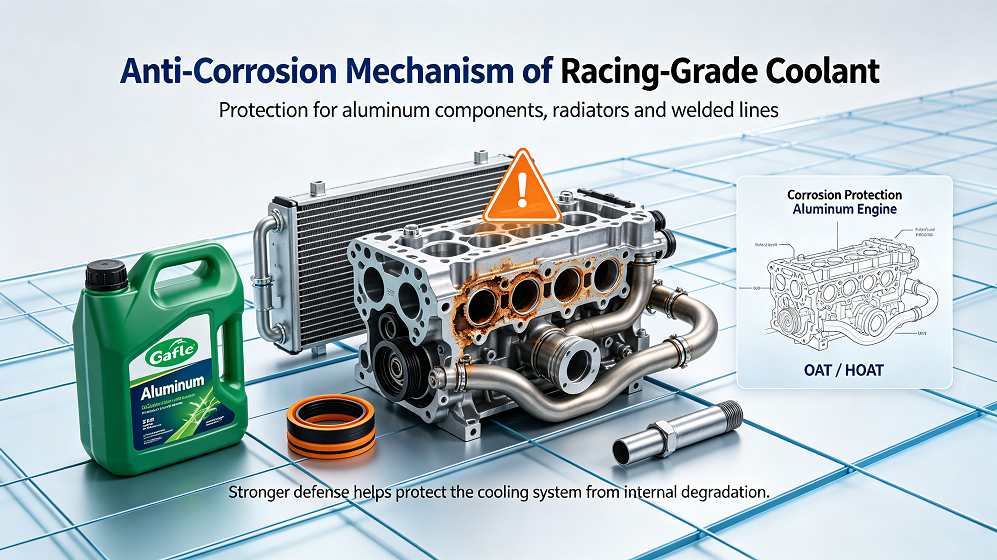
Many sanctioned racing setups rely on water with a corrosion inhibitor or wetting agent rather than a traditional street coolant mix. Water moves heat well, but it needs help to protect aluminum, iron, brass, and any seals that see frequent thermal cycling. Additives can reduce surface tension and improve heat transfer behavior, though results depend heavily on system design. A clean radiator, healthy cap, and proper bleeding usually matter more than people want to admit.
How different race series tend to approach coolant
Circuit racing: This is usually the most rule-driven environment. Many classes want water-only systems or approved additives because leakage on track is a safety issue. The best choice is often a coolant package that keeps temperatures stable over long stints without leaving sticky residue. High-revving engines with modest radiator area benefit from clean flow and disciplined maintenance.
Rally: Rally brings vibration, mud, dust, long warm-up periods, and changes in ambient temperature. Freeze protection becomes more important in colder events, and durability matters because hoses, caps, and clamps see a harder life. A coolant solution that performs well in both hot service roads and cold morning stages is usually more valuable than one optimized only for peak heat.
Drift: Drift cars often live at high load for shorter bursts, then idle, then return to load again. That repeated thermal cycling can expose weak cooling systems quickly. Many drift teams favor simple, track-safe water-based setups and focus on radiator size, airflow, and fan strategy. Coolant choice should support that layout rather than try to fix a poor cooling package by itself.
Go-kart racing: Kart engines are compact, and the cooling system is usually small enough that every choice is magnified. Some categories are very specific about what may be used, while others are less restrictive. Because the system volume is low, contamination and air pockets become a bigger issue than they do in larger cars. For karting, consistency and easy serviceability often matter more than chemical complexity.
Quick buyer checklist
If you need a short coolant selection guide, use this order:
1. Check the rule book and tech requirements.
2. Identify whether the series allows glycol-based coolant, water only, or an additive.
3. Match the coolant to climate and event duration.
4. Confirm compatibility with radiator materials, hoses, and seals.
5. Drain, flush, and refill with a process you can repeat consistently.
This may seem basic, but a surprising number of cooling issues trace back to mixed products, old residue in the system, or assumptions copied from another class. What works in a sprint car build may not translate cleanly to endurance circuit racing, and even within the same discipline, one engine package can be fussier than another.
Common mistakes teams still make
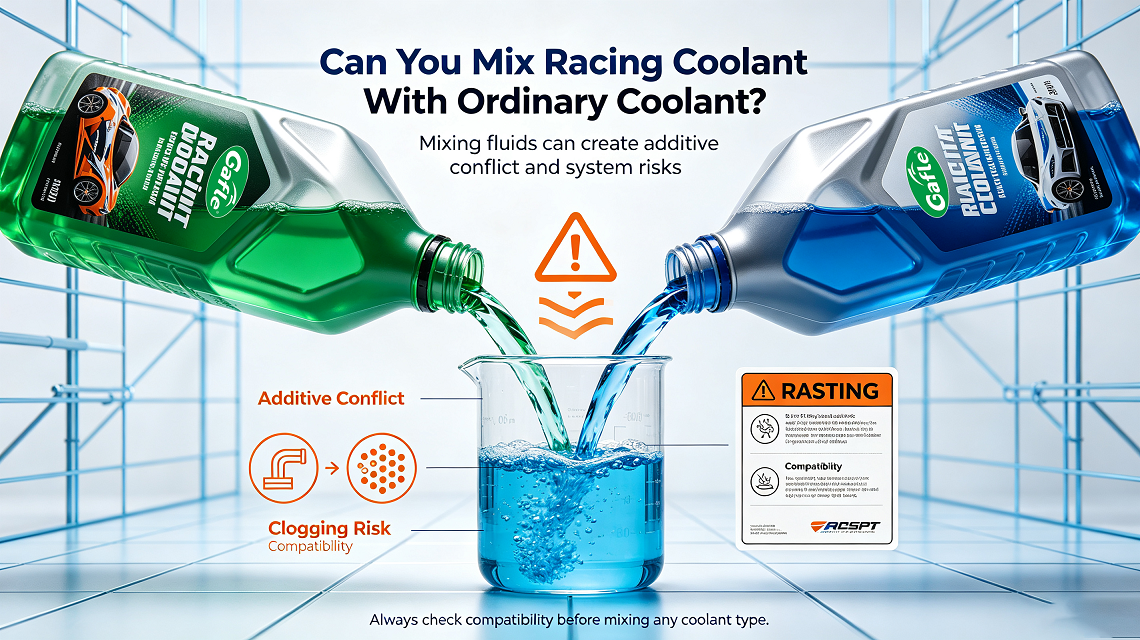
The first mistake is assuming more expensive means more suitable. The second is choosing a coolant for its advertised temperature claim without checking whether the series allows it. A third, less obvious problem is mixing leftover fluids from previous seasons. That can weaken inhibitor performance or leave deposits in the radiator. It is also common to overlook the water quality used for mixing; hard water can create scale over time, and scale quietly reduces cooling efficiency.
Another practical warning: if a team is switching between street use and race use, the system should be cleaned properly before adding a competition-approved fluid. Residue from conventional coolant can linger in the block and heater core, and that residue can become a real nuisance when the car is later inspected or serviced.
What to ask before you buy
Ask whether the product is intended for water-only racing systems, whether it offers corrosion protection for mixed-metal cooling circuits, and whether it is acceptable for your target series. If the seller cannot answer those points clearly, keep looking. The best product is not always the one with the boldest racing graphics; it is the one that fits the rule book, the climate, and the actual duty cycle of the car.
FAQ
Can one coolant work for every race series?
Usually not. Some products may be acceptable across several forms of motorsport, but the rule set and operating conditions differ enough that one fluid is rarely ideal for all of them.
Is water always better than coolant for racing?
Not always. Water transfers heat well, but it may need additives for corrosion control and may not meet freeze or safety requirements depending on the series.
Should I choose based on engine type or race type?
Both matter, but race type comes first because rules can limit your options. After that, engine design, radiator capacity, and ambient conditions shape the final choice.
If you are building or updating a car for competition, treat coolant like any other controlled part of the cooling system. Start with the regulations, then match the fluid to the event, the weather, and the hardware you actually have. That is usually the difference between a car that survives the season and one that spends too much time in the paddock with the bonnet up.
Welcome to contact GAFLE for more information & cooperation!
peter
ZHEJIANG GAFLE AUTO CHEMICL CO.,LTD
Tel:86-579-8222 1665
Fax:86-579-8246 4690
Cel/Wechart:86-13335993986
E-mail:peter@gafle.net
Web:www.gafle.net