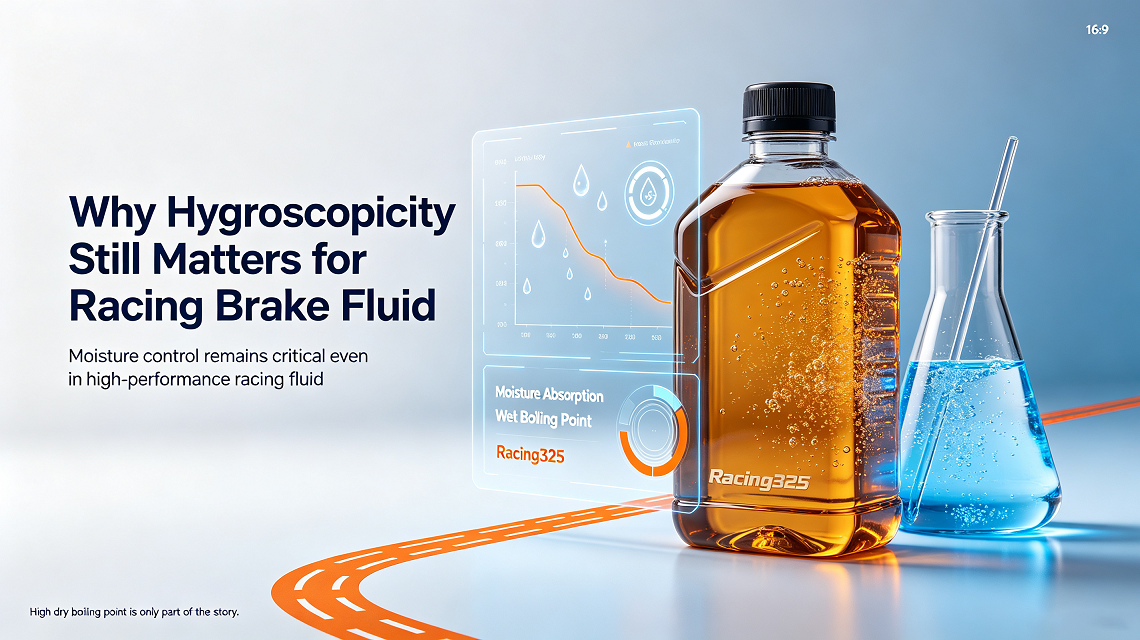
Why racing brake fluid is not just a track-day accessory
Racing brake fluid is one of those components that tends to be discussed only after something goes wrong. A pedal that softens at the end of a session, a fluid change that was delayed too long, or a car that feels strong on the first lap and inconsistent by the tenth can all send teams back to the basics. For engineers, sourcing managers, and product teams, the real question is not whether racing brake fluid sounds more technical than standard fluid. It is whether the fluid can hold consistent hydraulic performance under heat, moisture exposure, and repeated hard stops.
That matters because the brake system is only as dependable as the fluid moving through it. In motorsport and performance applications, heat load rises quickly, and the margin for error narrows. A fluid choice that looks fine on a specification sheet can still become the weak link if the operating environment is ignored. So the buying decision is less about labels and more about matching fluid behavior to the car, the event, and the maintenance rhythm.
What to look at first: boiling point, feel, and service interval
When people compare brake fluids, the conversation usually starts with boiling point. That is reasonable, but incomplete. Dry boiling point tells you how the fluid behaves when new and uncontaminated. Wet boiling point reflects what happens after the fluid has absorbed moisture over time. In practice, both matter, because a track car rarely lives in the lab-perfect condition used for a data sheet.
Pedal feel is harder to quantify, yet it is what drivers and test engineers notice first. A fluid that resists fade but feels inconsistent can still create confidence problems, especially in long stints or variable-weather events. The service interval is the other side of the same issue. Some teams want maximum performance between scheduled flushes; others need a fluid that tolerates seasonal use without becoming a maintenance burden.
Why hygroscopicity still matters for racing brake fluid
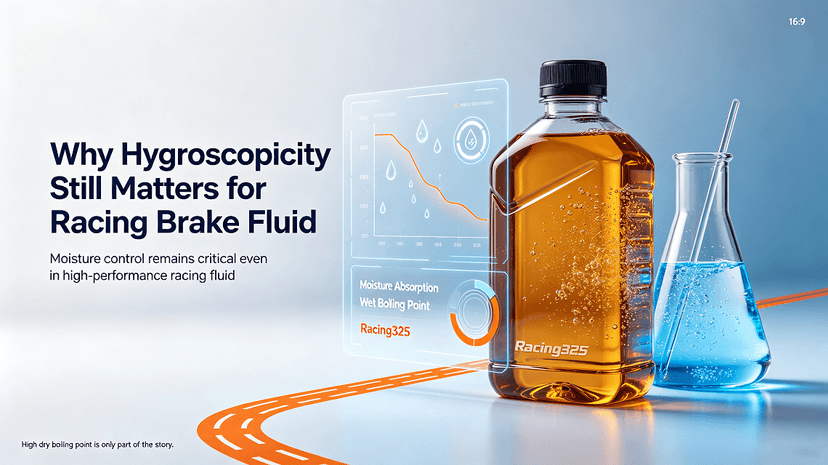
Hygroscopicity is often treated like a nuisance word in brake-fluid discussions, but it remains central to real-world performance. Brake fluids that absorb moisture over time can see their boiling point fall, which increases the risk of vapor formation under heat. Once vapor enters the system, pedal travel changes quickly and braking consistency suffers.
For a race program, this is not just a chemistry note. It affects storage, fleet management, and inspection routines. A fluid stored correctly in a sealed container can still be undermined once it is opened and exposed to ambient air. A workshop in a humid region may see different maintenance realities from a dry climate, even if the same fluid is used. That is why “Why Hygroscopicity Still Matters for Racing Brake Fluid” is not a theoretical question; it is a practical one that should inform purchasing and service planning.
Common fluid types and where they tend to fit
High-performance DOT fluids
These are often the most familiar option for performance shops and club-racing teams. They balance availability, compatibility, and elevated boiling performance. For many applications, they are the simplest route if the vehicle remains on a conventional hydraulic brake setup and the team wants straightforward sourcing.
Motorsport-focused fluids
These products are built for harsher thermal cycles and are usually chosen when brake temperatures are consistently high. They can offer stronger resistance to fade, but buyers should pay attention to maintenance expectations. A fluid designed for racing conditions may still demand more frequent changes than a road-oriented product.
Specialty formulas for mixed use
Some programs need a compromise: a car that sees both street miles and occasional competition. In those cases, selection is less about chasing the highest number on a label and more about choosing a stable, compatible fluid that fits the owner’s habits. The wrong choice can be technically impressive and operationally annoying, which is not a good trade.
Selection criteria that actually matter in purchasing
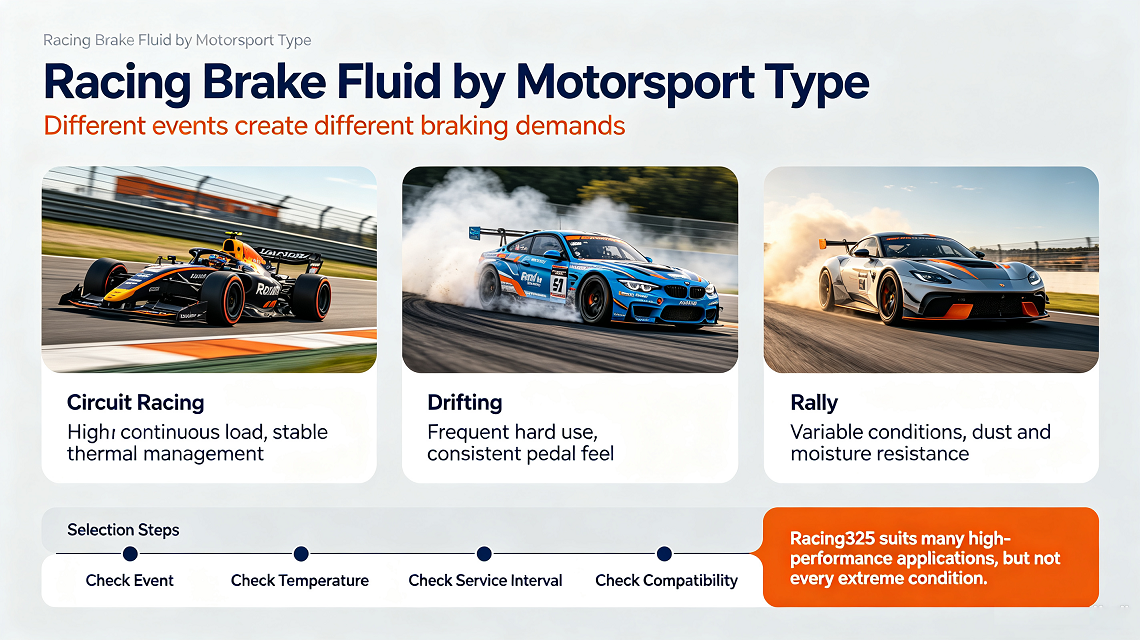
Start with the vehicle platform and brake system materials. Compatibility is basic, but it should never be assumed. Then look at duty cycle: short sprint racing, endurance events, heavy braking in autocross, or mixed road use all stress fluid differently. Climate matters as well, because moisture exposure and storage conditions influence real service life.
For sourcing teams, packaging and handling are also worth attention. A highly capable fluid that is awkward to dispense, hard to inventory, or easy to contaminate can create shop-floor problems. Buyers often overlook documentation discipline too. If a team changes products, the changeover should be recorded clearly so technicians are not mixing assumptions along with fluids.
Common mistakes buyers still make
The first mistake is chasing only the highest boiling point and ignoring the rest of the system. Hoses, seals, caliper condition, and pad selection all affect braking behavior. The second is leaving fluid changes until the driver complains. By then, the service window has already been missed. The third is assuming a fluid that worked well in one car will behave the same in another. Different thermal loads make that a shaky shortcut.
There is also a small but costly habit of treating unopened containers as indefinitely stable once they are on the shelf. That is rarely wise. Storage discipline and rotation matter, especially for teams managing multiple vehicles or seasonal inventory.
A practical buyer’s checklist
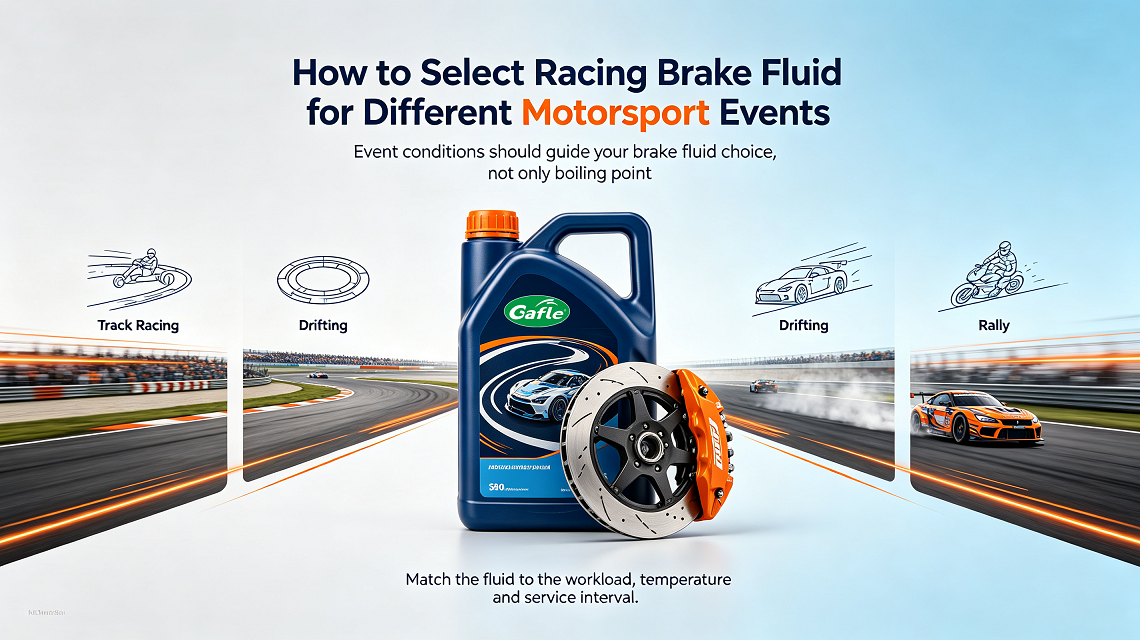
If you are selecting racing brake fluid for a program, the short version is this: confirm system compatibility, compare dry and wet boiling point claims, think seriously about hygroscopicity, and decide how often the fluid will be serviced in practice rather than on paper. Then match that choice to the event profile and the climate the car actually lives in.
For procurement, it helps to ask suppliers for clear product data and handling guidance, not just a headline spec. A good fluid should fit the performance target, but it should also fit the maintenance habits of the team using it. That is usually where the real success or failure shows up.
What to do next
Before approving a fluid change for a race program, test the maintenance plan as carefully as the product itself. Build a replacement interval around the car’s duty cycle, not around convenience. If the application is new, start with a controlled trial on one vehicle, then evaluate pedal feel, service behavior, and inspection results over time. In brake systems, consistency is the product people remember most.
Welcome to contact GAFLE for more information & cooperation!
peter
ZHEJIANG GAFLE AUTO CHEMICL CO.,LTD
Tel:86-579-8222 1665
Fax:86-579-8246 4690
Cel/Wechart:86-13335993986
E-mail:peter@gafle.net
Web:www.gafle.net