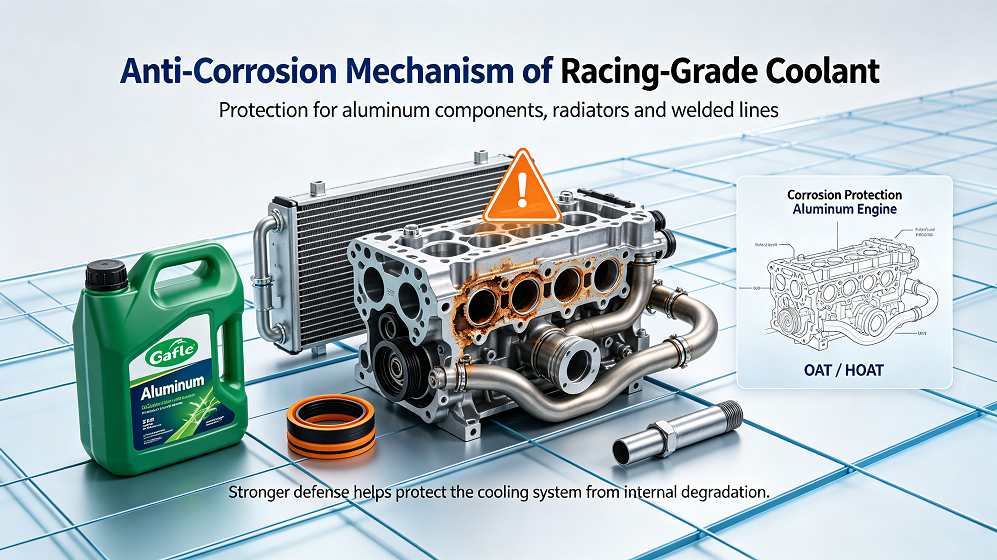
Why racing coolant corrosion protection matters more than many teams expect
Racing coolant corrosion protection is one of those topics that only gets attention after a problem shows up: a pitted water pump, stained passages in an aluminum radiator, or a season shortened by overheating that no one can trace back to the fluid. For engineers and sourcing teams, the issue is not just heat transfer. It is what happens when coolant sits in a high-load cooling system, gets aerated, sees different metals, and starts to lose its ability to protect surfaces that are already working at the edge.
That matters because motorsport cooling systems are not ordinary passenger-car systems. They often see higher temperatures, longer periods at full load, more vibration, and frequent maintenance cycles. A fluid that looks fine on paper can still become a weak point if its additive package cannot handle oxidation, scale, or galvanic activity over time. For buyers, the real decision is usually not “Which coolant is best?” but “Which chemistry fits our engine materials, service interval, and operating environment?”
What corrosion protection is actually doing inside a race engine
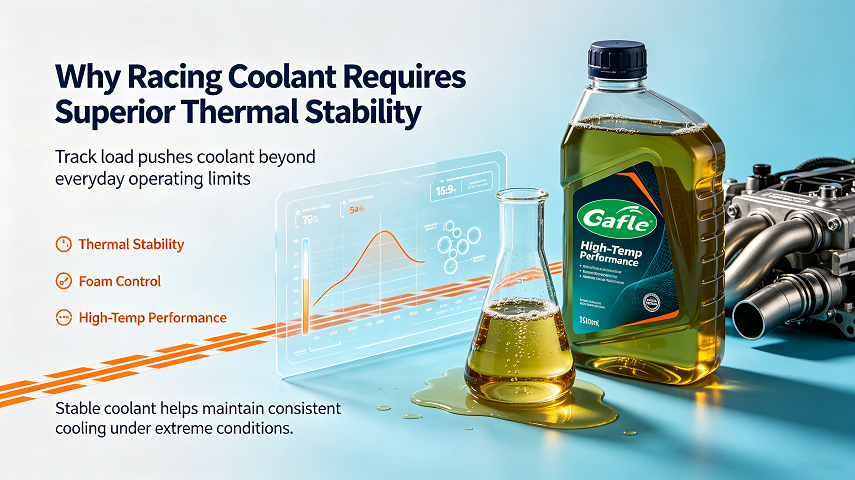
A coolant is expected to do three jobs at once: remove heat, prevent freezing where relevant, and protect the metal surfaces inside the system. In racing applications, the last function can be overlooked because teams focus on thermal performance. That is risky. Corrosion starts at small defects and exposed edges, then spreads into deposits or pitting that reduce flow and damage seals.
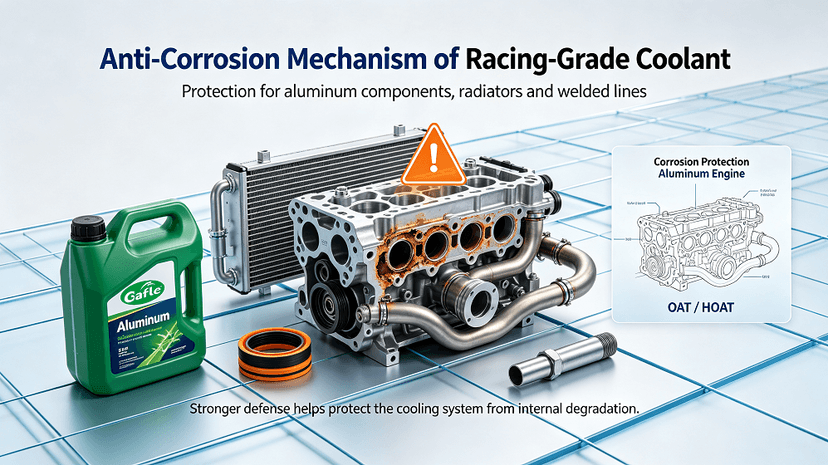
The anti-corrosion mechanism for racing grade coolant usually depends on a blend of inhibitors designed to form a thin protective layer on metals without building heavy deposits. In practice, this is about controlling reactions with aluminum, cast iron, solder, brass, steel, and sometimes magnesium or mixed-metal assemblies. The exact package varies, but the goal is consistent: keep the system clean and stable under heat cycling.
Common chemistry choices
Many buyers compare OAT HOAT racing coolant formulations because the underlying inhibitor approach affects both protection style and maintenance expectations. OAT systems are typically associated with organic acid technology, while HOAT blends combine organic acids with other inhibitor types. The label alone is not enough, though. Compatibility with seals, gasket materials, and mixed-metal layouts matters just as much as the chemistry family name.
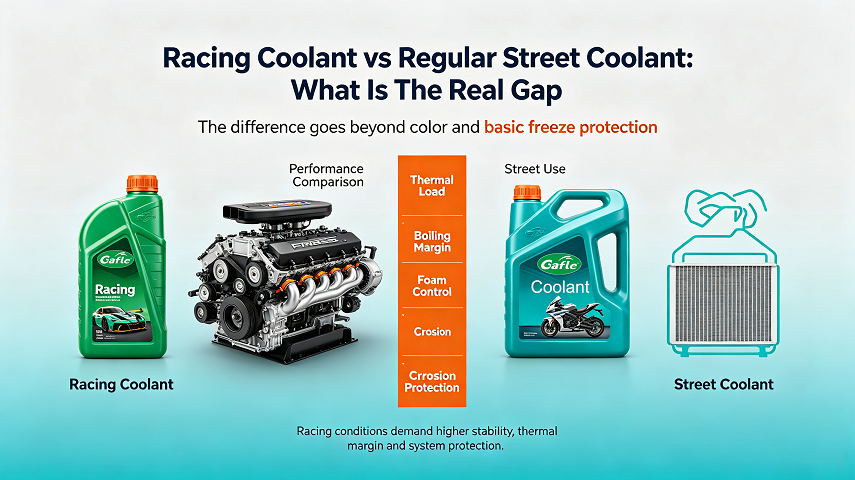
Motorport antifreeze products can also differ in whether they are intended for street-and-track use or for pure race-only systems. That distinction affects freeze protection, water pump lubrication, and whether the product is designed for extended service or more frequent flush intervals. It is one of those details that looks minor until a team discovers the product is not suited to its operating rules or climate.
Racing coolant for aluminum engine block applications
Aluminum is common in modern performance engines, but it is not forgiving when the coolant package is weak or contaminated. A racing coolant for aluminum engine block use should provide stable protection against localized corrosion and deposit formation, because aluminum is especially sensitive to pitting and thermal stress around hot spots.
For this reason, buyers should pay attention to how the coolant behaves in mixed-metal systems. A formula that protects aluminum well but creates issues elsewhere is not a good bargain. The better choice is usually the one that balances broad metal compatibility with clean heat transfer and predictable maintenance.
What engineers and sourcing managers should compare
A practical buyer checklist is more useful than a long list of marketing claims.
- Material compatibility with aluminum, cast iron, copper alloys, and elastomers
- Inhibitor type and whether the product is meant for OAT, HOAT, or another chemistry family
- Whether the coolant is for race-only use or mixed road/race service
- Resistance to scale, sludge, and deposit buildup under high heat
- Maintenance interval expectations and required flush discipline
- Local climate needs, especially if freeze protection is relevant
One practical caution: teams sometimes switch coolant types without fully flushing the system. That can dilute the inhibitor package or trigger compatibility problems. It is a small oversight that can undo a lot of testing.
Common mistakes that shorten coolant life
The biggest mistake is assuming all motorsport coolant behaves like distilled water with additives. It does not. Another common issue is using tap water with high mineral content, which can introduce scale and reduce the effectiveness of the formulation. Mixed coolant top-offs are also a problem; even when products seem similar, their additive systems may not cooperate.
There is also a habit of chasing the lowest initial cost. In cooling systems, that can be false economy. A slightly more suitable fluid may save a water pump, radiator core, or weekend of diagnosis later. That is especially true in endurance racing, where a slow degradation in corrosion protection can matter more than a single obvious failure.
Questions buyers should ask before specifying a coolant
What metals are in the cooling circuit? What service interval does the team actually follow? Is the car seeing track-only use or mixed use? Will the same fluid be stocked across multiple programs, or does each platform need its own spec? These questions help narrow the field quickly.
FAQ: quick buyer guidance
Is more corrosion protection always better?
Not necessarily. Excess additive loading can sometimes affect deposit control or compatibility. The best fluid is the one matched to the system, not the one with the most aggressive claim.
Can one coolant cover every race vehicle?
Sometimes, but not always. Different base metals, temperatures, and maintenance routines can change the answer.
Should racing teams prioritize freeze protection?
Only if the car, transporter, or storage conditions require it. Some race programs value pure track performance more than freeze margin.
Next step for technical buyers
If you are comparing racing coolant options, start with the engine materials and the maintenance reality, not the brochure language. Ask suppliers for the chemistry family, compatibility notes, and intended use case, then match that against how the car is actually run. That approach is slower than buying on headline claims, but it is usually cheaper by the end of the season.
Welcome to contact GAFLE for more information & cooperation!
peter
ZHEJIANG GAFLE AUTO CHEMICL CO.,LTD
Tel:86-579-8222 1665
Fax:86-579-8246 4690
Cel/Wechart:86-13335993986
E-mail:peter@gafle.net
Web:www.gafle.net