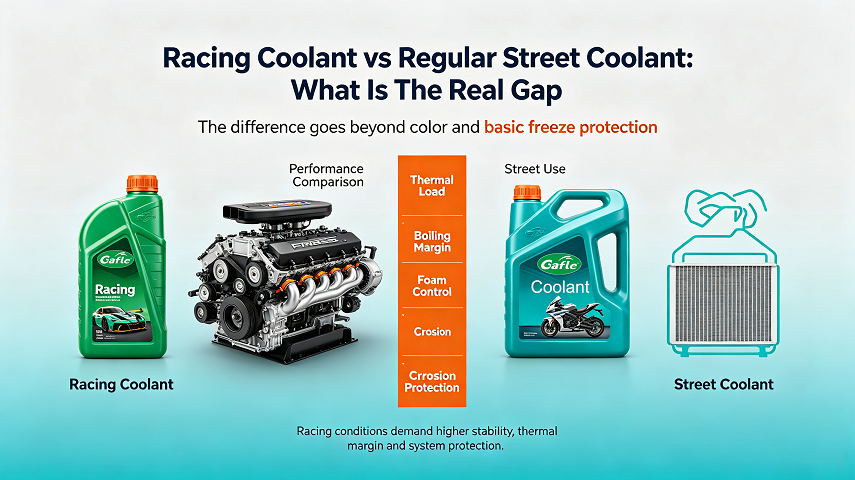
Racing coolant vs street coolant: what actually changes under the hood
People often ask about racing coolant vs street coolant only after a car starts seeing more heat than the factory intended. That could mean track days, autocross, towing, a turbo swap, or simply a hot summer commute in a vehicle that now runs harder than stock. The question matters because coolant is not just a freeze-and-boil fluid; it affects heat transfer, corrosion protection, water pump behavior, and in some cases the way a car is maintained between events.
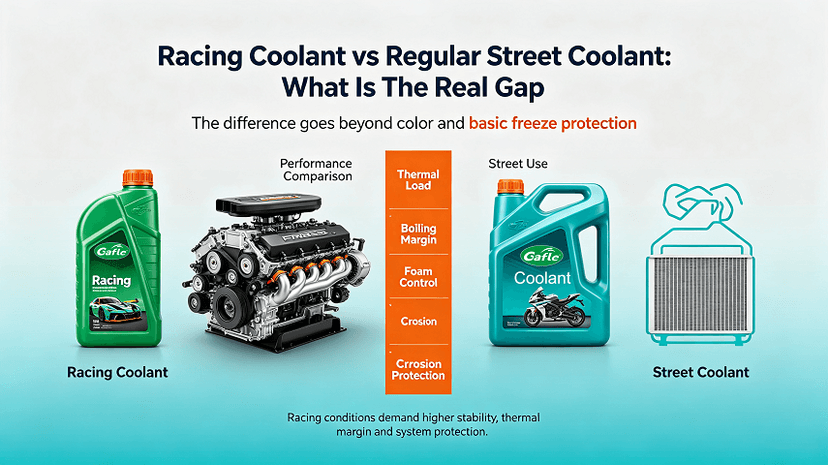
The short version is that street coolant is designed for everyday road use, where freeze protection, long service life, and mixed-material corrosion control matter most. Racing coolant is usually chosen for thermal management in performance use, especially when the car is not expected to sit in subfreezing weather. That sounds simple, but the real decision depends on climate, rules, engine build, and how much maintenance the owner is willing to accept.
What street coolant is built to do
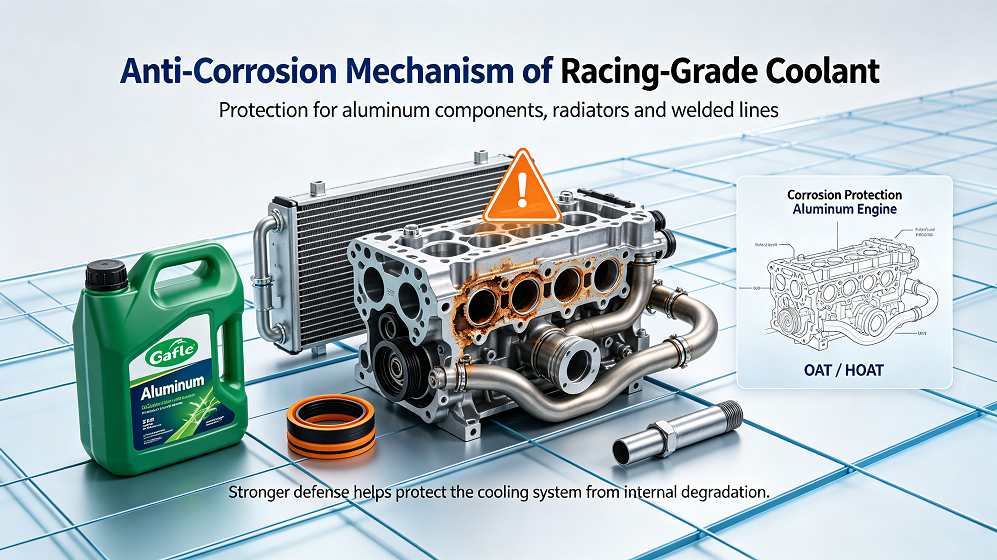
Standard street coolant, often a water and ethylene glycol blend with additives, is made to do several jobs at once. It must resist freezing in winter, raise the boiling point, protect aluminum and other metals from corrosion, and remain stable for long drain intervals. For passenger vehicles, that balance is usually more important than chasing the last bit of cooling performance.
In a normal road car, the factory coolant recommendation is usually the safest answer. It is matched to the seals, metals, gaskets, heater core, and service expectations of the vehicle. If a buyer is comparing products, this is where the difference between racing coolant and regular coolant becomes practical rather than theoretical: street coolant is a compromise, but a very deliberate one.
What racing coolant changes
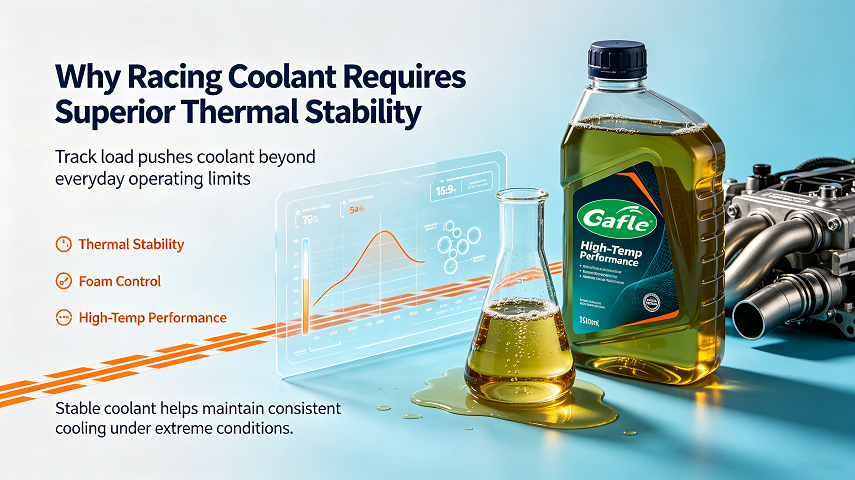
Racing coolant, or what many buyers call performance antifreeze, is typically aimed at improving heat transfer and reducing the chance of boiling during hard use. Some products use a higher percentage of water, because water moves heat more effectively than glycol. Others are formulated as water wetter-style additives or specialty coolants intended for motorsports-only use. The exact formulation varies a lot by brand, so it is worth reading the label closely instead of assuming all track products behave the same.
One practical caution: a fluid marketed for racing is not automatically better for every performance car. If the car must be street-driven in winter, or if the manufacturer requires a specific coolant chemistry, the wrong choice can create more trouble than it solves. Track-only does not mean maintenance-free, and it does not mean universally compatible.
Boiling point comparison: what matters and what gets oversimplified
When buyers look at a boiling point comparison, they sometimes focus on the highest number printed on the bottle. That can be misleading. Boiling resistance depends on system pressure, cap rating, ambient conditions, airflow, and whether the engine is actually shedding heat efficiently. A fluid with good lab numbers still may not fix a radiator that is undersized, blocked, or poorly ducted.
Street coolant often has a higher formal boil margin because glycol raises the boiling point, but water itself transfers heat better. Racing applications may therefore use more water for thermal performance, accepting less freeze protection as the tradeoff. For a car that sees hot laps but never winter storage outdoors, that can make sense. For a dual-purpose street car, the tradeoff is less attractive.
How to choose between racing and street coolant
Start with the environment
If the vehicle will see freezing temperatures, street coolant is usually the right starting point. If the vehicle is track-only, stored indoors, and flushed regularly, racing coolant or a water-based performance mix may be reasonable.
Match the engine and cooling system
Modern engines with tight cooling passages, variable valve timing hardware, or mixed metals can be less forgiving of chemistry changes. Older engines may be more tolerant, but they still benefit from a clean, compatible formulation. If the engine has an oil cooler, turbocharger, or integrated heat exchanger, coolant stability matters more than many owners realize.
Check the rules before the car reaches tech inspection
Many track days and racing organizations restrict glycol-based coolant because spilled coolant becomes slippery and hard to clean. Water-only or approved alternatives are sometimes required. This is a small detail that can end a weekend early if it is overlooked.
Common mistakes buyers make
The most common error is assuming that any coolant labeled for performance is automatically track safe. The second is mixing products without checking chemistry. The third is treating a coolant change like a cure-all for an overheating problem.
There is also a quieter mistake: choosing a product for one season and forgetting that the car still has to survive the other three. A racer in Southern California can make choices that would be irresponsible in Minnesota, and that is not an inconsistency. It is just operating reality.
Practical buyer advice
If the car is a daily driver with occasional spirited use, a quality street coolant that meets the vehicle maker’s specification is usually the sensible pick. If the car is primarily for motorsport, and the rules plus climate support it, a racing coolant or water-heavy setup may offer better thermal control. If the engine is already running hot, consider the whole system: radiator capacity, fan performance, thermostat choice, hose condition, and airflow through the bumper opening all matter.
For sourcing teams and product managers, the real purchasing question is not simply which fluid performs best in a lab. It is which coolant aligns with operating conditions, service policy, compliance needs, and customer expectations. That is where the decision gets commercial, not just mechanical.
FAQ
Can racing coolant be used on the street?
Sometimes, but not always wisely. If it lacks freeze protection, it is a poor choice for cold climates. Manufacturer guidance and local conditions should lead the decision.
Is water better than coolant for cooling?
Pure water transfers heat very well, but it offers poor corrosion protection and no freeze protection. That is why additives or blends are used in real-world systems.
Will changing coolant fix overheating?
Only if the old fluid was contaminated, degraded, or incompatible. Mechanical issues are often the real cause.
What to do next
Before ordering anything, confirm how the vehicle is used, what the climate demands, and whether event rules restrict glycol. Then compare the product chemistry against the OEM requirement and the cooling system’s actual needs. A good coolant choice is usually the one that fits the duty cycle cleanly, not the one with the flashiest claims on the bottle.
Welcome to contact GAFLE for more information & cooperation!
peter
ZHEJIANG GAFLE AUTO CHEMICL CO.,LTD
Tel:86-579-8222 1665
Fax:86-579-8246 4690
Cel/Wechart:86-13335993986
E-mail:peter@gafle.net
Web:www.gafle.net