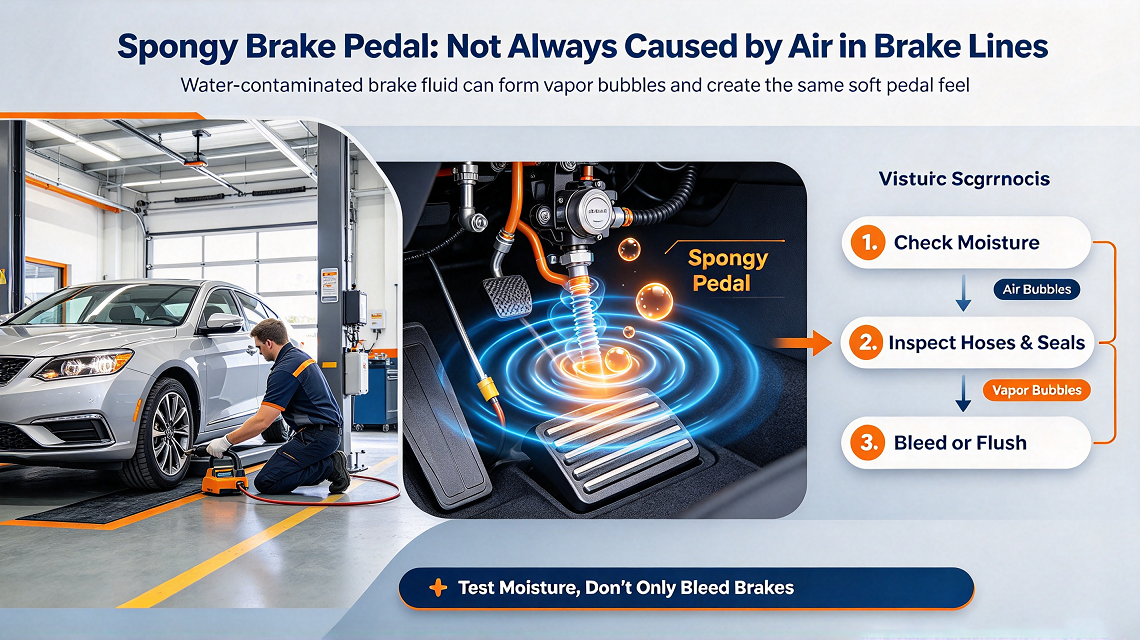
When a vehicle owner reports a spongy, soft brake pedal, most technicians immediately assume trapped air inside the brake lines. While air bubbles are a common cause, brake fluid degradation is another frequent culprit that is often overlooked.
Brake service is a core job for auto repair workshops. A spongy brake pedal is one of the most common customer complaints. The symptom is described as the brake pedal sinking further than expected when pressed, feeling soft and springy before building firm braking pressure. Many service technicians will automatically bleed the brake system to remove air. Sometimes bleeding the brakes improves the pedal feel temporarily, but the problem returns after a short time. This recurring issue often means air is not the root cause. The real source may be water-contaminated brake fluid.
Why air in brake lines creates a spongy pedal
To understand the difference, let us first review the classic case: trapped air. Liquid brake fluid cannot compress. Air is compressible. When air bubbles exist inside the hydraulic circuit, pressing the brake pedal first compresses the air. This creates that soft, spongy travel before the fluid transfers pressure to the calipers. Air usually enters the system during brake part replacement, brake line disassembly, or when the brake fluid reservoir runs empty. In this scenario, bleeding the brake lines will purge air out and restore a firm brake pedal.
Water-saturated brake fluid creates vapor bubbles under heat
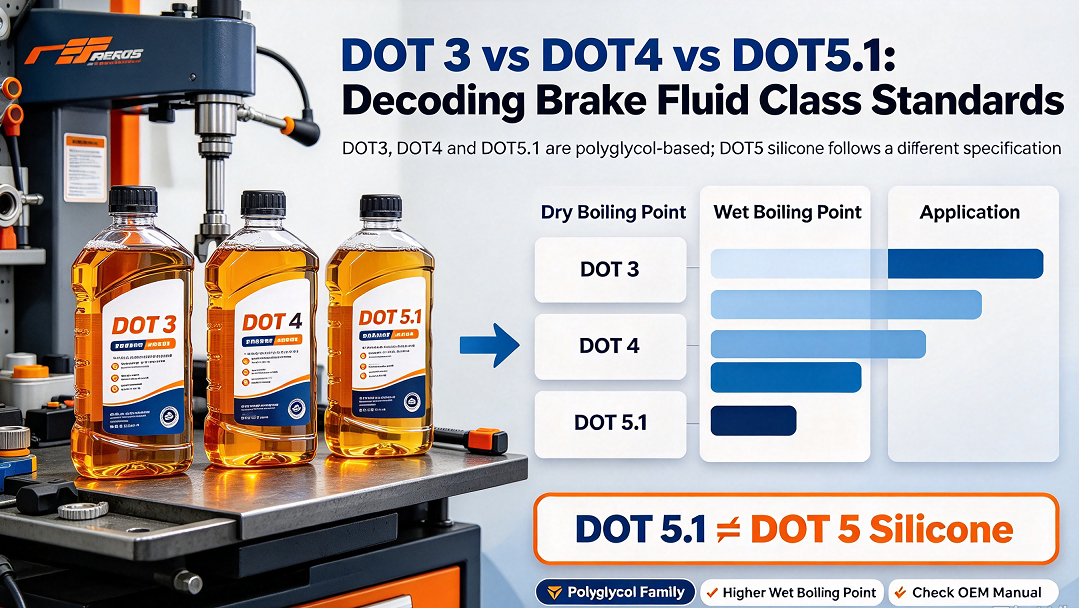
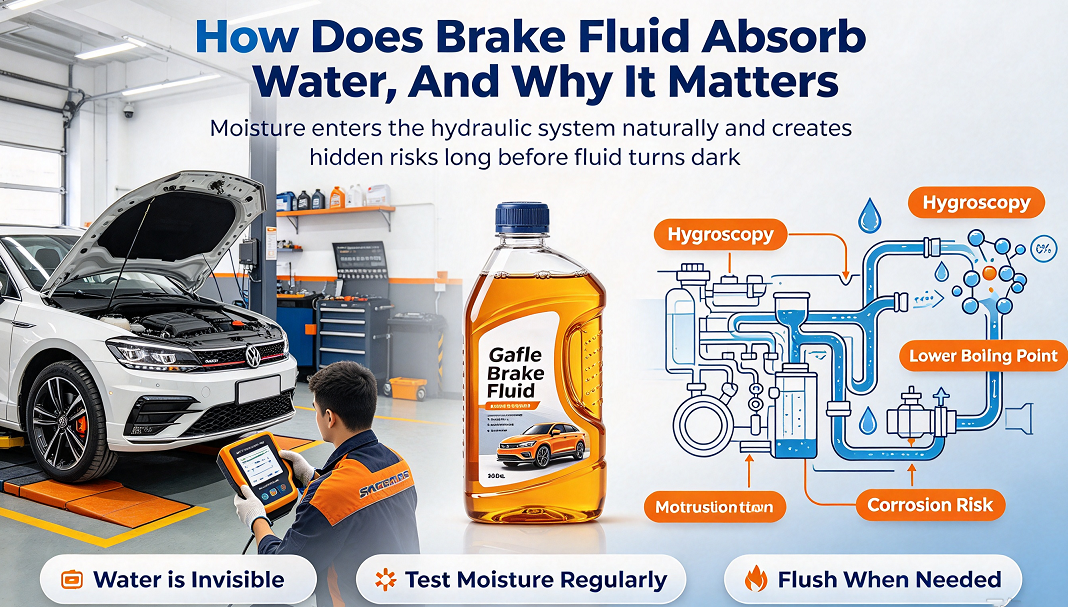
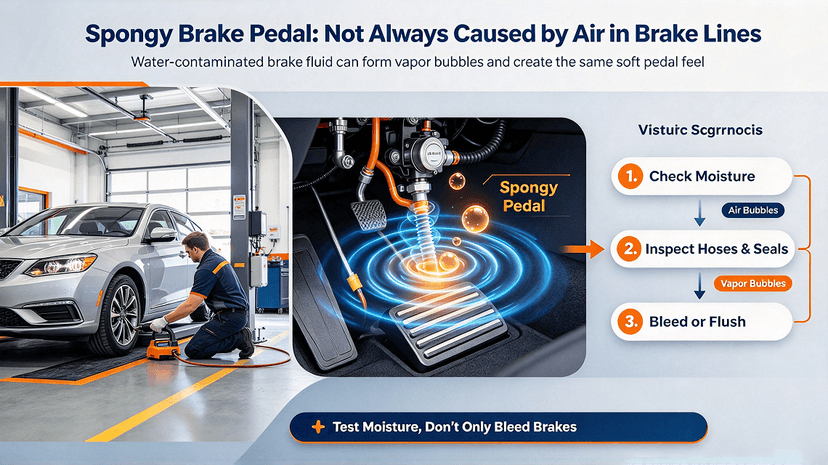
When brake fluid absorbs excessive water, the wet boiling point drops significantly. During normal driving, the brake pedal may feel firm. But after repeated braking, brake caliper temperature rises. The water dissolved in brake fluid turns into water vapor. These vapor bubbles are compressible, just like air bubbles. This creates the exact same spongy brake pedal symptom.
The key difference is timing. Air bubbles cause a spongy pedal all the time. Vapor bubbles from contaminated brake fluid only appear after the brakes get hot. After the vehicle stops and brakes cool down, the vapor condenses back into liquid water. The brake pedal feels firm again. This makes the problem very tricky to diagnose. If the technician only tests the brake when the system is cold, they will not reproduce the symptom. They may bleed the brakes, find no air, and send the vehicle out, leaving the hidden safety risk unresolved.
Other possible causes for a spongy brake pedal
Besides air and moisture-contaminated brake fluid, technicians should also check these components during diagnosis. Swollen rubber brake hoses can expand under hydraulic pressure, creating extra pedal travel. Worn or damaged caliper seals, failing master cylinder internal seals, and distorted brake rotors can also lead to soft pedal feel. A complete diagnostic workflow should not jump straight to brake bleeding.
Recommended step-by-step diagnostic workflow
- Interview the driver: Confirm whether the spongy pedal happens only after repeated braking, or appears cold from startup. This simple question helps separate vapor bubble issues from trapped air.
- Test brake fluid water content with a brake fluid tester. If water reading exceeds 3%, brake fluid degradation is highly likely.
- Inspect brake hoses for swelling, cracks and aging.
- Check master cylinder for internal seal leakage.
- Bleed the brake system only after confirming the root cause. If the fluid is heavily contaminated, perform a full brake fluid flush instead of simple bleeding.
Common mistakes technicians make in this diagnosis
The most frequent error is treating every spongy pedal complaint as an air problem. Bleeding brakes when the fluid is water-contaminated will not solve the fundamental issue. The moisture remains inside the circuit, and vapor bubbles will reappear once brakes heat up. Another mistake is judging brake fluid condition only by color. Dark brake fluid is a sign of aging, but even clear-looking fluid can contain dangerous levels of water. Always use a moisture tester.
Gafle brake fluid for reliable brake maintenance
Zhejiang Gafle Environmental Technology manufactures high-quality DOT series brake fluids for global repair shops and auto parts distributors. Stable anti-corrosion additives slow down internal system damage caused by moisture. Our technical team provides professional maintenance and troubleshooting materials for B2B customers, supporting mechanics to make accurate brake system diagnoses.
Final Takeaway
A spongy brake pedal is not always caused by trapped air in brake lines. Water contaminated brake fluid forms vapor bubbles under heat and produces identical symptoms. Follow a complete diagnostic process, test brake fluid moisture level, and perform full fluid flushing when needed, rather than only bleeding brakes blindly.
Welcome to contact GAFLE for more information & cooperation!
peter
ZHEJIANG GAFLE AUTO CHEMICL CO.,LTD
Tel:86-579-8222 1665
Fax:86-579-8246 4690
Cel/Wechart:86-13335993986
E-mail:peter@gafle.net
Web:www.gafle.net
peter
ZHEJIANG GAFLE AUTO CHEMICL CO.,LTD
Tel:86-579-8222 1665
Fax:86-579-8246 4690
Cel/Wechart:86-13335993986
E-mail:peter@gafle.net
Web:www.gafle.net