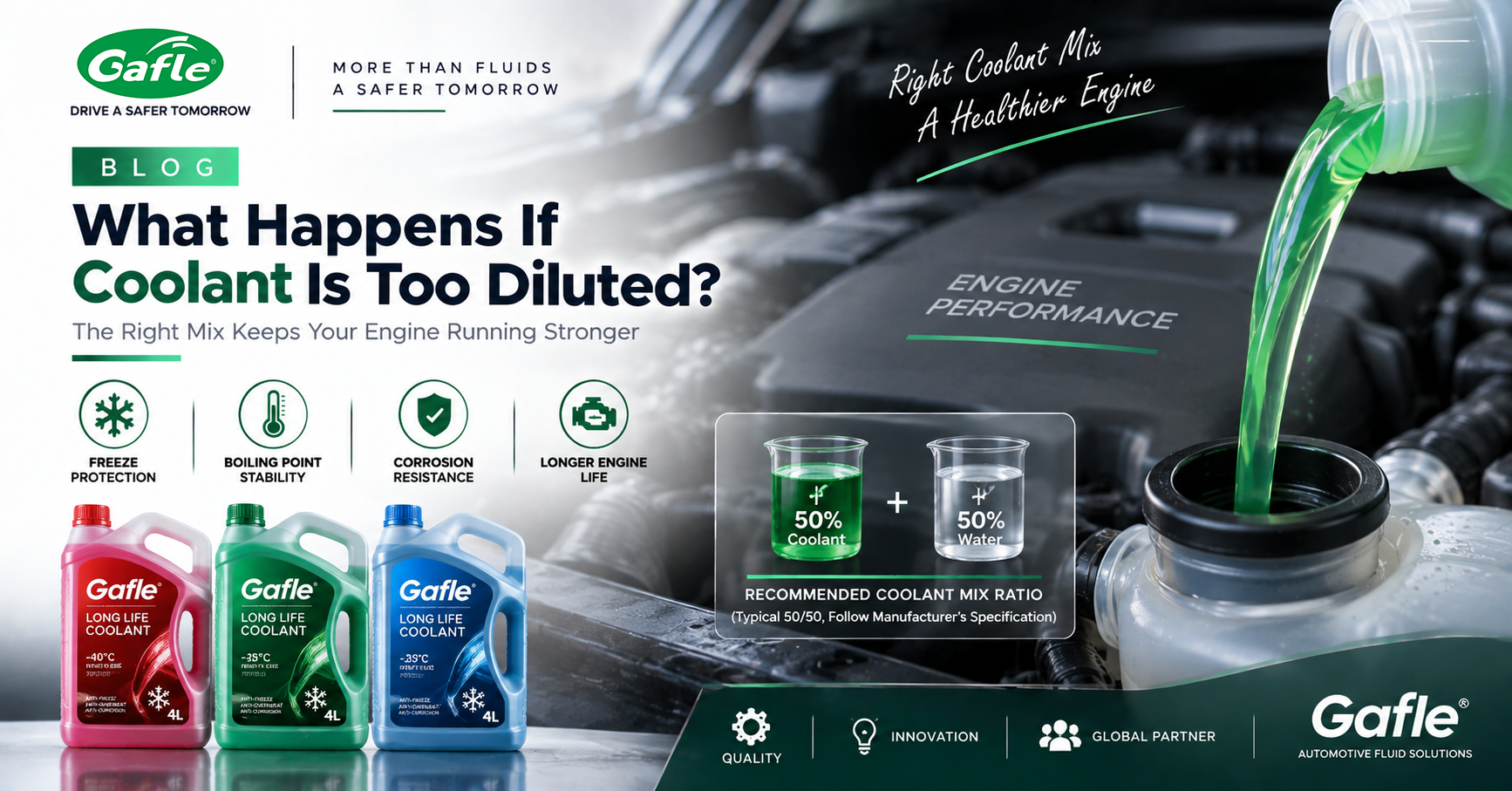
 What Happens If Coolant Is Too Diluted?
Engine coolant plays a vital role in maintaining proper engine temperature, protecting against freezing, preventing corrosion, and extending the life of the cooling system. While adding water to concentrated coolant is necessary, using too much water can reduce the coolant's effectiveness and lead to cooling system problems.
So, What Happens If Coolant Is Too Diluted? When the coolant mixture contains too much water, it loses part of its ability to protect the engine against freezing, overheating, corrosion, and scale formation. Maintaining the correct Coolant Mix Ratio is essential for ensuring reliable engine performance and long-term cooling system durability.
As a professional automotive fluid manufacturer with more than 20 years of manufacturing experience, Gafle develops high-performance engine coolants and brake fluids for OEM customers, distributors, and automotive brands worldwide. In this article, we'll explain why coolant concentration matters and how to maintain the proper coolant mixture.
Why Coolant Concentration Matters
Many people think coolant simply cools the engine.
In reality, modern Engine Coolant performs several important functions:
- Transfers engine heat efficiently
- Prevents freezing in cold weather
- Raises the coolant boiling point
- Protects against corrosion
- Prevents scale and deposits
- Lubricates the water pump
- Helps extend cooling system life
These benefits depend on maintaining the correct coolant concentration.
What Happens If Coolant Is Too Diluted?
When excessive water is added, the coolant becomes less effective.
Reduced Freeze Protection
Coolant concentrate contains antifreeze ingredients that protect the engine during cold weather.
If the coolant is overly diluted, the freezing point rises, increasing the risk of coolant freezing in low temperatures and potentially damaging engine components.
Lower Boiling Point
The correct coolant mixture raises the boiling point of the cooling system.
Too much water lowers this protection, increasing the possibility of coolant boiling under heavy engine loads or high ambient temperatures. Steam pockets can reduce heat transfer and contribute to overheating.
Weaker Corrosion Protection
Engine coolant contains corrosion inhibitors that protect:
- Radiators
- Water pumps
- Cylinder heads
- Engine blocks
- Heater cores
When the coolant is too diluted, these additives become less concentrated, reducing long-term protection against corrosion and internal damage.
Increased Risk of Scale Formation
Using excessive water—especially untreated water—can increase mineral deposits inside the cooling system.
Scale reduces heat transfer efficiency and may eventually restrict coolant flow. Using distilled or deionized water with concentrate is commonly recommended where required by the coolant manufacturer.
Reduced Water Pump Protection
Coolant additives also help lubricate the water pump and protect internal components.
Over-dilution reduces the concentration of these additives, which may shorten component life over time.
The Importance of the Correct Coolant Mix Ratio
Maintaining the correct Coolant Mix Ratio is essential for balanced cooling performance.
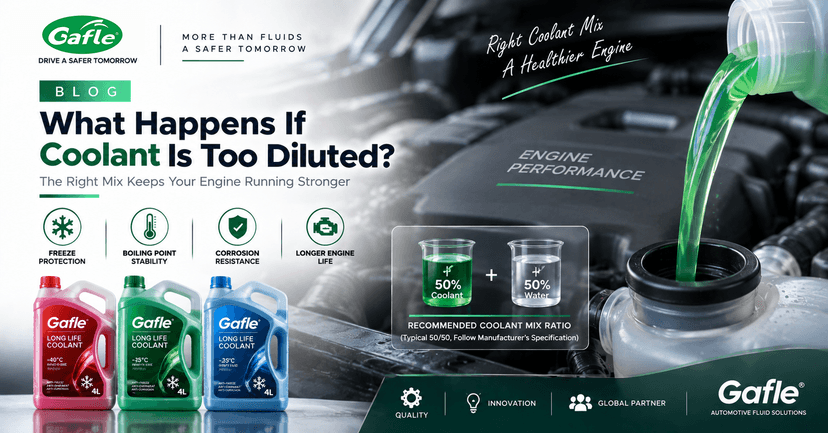
For many passenger vehicles using concentrated coolant, manufacturers commonly recommend approximately a 50:50 mixture of coolant concentrate and water, though the correct ratio always depends on the vehicle manufacturer's specification and the coolant product instructions. Pre-mixed coolants should not be diluted further unless specifically instructed.
Benefits of the proper mixture include:
- Excellent freeze protection
- Improved boil-over protection
- Better corrosion resistance
- Stable heat transfer
- Longer cooling system life
Always follow the vehicle manufacturer's recommendations for coolant specification and mixing ratio.
How to Check Coolant Concentration
Proper coolant concentration should be checked periodically, especially after maintenance or topping up the cooling system.
Common methods include:
- Coolant refractometer
- Coolant tester
- Professional workshop inspection
Regular testing helps ensure the cooling system continues to provide the intended level of protection.
How Gafle Ensures Coolant Quality
At Gafle, every coolant is developed to deliver reliable performance under a wide range of operating conditions.
Professional Formula Development
Our R&D team develops formulations designed to provide:
- Excellent freeze protection
- Reliable boil-over protection
- Long-term corrosion resistance
- Stable heat transfer performance
Premium Raw Materials
Only carefully inspected raw materials are approved for production.
Advanced Laboratory Testing
Every production batch undergoes comprehensive testing, including:
- Freeze protection
- Boiling protection
- Corrosion resistance
- pH stability
- Material compatibility
- Appearance inspection
Each batch is verified before shipment to ensure consistent quality.
Strict Quality Control
From raw material inspection to finished product testing, every manufacturing stage follows standardized quality procedures.
OEM & Private Label Manufacturing
Gafle provides flexible OEM services including:
- Customized coolant formulations
- Bottle customization
- Label design
- Carton packaging
- Technical documentation
Why Global Customers Choose Gafle
As a trusted automotive fluid manufacturer, Gafle supplies engine coolants and brake fluids to customers around the world.
Our strengths include:
- 20+ Years of Automotive Fluid Manufacturing Experience
- Professional Research & Development Team
- Advanced Laboratory Testing
- Modern Manufacturing Facilities
- Strict Quality Control
- IATF 16949 Quality Management System
- OEM & Private Label Manufacturing
- Customized Packaging Solutions
- Stable Large-Scale Production
- Global Export Experience
- Participant in Drafting China's National Brake Fluid Standards
These capabilities enable Gafle to provide reliable automotive fluid solutions for distributors, importers, wholesalers, and automotive brands worldwide.
How to Choose a Reliable Coolant Manufacturer
Choosing the right coolant supplier is just as important as selecting the right coolant.
A professional manufacturer should provide:
- Advanced laboratory facilities
- Formula development capability
- Strict quality management
- Stable production capacity
- OEM & ODM services
- Export experience
- Technical support
- Consistent batch quality
Many international buyers searching for the Best Brake Fluid Manufacturer in China also prefer manufacturers that offer premium engine coolants supported by advanced laboratories, strict quality control, and professional OEM manufacturing capabilities.
Frequently Asked Questions
What happens if coolant is too diluted?
Over-diluted coolant provides weaker freeze protection, lower boiling protection, reduced corrosion resistance, and may increase the likelihood of overheating or internal corrosion over time.
Can too much water cause engine overheating?
Yes. Excessive water lowers the coolant's boiling protection and can reduce the effectiveness of heat management under demanding operating conditions.
What is the correct coolant mix ratio?
For many vehicles using concentrated coolant, approximately 50% coolant concentrate and 50% water is commonly recommended, but always follow the vehicle manufacturer's specification and coolant product instructions.
Should I use distilled water with coolant concentrate?
Many manufacturers recommend distilled or deionized water when mixing concentrate because it reduces the risk of mineral deposits and scaling.
How should buyers choose the Best Brake Fluid Manufacturer in China?
Buyers should evaluate manufacturing experience, laboratory capability, quality management systems, OEM expertise, production consistency, export experience, and technical support—not simply compare prices.
Conclusion
Maintaining the correct coolant concentration is essential for protecting your engine. When coolant is too diluted, its ability to prevent freezing, resist boiling, protect against corrosion, and support long-term cooling system reliability is reduced. Following the recommended Coolant Mix Ratio and using the correct coolant specification help ensure dependable performance in all driving conditions.
With more than 20 years of manufacturing experience, Gafle continues to develop premium engine coolants and brake fluids through advanced laboratory testing, modern production facilities, and strict quality control.
For businesses searching for the Best Brake Fluid Manufacturer in China, Gafle offers reliable automotive fluid products, flexible OEM and private label solutions, and long-term partnerships built on quality, consistency, and innovation.
At Gafle, we believe that the right coolant mixture is the foundation of reliable engine protection and long-lasting vehicle performance.