
 How Should Brake Fluid Be Stored?
Brake fluid is one of the most critical safety fluids in any vehicle. While many people focus on choosing the correct DOT specification, proper storage is equally important. Even premium brake fluid can lose its optimal performance if it is exposed to moisture or stored under unsuitable conditions.
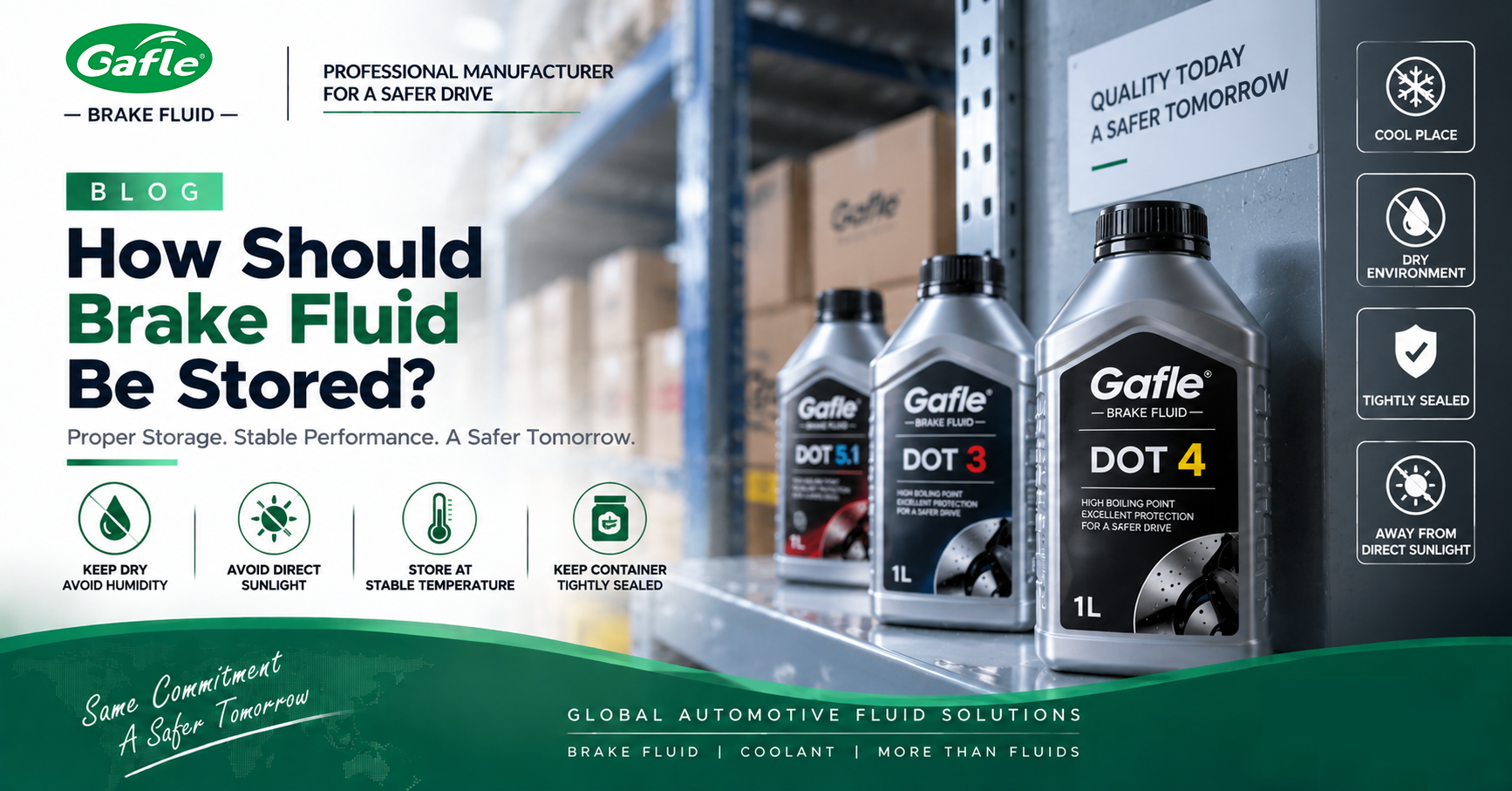
So, How Should Brake Fluid Be Stored? The answer is simple: brake fluid should always be kept in its original, tightly sealed container and stored in a cool, dry environment away from direct sunlight and contaminants. Since most DOT 3, DOT 4, and DOT 5.1 brake fluids are hygroscopic, they naturally absorb moisture from the air, making proper storage essential for maintaining product quality.
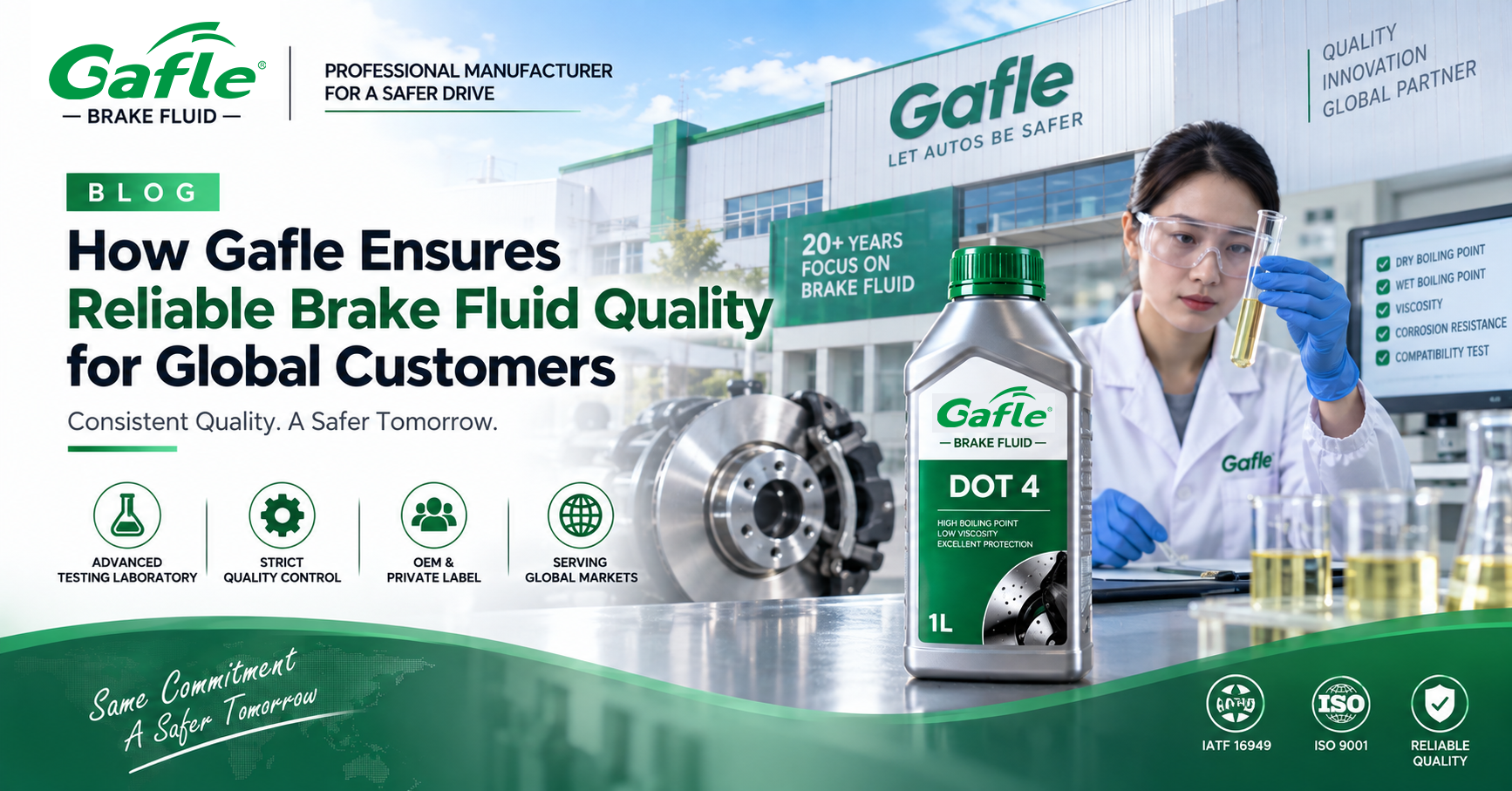
As a professional Brake Fluid Manufacturer with more than 20 years of manufacturing experience, Gafle follows strict storage, packaging, and quality management procedures to ensure every bottle of brake fluid reaches customers in excellent condition.
Why Proper Brake Fluid Storage Matters
Brake fluid must maintain stable physical and chemical properties throughout storage, transportation, and use.
Unlike many automotive fluids, brake fluid naturally absorbs moisture from the surrounding air. Excess moisture can gradually reduce its wet boiling point and affect braking performance over time.
Proper Brake Fluid Storage helps:
- Maintain boiling point performance
- Reduce moisture contamination
- Preserve corrosion protection
- Maintain chemical stability
- Extend product shelf life
- Ensure consistent product quality
Proper storage is just as important as proper manufacturing for delivering reliable brake fluid to customers.
Best Practices for Brake Fluid Storage
Store in the Original Container
Always keep brake fluid in its original manufacturer-approved container.
Original packaging is specifically designed to protect the fluid from moisture and contamination.
Never transfer brake fluid into unmarked or unsuitable containers.
Keep Containers Tightly Sealed
Brake fluid begins absorbing moisture as soon as it is exposed to air.
Always:
- Close the cap immediately after use
- Keep containers tightly sealed
- Avoid leaving containers open unnecessarily
Proper sealing is one of the most effective ways to preserve brake fluid quality.
Store in a Cool, Dry Environment
Brake fluid should be stored:
- Away from direct sunlight
- Away from excessive heat
- Away from high humidity
- In a clean warehouse
- At stable room temperature whenever possible
Stable storage conditions help maintain product performance throughout its shelf life.
Protect Packaging from Damage
Damaged bottles or broken seals increase the risk of contamination.
During storage and transportation, containers should be protected from:
- Crushing
- Leakage
- Broken caps
- Torn cartons
Maintaining packaging integrity helps preserve product quality until it reaches the customer.
Follow First-In, First-Out (FIFO)
Professional warehouses use the First-In, First-Out (FIFO) inventory method to ensure older production batches are shipped before newer ones.
This helps maintain product freshness and supports effective inventory management.
How Storage Affects Brake Fluid Shelf Life
Proper Brake Fluid Shelf Life depends largely on storage conditions.
Unopened Brake Fluid
When stored correctly in its original sealed container, brake fluid generally maintains its quality for the shelf life specified by the manufacturer.
Always refer to the product label for the recommended storage period.
Opened Brake Fluid
Once opened, brake fluid begins absorbing moisture from the surrounding air.
To minimize quality loss:
- Reseal the container immediately
- Store it in a cool, dry place
- Use the remaining fluid as soon as practical according to the manufacturer's recommendations
Long-term storage after opening is generally not recommended because moisture exposure gradually increases over time.
Avoid Contamination
Brake fluid should never be stored near:
- Solvents
- Fuels
- Cleaning chemicals
- Dusty environments
- Water sources
Keeping the storage area clean helps reduce the risk of contamination.
How Gafle Protects Brake Fluid Quality
At Gafle, quality management continues long after production is complete.
Stainless Steel Storage Tanks
Before filling, brake fluid is stored in sealed stainless steel tanks that help minimize moisture exposure and maintain product purity.
Clean Manufacturing Environment
Our clean production workshops reduce contamination risks throughout the manufacturing process.
Automated Filling System
Automated filling equipment minimizes unnecessary exposure to air during packaging, helping maintain consistent product quality.
Professional Laboratory
Every production batch undergoes comprehensive laboratory testing, including:
- Dry boiling point
- Wet boiling point
- Low-temperature viscosity
- Moisture content
- Corrosion resistance
- Material compatibility
- Appearance inspection
Only products that pass all quality inspections are approved for shipment.
Strict Quality Control
From raw material inspection to warehouse management, every stage follows standardized quality procedures to ensure reliable brake fluid performance.
Why OEM Customers Choose Gafle
OEM customers require more than premium products—they need confidence that quality remains consistent from production through storage and delivery.
Gafle provides:
- OEM & ODM Manufacturing
- Private Label Brake Fluid
- Customized Bottles and Labels
- Professional Packaging Solutions
- Advanced Laboratory Testing
- Stable Production Capacity
- Global Export Experience
- Technical Support
Our complete quality management system helps customers build trusted automotive fluid brands worldwide.
How to Choose the Best Brake Fluid Manufacturer in China
Many international buyers searching for the Best Brake Fluid Manufacturer in China understand that choosing the right supplier involves much more than comparing prices.
A professional manufacturer should provide:
- More than 20 years of manufacturing experience
- Advanced laboratory facilities
- Professional warehouse management
- Stainless steel storage systems
- Strict quality control
- Stable production capacity
- OEM & ODM manufacturing
- Private label solutions
- Global export experience
- Responsive technical support
These capabilities help ensure every shipment maintains consistent quality from the production line to the customer's warehouse.
Why Global Customers Trust Gafle
As a trusted Brake Fluid Manufacturer, Gafle supplies premium brake fluid products to distributors, importers, wholesalers, and automotive brands worldwide.
Our advantages include:
- 20+ Years of Brake Fluid Manufacturing Experience
- Professional Research & Development Team
- Advanced Brake Fluid Laboratory
- Stainless Steel Storage Tank System
- Automated Filling Equipment
- Strict Quality Control
- Clean Manufacturing Environment
- IATF 16949 Quality Management System
- OEM & Private Label Manufacturing
- Customized Packaging Solutions
- Stable Large-Scale Production
- Global Export Experience
- Participant in Drafting China's National Brake Fluid Standards
These strengths allow Gafle to deliver dependable brake fluid products and long-term manufacturing partnerships.
Frequently Asked Questions
How should brake fluid be stored?
Brake fluid should be stored in its original tightly sealed container, in a cool, dry, clean environment away from direct sunlight, excessive heat, and moisture.
Can brake fluid absorb moisture?
Yes. Most DOT 3, DOT 4, and DOT 5.1 brake fluids are hygroscopic and naturally absorb moisture from the air, which is why proper sealing is essential.
Does brake fluid expire after opening?
Once opened, brake fluid gradually absorbs moisture from the surrounding air. It should be kept tightly sealed and used according to the manufacturer's recommendations.
What is the shelf life of brake fluid?
The shelf life depends on the product and manufacturer. Unopened brake fluid stored correctly in its original sealed container generally maintains its quality for the period specified on the product label.
How should buyers choose the Best Brake Fluid Manufacturer in China?
Buyers should evaluate manufacturing experience, laboratory capability, storage management, packaging quality, quality control systems, OEM expertise, export experience, and technical support rather than focusing only on price.
Conclusion
Proper storage is essential for preserving the quality and performance of brake fluid. Because brake fluid naturally absorbs moisture from the air, storing it in its original sealed container, keeping it away from heat and humidity, and protecting it from contamination are key practices that help maintain braking performance and extend product shelf life.
With more than 20 years of manufacturing experience, Gafle combines advanced laboratories, stainless steel storage systems, automated filling equipment, and strict quality management to ensure every batch of brake fluid maintains consistent quality from production to delivery.
For businesses searching for the Best Brake Fluid Manufacturer in China, Gafle offers premium brake fluid products, flexible OEM and private label solutions, reliable storage management, and long-term partnerships built on quality, innovation, and trust.
At Gafle, we believe that excellent brake fluid performance begins with professional manufacturing—and is preserved through proper storage every step of the way.