Why Incoterms matter when you ship brake fluid and coolant
Incoterms sound like paperwork detail, but in automotive fluid export they often decide who pays for freight, who carries risk at each handoff, and who handles the customs-facing side of a shipment. For products such as brake fluid and coolant, that matters more than many first-time exporters expect. These are not just boxed consumer goods; they are regulated chemical products, usually moved in drums, pails, IBCs, or other industrial packaging that can trigger different carrier, warehouse, and border handling requirements.
If you are comparing trade terms, the real question is not which term sounds cheapest on paper. It is which one fits your product, your buyer’s logistics capability, and the route the cargo will actually travel. The wrong choice can create delays, surprise charges, or disputes over damage when the shipment changes hands. That is especially true for Brake fluid export and coolant shipment, where temperature exposure, packaging integrity, and documentation accuracy all matter.
What Incoterms help you decide
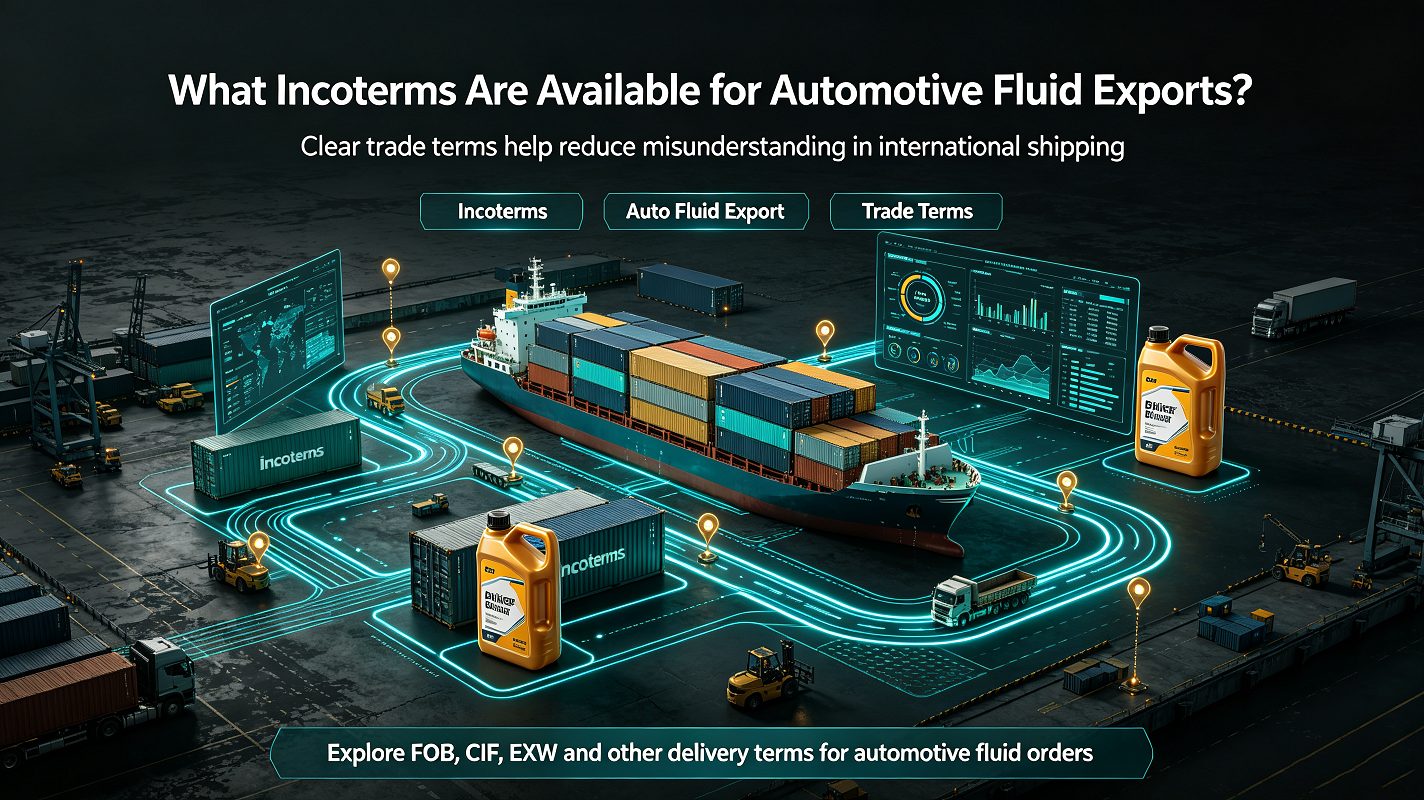
Incoterms are standardized international trade terms published by the ICC. They define the responsibilities of buyer and seller in an international sale, mainly around delivery point, transport cost, risk transfer, export and import clearance, and insurance obligations where applicable. They do not replace the sales contract, and they do not cover product quality, ownership transfer, or payment terms. That distinction is worth keeping in mind, because many shipment disputes start when a company assumes Incoterms do more than they actually do.
For chemical and automotive fluids, Incoterms help answer practical questions such as: Who arranges the main carriage? Who books the vessel or truck? At what point does risk move from seller to buyer? Who is responsible for export documents? Those answers shape margin, cash flow, and operational workload.
Common terms used in fluid shipments
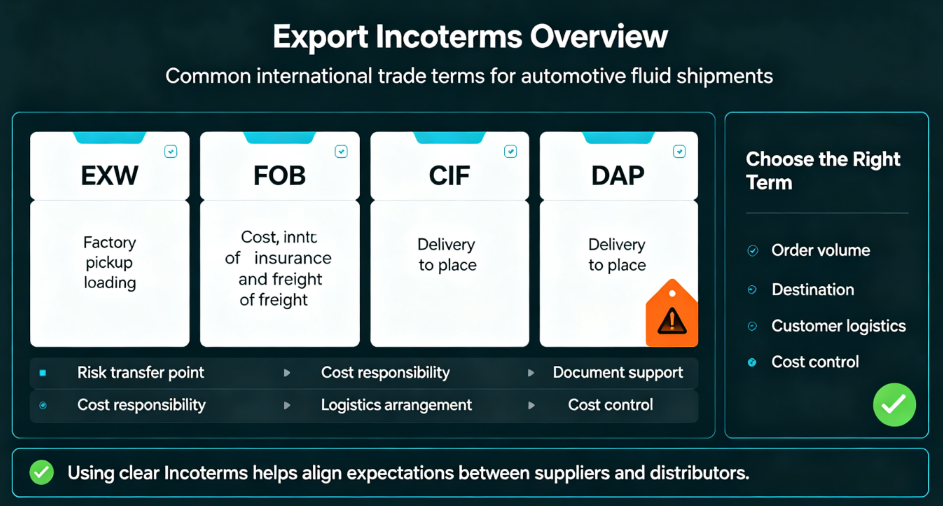
EXW and FCA
EXW places most responsibility on the buyer very early, while FCA is often more workable for international shipments because the seller delivers to a named carrier or place. In practice, FCA can be easier when brake fluid or coolant leaves a factory, because the seller can manage packing and gate-out procedures before the freight forwarder takes over. EXW may look simple, but it can become messy if the buyer has limited local transport capability or if export loading procedures are not clearly defined.
FOB and CIF
These are still widely used in some markets, though they are best suited to sea freight and need to be handled carefully. FOB transfers risk once the goods are loaded on board the vessel. CIF adds seller-arranged freight and insurance to the destination port. For coolant shipment in drums or containers, CIF can be convenient for a buyer who wants a landed-to-port price, but it does not remove the need to check insurance scope, cargo packing, or local discharge costs.
DAP and DDP
DAP and DDP are often attractive to buyers because they simplify the commercial picture. The seller takes on more of the transport burden, and under DDP the seller also handles import clearance and duties where allowed. That said, DDP can be risky if the exporter is not set up for tax registration or customs obligations in the destination country. Many experienced sellers avoid promising DDP unless they have the legal and operational structure to support it.
What makes brake fluid and coolant shipments different
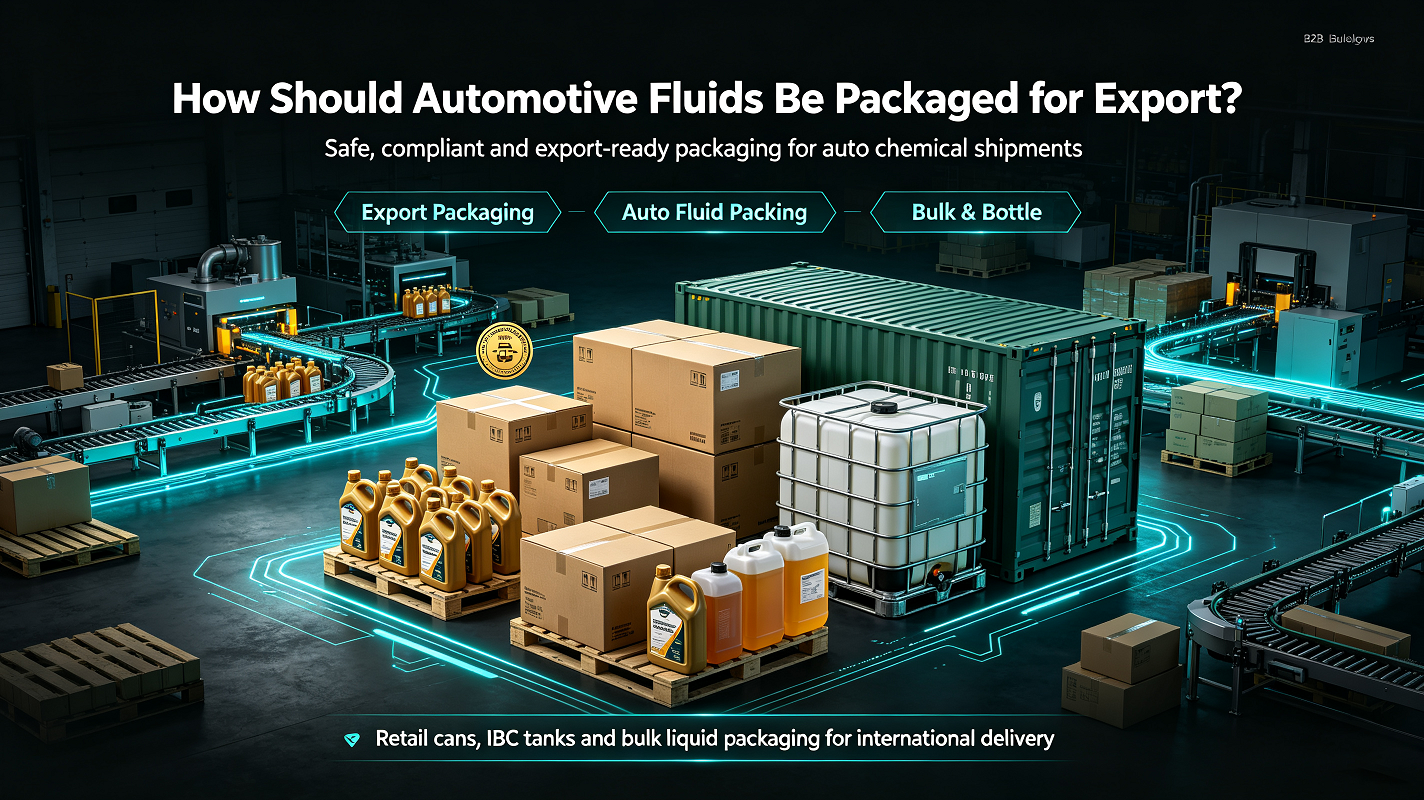
Brake fluid and engine coolant are both industrial fluids, but they do not behave like ordinary packaged goods. Packaging must hold up under stacking, vibration, and temperature swings. Labels and safety data need to match the actual product and destination market rules. Carriers may apply restrictions based on classification, packaging type, or route. A shipment that looks straightforward at the warehouse can run into trouble at the port if the documentation is incomplete or the packaging is not accepted by the forwarder.
There is also the commercial side. Buyers often want predictable landed cost, but fluid exporters need to protect margin from unexpected rehandling, demurrage, or import-side charges. The chosen Incoterm shapes who absorbs those costs. For new lanes, it is usually wise to start with a term that matches the side best equipped to control logistics, not simply the side asking for the lowest invoice price.
How to choose the right term
A sensible selection process starts with three questions. First, who controls the origin site and can manage export loading cleanly? Second, who has stronger freight-buying power and destination expertise? Third, how complex is the route, including customs paperwork, inland trucking, and possible temperature or handling concerns?
If the buyer has an established import team and domestic distribution network, FCA or FOB may be enough. If the seller wants to offer a more complete service, DAP can work well provided the destination is operationally manageable. For first shipments into unfamiliar markets, many companies prefer to keep the term simple and avoid taking on duties or import clearance they cannot fully control.
Common mistakes buyers and sellers make
One frequent mistake is treating the Incoterm as a substitute for a detailed shipping specification. It is not. The contract should still spell out packaging format, palletization, label language, document pack, and whether the cargo is bulk, bottled, or drum-packed. Another mistake is assuming insurance is automatically adequate. Under some terms it is not even required, and under others the minimum cover may not match the value or sensitivity of the goods.
A quieter but costly error is ignoring the destination side. A term that works smoothly for one port may fail at another because of local customs practice, warehouse rules, or inland transport availability. The same is true for buyer expectations: some importers say they want a simple price, but they actually need a seller who understands the route end to end.
Quick buyer checklist before you confirm the deal
Before you sign off on Incoterms for brake fluid and coolant, make sure both sides agree on the named place, the document set, packaging format, and who pays for each major leg. Confirm whether the shipment is moving by sea, road, or multimodal transport, because not every term is equally suitable for every mode. Then check that the chosen term matches the contract language, quotation, and commercial invoice. Small mismatches here can become expensive later.
FAQ: Incoterms for fluid exports
Are the same Incoterms always best for brake fluid and coolant?
No. The best choice depends on the shipping mode, destination country, and which party is stronger operationally. A term that is efficient for one customer may be awkward for another.
Do Incoterms cover product quality?
No. They only define delivery and risk responsibilities. Product quality, claims, and specifications need separate contractual language.
Should a first-time exporter use DDP?
Only with caution. DDP can simplify the buyer’s experience, but it places significant obligations on the seller. If the exporter lacks destination tax or customs support, it may be safer to choose a simpler term.
What to do next
If you are planning Incoterms for brake fluid and coolant shipment, start by mapping the actual logistics path before you quote the sale. The best trade term is usually the one that reflects how the cargo will move in the real world, not the one that makes the offer look easiest at first glance. A careful choice at the quotation stage can save a lot of explanation when the shipment is already on the water or waiting at the border.
Welcome to contact GAFLE for more information & cooperation!
peter
ZHEJIANG GAFLE AUTO CHEMICL CO.,LTD
Tel:86-579-8222 1665
Fax:86-579-8246 4690
Cel/Wechart:86-13335993986
E-mail:peter@gafle.net
Web:www.gafle.net