Why Brake Fluid Packaging Requires More Than Just Volume Calculation
For chemical procurement teams and aftermarket distributors, evaluating brake fluid wholesale packaging sizes is rarely just a question of unit cost or warehouse racking space. Hydraulic braking formulations—predominantly polyglycol ether blends (DOT 3, DOT 4, DOT 5.1)—are aggressively hygroscopic. The moment a container is sealed at the blending plant, the clock begins ticking on water absorption. Choosing the wrong volume profile or container material can turn a high-margin fluid delivery into out-of-spec scrap before it ever reaches a master cylinder.
Sourcing managers must balance three conflicting demands: inventory turnover speed, barrier integrity against ambient moisture, and the handling capabilities of the end user. A fleet maintenance depot consumes fluids differently than a fast-lube chain or an overseas repacker. Getting this decision right avoids field quality claims, premature boiling-point drops, and expensive repacking logistics.
The Breakdown: Small Packouts vs. Industrial Volumes
Wholesale distribution generally bifurcates into end-user workshop units and industrial intermediate supply. Each format carries distinct freight efficiency and handling characteristics.
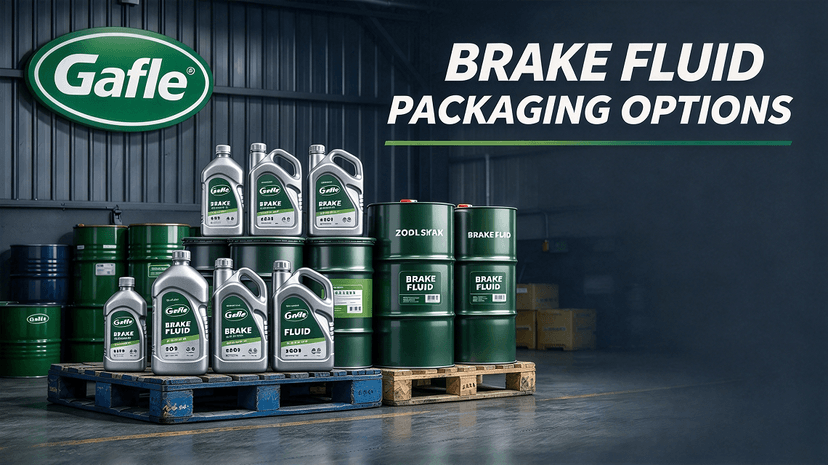
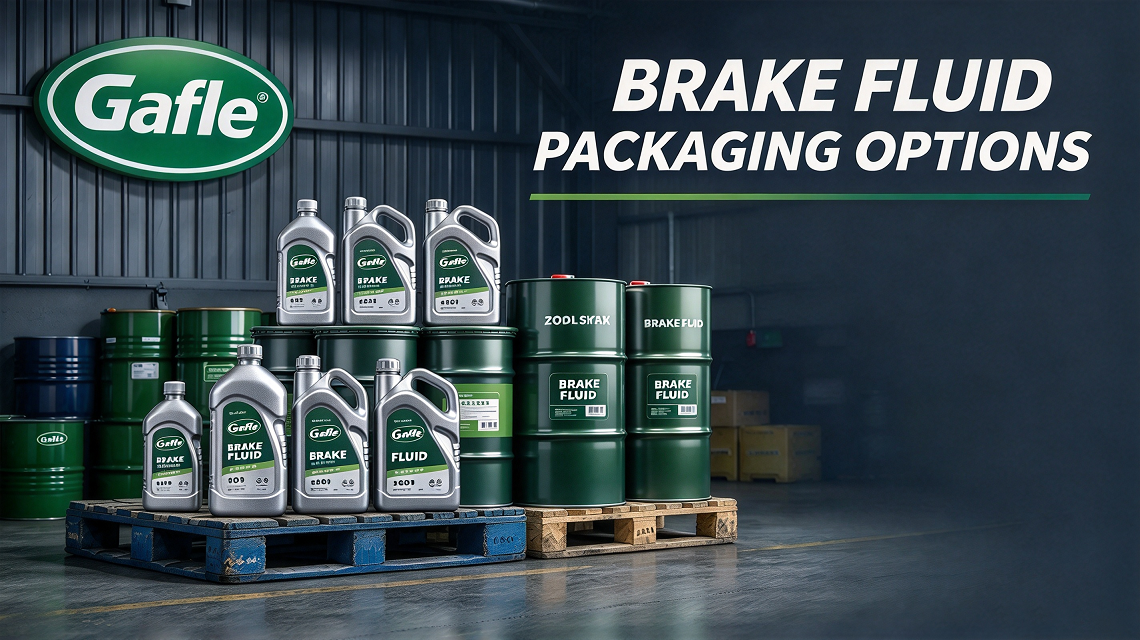
Retail and Professional Service Bottles (250 ml to 1 Liter)
Single-service containers remain the dominant volume for independent repair shops and retail shelves. A 250 ml or 500 ml bottle size ensures that a technician opens only the volume needed for a complete flush or top-off, discarding any remainder rather than leaving half-empty bottles to absorb ambient humidity. High-density polyethylene (HDPE) with multi-layer barrier linings or tinplate steel cans are standard here. While tinplate provides an absolute barrier to moisture and oxygen, modern fluorinated or EVOH-barrier plastic bottles have largely displaced metal due to lower tare weight and reduced denting during transit.
Shop-Level Pails and Jugs (5 Liters to 20 Liters)
Commonly specified for commercial fleet operators, bus transit maintenance hubs, and high-turnover dealerships equipped with pressurized brake-bleeding rigs. A larger bottle size or five-gallon carboy reduces plastic resin waste and yields a lower per-liter landed cost. However, once uncapped, these containers demand strict operational discipline. Without nitrogen-purged dispensing pumps or desiccant breather caps, a half-empty 20-liter pail will pull atmospheric moisture into the headspace with every diurnal temperature cycle, degrading dry equilibrium reflux boiling points (ERBP) over weeks.
Drums and Intermediate Bulk Containers (200 Liters to 1,000 Liters)
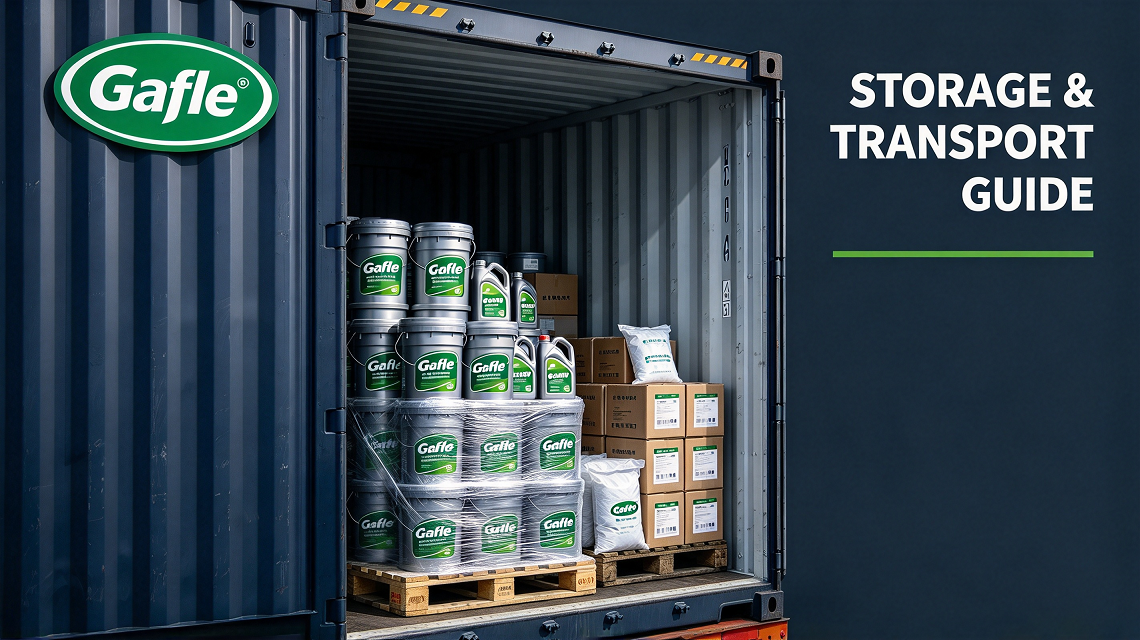
For tier-one contract packagers and vehicle assembly lines, bulk brake fluid IBC drum packaging offers the most cost-effective freight density. Standard tight-head 200-liter (55-gallon) steel drums feature specialized internal lacquers or phenolic linings to prevent corrosion and chemical leeching. For maximum throughput, 1,000-liter composite IBCs (rigid cross-linked polyethylene bottle enclosed in a galvanized steel cage) slash handling labor.
Buyers pursuing IBC volumes must verify that the totes include UV-stabilized resins, vapor-tight EPDM or Viton seals, and dedicated dry-air blanket ports. An unsealed IBC top valve exposed to humid maritime shipping conditions can ruin an entire metric ton of high-performance DOT 5.1 fluid in transit.
Evaluating Barrier Integrity and Material Compatibility
Not all container resins perform identically under extended storage. Sourcing specialists should look beyond unit capacity and audit the barrier specifications:
- Water Vapor Transmission Rate (WVTR): Standard HDPE permits low-level moisture migration over 18 to 24 months. For tropical export markets, multi-layer co-extruded bottles with ethylene vinyl alcohol (EVOH) or fluorinated walls are critical.
- Sealing Mechanisms: Induction-sealed foil liners are mandatory for retail bottles. The seal must bond cleanly to the land area without pinholes; peelable tabs must resist degradation from polyglycols.
- Drum Linings: Never accept unlined cold-rolled steel drums. Glycol ethers react with unprotected ferrous metals over time, generating particulate contamination and discolored fluid.
Operational Trade-Offs in Bulk Purchasing
Purchasing drums or IBCs reduces packaging unit expenditure by 18% to 30% compared to cased bottles, but internal operational costs frequently erase those savings if the facility is unprepared. Bulk dispensing systems require dedicated, moisture-trapped transfer lines, pneumatic pump skids, and rigorous cleaning protocols between fluid classifications. Mixing a DOT 4 line with silicone-based DOT 5, for instance, leads to immediate seal swell failures in vehicle hydraulic systems.
Conversely, ordering smaller containers shifts the burden to pallet optimization. Corrugated master cartons must maintain stack strength in high-humidity regional warehouses. Double-wall corrugated boxes with top-tier edge crush test (ECT) ratings are non-negotiable for 1-liter export consignments.
Frequently Asked Questions
What is the typical shelf life across different container formats?
Factory-sealed metal cans and foil-sealed EVOH bottles typically carry a 2- to 3-year shelf life under controlled conditions. Bulk IBC containers should generally be consumed within 12 months of delivery, provided the nitrogen blanket remains intact after opening.
Can DOT 3 and DOT 4 share identical packaging materials?
Chemically, yes. Both rely on glycol ether chemistry and interact similarly with HDPE, steel, and sealing elastomers. However, DOT 4 exhibits higher moisture sensitivity due to its higher wet boiling point requirements, often dictating thicker foil seals and stricter WVTR thresholds.
Strategic Next Steps for Sourcing Teams
Before issuing requests for quotation, map your exact customer usage profile against regional climate conditions. If your distribution network serves distributed workshops in humid climates, prioritizing small, induction-sealed bottles will protect brand reputation far better than pushing large-format jugs. For high-volume blending and filling operations, audit prospective chemical suppliers not just on their per-liter raw material pricing, but on their dry-air purging protocols and drum liner certifications.
Welcome to contact GAFLE for more information & cooperation!
peter
ZHEJIANG GAFLE AUTO CHEMICL CO.,LTD
Tel:86-579-8222 1665
Fax:86-579-8246 4690
Cel/Wechart:86-13335993986
E-mail:peter@gafle.net
Web:www.gafle.net