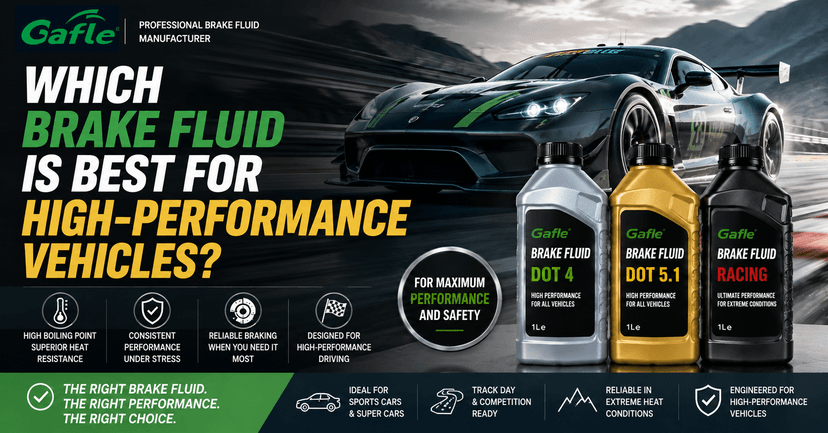
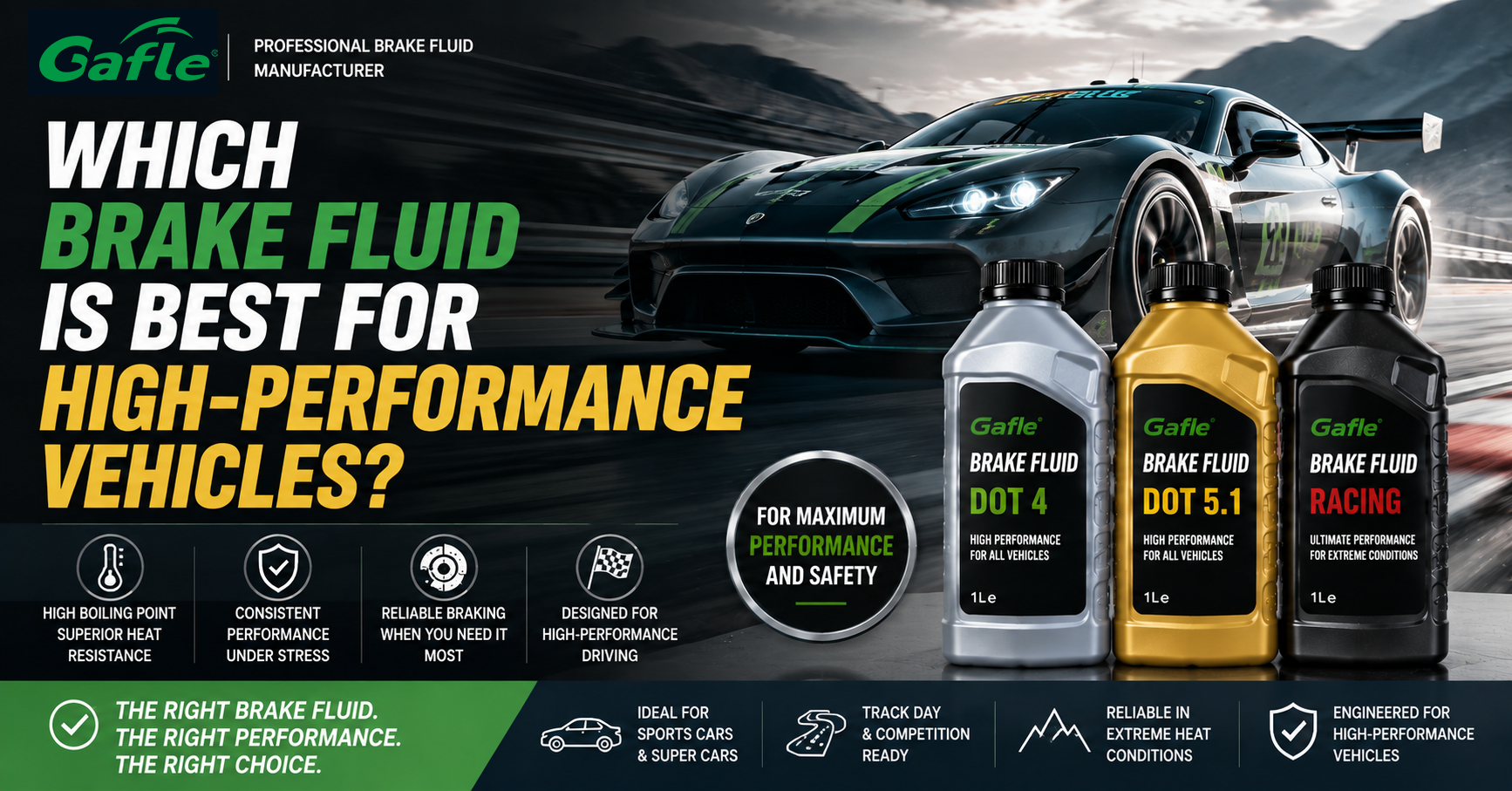
Which Brake Fluid Is Best for High-Performance Vehicles?
High-performance vehicles place greater demands on their braking systems. Higher speeds, repeated braking, mountain driving, heavy loads, and demanding road conditions can generate significant heat at the brakes. Under these conditions, choosing the right brake fluid becomes especially important.
So, which brake fluid is best for high-performance vehicles?
There is no single brake fluid that is best for every high-performance car. The correct choice depends on the vehicle manufacturer's specifications, braking-system design, operating conditions, and the actual performance characteristics of the fluid.
In general, a quality high performance brake fluid should provide a high boiling point, strong thermal stability, appropriate viscosity, corrosion protection, and reliable material compatibility.
As a professional brake fluid manufacturer with more than 25 years of manufacturing experience, Gafle develops brake fluid solutions for different automotive applications and international markets.
In this article, we explain what makes a brake fluid suitable for high-performance vehicles and how DOT 4 and DOT 5.1 compare.
Why Do High-Performance Vehicles Need High-Performance Brake Fluid?
Braking converts the vehicle's kinetic energy into heat.
During ordinary daily driving, the braking system generally has enough time to dissipate much of this heat. But under more demanding conditions, brake temperatures can rise significantly.
Examples include:
- Repeated hard braking
- Mountain and downhill driving
- High-speed driving
- Heavy vehicle loads
- Performance-oriented driving
- Certain motorsport applications
Heat generated at the brakes can eventually transfer into the brake fluid.
If brake fluid reaches its boiling point, vapor can form in the hydraulic system. Unlike liquid brake fluid, vapor is compressible, which can reduce hydraulic effectiveness and contribute to a softer or less consistent brake pedal.
For this reason, high temperature brake fluid with appropriate boiling-point performance is particularly important in demanding applications.
Why Brake Fluid Boiling Point Matters
When choosing the best brake fluid for high performance cars, boiling point is one of the most important specifications to consider.
Brake fluid performance is commonly evaluated using two boiling-point measurements.
Dry Boiling Point
The dry boiling point refers to the boiling-point performance of fresh brake fluid under standardized test conditions.
A higher dry boiling point generally provides a greater temperature margin before vapor formation becomes a concern.
This can be particularly useful in applications involving repeated high-temperature braking.
Wet Boiling Point
Most DOT 3, DOT 4, and DOT 5.1 brake fluids are glycol-based and hygroscopic, meaning they absorb moisture over time.
As moisture content increases, the boiling-point performance of the fluid can decrease.
The wet boiling point provides a standardized way to evaluate brake fluid after controlled moisture exposure.
For road vehicles, both dry and wet boiling-point performance are important because brake fluid remains in service over time.
What Is High Boiling Point Brake Fluid?
A high boiling point brake fluid is formulated to maintain hydraulic performance at higher temperatures before boiling occurs.
However, buyers should not evaluate a brake fluid based on one number alone.
A quality high-performance brake fluid should balance several characteristics, including:
- High dry boiling point
- Strong wet boiling-point performance
- Appropriate viscosity
- Thermal and chemical stability
- Corrosion protection
- Material compatibility
A very high advertised boiling point does not automatically make a product suitable for every vehicle.
The complete product specification and vehicle manufacturer requirements should always be considered.
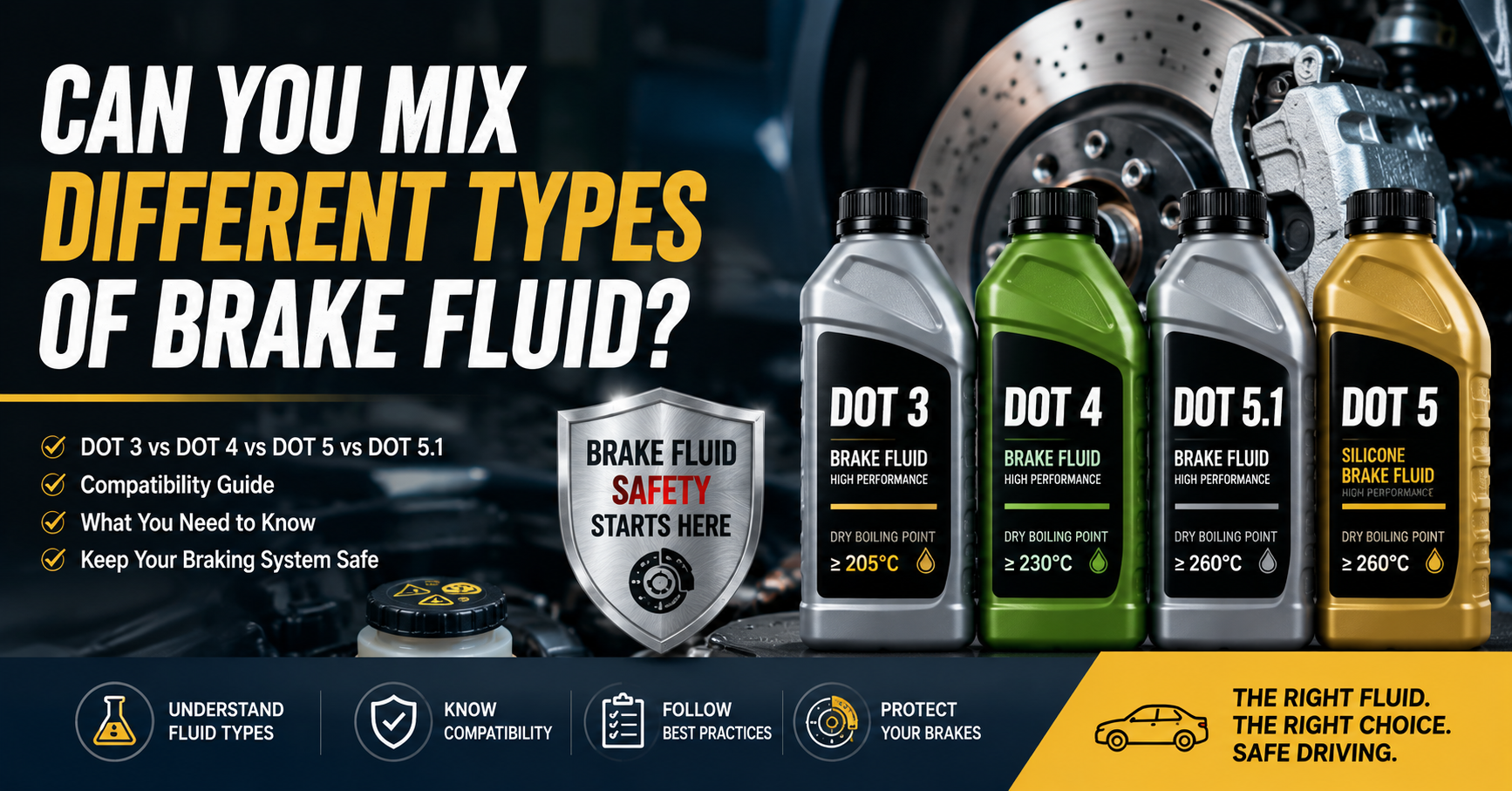
DOT 3 vs DOT 4 vs DOT 5.1 for High-Performance Vehicles
DOT classifications are often used when comparing brake fluids, but it is important to understand what these classifications actually mean.
DOT 3 Brake Fluid
DOT 3 is widely used in conventional passenger vehicles.
It provides suitable performance for many normal road applications, but its minimum boiling-point requirements are lower than those for DOT 4 and DOT 5.1.
For many performance-oriented applications, manufacturers may specify another grade.
DOT 4 Brake Fluid
DOT 4 brake fluid is widely used in modern passenger cars and performance vehicles.
Compared with DOT 3, DOT 4 has higher minimum dry and wet boiling-point requirements under FMVSS 116.
Importantly, DOT 4 represents a performance category rather than one fixed formulation.
Some premium or high-performance DOT 4 products can provide boiling-point performance considerably above the minimum requirements of the DOT 4 classification.
For this reason, high-performance DOT 4 brake fluid is commonly considered for demanding driving applications when compatible with the vehicle manufacturer's requirements.
DOT 5.1 Brake Fluid
DOT 5.1 is also generally glycol-based and has higher minimum boiling-point requirements than DOT 3.
It also has specific low-temperature viscosity requirements that can make it suitable for certain modern braking systems.
However, the higher DOT number does not automatically mean DOT 5.1 is better than every DOT 4 product.
The actual product specifications and vehicle requirements matter more than the number alone.
DOT 4 vs DOT 5.1 Brake Fluid: Which Is Better?
The question of DOT 4 vs DOT 5.1 brake fluid is common among performance-car owners.
The answer depends on the application.
DOT 5.1 has specific performance requirements, including relatively low viscosity at very low temperatures. This can be important for certain braking and stability-control systems.
However, some specialized high-performance DOT 4 formulations can provide extremely strong high-temperature performance.
Therefore:
DOT 5.1 is not automatically superior to high-performance DOT 4 for every performance vehicle.
Instead, compare:
- Vehicle manufacturer specifications
- Dry boiling point
- Wet boiling point
- Viscosity
- Intended application
- Brake system requirements
The safest choice is always a fluid that meets the specification required by the vehicle manufacturer.
What About DOT 5 Brake Fluid?
DOT 5 should not be confused with DOT 5.1.
DOT 5 is silicone-based, while conventional DOT 3, DOT 4, and DOT 5.1 fluids are generally glycol-based.
DOT 5 should not be mixed with glycol-based brake fluids.
A vehicle designed for glycol-based DOT 4 fluid should not simply be switched to DOT 5 because the number appears higher.
Always follow the braking-system and vehicle manufacturer's requirements.
5 Features to Look for in High-Performance Brake Fluid
When evaluating high performance brake fluid, focus on more than the DOT classification.
1. High Boiling Point
Repeated braking creates heat. A high boiling point provides greater resistance to vapor formation at elevated temperatures.
Both dry and wet boiling-point performance should be considered.
2. Thermal Stability
A quality high temperature brake fluid should maintain stable properties under demanding operating conditions.
3. Appropriate Viscosity
Brake fluid must move efficiently through hydraulic circuits and braking-control components.
Viscosity requirements can be particularly important for modern ABS, ESC, and electronically controlled braking systems.
4. Corrosion Protection
Brake systems contain various metal components.
A properly formulated brake fluid should help protect relevant system materials against corrosion according to applicable performance requirements.
5. Material Compatibility
Brake fluid comes into contact with seals and other materials within the hydraulic braking system.
A quality formulation should provide suitable compatibility with the materials used in the intended application.
Does Driving Style Affect Brake Fluid Choice?
Yes. The way a vehicle is used can influence the demands placed on brake fluid.
Daily Driving
For normal commuting and road use, the brake fluid specification recommended by the vehicle manufacturer should generally provide the appropriate performance.
Spirited Road Driving
Frequent acceleration and braking can generate more heat than normal commuting.
If the vehicle manufacturer permits it, a higher-performance fluid with stronger boiling-point characteristics may provide additional thermal margin.
Mountain Driving
Long downhill sections and repeated braking can create sustained brake temperatures.
Brake fluid condition and boiling-point performance become particularly important in these environments.
Track or Motorsport Use
Track driving can place much greater thermal stress on the braking system than ordinary road driving.
Brake fluid selection for motorsport applications should follow the requirements of the vehicle, braking system, and qualified technical professionals.
A product designed for normal road use should not automatically be assumed to be appropriate for competitive applications.
Is Higher DOT Always Better?
No.
This is one of the most common misconceptions about brake fluid.
A higher DOT number does not necessarily mean a fluid is the best choice for every vehicle.
For example, a high-performance DOT 4 formulation may have excellent boiling-point characteristics, while DOT 5.1 may offer other advantages such as specific low-temperature viscosity performance.
At the same time, DOT 5 uses a fundamentally different silicone-based chemistry.
Therefore, choosing brake fluid should never be based only on the DOT number printed on the bottle.
Always evaluate the full specification.
How Often Should High-Performance Brake Fluid Be Changed?
Brake fluid replacement intervals depend on the vehicle manufacturer, fluid specification, operating conditions, and service environment.
Because glycol-based brake fluid absorbs moisture over time, its boiling-point performance can decrease during service.
Vehicles exposed to frequent high-temperature braking may require closer monitoring than vehicles used only for normal commuting.
Drivers should follow the maintenance interval specified by the vehicle manufacturer and have the braking system inspected by qualified professionals when necessary.
For demanding applications, brake fluid condition should be considered part of overall brake-system maintenance.
Why Manufacturing Quality Matters for High-Performance Brake Fluid
High-performance brake fluid depends not only on formulation but also on manufacturing consistency.
A professional brake fluid manufacturer should control the complete production process.
This includes:
- Raw material inspection
- Formula management
- Production process control
- Laboratory testing
- Finished-product inspection
- Batch traceability
- Packaging quality control
Laboratory testing is especially important.
Depending on the applicable product specification, testing may evaluate boiling point, viscosity, chemical stability, corrosion performance, fluidity, appearance, and material compatibility.
For automotive brands and distributors, choosing a manufacturer with strong technical and quality-control capabilities helps ensure consistent performance across production batches.
Why Choose Gafle as Your Brake Fluid Manufacturer?
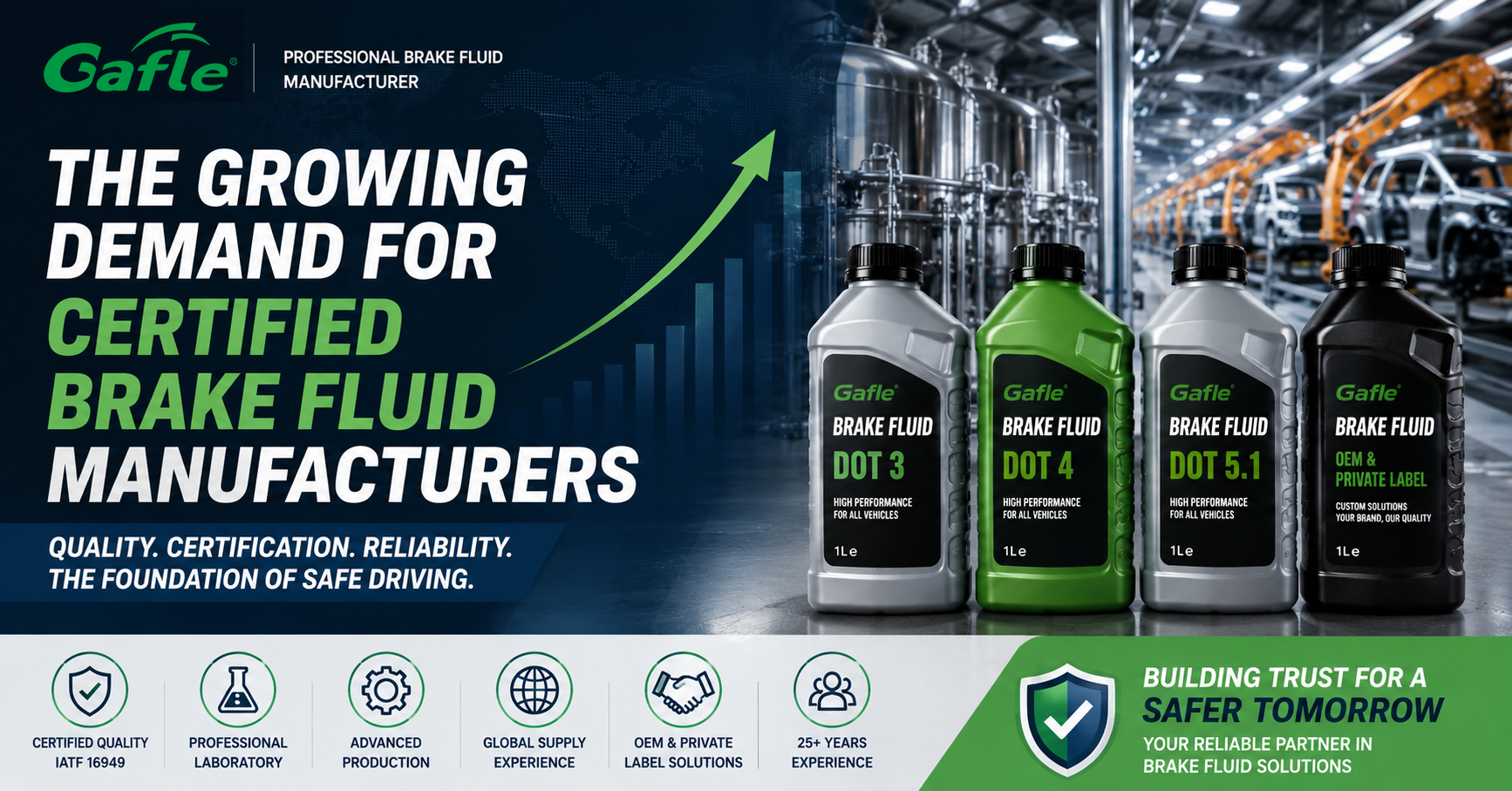
Gafle is a professional brake fluid manufacturer with more than 25 years of brake fluid manufacturing experience.
We provide brake fluid solutions for customers in international automotive markets, including products for different vehicle and operating requirements.
Gafle's manufacturing capabilities include:
- 25+ years of brake fluid manufacturing experience
- DOT 3 and DOT 4 brake fluid manufacturing
- High-performance brake fluid solutions
- Professional laboratory testing
- Strict production and quality control
- IATF 16949 quality management system
- OEM and private label brake fluid services
- Customized packaging solutions
- Global export experience
- Participation in drafting China's national brake fluid standards
For importers, distributors, wholesalers, and automotive brands, Gafle can support product development from specification selection through manufacturing, quality control, and customized packaging.
High-Performance Brake Fluid for OEM and Private Label Markets
Demand for premium automotive maintenance products continues to create opportunities for aftermarket brands.
For businesses targeting performance-oriented vehicle owners, brake fluid can be an important addition to an automotive product portfolio.
Working directly with an experienced manufacturer allows brands to develop products based on their target market requirements.
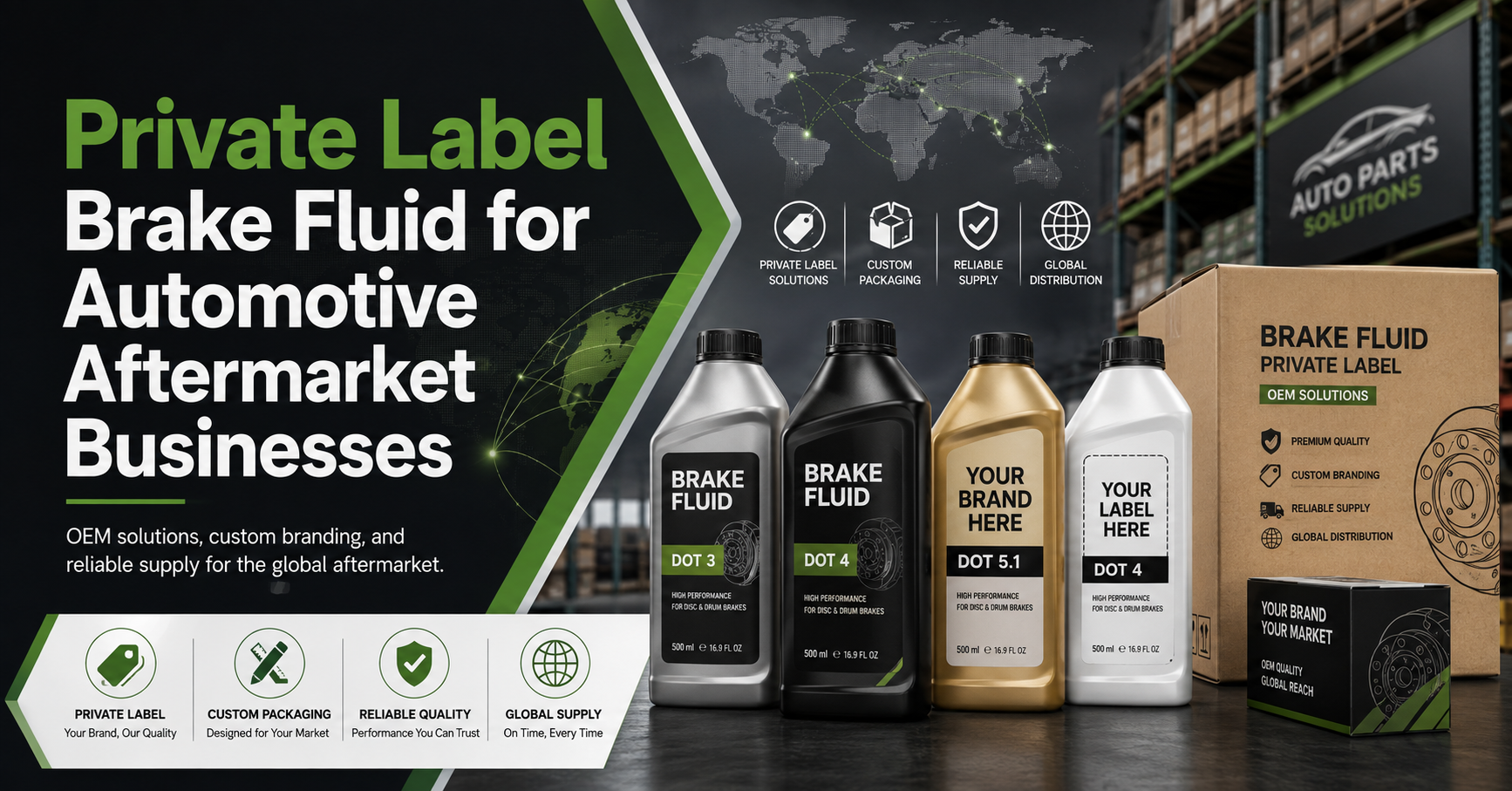
Gafle provides OEM and private label support including product specification selection, bottle and packaging options, label customization, and mass production.
For B2B buyers, the goal should not simply be finding a product with the highest advertised boiling point.
The more important objective is developing a product that combines appropriate performance, reliable quality, regulatory considerations, and consistent manufacturing.
Frequently Asked Questions
What is the best brake fluid for high-performance cars?
There is no universal best product. The correct brake fluid should meet the vehicle manufacturer's required specification while providing appropriate boiling point, viscosity, thermal stability, and other performance characteristics for the intended use.
Is DOT 4 good for high-performance cars?
DOT 4 is widely used in modern and performance-oriented vehicles. Some high-performance DOT 4 formulations provide boiling points significantly above the minimum DOT 4 requirements. Always verify compatibility with the vehicle manufacturer's specification.
Is DOT 5.1 better than DOT 4?
Not necessarily. DOT 5.1 and DOT 4 have different performance requirements, and some specialized DOT 4 products provide excellent high-temperature performance. The best choice depends on the vehicle and application.
Does high-performance brake fluid improve braking?
Brake fluid does not increase mechanical braking force by itself. Its role is to transmit hydraulic pressure reliably and maintain suitable performance under the required operating conditions. High-temperature fluid can provide greater resistance to boiling under demanding thermal conditions.
Can I use racing brake fluid in a normal car?
Do not select brake fluid solely because it is marketed for racing or performance use. Always confirm that the product meets the vehicle manufacturer's required specification and is suitable for the braking system.
Conclusion
So, which brake fluid is best for high-performance vehicles?
The answer is not simply DOT 4 or DOT 5.1.
The best choice is a brake fluid that meets the vehicle manufacturer's required specification while providing the appropriate combination of high boiling point, thermal stability, viscosity, corrosion protection, and material compatibility for the intended driving conditions.
For many performance-oriented vehicles, high-quality DOT 4 brake fluid can provide excellent performance. DOT 5.1 may also be appropriate for vehicles requiring its specific characteristics.
The key is to evaluate actual product performance rather than choosing based only on the DOT number.
For automotive businesses seeking a professional brake fluid manufacturer, Gafle provides more than 25 years of manufacturing experience, professional laboratory testing, DOT 3 and DOT 4 manufacturing, OEM and private label services, and global supply support.
Contact Gafle to discuss high-performance, OEM, or private label brake fluid solutions for your market.