Common Coolant Mistakes That Damage Your Engine
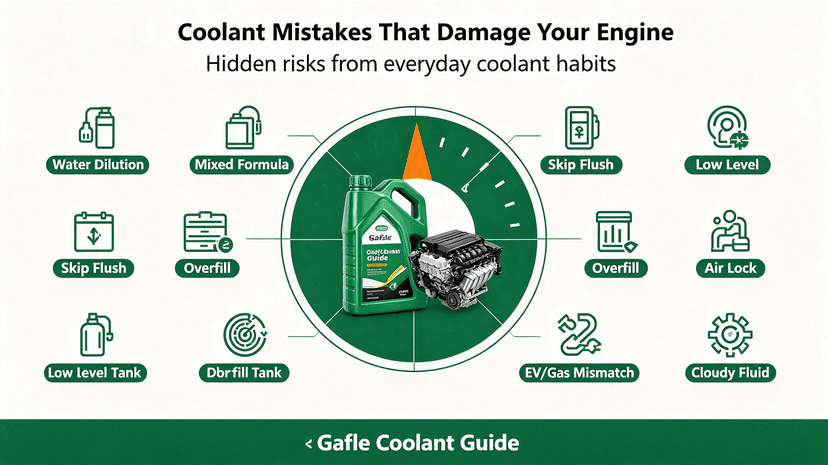
Most engine cooling system failures don’t stem from factory defects—they come from simple, repeated coolant mistakes made by everyday car owners. These cheap, convenient shortcuts slowly corrode radiators, trigger overheating, and create expensive engine damage over time. Below are the 8 most widespread coolant errors, their hidden long-term risks, and easy rules to protect your vehicle’s cooling system year-round.
1. Diluting Coolant With Tap Or Bottled Water Long-Term
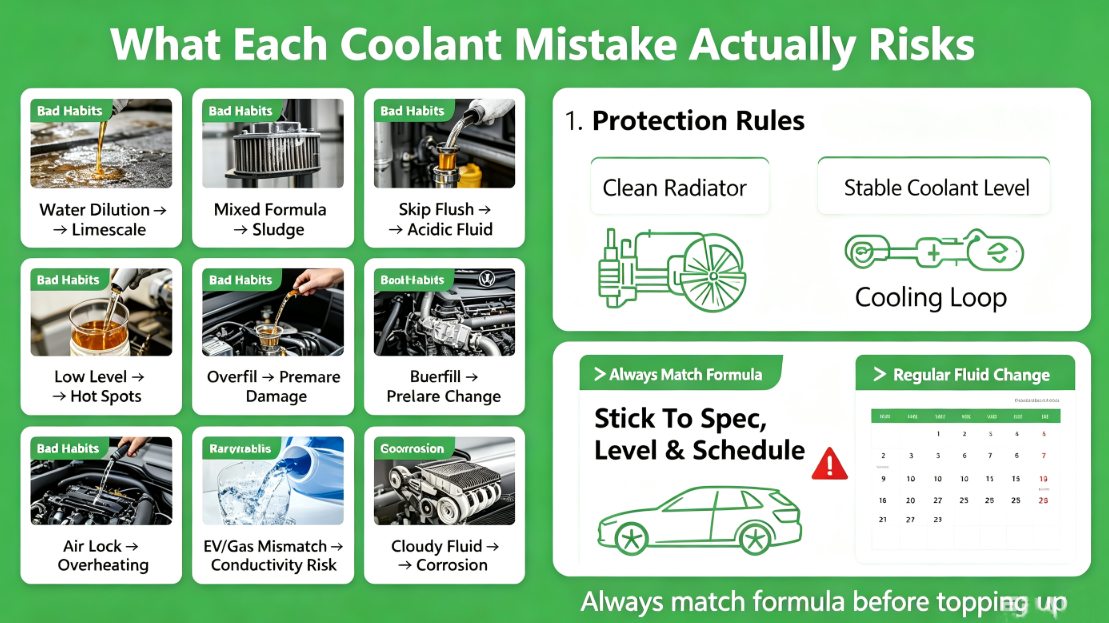
Many drivers top up low coolant with regular water to save money. Tap water contains mineral limescale and chlorine that builds sludge inside radiators. Even distilled water lacks anti-corrosion additives and lowers freeze/boil protection. Water is only acceptable for emergency short-distance trips, never permanent refills.
2. Mixing Different Coolant Formulas Randomly
Judging compatibility by color and blending IAT, OAT, HOAT, or EV low-conductivity coolant neutralizes protective additives. Conflicting chemical compounds create thick sediment that clogs narrow radiator tubes, triggering overheating and metal corrosion. If you don’t know your fluid type, perform a full system flush before adding new coolant.
3. Skipping Scheduled Coolant Flushes For Years
Coolant’s anti-rust, anti-boil additives wear out over time, even on low-mileage cars. Leaving aged acidic fluid in the loop eats aluminum radiators, water pump seals and engine water channels. Waiting 5+ years between flushes guarantees corrosion damage and frequent overheating breakdowns.
4. Running Coolant Level Too Low
Low fluid creates air pockets inside the cooling circuit, breaking consistent heat transfer. Air bubbles trap hot spots on cylinder heads, warping metal and blowing head gaskets. A constantly dropping coolant level also signals hidden pinhole leaks that need immediate inspection.
5. Overfilling The Coolant Reservoir Above MAX Line
Coolant expands when heated during driving. Fluid filled past the MAX mark spills onto hot engine parts, damaging plastic wiring harnesses and rubber hoses. Overfill also creates unnecessary pressure that cracks plastic overflow tanks over time.
6. Ignoring Trapped Air Pockets (Air Lock)
After topping up or flushing coolant, air gets trapped in high points of the cooling loop. Air lock blocks fluid circulation, causing uneven engine temperatures and sudden overheating on hills or highways. Most drivers skip proper bleeding and deal with persistent hot-running engines as a result.
7. Using EV Coolant In Gasoline Cars (And Vice Versa)
EV low-conductivity insulated coolant lacks the anti-rust additives needed for combustion engine metal parts. Standard gasoline coolant carries high electrical conductivity that creates short-circuit hazards inside EV high-voltage battery loops. The two fluid families are never interchangeable.
8. Ignoring Coolant Discoloration Or Cloudiness
Clear pale yellow/green coolant signals healthy fluid. Dark brown, murky coolant means heavy metal corrosion and depleted additives. Many owners ignore discolored fluid until a full overheating failure occurs, missing cheap early maintenance opportunities.
Final Takeaway
These 8 common coolant mistakes quietly destroy radiators, water pumps and engine blocks long before warning lights activate. Stick to manufacturer coolant specifications, follow flush intervals, maintain correct fluid levels, and bleed trapped air to avoid thousands in cooling system repair bills.
Welcome to contact GAFLE for more information & cooperation!
peter
ZHEJIANG GAFLE AUTO CHEMICL CO.,LTD
Tel:86-579-8222 1665
Fax:86-579-8246 4690
Cel/Wechart:86-13335993986
E-mail:peter@gafle.net
Web:www.gafle.net
peter
ZHEJIANG GAFLE AUTO CHEMICL CO.,LTD
Tel:86-579-8222 1665
Fax:86-579-8246 4690
Cel/Wechart:86-13335993986
E-mail:peter@gafle.net
Web:www.gafle.net